Jira Service Desk Pricing: A Practical Guide for 2026 Teams
Unsure about jira desk pricing? Compare 2026 plans, access, limits, and add-ons to budget confidently. Click to discover the right plan.
Jira Desk pricing can look simple until you compare plans, agent access, customer access, service limits, and optional features. A small team may expect a predictable monthly bill, then discover that premium workflows, automation, reporting, or additional agents change the total.
That uncertainty makes planning difficult. You may also encounter older references to Jira Service Desk, while Atlassian now positions the product as Jira Service Management. Comparing outdated plan names can lead to the wrong budget and an unsuitable package.
Here’s the practical solution: separate the published plan price from the real cost of running your service operation. This guide explains the current pricing structure, the costs that often go unnoticed, and how to compare Jira Service Management with another platform before committing.
Jira Service Desk Pricing: What You Actually Pay For
Jira Desk pricing refers to the cost of using Jira Service Management, Atlassian’s service management platform formerly known as Jira Service Desk. Your total typically depends on the number of agents, the plan level, billing frequency, deployment type, and optional services.
Atlassian generally offers Free, Standard, Premium, and Enterprise options for Jira Service Management. Exact prices and included limits can change, so treat the current Atlassian pricing page as the final authority before purchasing.
| Plan level |
Best suited to |
What to examine |
| Free |
Small teams testing service workflows |
Agent limits, automation allowances, storage, reporting, and support |
| Standard |
Growing service desks with core ticket management needs |
Per-agent pricing, service portals, integrations, and monthly usage limits |
| Premium |
Teams needing higher scale, advanced operations, or stronger continuity |
Automation capacity, incident features, asset capabilities, uptime commitments, and advanced controls |
| Enterprise |
Large organizations with complex governance requirements |
Custom pricing, security controls, support, contract terms, and organization-wide administration |
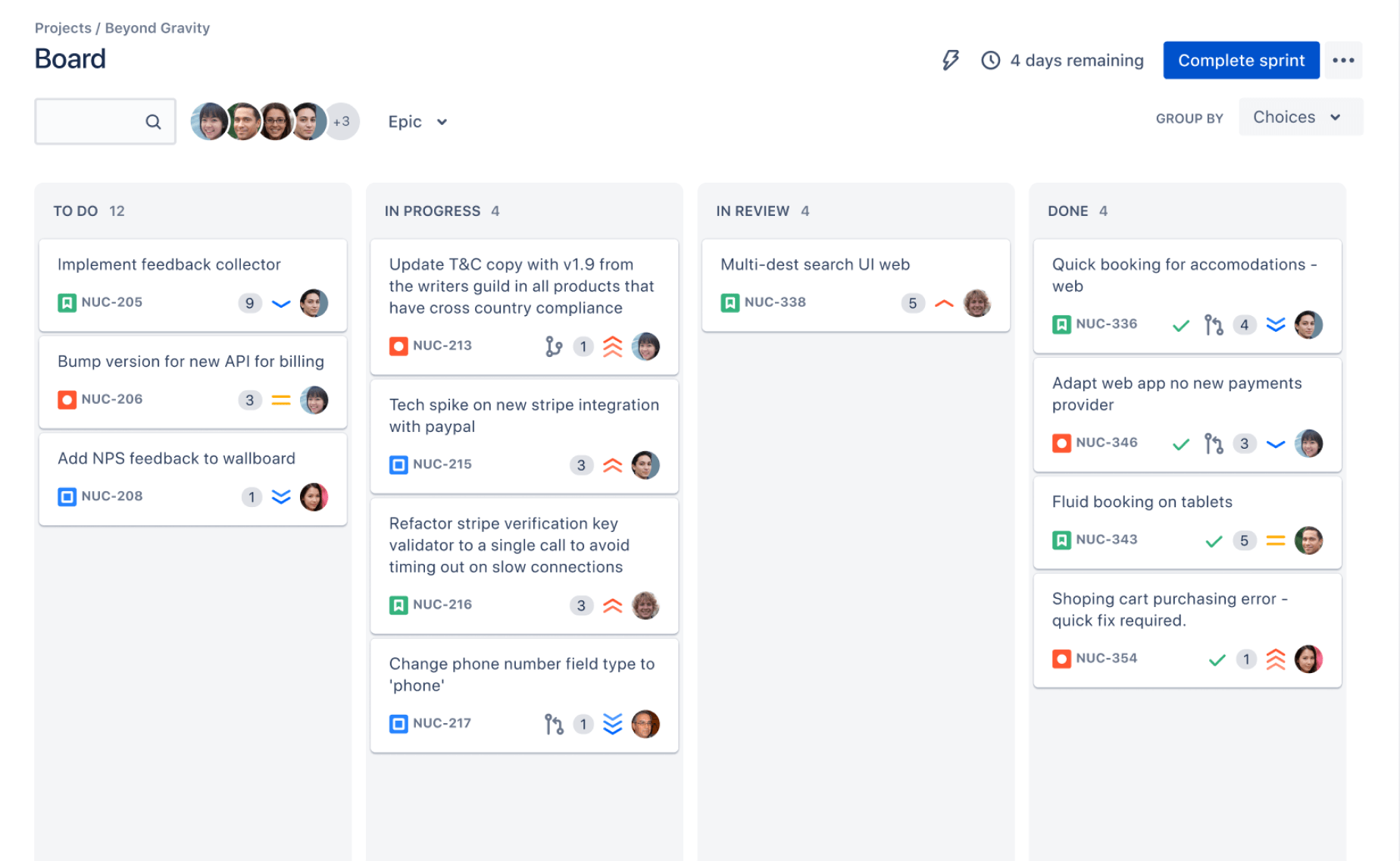
How the plan structure affects your budget
The advertised price is only one part of the calculation. A team with 10 agents and 2,000 requesters may pay differently from a team with 30 agents and 200 requesters, even when both handle a similar ticket volume.
Agents usually require paid access because they work inside queues, assign requests, change statuses, and manage workflows. Customers or requesters often interact through a portal, email, or chat without needing the same paid role.
That distinction matters when you estimate growth. If five employees occasionally respond to requests, giving all five full agent access may cost more than creating a smaller support group with carefully defined responsibilities.
Monthly and annual billing
Monthly billing gives you flexibility when your headcount changes. Annual billing may offer a different effective rate or contract structure, but it can also require a larger upfront commitment.
For example, a 12-agent team may add four agents during a busy quarter. Monthly billing can make that adjustment easier, while annual billing may require a more deliberate capacity forecast.
Before choosing a term, estimate your expected agent count for the next 12 months. Include contractors, technical specialists, incident managers, and occasional service owners who may need direct access.
What Drives the Real Cost?
Jira Service Management pricing is easier to compare when you divide the bill into four parts: subscriptions, people, operations, and adoption. This prevents a low entry price from hiding later expenses.
Agent seats and role design
Start by listing who actively resolves requests. A support agent, IT administrator, HR service specialist, and facilities coordinator may all need different permissions.
Then separate them from people who only approve requests or view reports. Some roles may need limited access rather than full agent privileges. Designing roles before buying seats can prevent unnecessary expansion.
A simple example is an internal IT team with eight full-time agents and three department approvers. Paying for eight operational seats may be more efficient than paying for eleven full agent seats.
Service projects and operational complexity
One service desk might support IT only. Another may manage employee onboarding, equipment requests, access approvals, facilities issues, and customer support.
More service areas usually mean more workflows, request types, queues, forms, permissions, and reporting requirements. The subscription may not increase in a direct one-to-one relationship with every project, but administration effort can rise quickly.
Before upgrading, ask whether the added plan features solve a genuine operational problem. A larger package may help a complex organization, while a smaller team may achieve the same result with cleaner workflow design.
Automation and usage limits
Automation can reduce repetitive work, such as assigning tickets, sending reminders, or escalating overdue requests. However, plans may place limits on automation executions or advanced capabilities.
Consider a password-reset queue that receives 1,500 requests each month. A rule that categorizes and routes each request could consume a meaningful portion of the available allowance.
Estimate high-volume actions before selecting a plan. Include recurring notifications, synchronization rules, incident alerts, and integrations that trigger activity in the background.
Premium functions and add-ons
Advanced incident management, asset tracking, analytics, and continuity features can be valuable. They can also change the cost of your service operation.
For instance, an organization managing laptops, servers, applications, and software licenses may need asset capabilities. A small help desk handling basic access requests may not need the same level of operational depth.
Compare each advanced feature with a measurable outcome. If a function reduces resolution time, prevents outages, or improves audit readiness, include that benefit in your evaluation.
How to Estimate Your Annual Spend
A reliable estimate starts with a simple formula:
Estimated annual cost = agent subscription cost + optional capabilities + implementation effort + administration and training.
This formula gives you a broader view than multiplying a displayed monthly rate by 12.
Step 1: Count active agents
List every person who will regularly triage, assign, resolve, approve, or report on requests. Do not count every employee who submits a request.
Group the list into full-time agents, occasional agents, administrators, and approvers. Then decide whether each group needs the same level of access.
Step 2: Define the service scope
Write down the services you plan to manage during the first year. Include IT support, employee services, customer support, facilities, security requests, and operational incidents.
Mark each service as essential, planned, or optional. This prevents you from paying for complexity before your team is ready to manage it.
Step 3: Estimate request and automation volume
Review your expected monthly request count. If you already operate a help desk, use the average from the last three to six months.
Then estimate automated actions. A request may trigger classification, assignment, approval, notification, escalation, and closure rules. Each step can affect usage and administration effort.
Step 4: Add implementation work
Implementation may include portal design, request forms, workflows, permissions, integrations, reporting, migration, and training.
A team can configure a basic queue quickly. A regulated organization with several departments may need weeks of planning and testing before launch.
Step 5: Model growth
Run at least three scenarios: current staffing, expected growth, and high-growth demand. For example, calculate costs for 10, 20, and 35 agents.
Also consider seasonal changes. A university may receive more requests at the start of term, while a retailer may need extra service capacity during holiday periods.
Jira Service Management Plan Comparison
The best plan depends on your operating model rather than your company size alone. A 20-person business with strict incident response needs may require more advanced capabilities than a 100-person business with simple request handling.
| Evaluation area |
Questions to ask |
Why it matters |
| Agent access |
Who actively resolves or manages requests? |
Seat counts often have the largest direct effect on recurring cost. |
| Request volume |
How many tickets, incidents, and approvals occur each month? |
High activity can affect automation and operational limits. |
| Workflow depth |
Do you need simple queues or multi-stage approvals? |
Complex processes require more configuration and administration. |
| Reporting |
Which service-level and performance measures must leaders see? |
Advanced reporting may influence plan selection or extra work. |
| Security |
What identity, access, audit, and hosting controls are required? |
Compliance needs can narrow the practical plan choices. |
| Continuity |
How quickly must the service recover after disruption? |
Resilience features can matter more than a small subscription difference. |
Free plans for small experiments
A free plan can work well for a small team validating request types and basic workflows. It gives you a low-risk way to test whether employees will use a portal instead of sending unstructured messages.
However, free access may include limits around agents, storage, automation, reporting, or support. Treat it as a controlled pilot rather than assuming it will support long-term growth.
Standard plans for core service operations
Standard access usually suits teams that need a dependable service portal, queues, workflow management, notifications, and integrations.
It may be the practical starting point for an internal IT desk with several agents and predictable request volume. Check whether the plan includes the controls your administrators need before making a final decision.
Premium and Enterprise for scale
Premium and Enterprise options become more relevant when you operate across departments, require advanced incident response, or need stronger governance.
Enterprise pricing is commonly tailored to the organization. Ask for a complete commercial proposal that includes agents, support, security, contract terms, and any implementation services.
Hidden Costs That Teams Often Miss
Subscription pricing rarely captures the full operating cost. The biggest surprises usually come from configuration, maintenance, and integration work.
Administration time
Someone must maintain request types, fields, queues, permissions, automation rules, and reports. If the platform supports several departments, that responsibility can become a part-time role.
For example, changing an approval process may require testing multiple request paths. Poorly maintained rules can route tickets incorrectly or create duplicate notifications.
Integration maintenance
Connections with identity providers, monitoring platforms, communication tools, asset systems, and development tools can improve efficiency. Each connection may require setup, testing, and ongoing troubleshooting.
Estimate maintenance hours, especially when another system changes its authentication method or application interface.
Training and adoption
Employees may continue sending requests by email if the portal is difficult to navigate. Agents may also bypass structured fields when forms ask for too much information.
Short training sessions, clear request categories, and simple forms can improve adoption. Those activities require time even when the platform itself is easy to configure.
Migration and cleanup
Moving from another service desk often involves reviewing old categories, removing duplicate workflows, mapping historical information, and deciding what should remain accessible.
Plan the transition as a separate workstream. A rushed migration can create confusing queues and reduce confidence in the new service experience.
When Jira Service Management Is a Good Fit
Jira Service Management may fit teams that already use Atlassian products and want service operations connected with development, incident response, or project work.
A software company, for example, might route a production incident to an engineering workflow while keeping communication inside a service process. That connection can reduce handoffs between support and development.
It can also suit organizations with structured approval paths. Access requests, onboarding tasks, and equipment approvals can follow defined stages instead of relying on informal messages.
Situations that require closer evaluation
You may need more planning if your team has many departments, strict hosting requirements, complex customer support needs, or limited administrative capacity.
In these cases, compare configuration effort alongside licensing. A platform that appears affordable may become expensive if every small process change requires specialist assistance.
Natural Jira Service Desk Pricing Solution: ONES.com
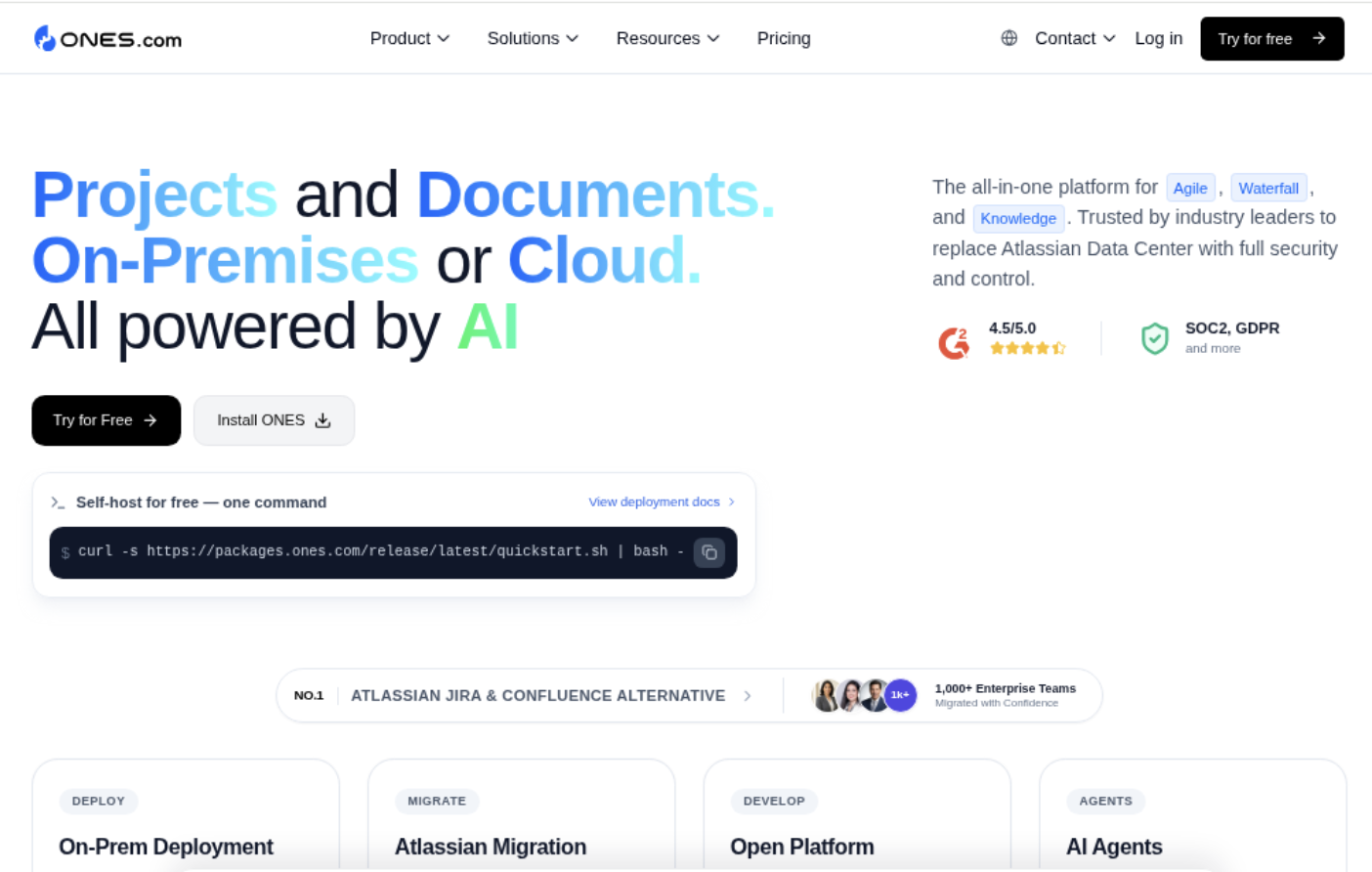
ONES.com combines project management and knowledge management in one platform, with ONES Project available as a Jira alternative and ONES Wiki available as a Confluence alternative. They are sold separately and can support teams that want structured service, project, and knowledge workflows with fewer plugins.
Value Proposition
ONES.com can help teams compare platform cost through a broader operational lens: workflow flexibility, deployment control, reporting, and reduced tool fragmentation. It offers a free plan for up to 30 seats and supports Cloud, On-Premise, Private Cloud, and Air-gapped deployments.
Core Capabilities
Rising plugin costs → Native project and service workflows → Lower integration dependence
Teams often add plugins to cover reporting, custom fields, workflow changes, or sprint planning. ONES Project includes custom workflows, custom fields, built-in reporting, sprint management, and automation in the core project experience.
Restricted hosting requirements → On-Premise, Private Cloud, or Air-gapped deployment → Greater infrastructure control
Some organizations cannot place operational information in a public cloud environment. ONES.com supports self-hosted deployment options, with full feature parity between cloud and self-hosted versions.
Scattered project information → Unified project and knowledge management → Easier context sharing
When project decisions and operational guidance live in separate systems, people spend time searching for context. ONES.com connects the wider platform experience through ONES Project and ONES Wiki, which are available separately.
Complex approval processes → Custom workflows and fields → Better process fit
Standard ticket paths may not match procurement, access, compliance, or release approvals. Custom workflows and fields let teams reflect their actual stages and required details.
Limited operational visibility → Built-in reporting → Faster performance reviews
Managers need visibility into workload, delays, priorities, and completion trends. Built-in reporting helps teams review activity without depending on multiple reporting extensions.
Development and service disconnects → Jira-compatible workflows → Smoother team transitions
Teams familiar with Jira-style processes may want a similar working model without rebuilding every habit. ONES Project supports Jira-compatible workflows, which can reduce the learning curve during evaluation.
Growing seat requirements → Free access for up to 30 seats → Lower-risk evaluation
A small team can test the platform before committing to a larger subscription. The free allowance is useful for validating workflows, roles, and adoption with a controlled group.
Application Scenarios
Internal IT service team: An IT group can manage requests, priorities, approvals, and delivery work through structured workflows. Project teams can connect operational requests with sprint planning and reporting.
Air-gapped engineering organization: A company working in a restricted network can use an air-gapped deployment while retaining feature parity with the cloud experience. This supports internal control requirements without removing core capabilities.
Growing product company: A company moving beyond basic ticket queues can combine custom fields, automation, reporting, and knowledge management. ONES Wiki can help maintain procedures separately from project execution through its standalone product model.
Common Challenges and Practical Solutions
Challenge: The advertised price does not match the final estimate
Solution: Separate agent subscriptions, advanced capabilities, implementation, integrations, and administration. Build a 12-month estimate with current, expected, and high-growth scenarios.
Challenge: Too many people receive full agent access
Solution: Define roles before purchasing. Distinguish requesters, approvers, observers, administrators, and active resolvers. Review access quarterly as responsibilities change.
Challenge: Automation reaches its limit
Solution: Measure the rules that run most frequently. Remove duplicate actions, combine related rules, and reserve automation for tasks that produce a clear operational benefit.
Challenge: A complex portal discourages adoption
Solution: Start with a small number of clear request categories. Test the portal with five employees who were not involved in its design, then simplify confusing labels.
Challenge: The team chooses a plan before defining service requirements
Solution: Create a capability checklist first. Include workflows, permissions, reporting, hosting, integrations, incident response, and recovery expectations before comparing commercial plans.
FAQs
Is Jira Service Desk still the current product name?
Jira Service Desk was renamed Jira Service Management. Many people still search for the older name, so “Jira Desk pricing” may refer to the current Jira Service Management plans. When reviewing a quote, confirm the product name, plan level, agent count, billing term, and included capabilities.
Does Jira Service Management charge for every person who submits a request?
Usually, the key paid role is the agent who works inside the service project. People who submit requests through a portal or other supported channels may not need the same paid access. Confirm the current requester rules and limits because eligibility can depend on the plan and service configuration.
What is the cheapest way to test Jira Service Management?
A free plan or trial is generally the lowest-risk starting point. Use it to test request categories, queues, approvals, notifications, and employee adoption. Do not evaluate only the sign-up experience. Run a realistic workflow, such as onboarding an employee or resolving a recurring access request.
Should I choose monthly or annual billing?
Monthly billing may suit a team with uncertain hiring plans or seasonal demand. Annual billing can make budgeting easier when your agent count is stable. Compare the effective rate, renewal terms, seat adjustments, and cancellation conditions before choosing a commitment.
What should I ask for in a Jira Service Management quote?
Request a complete breakdown of agent pricing, plan features, automation allowances, support, security controls, storage, integrations, implementation services, and taxes. Also ask how additional agents are billed during the contract period. A clear quote makes alternatives easier to compare.
Conclusion
Jira Desk pricing becomes easier to understand when you separate the subscription from the wider cost of running a service operation. Count active agents, define your service scope, estimate automation, review advanced capabilities, and model growth before selecting a plan.
But here’s the truth: a low starting price cannot compensate for poor adoption, excessive administration, or missing controls. The right choice should support your workflows without creating avoidable complexity.
Review Jira Service Management alongside alternatives such as ONES.com, especially when deployment flexibility, native workflow capabilities, reporting, and reduced plugin dependence matter. That comparison gives you a more realistic path from initial budget to reliable long-term service delivery.