Jira Service Desk Pricing Calculator: A 2026 Cost Guide
Need a clearer Jira Service Desk budget? Use our jira service desk pricing calculator to compare plans, seats, add-ons, and 2026 costs. Calculate now.
Jira Service Desk pricing can look simple until you add agents, billing terms, premium features, marketplace apps, and support requirements. A small team may expect a modest monthly bill, then discover that annual billing, extra seats, or essential integrations change the total.
That uncertainty makes budget planning difficult. You may compare plans using the wrong seat count, mistake customer access for agent access, or overlook costs outside the subscription. The result is a forecast that looks precise but fails during procurement.
But here's the truth: a reliable Jira Service Desk pricing calculator is a cost model, not just a multiplication tool. It separates licensed agents, billing frequency, optional products, taxes, and one-time services. This guide shows you how to calculate the likely 2026 cost clearly, test different scenarios, and compare the result with practical alternatives.
How to Calculate Jira Service Desk Costs in 2026
A Jira Service Desk pricing calculator estimates your total Jira Service Management cost by combining the plan price, agent count, billing cycle, optional products, marketplace apps, and implementation expenses. Jira Service Desk is the former name commonly used for Jira Service Management, Atlassian’s service management platform.
The fastest approach is to calculate the recurring subscription first, then add optional and operational costs. Use the pricing shown for your region and billing arrangement because rates, promotions, taxes, and plan rules can change.
- Count paid agents. Include service desk agents, IT support staff, HR service agents, and anyone who needs to work on requests. Do not automatically count every employee who submits a request.
- Select the service management plan. Compare Free, Standard, Premium, or Enterprise availability for your team. Enterprise pricing generally requires a direct quote rather than a simple checkout calculation.
- Choose monthly or annual billing. Annual billing may use a different effective rate and commitment period. Monthly billing provides flexibility but can produce a higher annual total.
- Add connected products. Jira Software, Confluence, Assets-related capabilities, analytics, and other Atlassian products may create separate charges.
- Add marketplace apps. Time tracking, advanced reporting, phone support, forms, asset discovery, and automation extensions may have their own pricing.
- Estimate services and administration. Include migration, configuration, training, consulting, custom integration work, and internal administration time.
- Apply taxes and currency conversion. Your final invoice may differ from the displayed price because of regional taxes, currency, or purchasing arrangements.
- Test future scenarios. Calculate today’s cost, expected growth, and a high-demand scenario. A tool that is affordable for 10 agents may become expensive at 50.
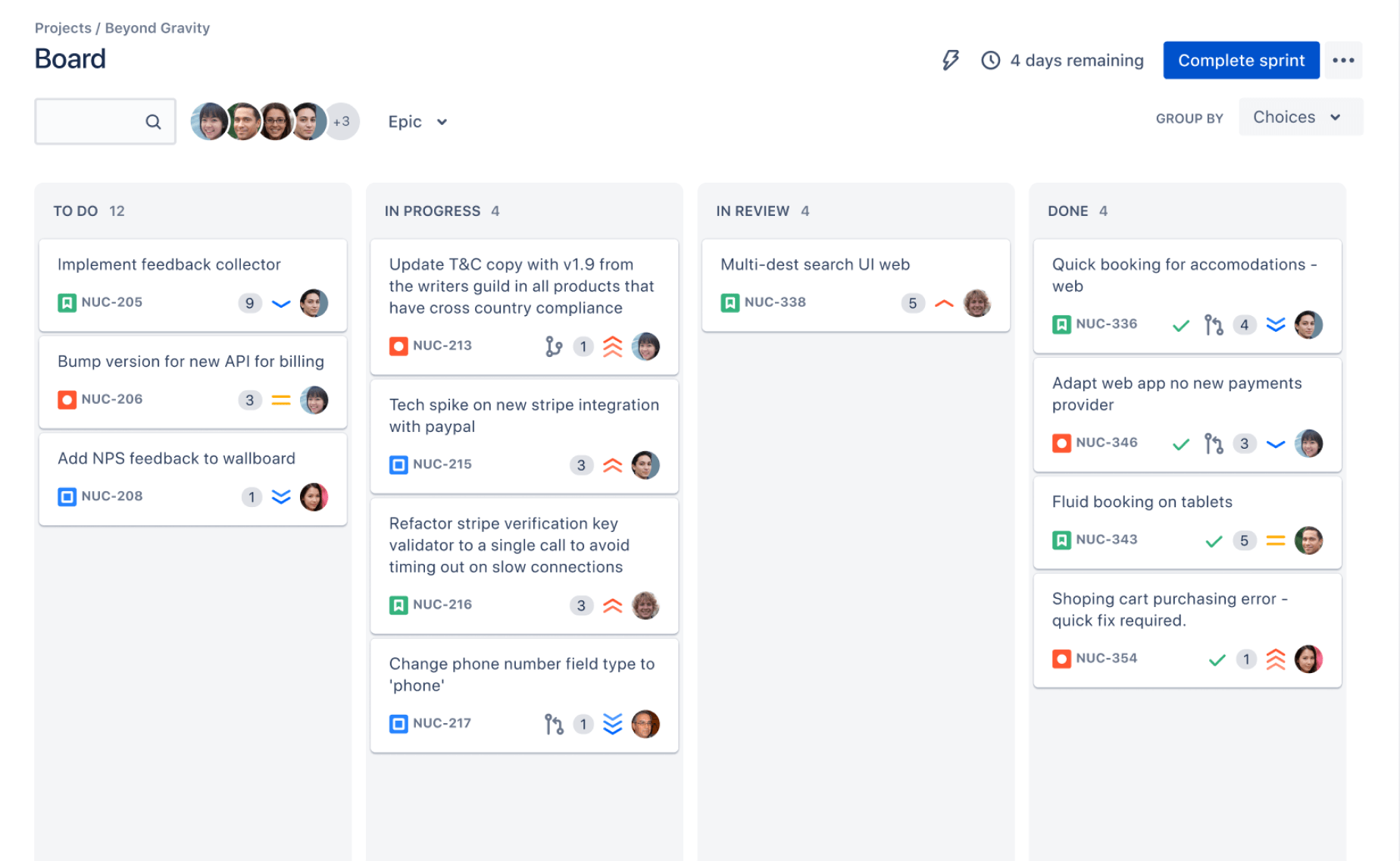
The basic calculation
Use this formula for a first-pass estimate:
Annual total = subscription cost + optional product cost + app cost + implementation cost + support cost + taxes
For a monthly plan, calculate the subscription like this:
Monthly subscription = monthly price per agent × paid agents
Then multiply the monthly amount by 12 for an annual view. If the pricing page uses tiered brackets, use the applicable bracket rather than multiplying a single rate across every seat.
A practical example
Imagine a service team with 12 agents. You are comparing two plans, two billing cycles, and one reporting app. Instead of presenting unverified prices as current, place the displayed rates into a scenario model:
| Cost item |
Example calculation |
| Core subscription |
Displayed plan rate × 12 agents |
| Annual subscription view |
Monthly equivalent × 12 months |
| Reporting app |
App rate for the same user bracket |
| Implementation |
One-time configuration and migration estimate |
| Contingency |
10% to 20% of expected recurring costs |
This method gives you a defensible estimate without pretending that one public price applies to every organization. Replace each placeholder with the rate shown during your 2026 purchasing review.
What the Pricing Calculator Should Include
A useful calculator separates costs that behave differently. Recurring licensing grows with seats, while implementation happens once. Marketplace apps may follow their own user tiers, and taxes depend on your purchasing location.
Here's why: combining everything into one number hides the reason your budget changes. If your monthly total rises, you need to know whether the cause was five new agents, a premium feature, or an added app.
Agent seats and customer access
Agent licensing is usually the main variable. An agent can triage, assign, comment, transition, and resolve requests. A customer typically submits or follows requests through a portal or communication channel.
For example, 2,000 employees may submit IT requests, while only 18 support specialists need agent permissions. Counting all employees as paid agents can inflate your estimate dramatically.
Plan differences
Lower plans may cover core request handling, queues, portals, service-level agreements, and basic reporting. Higher plans can add stronger automation, advanced administration, capacity, security, or operational controls.
Do not compare plans by feature count alone. Ask which capabilities affect your workflow. A small HR team may need approvals and knowledge content, while an enterprise IT department may prioritize asset visibility, audit controls, and service continuity.
Apps and connected services
A marketplace app can solve a real gap, but it changes the ownership cost. Common additions include phone integrations, advanced forms, employee onboarding, time tracking, asset discovery, and richer reports.
The best practice is to list every required capability before selecting a plan. Otherwise, you may choose a cheaper tier and later spend more on extensions than the higher tier would have cost.
Implementation and administration
Subscription pricing does not measure the effort needed to build queues, request types, workflows, permissions, automation, knowledge content, and integrations.
A team that spends 80 hours configuring and maintaining the environment has a real operating cost, even when no consultant is hired. Include that internal effort in your business case.
Monthly Versus Annual Jira Service Management Cost
Monthly billing is easier to adjust when your team is growing or testing a new service process. Annual billing can simplify purchasing and may offer a different effective rate, but it creates a longer commitment.
You might be wondering: which option is cheaper? The answer depends on your seat stability, renewal terms, and expected growth. Compare the total commitment, not just the displayed monthly equivalent.
| Situation |
Billing approach to evaluate |
Why it matters |
| New service desk launch |
Monthly first, then annual review |
You can validate adoption before committing longer. |
| Stable internal IT team |
Annual and monthly side by side |
A longer term may simplify budgeting. |
| Rapid hiring or restructuring |
Flexible monthly modeling |
Seat needs may change quickly. |
| Large organization |
Quote-based enterprise discussion |
Commercial terms may differ from public checkout rates. |
Run at least three scenarios: your current headcount, expected headcount at renewal, and a high-growth case. For example, calculate 12, 20, and 35 agents separately rather than applying a simple percentage increase.
The best part? This approach exposes your break-even point. If adding 10 agents also requires another app tier or administrative role, the real increase may be much larger than the license difference.
Hidden Costs That Can Change the 2026 Estimate
The subscription is only one part of the financial picture. A service management rollout may also involve migration, configuration, integrations, training, governance, and ongoing administration.
Here are the costs most often missed during early planning:
- Migration: cleaning request types, users, queues, knowledge content, and historical records before moving them.
- Integration: connecting identity management, monitoring, email, chat, asset tools, HR systems, or finance workflows.
- Training: teaching agents how to classify, prioritize, communicate, and close requests consistently.
- Administration: reviewing automation, permissions, service-level rules, reports, and workflow changes.
- Custom development: maintaining scripts, connectors, or special approval paths.
- Business continuity: planning for backup procedures, access issues, outages, and recovery exercises.
- Tax and procurement: accounting for regional taxes, reseller terms, currency conversion, and purchase approvals.
Consider a simple example. A team may pay a modest recurring subscription but spend several weeks rebuilding complex workflows and integrations. In the first year, implementation can outweigh the monthly license difference between two plans.
Separate first-year cost from ongoing cost. That distinction helps executives understand why year one may be expensive while later years stabilize.
How to Compare Jira Service Desk With Other Options
Price comparison becomes useful only when the tools solve the same operational problem. Compare the same agent count, service scope, automation needs, reporting requirements, hosting expectations, and integration list.
Let me explain: a lower subscription can become a higher total cost when your team needs several extensions or extensive custom work. A higher base price may be more economical if core capabilities are included.
| Comparison area |
Questions to ask |
| Licensing |
Are prices tied to agents, requesters, employees, or usage? |
| Workflow |
Can you configure approvals, escalations, queues, and service levels? |
| Reporting |
Do standard reports answer management questions without extra apps? |
| Hosting |
Do you need cloud, on-premise, private cloud, or restricted-network deployment? |
| Extensibility |
How many plugins or integrations are needed for normal operations? |
| Administration |
How much specialist time is required each month? |
| Growth |
What happens when the agent count doubles? |
For a fair comparison, calculate three figures: first-year total cost, recurring annual cost, and three-year ownership cost. The three-year view can reveal whether a low starting price remains attractive after extensions and administration are included.
Jira Service Desk Alternative: ONES.com
ONES.com is a unified platform for project management and knowledge management. ONES Project provides project and service-oriented work management as a Jira alternative, while ONES Wiki provides knowledge management as a Confluence alternative. They are sold separately.
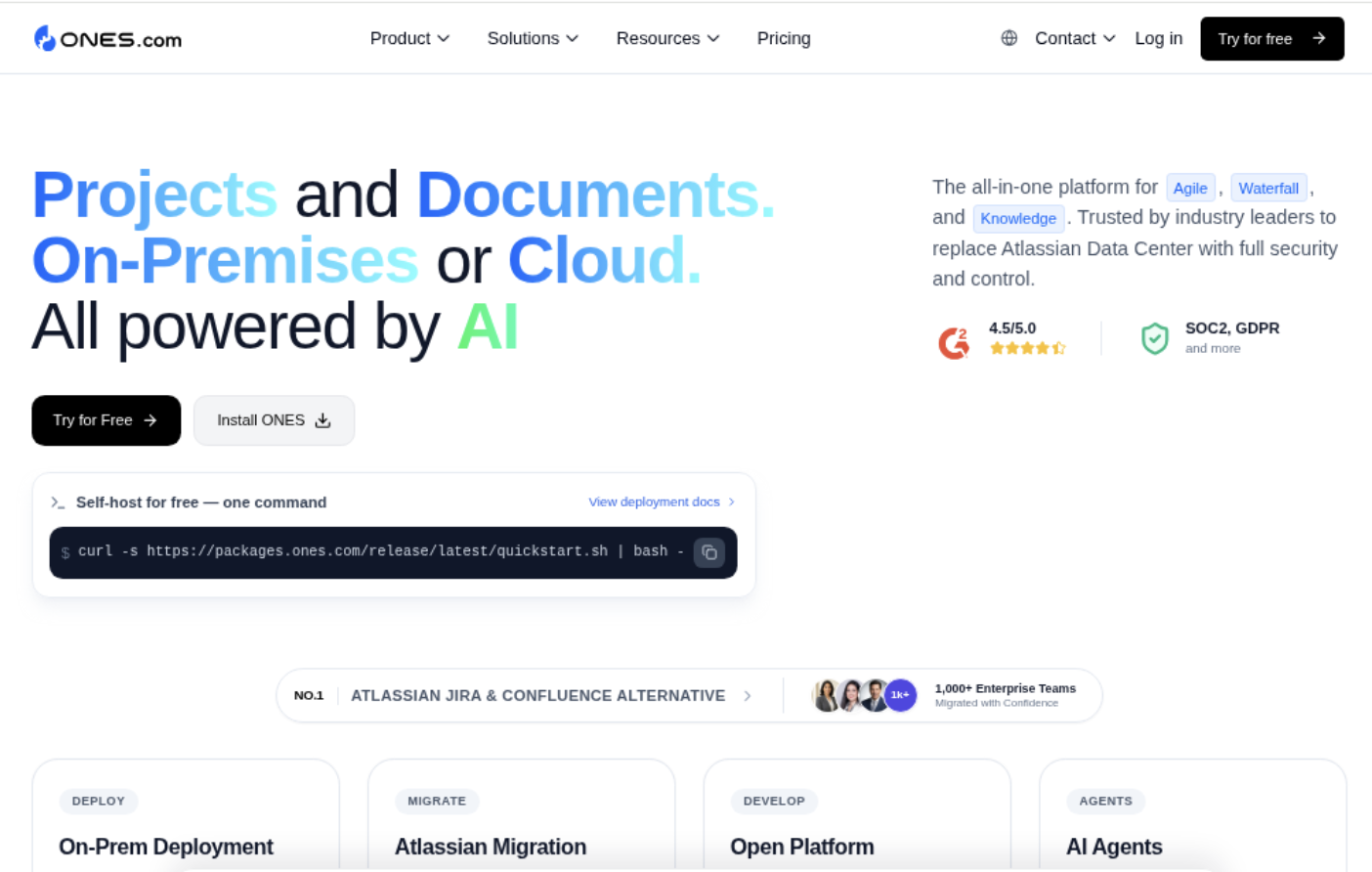
For teams comparing service workflows, the relevant question is whether the platform can support request handling, planning, reporting, and knowledge sharing without creating unnecessary system complexity. ONES.com offers cloud, on-premise, private cloud, and air-gapped deployment options, with full feature parity between cloud and self-hosted versions.
Value Proposition
ONES.com can suit teams that want Jira-compatible workflows, built-in reporting, configurable work management, and on-premise or restricted-network deployment choices. A free plan supports up to 30 seats, which can help smaller teams test practical fit before expanding.
Core Capabilities
- Fragmented project and service work → ONES Project: Manage project work and service-oriented activities in a connected environment, reducing context switching between separate tools.
- Complex workflows → Custom workflows: Configure statuses, transitions, approvals, and routing rules around the way your team handles requests.
- Inconsistent request details → Custom fields: Capture structured information such as urgency, affected service, department, and approval status.
- Manual sprint coordination → Sprint management: Plan iterations, assign work, and track progress using familiar agile practices.
- Limited visibility → Built-in reporting: Review work progress, workload, and operational trends without depending entirely on additional plugins.
- Repetitive administration → Automation: Trigger routine actions such as assignments, status changes, notifications, or follow-up tasks.
- Restricted hosting requirements → Deployment choice: Select cloud, on-premise, private cloud, or air-gapped deployment according to security and network needs.
- Plugin-heavy operations → Native capability parity: Use core project management capabilities with fewer extensions where the platform already covers the workflow.
- Knowledge scattered across teams → ONES Wiki: Pair project or service work with a knowledge base when the organization also needs structured team knowledge.
Application Scenarios
Internal IT team: A 15-person IT group can configure request workflows for access changes, equipment issues, and incident escalation. Custom fields can capture urgency and business impact, while automation routes requests to the appropriate queue.
Product and engineering organization: A team already managing sprints can connect service requests with development work. A production issue can move from intake to triage, sprint planning, resolution, and reporting without losing ownership.
Restricted-network environment: A government, manufacturing, or security-sensitive team may need air-gapped or on-premise deployment. ONES.com provides deployment choices that can fit environments where public cloud adoption is limited.
Common Challenges When Estimating Service Desk Pricing
Challenge: Counting every requester as an agent
Solution: Separate people who submit requests from people who triage, assign, resolve, or administer them. Verify the licensing rules for your selected plan before finalizing the seat count.
Challenge: Using a plan price without checking the billing tier
Solution: Record the exact agent bracket, billing period, currency, and region used in your estimate. Recheck the calculation whenever the team crosses a seat threshold.
Challenge: Ignoring marketplace applications
Solution: Create an application inventory before comparing plans. Mark each app as essential, useful, or replaceable through native functionality.
Challenge: Treating implementation as free
Solution: Estimate internal hours for configuration, testing, migration, training, and ongoing administration. Assign an internal hourly rate so the estimate reflects real effort.
Challenge: Comparing only the first-year subscription
Solution: Build a three-year view with expected seat growth, renewals, app changes, and maintenance. A small annual difference can become significant over several years.
FAQs
Is Jira Service Desk still the current product name?
Jira Service Desk is the older name commonly used for Jira Service Management. Many teams still search for the former term when researching pricing, setup, or alternatives. When calculating costs, use the current Jira Service Management plan, seat, and billing rules shown during your purchasing review.
Does the calculator need the number of customers?
It should track customers separately from agents. Customers may submit requests without needing the same permissions as agents. Still, customer volume can affect email, portal, automation, support, or integration requirements. Include it as an operational planning measure, even when it does not directly multiply the license price.
Should I calculate monthly or annual costs?
Calculate both. Monthly cost shows cash flow and flexibility, while annual cost supports procurement and budget planning. If annual billing uses a different rate, compare the full commitment rather than multiplying a displayed monthly estimate by 12.
What should I include besides the subscription?
Include connected Atlassian products, marketplace apps, migration, configuration, training, integrations, administration, taxes, and support. Separate one-time implementation from recurring ownership costs so your first-year estimate does not obscure future spending.
How can I compare a Jira alternative fairly?
Use the same agent count, workflows, reports, integrations, deployment requirements, and three-year period. Compare native capabilities as well as license prices. A platform that needs fewer extensions may have a lower total operating cost, even when its initial subscription appears similar.
Conclusion
A dependable Jira Service Desk pricing estimate starts with the right agent count and continues through billing terms, optional products, apps, taxes, implementation, and growth. The most useful calculator shows each cost category instead of hiding everything inside one total.
But here's the truth: the cheapest first-year subscription is not always the cheapest service management choice. Test current, expected, and high-growth scenarios, then compare three-year ownership costs with the workflow and deployment capabilities your team actually needs.
If your forecast reveals rising plugin costs, complex administration, or strict hosting requirements, evaluate alternatives such as ONES.com. The goal is simple: choose a service management approach that remains financially clear and operationally practical as your team grows.