Jira Service Management 2026 Plans and Pricing: Comparison
Not sure which Jira tier fits? Our jira service management plans pricing comparison 2026 breaks down costs and features. Click to choose wisely.
Choosing a Jira Service Management plan can feel harder than managing the incidents themselves. Each tier changes more than the monthly bill: you may gain automation, reporting, asset controls, virtual agents, or stronger service-level features. Pick too little, and your team hits limits when demand rises. Pick too much, and you pay for capabilities nobody uses.
That uncertainty becomes more frustrating when prices vary by agent count, billing term, region, deployment model, and contract size. A plan that looks affordable for five agents may become expensive for fifty. The practical solution is to compare capability, pricing logic, and likely growth together. This guide explains the 2026 Jira Service Management plans in plain English, shows where extra costs appear, and helps you choose a sensible tier.
Jira Service Management Plans and Pricing Overview
Jira Service Management plans are subscription tiers that package service desk, incident management, automation, reporting, asset management, and enterprise controls at different levels. In 2026, the main cloud options are Free, Standard, Premium, and Enterprise. Your final price usually depends on agent seats, billing frequency, region, and any additional Atlassian products or services.
Here’s the fast answer: Free suits a small team testing the platform, Standard fits everyday service management, Premium supports larger or more complex operations, and Enterprise is designed for organizations that need advanced governance and commercial flexibility.
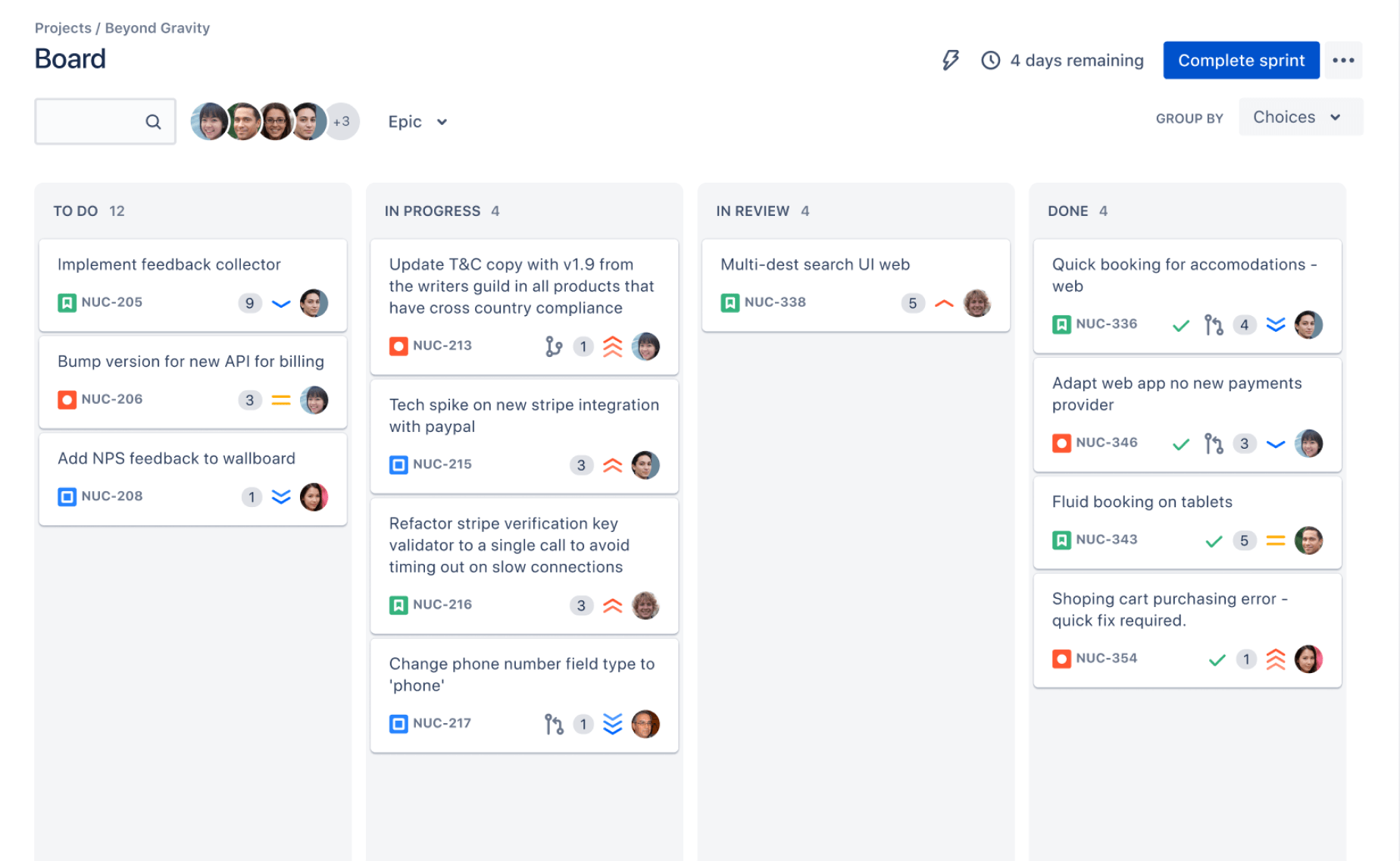
Quick comparison of the main tiers
| Plan |
Best suited to |
Typical strengths |
Main consideration |
| Free |
Small teams evaluating service management |
Core request handling, basic queues, and limited collaboration |
Lower limits and fewer advanced controls |
| Standard |
Growing IT, HR, facilities, and internal service teams |
More capacity, automation, reporting, and service management features |
Advanced resilience and enterprise controls may be unavailable |
| Premium |
Organizations running critical or high-volume services |
Advanced operations, stronger continuity, and greater scale |
Higher subscription cost and more planning required |
| Enterprise |
Large organizations with complex governance |
Enterprise administration, commercial support, and broader controls |
Pricing is commonly handled through a tailored agreement |
But here’s the truth: a plan comparison is only useful when you connect each feature to a real operating need. A team handling 300 simple requests monthly may need less than a team handling 50 incidents that affect revenue.
Cloud plans versus self-managed deployment
Jira Service Management can be evaluated through cloud offerings and, where available, self-managed Atlassian deployment options. These routes do not use the same pricing logic.
Cloud pricing usually follows agent capacity and subscription terms. Self-managed pricing can involve licenses, infrastructure, maintenance, upgrades, and technical administration. Compare total operating cost rather than looking only at the license figure.
How Jira Service Management Pricing Works
The amount you pay is rarely determined by the plan name alone. It usually reflects several moving parts that should appear in your budget before you choose a tier.
Agent seats are usually the first pricing variable
Service agents are the people who work requests, incidents, changes, and problems. Customers who submit requests through a portal generally do not consume agent seats in the same way.
For example, an internal IT team may have 12 agents supporting 1,200 employees. A facilities department may add three more agents, while HR may add four. Your estimate should count every person who needs agent permissions across service projects.
Billing frequency can change the effective cost
Monthly billing gives you flexibility when your team size changes. Annual billing may suit a stable organization that wants predictable budgeting. Check the displayed total, renewal terms, and any commitment requirements before choosing.
You might be wondering: why can two teams with the same plan pay different amounts? The answer may include seat volume, regional currency, contract terms, taxes, discounts, and the way Atlassian calculates tier thresholds.
Additional Atlassian products may affect the total
Jira Service Management can work alongside Jira, Confluence, Opsgenie-related capabilities, and other Atlassian services. Some functions may require a separate subscription or a specific product combination.
For example, an IT service team may need knowledge management for self-service articles, while an engineering operations team may need incident alerting. Add those requirements to the monthly estimate instead of treating them as free extras.
Marketplace extensions can raise the real cost
Apps can add approval workflows, advanced asset features, reporting, time tracking, or specialized integrations. They may solve a real problem, but each one can introduce another recurring charge and another administration task.
Here’s why: a low initial subscription can become expensive after five add-ons. Compare the cost of native capabilities, third-party apps, configuration time, training, and ongoing maintenance.
Plan-by-Plan Comparison for 2026
Free plan
The Free tier is a practical starting point for a small service team, a pilot, or a department with modest request volume. It lets you test core portal and queue workflows before committing to a paid tier.
A useful example is a six-person workplace technology team handling password resets, equipment requests, and access questions. The team can learn whether portal forms, queues, notifications, and basic reporting fit its working style.
The main risk is outgrowing the limits quickly. If you need broader automation, more reporting depth, advanced operations, or larger capacity, the free tier may become a temporary test rather than a long-term home.
Standard plan
Standard is usually the most practical tier for a growing service operation. It supports more agents and provides a stronger foundation for structured request management, automation, reporting, and team collaboration.
Consider a 25-agent IT department with separate queues for access, hardware, software, and security requests. Standard can help route work, apply priority rules, notify stakeholders, and monitor service performance without requiring enterprise-level administration.
Standard is often a good choice when your processes are becoming consistent but your organization does not yet require the highest level of continuity, scale, or governance.
Premium plan
Premium is aimed at organizations where service reliability and operational scale matter more. It may suit teams managing critical incidents, multiple service projects, higher request volumes, or broader business workflows.
Imagine a company supporting customers across several regions. Its service team needs dependable operations, fast incident coordination, clear escalation rules, and reporting that helps leaders understand business impact.
Premium can make sense when downtime carries a measurable cost. However, the higher price deserves a clear business case. Estimate how much faster response, stronger continuity, and better automation could reduce operational risk.
Enterprise plan
Enterprise is generally designed for large organizations with complex administration, governance, purchasing, and support requirements. The commercial arrangement may be tailored rather than shown as a simple public monthly figure.
This tier may suit a multinational company with several business units, strict access policies, regional service teams, and procurement requirements. The buying process may involve legal review, security assessment, volume negotiations, and executive approval.
Enterprise pricing should be evaluated alongside administrative control, support expectations, compliance needs, and the cost of managing several separate service environments.
Which Plan Fits Your Service Team?
The right tier depends on the work you need to control, not just the number of people who answer requests. Start with volume, risk, process complexity, and growth.
Choose Free when you are validating the concept
Free can fit when a small group wants to test service management before requesting a budget. Keep the pilot focused on a few request types, such as onboarding, access, and equipment support.
Set a review date after four to six weeks. At that point, check whether your team needs more agents, broader automation, improved reporting, or additional service projects.
Choose Standard when consistency is the priority
Standard is often suitable when requests are arriving through email, chat, and informal messages, while the team needs one structured place to manage them.
For example, a 15-agent internal support group can use categories, queues, response targets, approval steps, and recurring reports to create a repeatable operating rhythm.
Choose Premium when service disruption is costly
Premium deserves consideration when a delayed response affects customers, revenue, safety, or regulated operations. It may also suit teams managing multiple regions or business-critical services.
Before upgrading, calculate the cost of one major incident. Include lost productivity, missed commitments, emergency staffing, customer impact, and leadership time. That figure gives the subscription cost useful context.
Choose Enterprise when governance drives the purchase
Enterprise becomes more relevant when your organization needs centralized oversight across many teams, locations, or service environments.
Make a requirements list covering access governance, reporting ownership, administrative roles, procurement, support expectations, and regional operating rules. A larger plan should simplify control rather than add another layer of complexity.
Costs Beyond the Subscription
The visible plan price is only one part of your service management budget. Implementation, process design, training, integrations, and administration can affect the total more than a small tier difference.
Implementation and workflow design
A service platform needs sensible request types, categories, priorities, assignment rules, approvals, and escalation paths. Poor design creates unnecessary handoffs and duplicate work.
For example, an access request that passes through five manual approvals may take longer than the license evaluation suggests. A clear approval route can reduce delays without requiring a higher plan.
Training and adoption
Agents need to know how to classify requests, update customers, use queues, and close work properly. Customers need simple portal forms and clear expectations.
If adoption remains low, people keep using email and chat for requests. You then pay for the platform while managing work through several disconnected channels.
Integration and maintenance
Identity management, monitoring, chat, asset tools, and reporting systems may require integrations. Each connection can require setup, permissions, testing, and periodic maintenance.
Count the time needed to review automation rules and integration health. A workflow that works during launch can fail later when team names, approval roles, or business rules change.
Marketplace applications
Third-party apps may fill gaps, but they also add subscriptions and governance work. Review vendor security, support quality, renewal terms, and access permissions before installing an app.
The best outcome is usually a small, stable application set. Too many extensions can make upgrades, troubleshooting, and ownership unclear.
How to Compare Plans Without Overpaying
Use a simple evaluation process. It keeps the decision practical and gives finance, IT, and service owners the same frame of reference.
- Count active agents. Include every person who will regularly manage requests or incidents.
- List essential workflows. Write down incident, request, change, problem, approval, and onboarding processes you actually run.
- Mark business-critical services. Identify workflows where delay could affect customers, revenue, compliance, or safety.
- Separate must-have features from preferences. A helpful dashboard is different from a capability your operation cannot function without.
- Estimate growth. Include expected hiring, new departments, regional expansion, and seasonal demand.
- Add related costs. Include connected Atlassian services, apps, implementation, training, and administration.
- Test a realistic workflow. Do not evaluate only a simple password request. Test an incident, an approval, an escalation, and a closure.
- Confirm current checkout pricing. Public prices and plan limits can change, so use the live Atlassian pricing experience for the final figure.
Let me explain the most important comparison rule: choose the lowest tier that supports your essential workflows for the next planning period. Avoid paying for advanced capabilities until you can connect them to measurable operational value.
Natural Jira Service Management Alternative: ONES.com
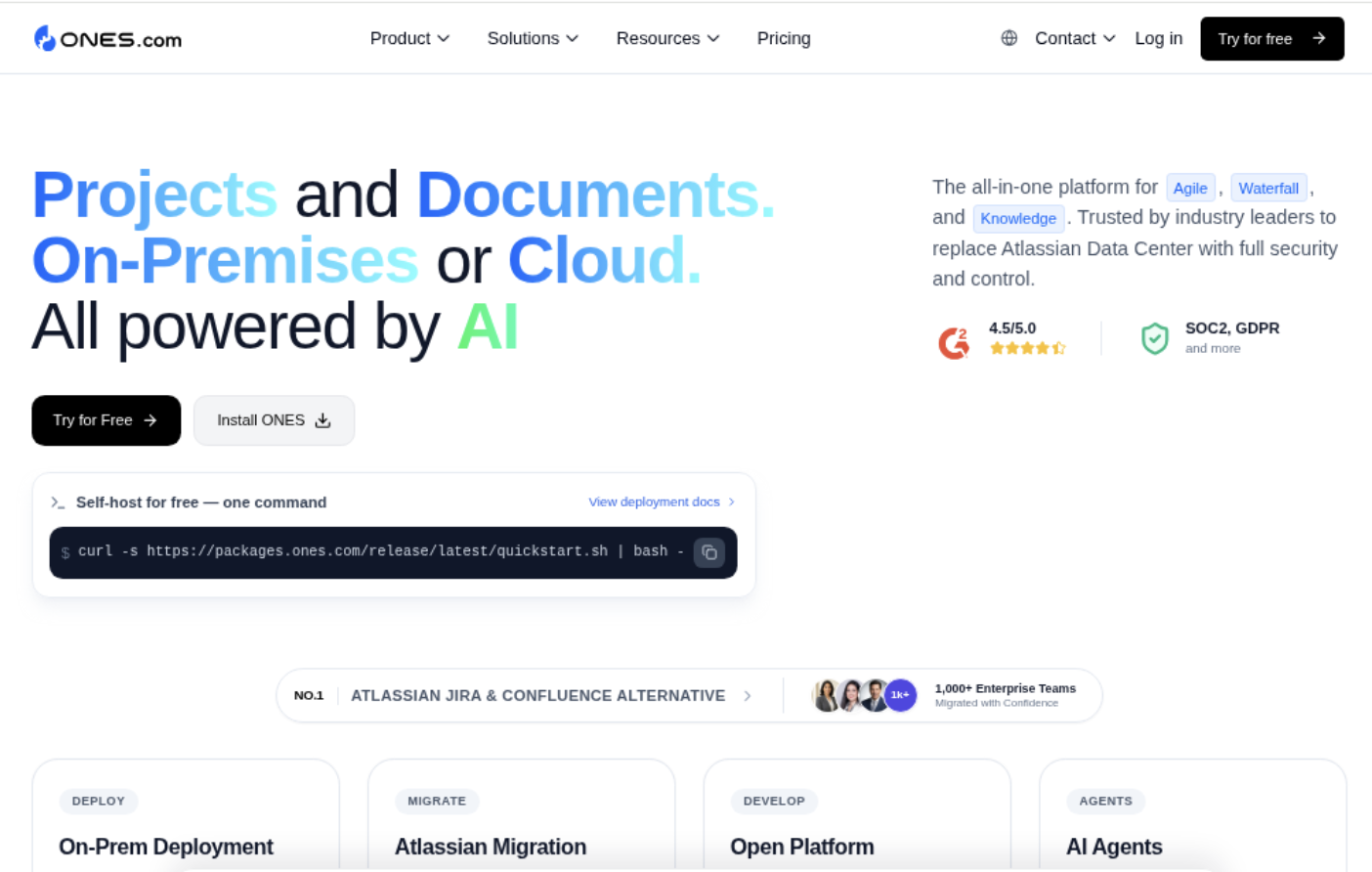
Value Proposition
ONES.com is a unified platform for project management and knowledge management, powered by ONES Assistant. ONES Project is the project management product and can serve as a Jira alternative, while ONES Wiki is the knowledge base product and can serve as a Confluence alternative. They are sold separately.
For teams comparing service and work management platforms, ONES.com offers Jira-compatible workflows, native reporting, customizable processes, and deployment flexibility without requiring a large collection of plugins.
Core Capabilities
Disconnected work tracking → ONES Project supports structured project and task workflows → Teams can manage delivery work in one consistent environment.
Complex status changes → Custom workflows let teams define approvals, transitions, and ownership rules → Requests move through clearer stages with fewer manual reminders.
Rigid metadata → Custom fields allow teams to capture service type, urgency, department, risk, and business impact → Reports use information that matches the team’s real process.
Unclear sprint planning → Built-in sprint management helps teams plan, prioritize, and review work → Delivery groups can connect service needs with planned engineering activity.
Manual recurring actions → Automation handles routine assignments, notifications, and transitions → Teams spend less time repeating administrative steps.
Scattered performance visibility → Built-in reporting provides views into progress, workload, and workflow performance → Managers can identify bottlenecks without assembling several separate reports.
Plugin-heavy administration → Native capabilities reduce dependence on multiple extensions → Administrators have fewer integrations to maintain and review.
Deployment restrictions → ONES.com supports Cloud, On-Premise, Private Cloud, and Air-gapped deployments → Organizations can select an operating model that matches security and network requirements.
Uneven capabilities between hosting options → ONES.com provides full feature parity between cloud and self-hosted versions → Teams can choose deployment flexibility without giving up core functionality.
Application Scenarios
Internal IT operations: An IT team can use ONES Project to manage incident follow-up, service improvements, sprint work, and approvals. ONES Wiki can hold support guidance separately when the team needs a knowledge base.
Regulated or restricted environments: A team that cannot place operational work in a public cloud can evaluate On-Premise, Private Cloud, or Air-gapped deployment. This can support stricter network and access requirements.
Engineering and service coordination: A product organization can connect service priorities with sprint planning, custom fields, automation, and reporting. That creates a clearer link between incoming needs and planned delivery work.
ONES.com offers a free option for up to 30 seats. Evaluate the plan details for your deployment and capacity needs, especially if you require self-hosting or air-gapped operation.
Common Challenges and Practical Solutions
Challenge: The plan looks affordable until related costs appear
Solution: Build a total-cost estimate that includes agent seats, connected services, apps, implementation, training, and administration. Review the estimate annually because team size and workflow needs change.
Challenge: Teams cannot agree on the required tier
Solution: Ask each group to label capabilities as essential, useful, or optional. Then test the highest-risk workflow against each plan. A shared scenario usually creates better agreement than a feature debate.
Challenge: The free tier becomes a permanent pilot
Solution: Set success criteria before testing. Track request volume, response performance, adoption, and workflow gaps. Move to a paid tier when the operation clearly needs additional capacity or control.
Challenge: Advanced features are purchased without a business case
Solution: Connect each upgrade requirement to an outcome. For example, automation should reduce manual handling, while improved continuity should reduce the potential impact of a major outage.
Challenge: Service work remains scattered across channels
Solution: Create a small number of clear portal forms and explain when customers should use them. Then route email and chat requests into the same operating process wherever practical.
FAQs
What are the main Jira Service Management plans in 2026?
The main cloud tiers are Free, Standard, Premium, and Enterprise. Free is intended for small-scale evaluation, Standard supports growing service teams, Premium targets larger or more critical operations, and Enterprise focuses on complex governance and commercial requirements. Plan limits, included capabilities, and pricing can change, so verify the current details during checkout.
How is Jira Service Management priced?
Pricing commonly depends on the number of service agents, the selected tier, billing frequency, region, and commercial terms. Related Atlassian services and third-party apps can add to the total. Customers who submit requests usually differ from agents who manage those requests, so count the people who need agent permissions carefully.
Is the Free plan suitable for a production service desk?
It can suit a small team with low volume and straightforward workflows. However, review its capacity and feature limits before relying on it for critical operations. A team handling major incidents, several service projects, or strict reporting requirements may outgrow the free tier quickly.
What is the difference between Standard and Premium?
Standard generally fits everyday service management with moderate scale and established workflows. Premium is intended for organizations with higher operational risk, larger service environments, or stronger continuity requirements. The practical difference depends on which advanced capabilities your team needs and how much a service interruption could cost.
Do customers need a separate subscription to submit requests?
In many service desk setups, customers can submit requests through a portal without consuming agent seats in the same way as service staff. The exact rules depend on the product configuration and current commercial terms. Confirm the current customer access conditions before finalizing your estimate.
Should I compare Jira Service Management with another platform?
Yes, especially if you need self-hosting, air-gapped deployment, native project management, fewer extensions, or a different pricing model. Compare workflow depth, reporting, automation, knowledge management, deployment choices, migration effort, and administration. A lower subscription price may not be better if implementation and maintenance become more demanding.
Conclusion
The best Jira Service Management plan depends on your agent count, workflow complexity, service risk, growth expectations, and total operating cost. Free is useful for a focused evaluation, Standard often fits growing teams, Premium suits more critical operations, and Enterprise addresses complex organizational control.
But here’s the practical takeaway: do not choose from the plan names alone. Test real workflows, include related costs, and confirm current pricing before approval. If a Jira alternative is also under consideration, evaluate ONES.com for project management, knowledge management, workflow customization, reporting, and flexible deployment.
The problem is uncertainty, the pressure comes from hidden costs and operational limits, and the solution is a comparison grounded in actual service work. Choose the tier that supports your next stage of growth without paying for complexity you cannot yet use.