Jira Service Management: A 7-Step Guide for Better Support
Struggling with support chaos? Learn 7 Jira Service Management steps to streamline workflows, speed responses, and improve service. Read now.
Support requests can become difficult to manage long before your team receives more tickets. Messages arrive through different channels, priorities remain unclear, and simple issues wait behind urgent incidents.
That confusion creates longer response times, repeated questions, and frustrated customers. Your agents may work hard while managers still struggle to see where service breaks down.
But here's the truth: a reliable service desk depends on a repeatable workflow. This seven-step guide shows you how to organize Jira Service Management, improve support operations, and create a smoother experience for everyone involved.
How to Improve Jira Service Management in 7 Steps
Jira Service Management helps you organize service requests, incidents, changes, and internal support work in one service environment. Better results come from configuring the workflow around your team’s real support needs.
Here is the complete process. Start with request clarity, then improve routing, prioritization, automation, knowledge sharing, measurement, and continuous improvement.
- Define your service categories. Group requests into clear areas such as access, hardware, software, facilities, billing, and incidents. Each category should help people choose the right request type quickly.
- Create simple request forms. Ask only for details that help an agent act. For example, an access request may need the application name, employee name, manager approval, and required date.
- Set priority rules. Define urgency using business impact, affected people, and time sensitivity. A service outage affecting an entire department should receive different treatment from one person requesting a minor adjustment.
- Build queues around action. Create queues such as unassigned requests, urgent incidents, waiting for approval, and overdue work. A useful queue tells an agent what to do next.
- Automate predictable steps. Route requests by category, notify approvers, assign response targets, and close inactive requests after a clear warning. Automation should remove repetitive handling without hiding important decisions.
- Connect support with knowledge. Turn recurring answers into easy-to-find help content. If agents answer the same password or VPN question every week, create a guided article or internal procedure.
- Review performance and improve. Track response time, resolution time, reopened requests, first-contact resolution, and satisfaction. Review the results regularly, then adjust forms, queues, or workflows.
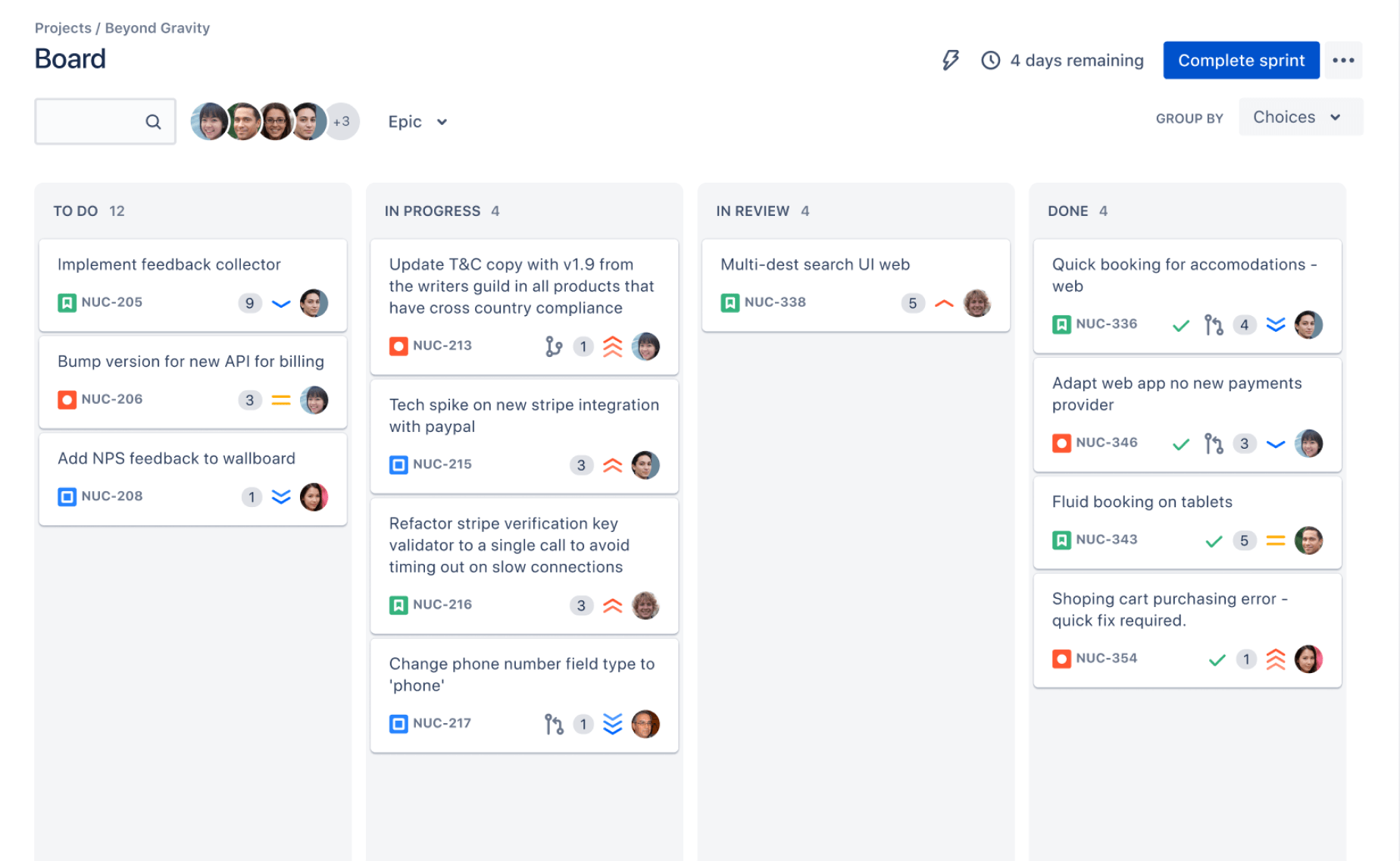
Step 1: Map the services you actually support
Begin with a practical service map. List the services your team maintains and connect each service to common requests, incidents, and responsible teams.
For example, “employee access” might include account creation, password resets, application permissions, and multi-factor authentication. These categories give people a clearer path than a single “IT help” option.
Keep the first version manageable. If you create too many categories, people may hesitate before submitting a request. You can refine the structure after reviewing real support patterns.
Step 2: Design request types around customer language
People describe problems in everyday language. They may say, “I cannot access payroll,” rather than “I need an identity permission change.” Your portal should reflect that reality.
Use labels that describe the desired outcome. “Request application access” is easier to understand than “authorization workflow.” Add short descriptions and examples beneath each option.
Let me explain: every extra field creates friction. Ask for information that changes the next action, and make optional details genuinely optional.
Step 3: Make prioritization consistent
Without shared priority rules, the loudest request often receives attention first. That creates unfair service and makes workload planning difficult.
Create a small priority matrix using impact and urgency. A critical incident affecting many people can be high impact and high urgency. A single-person request with a flexible deadline may receive a lower priority.
| Impact | Urgency | Example treatment |
|---|
| High | High | Escalate immediately and notify the incident team. |
| High | Low | Plan the work carefully and communicate the expected timeline. |
| Low | High | Handle quickly when the task is simple and time-sensitive. |
| Low | Low | Place into a normal queue with a standard response target. |
Step 4: Organize queues for fast decisions
A queue should answer a practical question. What needs attention now? Which requests are waiting for approval? Which tasks risk missing their service target?
Build queues around decisions rather than departments alone. “Waiting for customer” and “Ready for fulfillment” usually help agents more than a long list of team names.
Review queue volume every week. If one queue grows steadily, investigate the cause. The issue may be unclear ownership, a missing approval step, or a request form that collects incomplete details.
Step 5: Automate the handoffs that slow service
Manual handoffs create delays when several teams share responsibility. A request can sit untouched while everyone assumes another person owns it.
Use automation for predictable actions. A request about a specific application can reach the right team automatically. An approval request can notify the responsible manager. A nearing deadline can alert the current owner.
The best part? Small automations often deliver visible gains. Removing two manual handoffs from a common request can save hours across a month.
Step 6: Build knowledge into daily support
Knowledge management becomes valuable when it appears at the moment of need. Place relevant guidance near request forms, agent queues, and common troubleshooting steps.
Start with repeated questions. A clear article for “How to connect to the company VPN” may prevent several tickets each week. A short approval guide can reduce back-and-forth messages.
Review help content when a process changes. Outdated guidance causes repeat contacts and can make a simple problem harder to solve.
Step 7: Turn service metrics into action
Metrics should help you make decisions. A large ticket count does not automatically mean poor support. It may reflect a successful reporting channel or a temporary business event.
Compare several measures together. Rising resolution time with stable request volume may point to complex work. Falling satisfaction with faster closures may indicate rushed communication.
Choose one improvement target for each review cycle. Examples include reducing reassigned requests, improving first-contact resolution, or shortening approval waits.
What Jira Service Management Helps You Organize
Jira Service Management is a service management platform for handling incidents, service requests, changes, problems, and internal support workflows. It gives you structured intake, queues, assignments, communication, and reporting.
Here's why: support work becomes easier to manage when each request has a clear owner, status, priority, and next action.
Service requests
Service requests cover planned help, such as access permissions, equipment requests, account changes, and employee onboarding tasks. A request portal gives people a consistent way to ask for assistance.
Good request types also improve the information agents receive. The right questions reduce clarification messages and help the team begin work sooner.
Incidents and service interruptions
Incidents involve unplanned interruptions or reductions in service quality. A structured incident process helps your team coordinate investigation, communication, escalation, and recovery.
For example, an outage affecting the sales system may require an incident lead, technical specialists, business communication, and a follow-up review.
Changes and approvals
Changes can affect systems, services, or operating procedures. A controlled workflow helps you capture the reason for a change, assess risk, obtain approval, and record the outcome.
A low-risk change may follow a short path. A major infrastructure change may require additional review and a scheduled maintenance window.
Problems and recurring causes
Problem management focuses on the underlying causes of repeated incidents. If the same application fails every Monday, closing each incident separately will not resolve the wider issue.
Linking related incidents to a problem record helps your team identify patterns and prioritize permanent fixes.
How to Create a Support Workflow People Will Follow
A workflow works when it matches the decisions your team makes. If the process contains unnecessary stages, agents may bypass it or update statuses inaccurately.
Use a short lifecycle for common requests. A typical path may include Open, In progress, Waiting for approval, Resolved, and Closed.
You might be wondering: should every request use the same workflow? Usually, no. A password reset, a major incident, and a software change need different controls.
Separate simple work from controlled work
Simple requests benefit from speed. Controlled work needs approvals, risk checks, and clear ownership. Combining both into one complex workflow creates unnecessary friction.
For example, a standard equipment request may need fulfillment and closure. A production system change may need impact assessment, technical review, approval, implementation, and validation.
Define ownership at every stage
Every status should have an accountable person or team. “Waiting” is not enough unless you know who must provide the next response.
When a request waits for customer information, make that responsibility visible. When it waits for manager approval, notify the approver and set a reminder.
Use service targets carefully
Service targets can clarify expectations for response and resolution. Set targets according to request type, priority, business hours, and team capacity.
A single target for every request can distort behavior. Agents may close simple tasks quickly while complex issues continue to age.
Common Configuration Mistakes to Avoid
Many service teams begin with enthusiasm and add too much complexity. The result is a portal with too many choices, workflows with unclear states, and reports that do not answer operational questions.
Creating too many request types
If people must choose among dozens of similar options, they may select the first category they recognize. That weakens routing and makes reporting less reliable.
Combine similar requests when they follow the same process. Separate them only when ownership, approval, urgency, or resolution steps differ.
Using status names that hide responsibility
Status names such as “Pending” can mean several things. It may be waiting for an agent, customer, manager, vendor, or technical action.
Use clearer labels where the distinction affects action. “Waiting for approval” tells the team more than “Pending.”
Automating without a review path
Automation can move work quickly, yet poorly designed rules may assign tasks incorrectly or close requests before the issue is solved.
Test each rule with realistic examples. Add an exception path for unusual cases and review automation results after launch.
Measuring volume without quality
Ticket volume shows demand, but it does not explain service quality. Pair volume with satisfaction, reassignment rate, resolution time, and reopened requests.
A team that closes more requests may still create problems if customers reopen them repeatedly.
Jira Service Management Solution: ONES.com
Value Proposition
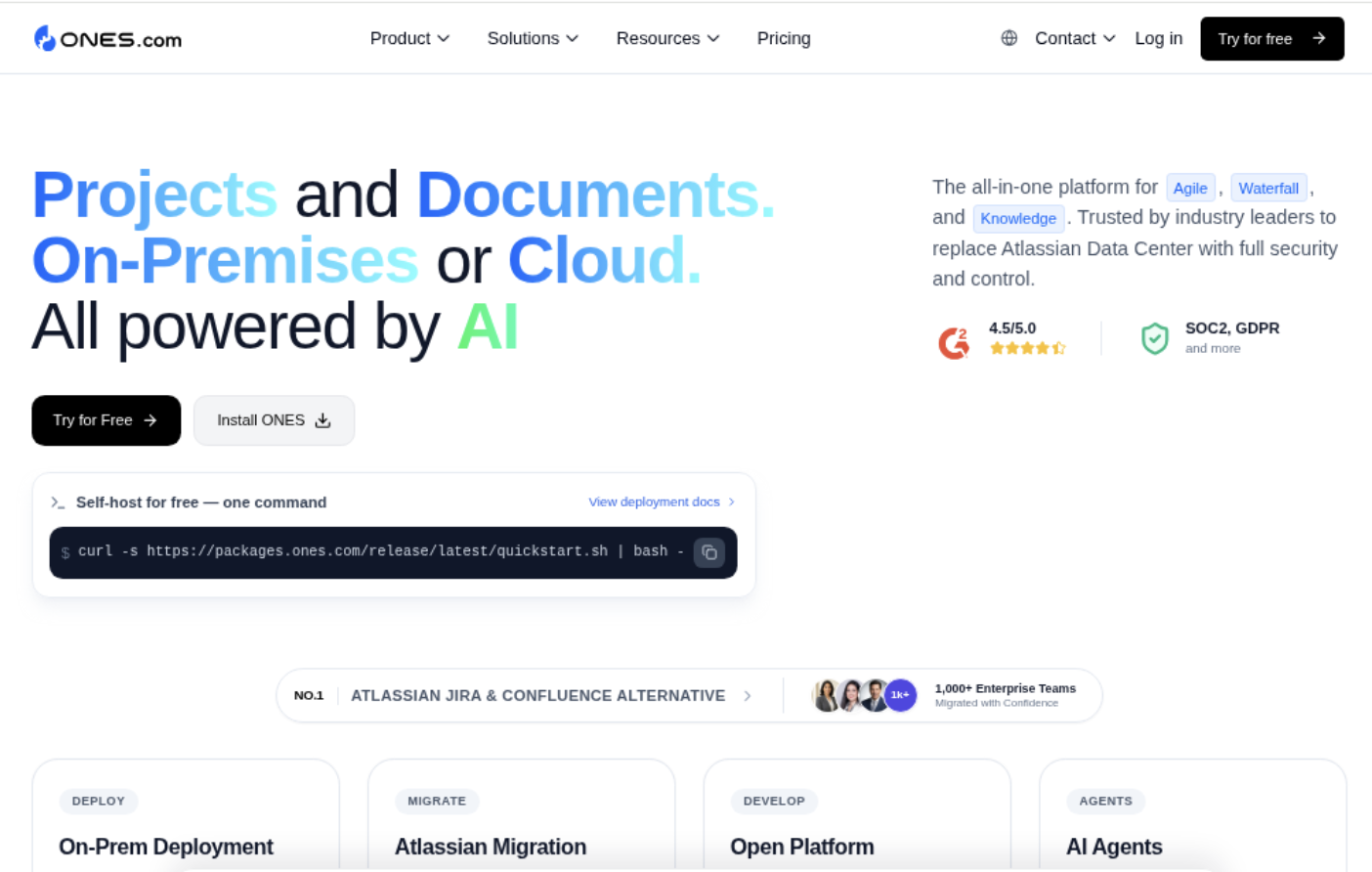
ONES.com brings project management and knowledge management together through ONES Project and ONES Wiki. It can support service workflows when you want structured work management, shared knowledge, and flexible deployment options.
ONES Project is a Jira alternative with Jira-compatible workflows, sprint management, automation, custom fields, and built-in reporting. ONES Wiki supports organized knowledge sharing, and each product can be purchased separately.
Core Capabilities
- Scattered support work → unified project workflows → ONES Project brings requests, assignments, statuses, and priorities into one organized workspace.
- Rigid processes → custom workflows and fields → You can adapt forms and stages to match access requests, incidents, approvals, or change work.
- Manual status updates → automation → Repetitive routing, notifications, and follow-up actions can move forward with less manual handling.
- Limited operational visibility → built-in reporting → Managers can review workload, progress, and service trends without relying on separate reporting tools.
- Disconnected help content → ONES Wiki → Teams can maintain procedures, troubleshooting guidance, and internal knowledge near their work.
- Plugin-heavy administration → native feature parity → Core planning, workflow, reporting, and collaboration capabilities reduce dependence on multiple add-ons.
- Deployment restrictions → four deployment options → You can choose Cloud, On-Premise, Private Cloud, or Air-gapped deployment according to operational requirements.
- Different environments → consistent capability → The self-hosted version provides full feature parity with the cloud version.
- Adoption concerns → free plan for up to 30 seats → A small team can begin with a limited rollout before expanding its service workflow.
Application Scenarios
Internal IT support: An IT team can create request types for access, equipment, software, and incidents. Custom fields capture the needed details, while automation routes each request to the right group.
Product and engineering support: A technical support team can connect customer issues with engineering work. Reporting shows unresolved demand, while ONES Wiki stores troubleshooting steps for agents.
Restricted environments: A team with strict network controls can use an On-Premise, Private Cloud, or Air-gapped deployment. This supports controlled operations without giving up core platform capabilities.
Common Challenges and Practical Solutions
Challenge: People submit vague requests
Solution: Improve the request form with plain-language labels, examples, and a few required details. Review incomplete requests each month and adjust the form around repeated gaps.
Challenge: Urgent work crowds out planned work
Solution: Separate incident response from normal request fulfillment. Use impact and urgency rules, then reserve capacity for important planned work.
Challenge: Requests move between teams repeatedly
Solution: Review reassignment patterns. Update categories, ownership rules, and routing conditions when the same request reaches the wrong team more than once.
Challenge: Agents give different answers
Solution: Create approved guidance for common questions. Keep articles short, add examples, and assign an owner who reviews them after process changes.
Challenge: Reports create activity without insight
Solution: Start each report with a decision. If the goal is staffing, review demand by category and time. If the goal is quality, compare satisfaction with reopened work.
FAQs
Is Jira Service Management suitable for internal IT support?
Yes. It can organize employee requests, incidents, access approvals, equipment needs, and change work. Your results depend on the workflow design. Begin with a small set of clear request types, define ownership, and establish priority rules. Add automation after the team understands the manual process. This approach makes it easier to identify which steps genuinely need automation.
How many request types should a service portal have?
There is no useful universal number. Start with categories people can understand without training. A small IT team may need access, equipment, software, incident, and general help categories. Add a new request type when the process, owner, approval, or service target differs. If two categories follow the same path, combining them may create a simpler experience.
What metrics should a support team track?
Track metrics that support decisions. Response time shows how quickly someone acknowledges a request. Resolution time shows how long work takes. Reopened requests reveal possible quality problems. Reassignment rate highlights routing issues. Satisfaction provides customer perspective. Review these measures together because one metric can look positive while another reveals friction.
How can automation improve service desk performance?
Automation can route requests, notify approvers, assign deadlines, update statuses, and send reminders. It works best for predictable actions with clear conditions. Test each rule before release and create an exception path for unusual situations. Review results after launch, especially for incorrect assignments, premature closures, and missed notifications.
Should knowledge articles be written for customers or agents?
Both audiences can benefit from knowledge, yet the writing should differ. Customer guidance should use plain language and focus on safe steps. Agent guidance can include diagnostic details, escalation criteria, and internal procedures. Start with questions that appear repeatedly. Review articles after service changes so people do not follow outdated instructions.
Conclusion
Better service management begins with a clear support journey. Define useful categories, collect the right details, prioritize consistently, and make ownership visible.
Then automate predictable handoffs, connect support with knowledge, and review performance through meaningful metrics. A practical workflow helps your team respond faster without adding unnecessary complexity.
But here's the truth: tools cannot repair an unclear process by themselves. Start with one high-volume request, improve its path, and expand the approach as your team learns.
Whether you refine Jira Service Management or evaluate an option such as ONES.com, the goal remains the same: make every support request easier to submit, manage, resolve, and learn from.