Jira Service Management Enterprise Pricing: A 2026 Guide
Wondering about jira service management enterprise pricing? Learn the full 2026 cost, from tiers to add-ons and support. Read now to plan smarter.
Jira Service Management enterprise pricing can be difficult to plan because the final bill rarely comes from one simple per-agent number. Your cost may depend on agent count, service tier, deployment model, add-ons, support needs, and contract terms.
That uncertainty creates a real budgeting problem. A team may estimate license fees correctly, then discover that premium features, implementation help, or extra capacity changes the total significantly.
But here's the truth: enterprise pricing becomes easier to evaluate when you separate the subscription price from the full cost of ownership. This guide explains what usually affects the quote, how to compare plans, which questions to ask, and how an alternative may fit your environment.
Jira Service Management Enterprise Pricing at a Glance
Jira Service Management enterprise pricing is usually quote-based and depends on your organization’s scale, service tier, deployment requirements, support expectations, and selected capabilities. Public pricing can help with early planning, but large organizations typically need a tailored commercial proposal.
Enterprise agreements commonly involve more than agent licenses. You may also need to consider request participants, asset management, virtual agents, advanced reporting, integrations, premium support, implementation services, and contract commitments.
| Pricing factor |
Why it matters |
| Agent count |
The number of people handling tickets and service requests can be the largest recurring cost driver. |
| Service tier |
Higher tiers may include stronger uptime commitments, advanced administration, and enterprise support. |
| Deployment model |
Cloud, self-managed, or specialized hosting can create different licensing and operating costs. |
| Feature requirements |
Assets, automation, reporting, knowledge management, and incident capabilities may affect the total. |
| Support and services |
Premium support, migration help, training, and consulting can add one-time or recurring charges. |
| Contract structure |
Annual commitments, renewal terms, growth protections, and volume arrangements may change the effective rate. |
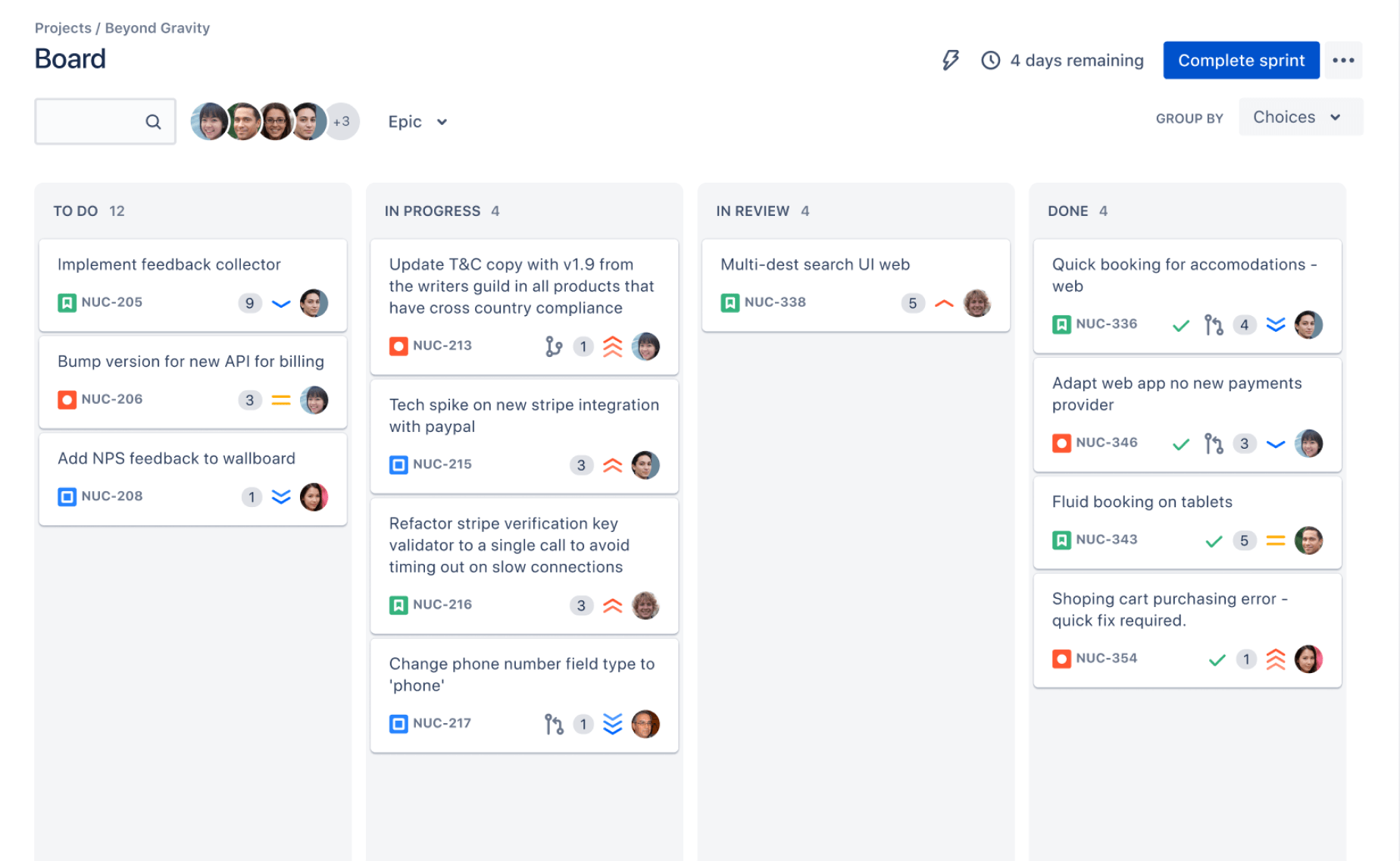
Why there is no single enterprise price
A small internal IT team and a global organization may both use Jira Service Management. Their operating requirements can still be completely different.
For example, one company may need 25 agents, standard ticket queues, and email support. Another may require 1,000 agents, regional service desks, strict uptime commitments, custom integrations, and a controlled rollout across several business units.
Those environments should not receive the same commercial package. Enterprise pricing reflects that difference.
What the quote may include
A commercial proposal may cover the main subscription, eligible features, support, usage limits, and contract duration. Some proposals also outline optional services separately.
Ask for a line-by-line breakdown. You should be able to distinguish recurring subscription fees from migration, training, consulting, and implementation costs.
How to Estimate Your Total Cost
The quickest practical approach is to build a simple cost model before speaking with sales. You need a realistic picture of who will work in the platform, which capabilities matter, and how the environment may grow.
- Count active agents. Include service desk staff, IT operations teams, HR teams, facilities teams, and other groups that will resolve requests.
- Separate occasional participants. Employees who submit or follow requests may not require the same access as agents. Confirm how the plan treats these roles.
- List required capabilities. Identify asset tracking, incident management, change management, knowledge features, automation, reporting, and integrations.
- Choose the operating model. Decide whether cloud, self-managed, or another enterprise arrangement fits your security and governance needs.
- Estimate growth. Model today’s seats and expected hiring, acquisitions, service expansion, and regional adoption.
- Add non-license costs. Include implementation, administration, training, consulting, migration, integration work, and internal ownership.
- Compare renewal scenarios. Ask how pricing changes when your agent count rises, your contract renews, or your organization adds service teams.
A simple planning example
Imagine a company with 120 service agents today. It expects to add 30 agents during the next year and introduce HR and facilities service desks.
The initial estimate should use more than 120 seats. Create a current scenario, a 12-month scenario, and a three-year scenario. Then ask how each scenario affects the commercial offer.
This approach helps you avoid choosing a plan that looks affordable now but becomes difficult to manage after expansion.
Separate recurring and one-time expenses
Your subscription may be recurring, while migration and training may happen only once. Administration, integration maintenance, and internal support can continue for years.
Use this structure when planning:
| Cost category |
Examples |
| Recurring platform costs |
Subscriptions, premium support, capacity, and selected add-ons. |
| One-time project costs |
Migration, configuration, integrations, training, and rollout assistance. |
| Internal operating costs |
Administration, governance, reporting, workflow maintenance, and user support. |
| Risk allowance |
Unexpected consulting, customization, additional capacity, or expansion costs. |
What Changes the Enterprise Quote?
Enterprise pricing is shaped by several connected decisions. The key is to understand the cause-and-effect relationship behind each one.
Agent volume and service desk scope
More agents usually increase the subscription cost. However, the commercial structure may also change when your organization reaches higher volumes.
Consider every team that may resolve requests. A platform initially purchased for IT can later support employee services, legal operations, procurement, security, and facilities.
Feature and usage requirements
Advanced capabilities may affect the total price or require a different plan. Examples can include asset management, service mapping, automation volume, advanced analytics, and specialized support.
Build a capability checklist before requesting a quote. Otherwise, you may compare a basic estimate with a complete operating model.
Cloud and self-managed considerations
Cloud services can reduce infrastructure responsibilities, while self-managed environments may provide more control over hosting and internal governance.
Self-managed operation can also require staff time for upgrades, availability, security controls, monitoring, backups, and troubleshooting. The lower subscription figure is not automatically the lower total cost.
Support, availability, and governance
Large organizations may require stronger service commitments, escalation paths, account management, or implementation assistance.
These requirements matter when service management supports critical business operations. A low subscription price may offer poor value if a prolonged outage creates expensive operational delays.
Contract length and renewal terms
Longer commitments may create commercial advantages, but they can also reduce flexibility. Ask about renewal increases, seat reductions, expansion pricing, and early changes to the agreement.
Get answers in writing inside the commercial proposal. A verbal expectation is difficult to use during renewal planning.
How to Compare Plans and Quotes
Price comparison works best when every vendor answers the same questions. Otherwise, a cheaper quote may simply include fewer capabilities.
Use a normalized comparison
Compare each option across the same period, such as three years. Include subscription fees, implementation, training, administration, integrations, and likely expansion.
For example, a platform costing more per year may require fewer external integrations and less custom maintenance. Its three-year cost could be lower than a cheaper platform with many add-ons.
| Comparison area |
Question to ask |
| Included capabilities |
Which required functions are included in the quoted tier? |
| Usage limits |
Are automation runs, storage, assets, reporting, or integrations limited? |
| Growth pricing |
What happens when agent numbers or service teams increase? |
| Support |
What response times, escalation options, and service commitments apply? |
| Implementation |
Which migration, configuration, and training services are included? |
| Renewal |
How can the price change at renewal? |
Calculate the effective cost per agent
Effective cost per agent is useful, but it should not be your only metric. Divide the complete annual operating cost by the number of active agents.
Suppose one option costs $180,000 annually and supports 300 agents. Its effective annual cost is $600 per agent. Add administration and integration costs before comparing it with another platform.
Check what happens after implementation
A successful launch does not end the cost discussion. Workflows need maintenance, permissions need review, and reporting requirements often expand.
Ask who will own configuration internally. If no one has that responsibility, your organization may depend on consultants for routine changes.
Questions to Ask Before Signing
A pricing conversation should clarify commercial risk, operational fit, and future flexibility. Here's why: the first quote rarely answers every question your finance, security, and service teams will ask.
- What exactly is included in the enterprise package?
- Which capabilities require separate purchases or higher tiers?
- How are occasional requesters and external participants treated?
- Are there limits on automation, assets, reporting, integrations, or storage?
- How does pricing change when agent numbers increase?
- Can unused capacity be reduced at renewal?
- What support response times are included?
- Are migration and implementation services included?
- What security and compliance controls are available?
- How are renewal increases calculated?
- What happens if you need additional service desks later?
- Which features are available in your selected deployment model?
Bring the right people into the review
Finance should review total commitment and renewal exposure. IT should examine integrations and administration. Security should assess access controls, hosting, and regulatory requirements.
Service owners should test whether the workflows match real operations. A quote can look attractive while creating extra work for every team that uses the platform.
Common Enterprise Pricing Mistakes
Using public pricing as the final forecast
Public prices can support early research, but enterprise terms may differ. Treat them as a starting point rather than a guaranteed final amount.
Request a tailored proposal once you know your agent count, service scope, deployment needs, and support expectations.
Ignoring expansion beyond IT
Service management platforms often spread into HR, security, facilities, and finance. If you plan only for the initial IT team, your forecast may become outdated quickly.
Create a three-year adoption map. Even a rough estimate is better than assuming the first seat count will remain unchanged.
Comparing license price alone
License cost is visible, while administration and integration effort are less obvious. That makes license-only comparisons misleading.
Estimate the people, consulting, training, and maintenance required to keep the service running. These costs influence the business case.
Overlooking contract flexibility
A large discount may come with a longer commitment or limited adjustment rights. Review the commercial terms before treating the discount as a saving.
Ask how your organization can respond to acquisitions, restructuring, hiring changes, and service expansion.
Jira Service Management Enterprise Alternative: ONES.com
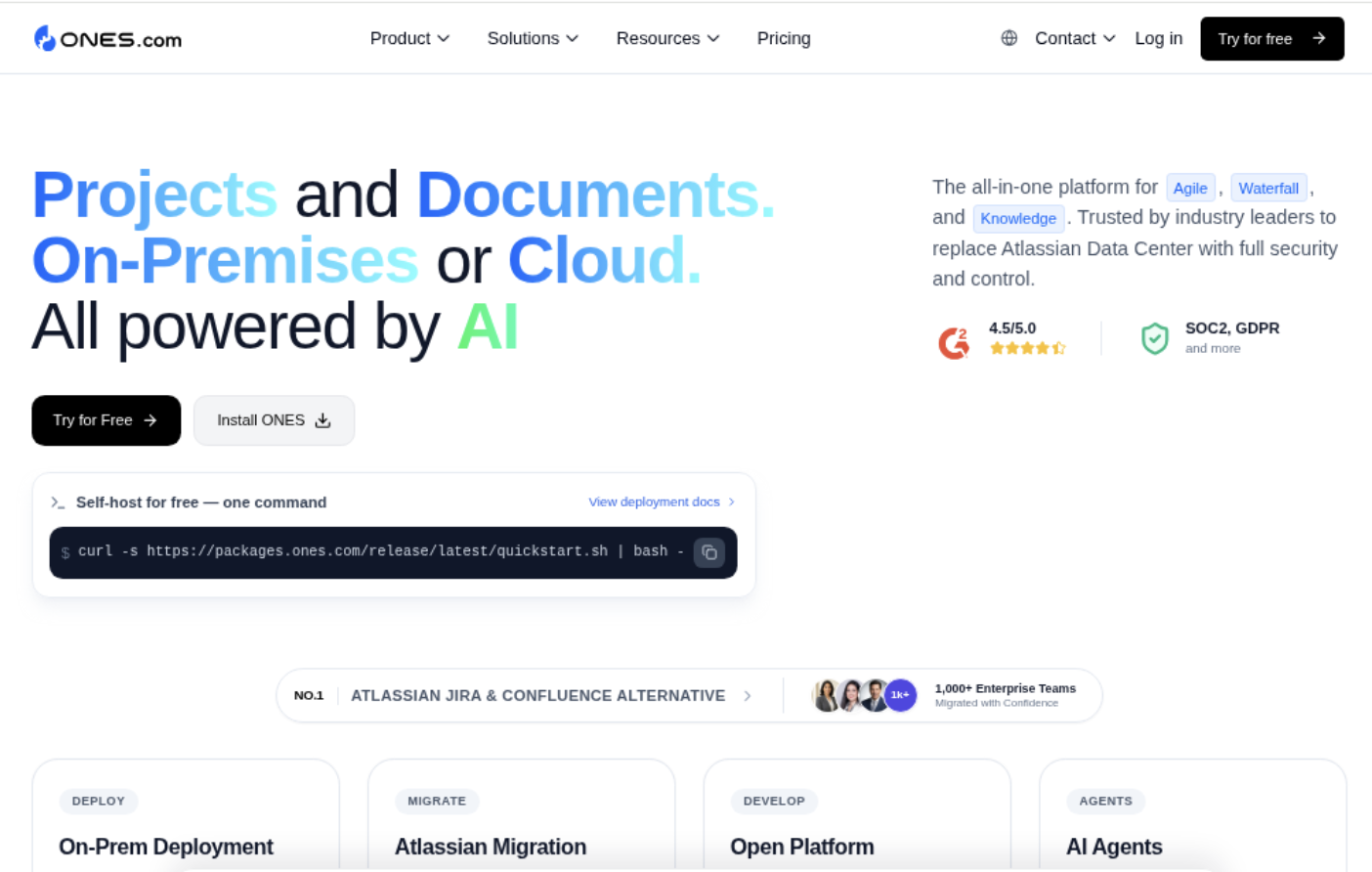
Value Proposition
ONES.com combines project management and knowledge management in one platform. ONES Project is a Jira alternative for teams that want project workflows, reporting, and service-related coordination without assembling many separate plugins.
ONES Project and ONES Wiki are sold separately. You can choose the product that fits your operating needs, while both support cloud and self-hosted deployment options.
Core Capabilities
- Fragmented project and service work → ONES Project and ONES Wiki provide connected work management and knowledge capabilities → Teams can coordinate delivery work and internal knowledge with less system switching.
- Complex Jira-compatible workflows → ONES Project supports Jira-compatible workflows, custom workflows, and custom fields → Teams can preserve familiar operating patterns while adapting them to internal processes.
- Limited deployment flexibility → ONES.com supports Cloud, On-Premise, Private Cloud, and Air-gapped deployments → Organizations can select an environment that fits security, network, and governance requirements.
- Feature differences between hosted and self-managed editions → ONES.com provides full feature parity between cloud and self-hosted versions → Teams can choose hosting based on control and compliance needs rather than losing core functionality.
- Manual sprint coordination → ONES Project includes sprint management → Agile teams can plan, prioritize, and track iteration work in a single workspace.
- Weak operational visibility → Built-in reporting helps teams monitor progress, workload, and delivery trends → Managers can review project health without manually assembling separate reports.
- Repetitive administrative work → Automation supports routine workflow actions → Teams can reduce manual status changes, routing, and follow-up tasks.
- High entry cost for small teams → ONES.com offers a free plan for up to 30 seats → Smaller teams can evaluate the platform before making a larger commitment.
Application Scenarios
Restricted-network engineering: An organization with air-gapped requirements can evaluate the Air-gapped deployment option for controlled project operations. This may suit teams that cannot place project work in a public cloud environment.
Growing product teams: A product organization moving away from disconnected project and knowledge tools can use ONES Project for delivery workflows and ONES Wiki for internal knowledge. The products remain separately purchased, allowing a more targeted rollout.
Enterprise governance: A company with strict hosting requirements can compare On-Premise and Private Cloud deployment options. Its technology team can assess control, administration effort, and feature parity together.
Common Challenges
Challenge: The final quote is difficult to predict
Solution: Prepare three scenarios covering current usage, expected growth, and high-adoption growth. Ask for pricing under each scenario and compare the resulting three-year totals.
Challenge: Teams underestimate implementation effort
Solution: Identify workflows, integrations, permissions, reports, and migration requirements before signing. Assign internal owners for each workstream.
Challenge: Different departments have different priorities
Solution: Create a shared capability checklist. IT may prioritize incident management, while HR may need request routing, approvals, and knowledge access.
Challenge: A discount hides future exposure
Solution: Review renewal terms, expansion rates, seat adjustments, and contract duration. Calculate the effective cost across the full commitment period.
FAQs
Is Jira Service Management enterprise pricing publicly listed?
Some Jira Service Management plans have public pricing, but enterprise arrangements commonly require a tailored quote. The final amount may depend on agent volume, selected tier, deployment model, support requirements, and additional capabilities. Use public pricing for initial planning, then request a detailed proposal that separates recurring subscription fees from implementation, consulting, and other services.
What information should I prepare for an enterprise quote?
Prepare your current and expected agent counts, service teams, deployment preference, required workflows, integrations, reporting needs, support expectations, and contract horizon. Include possible expansion into HR, facilities, security, or other departments. This gives the vendor enough context to provide scenarios instead of a narrow estimate that may not match your actual rollout.
Are requesters charged the same way as agents?
Agents generally perform service work, while requesters submit or track requests. Those roles may receive different treatment, but the exact rules depend on the plan and commercial terms. Ask the vendor to explain how employees, contractors, customers, approvers, and occasional participants are counted. Confirm the answer for every service desk you plan to operate.
How can I compare Jira Service Management with another platform?
Compare equivalent capabilities and the full operating cost. Review workflows, automation, reporting, integrations, knowledge management, deployment options, support, administration, migration, and renewal terms. A lower subscription price may require more customization or maintenance. A higher price may include capabilities that reduce external tools and operational effort.
Can an alternative support self-hosted or restricted environments?
Some alternatives support self-hosted, private cloud, or air-gapped deployments, while others focus primarily on public cloud delivery. Check feature parity, upgrade responsibilities, security controls, and support arrangements. ONES.com, for example, offers Cloud, On-Premise, Private Cloud, and Air-gapped deployment options with full feature parity between cloud and self-hosted versions.
Conclusion
Jira Service Management enterprise pricing is best evaluated as a total operating commitment. Agent volume matters, but deployment, capabilities, support, implementation, growth, and renewal terms can change the final result.
Start with a realistic three-year model. Separate recurring fees from one-time work, compare equivalent capabilities, and ask how expansion affects the agreement.
The best part? You do not need a perfect forecast before beginning. A clear current scenario, growth scenario, and list of required capabilities can make the first pricing conversation far more useful.
If Jira Service Management does not fit your deployment or cost requirements, compare Jira alternatives such as ONES.com. The right choice is the platform that supports your service workflows while keeping long-term ownership manageable.