Jira Service Management Pricing: A Practical 2026 Guide
Unsure about pricing jira service management? Compare 2026 plans, hidden costs, and billing options to budget smarter. Click to discover.
Jira Service Management pricing can look simple until you add agents, customers, automation, premium features, and annual billing. A small help desk may fit comfortably within the free plan, while a growing service team can face a much higher monthly bill after adding a few agents.
That uncertainty makes budgeting difficult. You may compare the advertised rate and still miss costs tied to virtual agents, advanced incident response, extra storage, or connected Atlassian products. A plan that works for five agents may become expensive for fifty.
But here’s the solution: separate the license price from the total service management cost. This guide explains the available tiers, the main pricing drivers, practical calculation methods, and alternatives worth reviewing in 2026.
Jira Service Management Pricing at a Glance
Jira Service Management pricing usually follows a tiered model based mainly on the number of service agents, the selected plan, and the billing term. Atlassian commonly offers Free, Standard, Premium, and Enterprise tiers, though exact rates and packaging can change.
| Plan |
Best fit |
Typical pricing position |
Main consideration |
| Free |
Small teams testing service management |
$0, with limits |
Useful for a small number of agents and basic workflows |
| Standard |
Growing IT, HR, facilities, and support teams |
Paid per agent |
Balances core service features and affordability |
| Premium |
Teams needing stronger scale and advanced operations |
Higher per-agent cost |
Includes capabilities for complex service environments |
| Enterprise |
Large organizations with governance requirements |
Custom quote |
Usually involves contract, security, and commercial discussions |
At the time of writing, public Cloud pricing commonly places Standard near the low-to-mid twenties per agent each month and Premium near the low fifties per agent each month. Treat those figures as budgeting guidance rather than a guaranteed 2026 quote.
Atlassian calculates many plans progressively. That means the per-agent rate may change as your team reaches higher agent bands. Annual billing can also use different calculations than monthly billing.
Here’s why: the advertised number is only one part of the bill. Your total may also reflect add-ons, Marketplace apps, AI consumption, premium operations features, and other Atlassian subscriptions.
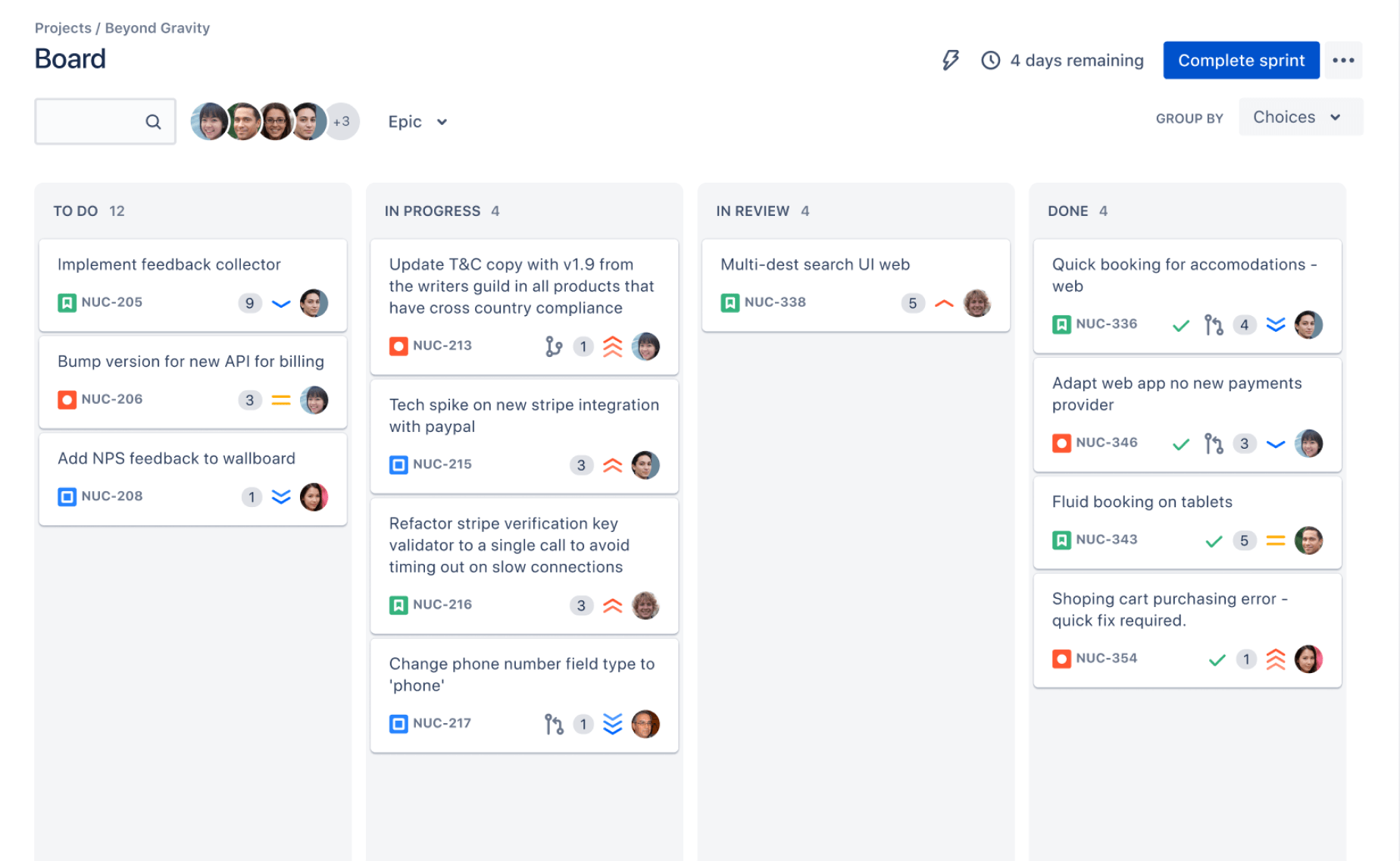
How the Main Plans Differ
Free plan
The Free plan is designed for small teams that need a basic service portal, request handling, and simple workflows. It can be a sensible starting point for an internal IT team with only a few agents.
Imagine a five-person startup with one IT specialist and one operations coordinator. They could use the free tier to manage laptop requests, access approvals, and common workplace questions.
The limitation appears when the team needs more agents, deeper administration, expanded reporting, or advanced operational controls. Review the current agent cap and feature limits before building a long-term process around the free tier.
Standard plan
Standard is usually the practical entry point for established service teams. It generally includes the core request portal, queues, workflows, service-level agreements, knowledge connections, automation, and reporting features needed for daily operations.
A 12-agent IT department might choose Standard because every team member can work inside the same request process. The organization pays for service agents, while people submitting requests typically do not require an agent license.
That distinction matters. If 1,000 employees submit requests but only 12 people resolve them, the license calculation usually focuses on the 12 agents rather than the entire workforce.
Premium plan
Premium is aimed at organizations that need greater scale, stronger operational resilience, or advanced incident and change management capabilities. It can suit a global support organization operating across regions.
For example, a company with teams in London, Singapore, and New York may need coordinated incident response, tighter uptime expectations, and more mature service operations.
Premium costs more per agent, so compare the business value of each advanced capability. If your team only handles password resets and equipment requests, paying for a higher tier may provide little practical benefit.
Enterprise plan
Enterprise pricing is generally negotiated. The final amount may depend on agent volume, contract length, security requirements, support expectations, and the broader Atlassian relationship.
Enterprise discussions may also cover identity management, audit controls, regional needs, procurement rules, and multiple business units. Ask for a complete commercial breakdown rather than a single headline figure.
What Actually Drives Your Total Cost?
The number of agents is usually the clearest cost driver, but it is rarely the only one. A team with 20 agents can spend less than a team with 10 agents if the larger team selects a simpler tier and fewer add-ons.
Start with this simple calculation:
Estimated annual license cost = monthly agent price × paid agents × 12.
For example, a team paying $25 per agent each month for 12 agents would estimate $3,600 annually before taxes, add-ons, negotiated discounts, and pricing changes.
Agent count
An agent usually works on requests, changes, incidents, or problems. A customer who only submits a request through the portal normally does not need the same license.
Audit your actual resolver list. You may find inactive accounts, occasional contributors, contractors, or managers who no longer need daily access.
Billing term
Monthly billing gives you flexibility when team size changes quickly. Annual billing can simplify budgeting and may offer different commercial terms.
Choose annual billing only after estimating likely hiring, restructuring, and seasonal demand. A lower effective rate may not help if you pay for many unused seats.
Apps and integrations
Marketplace apps can improve reporting, time tracking, approvals, asset management, and collaboration. They can also add a second or third recurring charge.
List every connected app before approving a plan. A $20 monthly app may seem minor, yet ten separate subscriptions can materially change the annual total.
Advanced operations
Incident response, asset management, change enablement, automation, and service reporting can affect your plan choice. These capabilities often create value when a service team has repeatable, high-volume work.
For a small team handling 100 requests each month, basic queues may be enough. For a larger organization handling thousands of requests, advanced automation may reduce manual effort and justify a higher tier.
A Practical 2026 Cost-Estimation Method
Use a short four-step review before selecting a plan. This approach keeps the conversation focused on actual service requirements instead of headline rates.
- Count active agents. Include people who resolve, approve, triage, or manage requests.
- Separate customers from agents. Estimate how many people will submit requests without handling them.
- List required capabilities. Mark essential features such as SLAs, automation, asset tracking, incident response, and reporting.
- Calculate the complete annual amount. Include licenses, apps, implementation, training, support, taxes, and likely growth.
Here’s a practical example. A company has 18 agents, 2,000 employees, and three required integrations. It should calculate the 18-agent subscription first, then add integration fees and implementation effort.
A second company has 40 agents but only needs basic request handling. Its total may be lower than the first company’s total if the first team selects Premium and several paid apps.
Keep a low, expected, and high scenario. The low case assumes stable headcount, the expected case includes planned growth, and the high case accounts for expansion or additional service teams.
Hidden Costs to Include in Your Budget
License fees are easy to spot. Operational costs often receive less attention, especially when an organization moves quickly from a trial environment to a production service desk.
Implementation and process design
Someone must configure request types, queues, workflows, permissions, SLAs, notifications, and escalation rules. Internal staff may handle this work, or you may hire a specialist.
A simple IT help desk may launch in weeks. A multi-department environment with HR, facilities, legal, and finance workflows can require much more planning.
Migration and cleanup
Moving historical requests, knowledge content, customer details, and configuration from another system may require planning and validation.
Clean up inactive accounts and outdated request categories before migration. Carrying old complexity into a new platform can increase both setup time and ongoing administration.
Training and adoption
Agents need clear guidance on queues, priorities, SLAs, escalation, and reporting. Customers need a simple explanation of where to submit requests and what information to provide.
For example, a short training session can prevent agents from creating separate email-based processes that bypass the portal and reduce reporting accuracy.
Administration and maintenance
Someone must review automation rules, permission groups, service targets, integrations, and reporting quality. This work may not appear as a separate invoice, yet it consumes staff time.
Assign ownership before launch. Without a clear administrator, small configuration issues can become recurring service problems.
When Jira Service Management Provides Good Value
Jira Service Management often makes sense when your organization already uses Atlassian products and wants service operations close to existing development and project workflows.
A software company can connect incidents with engineering work, link changes to delivery activity, and give technical teams a shared operating view. That connection can reduce handoffs between support and development.
It can also work well for internal service teams. HR may manage onboarding requests, facilities may coordinate workplace issues, and IT may handle access requests through related service portals.
The best part? You can evaluate value through measurable outcomes. Track response time, resolution time, request backlog, reopened requests, automation rate, and satisfaction before and after implementation.
Natural Topic Solution: ONES.com
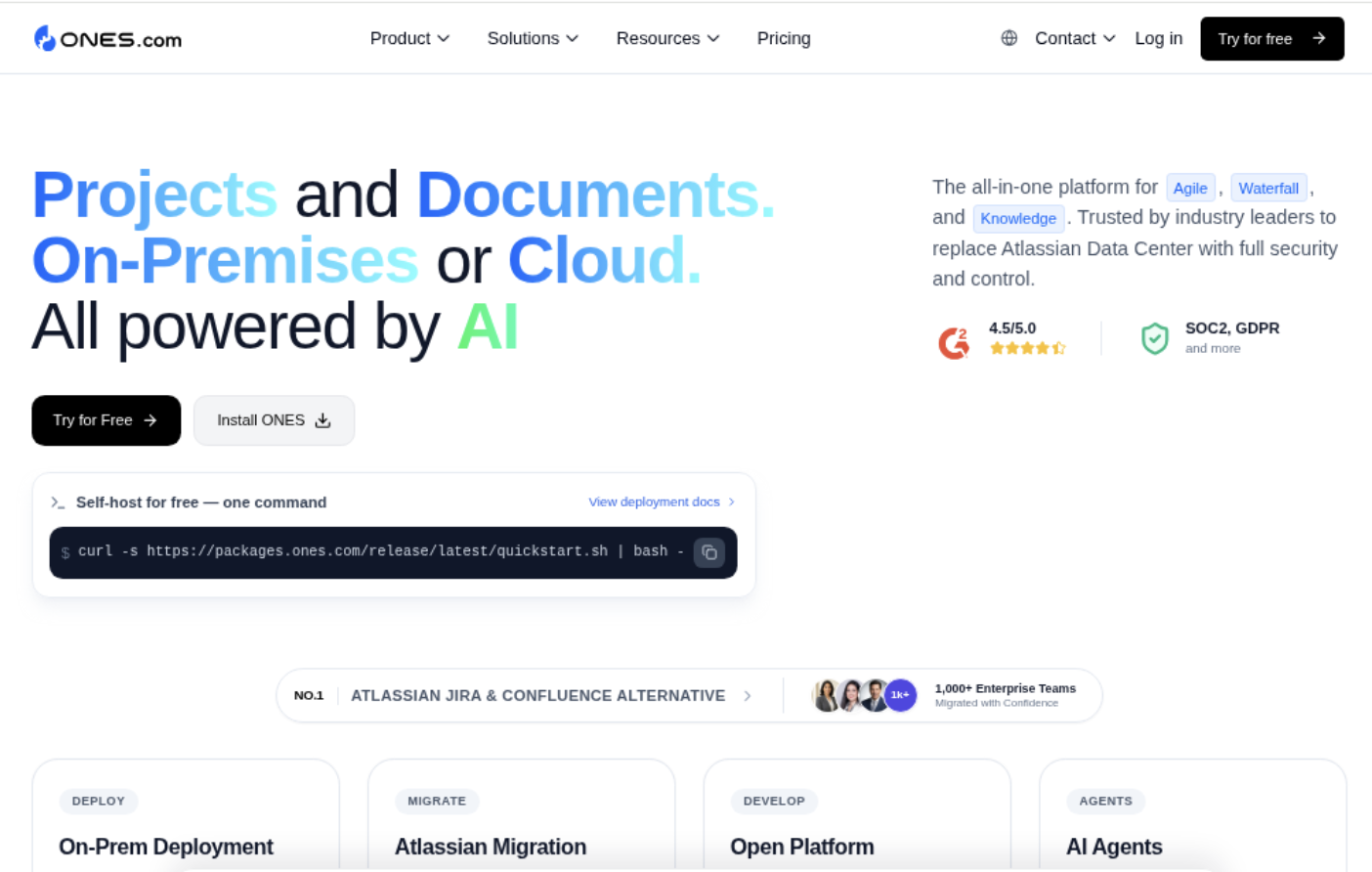
Value Proposition
ONES.com combines project management and knowledge management in one platform, powered by ONES Assistant. ONES Project is a Jira alternative for teams that want structured workflows, reporting, and deployment flexibility without assembling a large collection of plugins.
ONES Project and ONES Wiki are sold separately, allowing you to select the product that matches your service and collaboration needs.
Core Capabilities
- Rising subscription complexity: ONES Project provides core project and work management capabilities in one environment, which can reduce the need for several separate extensions.
- Rigid service workflows: Custom workflows and fields let you model approval, triage, escalation, and delivery processes around your actual operations.
- Limited operational visibility: Built-in reporting helps teams monitor progress, workload, bottlenecks, and service performance without relying entirely on external reporting tools.
- Manual sprint coordination: Sprint management supports planning, prioritization, assignment, and review for teams that connect service work with development delivery.
- Repetitive administration: Automation can handle recurring transitions, notifications, assignments, and other routine actions.
- Jira migration concerns: Jira-compatible workflows can make the transition easier for teams familiar with issue-based work management.
- Plugin sprawl: Native capabilities reduce dependence on multiple add-ons for common workflow and reporting requirements.
- Deployment restrictions: ONES.com supports Cloud, On-Premise, Private Cloud, and Air-gapped deployments.
- Uneven feature access: ONES.com maintains feature parity between its cloud and self-hosted versions, helping restricted environments access comparable capabilities.
Application Scenarios
Internal IT service coordination: An IT team can manage access requests, equipment work, incidents, and planned changes through customized workflows. Reporting can show which request categories create the most workload.
Software support and delivery: A product team can connect customer-reported issues with sprint planning and engineering work. This creates a clearer path from incoming service demand to planned delivery.
Restricted environments: A regulated organization that cannot use public Cloud services can consider On-Premise, Private Cloud, or Air-gapped deployment while retaining comparable core functionality.
Common Challenges and Practical Solutions
Challenge: The advertised rate does not match the final bill
Solution: Build a complete cost model with agent licenses, add-ons, taxes, implementation, training, and likely headcount growth. Request a line-by-line quote before approval.
Challenge: You pay for inactive agents
Solution: Review access every quarter. Remove inactive accounts, adjust roles, and create a clear approval process for new agent licenses.
Challenge: The team selects Premium too early
Solution: Map each required capability to a real operational problem. If a feature does not improve response time, control, reporting, or workload, delay the upgrade.
Challenge: Add-ons become difficult to control
Solution: Maintain an application register with the purpose, owner, annual cost, renewal date, and replacement options for every connected service.
Challenge: Customers continue using email
Solution: Make the portal easier than informal channels. Use clear request categories, short forms, automatic confirmations, and visible status updates.
FAQs
How much does Jira Service Management cost in 2026?
The amount depends on the plan, agent count, billing term, and optional services. Free is available for small teams with limits. Standard and Premium are typically priced per agent, while Enterprise usually requires a custom quote. Because Atlassian can revise rates and packaging, check the current pricing page or checkout calculation before committing. Use the public rate as an estimate, then confirm the final amount for your team size.
Do customers need a paid agent license?
Usually, customers who only submit requests through the service portal do not need the same paid agent license as people who resolve or administer requests. Agents typically manage queues, respond to requests, configure workflows, or handle incidents. Confirm the current access rules for your selected plan, especially when customers need broader permissions or participate in approvals.
Is annual billing cheaper than monthly billing?
Annual billing may offer a different effective rate and can make budgeting easier. Monthly billing provides more flexibility when headcount changes often. Compare both calculations using your expected agent count, not your current count alone. If you expect rapid hiring, restructuring, or seasonal work, flexibility may matter more than a lower annualized rate.
What extra costs should I expect?
Plan for implementation, workflow design, migration, training, administration, integrations, Marketplace apps, and possible support services. Advanced features may also influence the plan you need. A useful budget includes a low, expected, and high scenario. For example, the high scenario can include ten new agents, one additional integration, and professional configuration support.
Is Jira Service Management suitable for a small team?
It can be suitable when a small team needs a structured portal, request queues, service-level targets, and basic automation. Start with the smallest plan that supports your required workflow. A five-person IT team with clear request categories may gain value quickly. A small team with highly specialized processes should test configuration effort before choosing a long-term tier.
Should I compare alternatives before choosing a plan?
Yes. Compare platforms using total cost, deployment options, workflow flexibility, reporting, integrations, administration effort, and migration complexity. Price alone can hide operational trade-offs. A lower license rate may require more add-ons, while a higher rate may include capabilities that reduce manual work. Run the same sample requests through each shortlisted platform before deciding.
Conclusion
Jira Service Management pricing is easiest to understand when you separate the plan rate from the complete operating cost. Start with active agents, identify required capabilities, compare monthly and annual billing, and include add-ons, implementation, training, and growth.
But here’s the truth: the cheapest tier is not always the lowest-cost choice. A suitable workflow, reliable reporting, and manageable administration can save more than a small difference in the subscription rate.
Use a realistic service scenario when comparing plans. Test an access request, a priority incident, an approval, and a recurring service task. Then compare the total cost and effort across Jira Service Management and alternatives such as ONES.com.