Jira Service Management Pricing Guide: Plans, Costs & Fees
Unsure about jira pricing service management? Compare plans, agent costs, billing, fees, and extras to budget accurately. Read now to choose wisely.
Jira Service Management pricing can look simple until you compare agent seats, billing cycles, service limits, and optional features. A small team may pay nothing, while a growing support operation can face a much larger monthly bill after adding agents, apps, and premium capabilities.
That uncertainty creates practical problems. You may compare the wrong plan, mistake customer access for paid access, or estimate costs using only the advertised per-agent rate. The final checkout total can then differ from your internal budget.
Here’s the solution: separate the plan price from the real operating cost. This guide explains Jira Service Management tiers, agent billing, common fees, annual versus monthly payment, and the questions worth asking before you commit.
Jira Service Management Pricing at a Glance
Jira Service Management pricing is primarily determined by your plan, the number of paid agent seats, billing frequency, and any additional apps or advanced services you choose.
Jira Service Management Cloud generally offers Free, Standard, Premium, and Enterprise tiers. Free costs nothing within its limits, while Standard and Premium use per-agent pricing. Enterprise pricing is customized for larger organizations.
| Plan |
Typical positioning |
Common pricing approach |
Best fit |
| Free |
Basic service management |
$0 within plan limits |
Small teams testing service workflows |
| Standard |
Core service desk operations |
Per-agent subscription |
Teams handling regular internal or external requests |
| Premium |
Advanced scale, automation, and service operations |
Higher per-agent subscription |
Organizations with complex support and incident needs |
| Enterprise |
Large-scale governance and administration |
Custom quote |
Organizations requiring enterprise controls |
Advertised prices can change by region, currency, billing term, promotions, and Atlassian’s current packaging. Treat public figures as planning estimates and confirm the final amount during checkout.
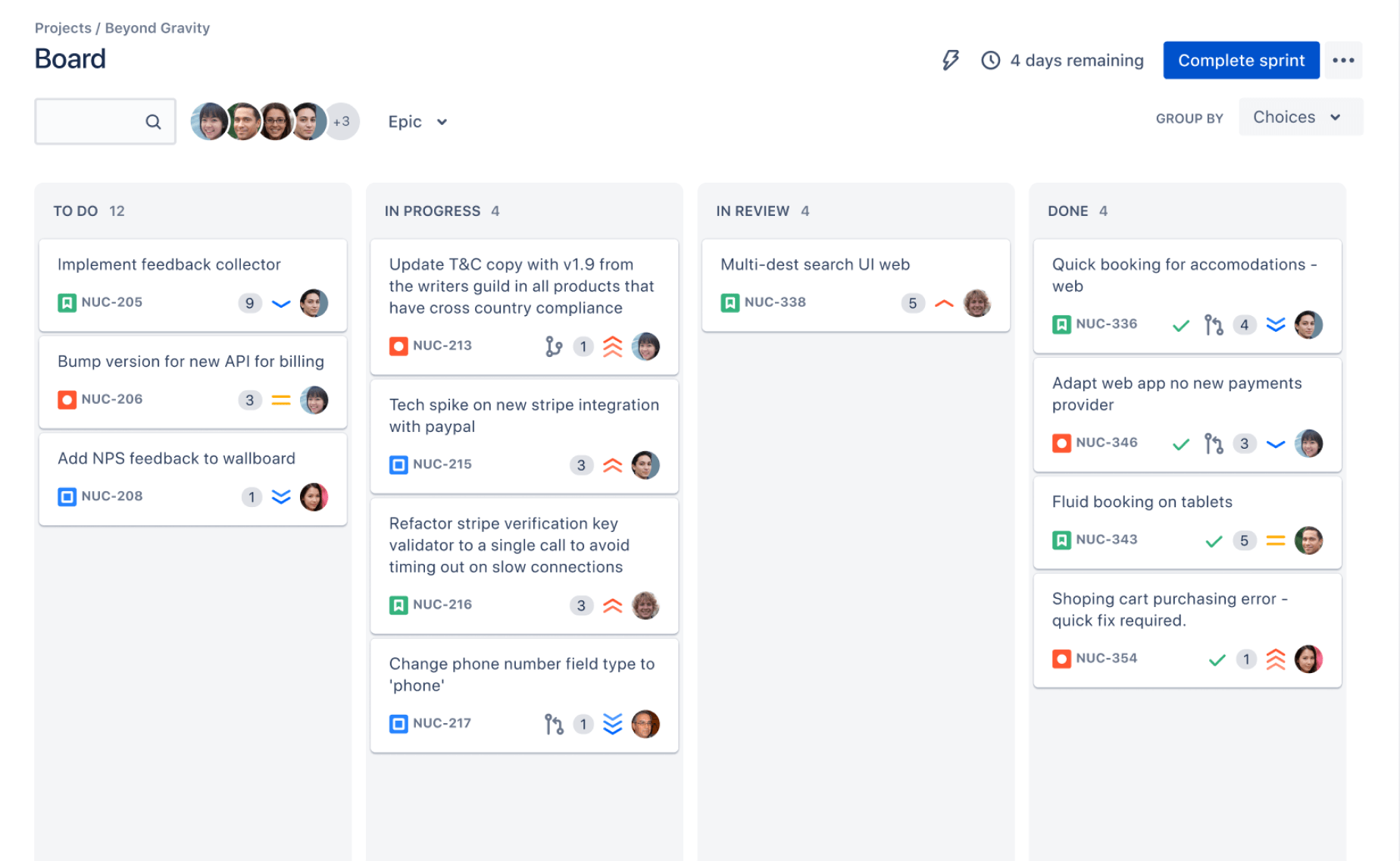
What counts as a paid seat?
An agent is a person who works on service requests, manages queues, updates issues, or administers service projects. Agent seats usually drive the subscription cost.
Customers who submit requests through a portal commonly do not require paid agent seats. However, special access rules can apply when a customer also receives broader product permissions.
For example, five support specialists may need five agent seats, while 2,000 employees submit requests through the portal without each becoming a paid agent.
Typical plan price ranges
Jira Service Management Standard is commonly listed around $20 per agent per month, while Premium has often been listed around $51.42 per agent per month. These figures can change.
A team with 10 Standard agents could therefore estimate roughly $200 per month before taxes, add-ons, discounts, or billing adjustments. Ten Premium agents could estimate roughly $514.20 per month using the same planning figures.
The estimate does not automatically include every Atlassian product, marketplace app, implementation service, or optional capability. Review each line item before approving a purchase.
How the Plans Differ
Free plan
The Free plan gives a small team a low-risk way to test request forms, queues, basic workflows, and customer portals. It can suit a startup, a small internal IT group, or a temporary pilot.
Free plans usually come with limits around agent seats, storage, automation, support, administration, and service features. Those limits matter when your team begins handling several request types.
For example, a three-person IT team may manage password resets and equipment requests comfortably. A 12-person support department will likely outgrow the plan quickly.
Standard plan
Standard is the practical starting point for many service teams. It typically provides the core tools needed for intake, triage, assignment, approvals, service-level tracking, knowledge access, and reporting.
Standard can work well when you need a dependable service desk without advanced resilience or large-scale operational controls. Your main cost driver remains the number of agents.
Let me explain: a Standard subscription may look affordable with five agents, yet the cost rises steadily as managers, specialists, and escalation teams receive agent access.
Premium plan
Premium is designed for organizations that need more scale and advanced service operations. Depending on the current packaging, it may include stronger automation allowances, advanced incident management, higher service limits, and additional operational features.
Premium becomes easier to justify when downtime carries a measurable cost. A software company losing thousands of dollars per hour during an outage may value faster incident coordination more than a lower subscription rate.
Before upgrading, identify the specific Premium capability your team needs. A plan upgrade should solve a defined capacity, resilience, or workflow problem.
Enterprise plan
Enterprise pricing is usually negotiated around organization size, governance requirements, support expectations, security controls, and commercial terms.
This tier may appeal to companies with multiple business units, regional service desks, strict administrative separation, or formal procurement requirements.
You might be wondering: when should you request an Enterprise quote? Start when administration, compliance, support, and scale requirements exceed what a team-level subscription can manage efficiently.
What Actually Drives Your Monthly Cost?
Agent count
Agent count is usually the most visible cost factor. Count people who actively resolve, triage, approve, or administer requests.
Do not count every employee who submits a help request. Separate requesters from service agents when you build your estimate.
| Team profile |
Estimated agents |
Illustrative Standard estimate |
Illustrative Premium estimate |
| Small IT help desk |
3 |
About $60 per month |
About $154.26 per month |
| Growing support team |
10 |
About $200 per month |
About $514.20 per month |
| Regional service operation |
25 |
About $500 per month |
About $1,285.50 per month |
These examples use commonly listed rates and exclude taxes, discounts, add-ons, and commercial adjustments. Use them for early planning only.
Monthly versus annual billing
Monthly billing gives you flexibility. You can increase or reduce seats as staffing changes, although the effective rate may be higher.
Annual billing can provide a lower effective rate or more predictable budgeting, depending on the current commercial terms. It may also require a commitment to a particular user tier.
Here’s why: annual plans can create waste when your hiring forecast is uncertain. Monthly plans can cost more when your team size remains stable for years.
Additional products and marketplace apps
Jira Service Management may connect with other Atlassian products, monitoring services, chat tools, identity providers, and marketplace apps. Each product can have separate pricing.
An app that costs $5 per agent may seem minor with five agents. At 100 agents, that same rate adds roughly $500 monthly before taxes.
Create a separate line for every integration, reporting tool, asset capability, chat connector, and automation service. This prevents a low platform estimate from hiding a high operating total.
Taxes, currency, and regional differences
Your final charge can vary because of tax rules, currency conversion, billing location, contract terms, and promotional pricing.
A company planning in euros should avoid converting a United States dollar rate once and treating it as permanent. Exchange rates and local commercial terms can change.
Jira Service Management Fees Beyond the Subscription
Implementation and migration
Subscription pricing covers access to the platform. It does not necessarily cover workflow design, migration, training, consulting, or service catalog development.
A simple help desk may need only internal configuration time. A regulated company with several departments may need outside specialists to map approvals, escalation paths, and reporting requirements.
For example, migrating 10 request types is very different from redesigning a global service operation with 80 queues and separate approval policies.
Integration and automation expenses
Some integrations require paid connectors or separate products. Others need custom development and ongoing maintenance.
Automation can reduce manual work, yet complex rules require testing. Poorly designed rules can create duplicate requests, incorrect escalations, or unnecessary notifications.
Budget for both the initial setup and the time needed to maintain integrations after systems change.
Training and administration
New agents need training on queues, priorities, service-level goals, approvals, and customer communication. Administrators need deeper knowledge of permissions, workflows, reports, and automation.
A low subscription can still become expensive when every change requires specialist help. Training one or two internal administrators may reduce that dependency.
Support and service expectations
Higher plans may provide different support options, service commitments, or operational capabilities. Review these benefits against your actual business risk.
If your service desk supports critical infrastructure, faster assistance and stronger resilience may matter. If it handles routine office requests, a simpler plan could be enough.
How to Calculate Your Realistic Budget
Step 1: Count active agents
List everyone who needs agent permissions. Include service desk staff, team leads, specialists, approvers who work inside the service project, and administrators.
Then remove people who only submit requests or check request status through the customer portal.
Step 2: Compare plan requirements
Write down the capabilities your team needs before looking at the highest tier. Typical requirements include:
- Request portals and email intake
- Service-level agreements
- Approval workflows
- Knowledge base access
- Incident and problem management
- Asset and configuration tracking
- Automation volume
- Advanced reporting
- Administrative and security controls
Match each requirement to the lowest plan that supports it. This keeps the evaluation tied to work instead of attractive feature lists.
Step 3: Add annual operating expenses
Estimate implementation, training, app subscriptions, integrations, administration, and internal support time.
For example, 10 Standard agents at roughly $200 per month produce an annual subscription estimate near $2,400. Add a paid reporting app, onboarding assistance, and administrator time separately.
Step 4: Model growth
Create three scenarios: current staffing, expected staffing, and peak staffing. A plan that works today may become expensive after a hiring round.
Consider whether contractors, temporary agents, and departmental teams will need access. Their seats can change your effective rate.
Step 5: Confirm the checkout total
Before purchasing, confirm the currency, billing term, agent quantity, taxes, renewal terms, promotional period, and add-on charges.
The best part? A short checkout review can prevent a year of budget surprises.
Choosing the Right Tier for Your Team
Choose Free when you are validating the workflow
Free can make sense when a small team wants to test portal intake, request categories, queues, and basic reporting.
Set a review date before the trial becomes permanent. Check whether agents are hitting limits or bypassing the service desk through email and chat.
Choose Standard when core service operations matter
Standard is often suitable for an established help desk with predictable request volume and routine workflows.
It can support common examples such as employee onboarding, access requests, equipment issues, and internal facilities support.
Choose Premium when operational risk justifies the cost
Premium may fit teams managing major incidents, higher automation demand, broader service coverage, or stronger continuity expectations.
Calculate the financial impact of slow restoration. If one serious outage costs more than the annual plan difference, Premium may have a defensible business case.
Request Enterprise pricing when governance dominates
Enterprise becomes relevant when you need organization-wide controls, complex procurement, dedicated commercial arrangements, or large-scale administration.
Bring a clear requirements list to the conversation. Vague requests make it harder to compare the quote with Standard or Premium.
Jira Service Management Alternative: ONES.com
Value Proposition
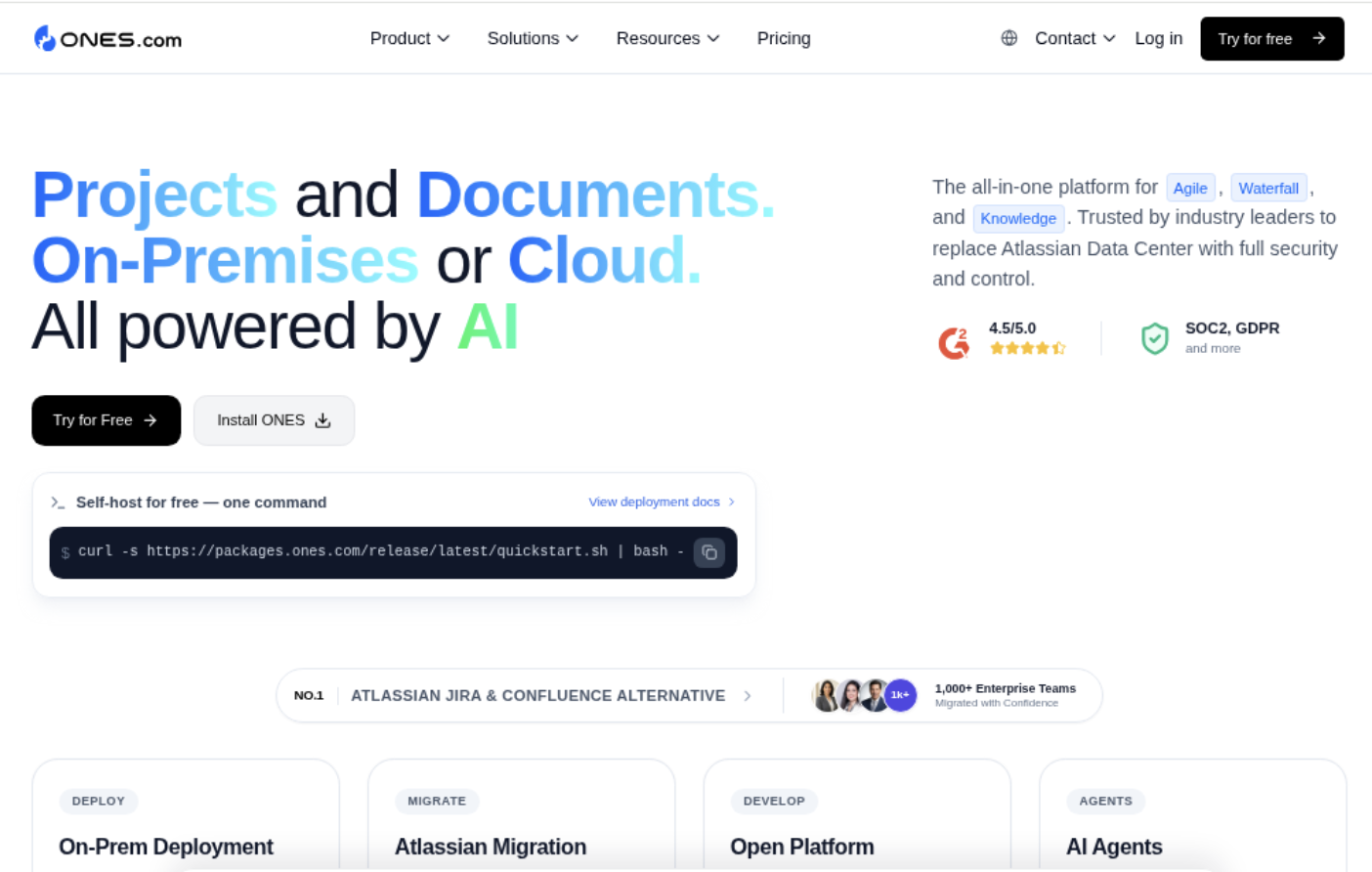
ONES.com combines project management and knowledge management in one AI-powered platform. ONES Project serves as the project management product and can support Jira-compatible workflows, while ONES Wiki provides a knowledge base experience comparable to a Confluence alternative.
ONES Project and ONES Wiki are sold separately. ONES.com offers a free plan for up to 30 seats and supports Cloud, On-Premise, Private Cloud, and Air-gapped deployments.
Core Capabilities
- Fragmented planning — ONES Project unifies project work: Jira-compatible workflows, sprint management, custom fields, and reporting help teams coordinate work in one project environment. The result is less context switching between planning and execution.
- Plugin dependency — Native capabilities reduce add-on reliance: Built-in reporting, automation, custom workflows, and custom fields cover common project management requirements. The result is a simpler administration model for teams that want fewer plugins.
- Restricted network requirements — Air-gapped deployment supports isolated environments: Teams operating in restricted networks can use an air-gapped deployment. The result is a project workflow that fits tighter infrastructure constraints.
- Hosting concerns — Multiple deployment choices match governance needs: Cloud, On-Premise, Private Cloud, and Air-gapped options let you align deployment with security and operational policies. The result is more control over where the platform runs.
- Knowledge scattered across locations — ONES Wiki centralizes team knowledge: Teams can maintain technical guidance, procedures, and project knowledge in a connected knowledge management product. The result is easier access to recurring answers.
- Limited workflow flexibility — Custom workflows adapt to real processes: Teams can configure statuses, fields, and approval paths around their operating model. The result is less pressure to force every department into one rigid process.
- Manual status reporting — Built-in reporting improves visibility: Managers can review progress, workload, and delivery information without assembling separate reports. The result is faster operational review.
- Different hosting needs across departments — Full feature parity supports deployment choice: ONES.com maintains feature parity between its cloud and self-hosted versions. The result is less compromise when a team requires self-hosting.
Application Scenarios
Software development team: A development group can use ONES Project for sprint planning, custom workflows, automation, and delivery reporting. ONES Wiki can hold engineering guidance separately when the team also needs knowledge management.
Restricted-network organization: A defense, manufacturing, or infrastructure team can evaluate an On-Premise or Air-gapped deployment. This approach suits environments where cloud access is limited by policy.
Growing project office: A project office can begin with up to 30 free seats, then expand as more contributors need structured planning and reporting. Separate products allow the organization to adopt project or knowledge capabilities according to need.
Common Challenges
Challenge: confusing agents with customers
Solution: Count people who resolve or administer requests separately from people who only submit them. This distinction often changes the estimate substantially.
Challenge: comparing monthly rates without annual totals
Solution: Multiply the monthly estimate by 12, then add apps, taxes, training, and administration. Review both monthly flexibility and annual commitment.
Challenge: upgrading for features nobody uses
Solution: Tie every upgrade to a measurable requirement, such as automation capacity, incident response, or governance. Review usage after implementation.
Challenge: underestimating marketplace apps
Solution: Create an app inventory before approval. Record the pricing model, number of affected agents, renewal date, and business owner.
Challenge: ignoring migration effort
Solution: Estimate workflow mapping, request history transfer, permissions, integrations, testing, and training. Migration effort can exceed the first subscription payment.
FAQs
Is Jira Service Management free?
Jira Service Management offers a Free plan with limits on agents, features, automation, storage, and administration. It can suit a small team testing a service desk. Larger teams may need Standard or Premium. Check the current plan limits before relying on Free for production operations, because Atlassian can change packaging and eligibility.
Do customers need paid Jira Service Management accounts?
Customers who submit requests through a service portal commonly do not require paid agent seats. Agents who triage, resolve, approve, or administer requests generally do. Review access permissions carefully, because a person may need a paid license if they use broader Jira capabilities beyond customer interactions.
How much does Jira Service Management Standard cost?
Standard has commonly been listed around $20 per agent per month, although the actual amount can vary by currency, billing term, promotions, taxes, and pricing updates. Ten agents would produce an illustrative estimate of about $200 per month before additional charges. Confirm the current checkout price before purchasing.
How much does Jira Service Management Premium cost?
Premium has commonly been listed around $51.42 per agent per month. Ten agents would therefore produce an illustrative estimate near $514.20 per month before taxes, add-ons, and commercial adjustments. Premium is easier to justify when advanced incident management, higher scale, automation, or resilience capabilities address a measurable operational risk.
Is annual billing cheaper than monthly billing?
Annual billing may provide a lower effective rate or more predictable budgeting, depending on current Atlassian terms. Monthly billing gives you more flexibility when agent numbers change. Compare the total annual commitment, seat tier, renewal terms, and expected staffing before choosing a payment schedule.
What should I include in a Jira Service Management budget?
Include agent subscriptions, taxes, marketplace apps, integrations, implementation, migration, training, administration, and ongoing maintenance. Also model staffing growth and temporary agents. A platform quote shows only part of the cost. Your realistic budget should reflect how the service desk will operate after launch.
Conclusion
Jira Service Management pricing starts with the plan and paid agent count, then expands through billing terms, apps, taxes, implementation, and administration.
But here’s the truth: the cheapest advertised tier is not automatically the cheapest operating choice. Free can be ideal for a small pilot, Standard often fits core service operations, and Premium can make sense when incidents and scale carry serious costs.
Calculate your current and future agent counts, connect each feature to a business requirement, and confirm the final checkout total. If you need a Jira alternative with project management, knowledge management options, flexible deployment, and native capabilities, ONES.com is also worth evaluating.