Jira Service Management Standard Pricing: 2026 Cost Guide
What does jira service management standard pricing really cost? This 2026 guide explains seats, billing, add-ons, and taxes. Click to budget wisely.
Planning a service desk budget can feel simple until seat counts, billing terms, add-ons, and taxes change the total. A price that looks manageable for five agents may become significant for fifty.
That uncertainty creates awkward budget meetings. You may approve the Standard plan, then discover that extra agents, premium features, marketplace apps, or annual billing alter the final amount.
But here's the truth: Jira Service Management Standard pricing is easiest to understand when you separate the base subscription from operational extras. This guide breaks down each cost area, shows practical examples, and explains how to estimate your likely spend for 2026.
You will also see where Standard fits, when another plan may make sense, and how an alternative platform could affect your wider service management budget.
Jira Service Management Standard Pricing at a Glance
Jira Service Management Standard pricing is commonly listed at approximately US$20 per agent per month for cloud subscriptions at smaller seat counts. Your final 2026 quote can vary with the number of agents, billing cycle, location, taxes, promotions, and optional products.
Jira Service Management charges for agents who work on requests, incidents, changes, and service queues. Customers who submit requests through the portal usually do not count as paid agents.
| Cost area |
What to expect |
| Standard subscription |
Approximately US$20 per agent per month at smaller cloud seat counts |
| Requesters |
Portal customers generally do not require paid agent seats |
| Billing cycle |
Monthly billing offers flexibility; annual billing may use a tiered quote |
| Taxes |
Regional taxes, VAT, or similar charges may apply |
| Additional products |
Jira Software, Confluence, Statuspage, and other products can create separate charges |
| Marketplace apps |
Third-party applications may add recurring subscription costs |
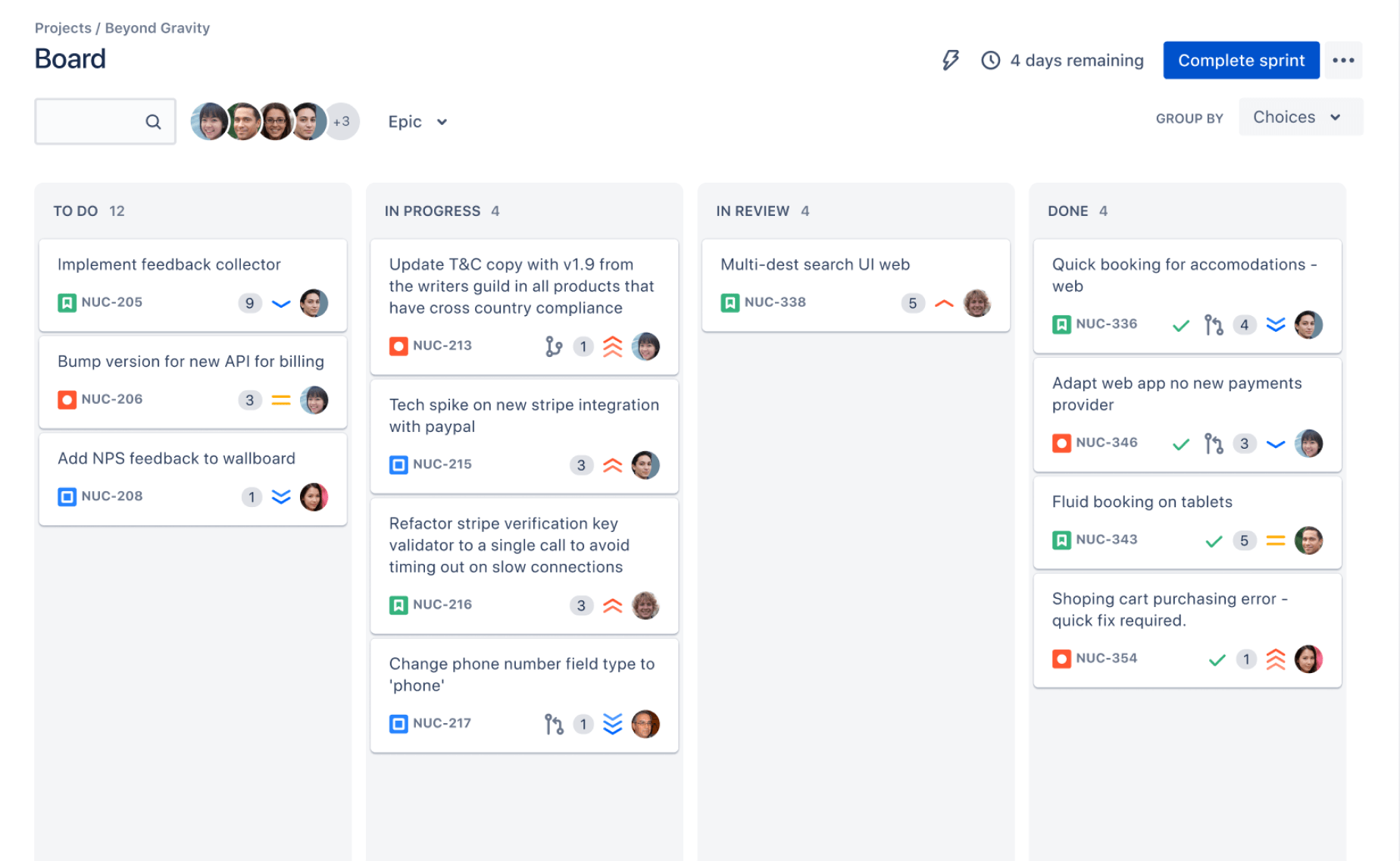
What the Standard plan is designed to cover
Standard is aimed at teams that need a structured service desk without the highest-level enterprise controls. It typically supports request portals, queues, service projects, automation, reporting, and common IT service workflows.
For example, an internal IT team can create request types for laptop access, account recovery, software installation, and employee onboarding. Agents can triage those requests, assign ownership, set priorities, and track service targets.
A simple monthly estimate
Suppose you have 12 paid agents and the displayed rate is US$20 per agent each month:
- 12 agents × US$20 = US$240 per month
- US$240 × 12 months = US$2,880 per year before taxes
This estimate excludes optional applications, additional Atlassian products, implementation services, and regional charges. Use the official checkout calculator for the final quote before committing to a budget.
How to Calculate Your Real Service Desk Cost
The fastest way to estimate your spend is to count paid agents first, then add adjacent products and operational extras. A clear calculation prevents a low subscription estimate from becoming an inaccurate annual budget.
- Count people who need agent access. Include service desk analysts, team leads, administrators, and specialist staff who actively manage requests.
- Separate agents from requesters. Employees, customers, or contractors who only submit and view requests generally do not need agent seats.
- Choose monthly or annual billing. Monthly billing helps during a pilot, while annual terms may suit stable teams.
- Estimate growth. Add expected hires, seasonal support staff, and planned service expansion.
- List connected products. Check whether your workflow also requires Jira Software, Confluence, Statuspage, or another Atlassian product.
- Review applications. Identify tools for time tracking, approvals, asset management, reporting, surveys, or advanced automation.
- Add implementation and administration costs. Migration, workflow design, training, and ongoing ownership can exceed the subscription during the first year.
- Confirm the live quote. Check currency, taxes, discounts, billing terms, and seat-tier rules at purchase time.
Example: a small internal IT team
Imagine a company with eight service agents and 1,200 employees. The employees submit requests, while the eight-person IT team handles them.
At an indicative rate of US$20 per agent monthly, the subscription estimate is US$160 per month or US$1,920 annually before taxes and extras.
The company may still need an asset management app, identity integrations, reporting enhancements, and onboarding support. Those items belong in the total service desk budget.
Example: a growing support operation
Now consider a support organization with 35 agents. At the same indicative rate, the monthly subscription estimate becomes US$700, or US$8,400 annually before taxes.
Growth changes more than the seat total. More agents may require additional queues, stricter permissions, more automation, advanced reporting, and stronger governance.
| Agent count |
Indicative monthly estimate |
Indicative annual estimate |
| 5 |
US$100 |
US$1,200 |
| 10 |
US$200 |
US$2,400 |
| 25 |
US$500 |
US$6,000 |
| 50 |
US$1,000 |
US$12,000 |
These figures are planning examples rather than guaranteed quotes. Seat tiers, currency conversion, taxes, and commercial terms can change the amount you pay.
What You Get With Standard
Standard generally covers the core service management workflow: request intake, prioritization, assignment, communication, service targets, and performance visibility.
Portal and request management
A customer portal gives people a consistent way to ask for help. You can create request types such as “New starter setup” or “VPN access” instead of forcing employees to write vague emails.
Structured forms improve triage because the right details arrive at the beginning. A laptop replacement request can ask for the device type, department, urgency, and manager approval.
Queues and ownership
Queues help agents see what needs attention. A team might create views for urgent incidents, overdue requests, unassigned work, and tickets awaiting customer responses.
Clear ownership reduces duplicate effort. When every request has an assignee and priority, team leaders can identify bottlenecks before they affect service targets.
Automation and service targets
Automation can assign requests by category, notify a manager, escalate overdue work, or transition a request after approval. Service targets help teams measure response and resolution performance.
For example, an access request could move to the security queue automatically, alert the approver, and escalate after two business days.
Reports and operational visibility
Reports can reveal request volume, resolution time, reopened work, and workload by team. These metrics support staffing decisions and help explain why a service desk needs additional capacity.
However, reporting quality depends on consistent categorization. If agents use different request types for the same issue, trends become difficult to interpret.
Standard Compared With Free, Premium, and Enterprise
Plan selection depends on scale, governance, resilience, and reporting requirements. Price alone can hide the operational differences between tiers.
| Plan level |
Usually suits |
Questions to ask |
| Free |
Very small teams testing basic service workflows |
Will three agents and the available limits support real operations? |
| Standard |
Growing internal IT, HR, facilities, or customer service teams |
Do you need dependable core workflows without premium governance? |
| Premium |
Organizations needing higher scale, resilience, or advanced capabilities |
Will premium controls reduce operational risk or manual work? |
| Enterprise |
Large organizations with complex governance and commercial needs |
Do procurement, security, and multi-team requirements justify a custom agreement? |
When Standard may be enough
Standard can fit a 10-person IT team supporting several hundred employees. The team may need a portal, queues, automation, service targets, and reporting without advanced enterprise administration.
It can also work for departments outside IT. Facilities teams can manage maintenance requests, while HR teams can organize employee questions and approval workflows.
When Premium deserves consideration
Premium may become relevant when downtime has serious consequences, service operations span multiple regions, or the organization needs stronger continuity features.
Before upgrading, identify the exact operational problem. If the issue is poor request design, another plan may not solve it. Better categories, automation, or training could deliver more value.
When Enterprise is the right conversation
Enterprise usually enters the discussion when procurement, security, identity, governance, and large-scale administration require customized commercial terms.
Ask whether the additional controls will change measurable outcomes. A larger plan should support a defined requirement rather than compensate for unclear ownership.
Hidden and Related Costs to Include in Your Budget
The subscription is only one part of service management spending. The surrounding operating model often determines whether the platform delivers value.
Additional Atlassian products
Your service desk may connect with Jira Software for development work or Confluence for internal knowledge. Each product can have its own subscription and seat rules.
For example, an incident may begin in a service project, move to a development project, and require a troubleshooting article in a knowledge base. The workflow is connected, but the products may be priced separately.
Marketplace applications
Teams often add applications for asset discovery, time tracking, approvals, surveys, phone support, reporting, or advanced forms. A small application charge can become substantial across a large seat count.
Review every application quarterly. Remove unused tools, consolidate overlapping features, and confirm whether native capabilities now cover the requirement.
Implementation and migration
Moving from email or another service desk requires more than importing requests. You may need to redesign categories, clean up permissions, build automations, train agents, and create customer guidance.
A practical budget separates one-time setup from recurring operations. This makes renewal planning more accurate.
Administration and governance
Someone must manage request types, workflows, permissions, service targets, reports, and integrations. Without ownership, a well-priced platform can become inconsistent and difficult to maintain.
Assign a platform owner before launch. Even a part-time owner can prevent uncontrolled customization and outdated routing rules.
How Billing Choices Affect 2026 Planning
Monthly billing and annual billing serve different planning needs. Monthly billing offers flexibility, while annual billing can suit organizations with stable staffing and approved yearly budgets.
Monthly billing
Monthly billing works well for pilots, temporary projects, and teams expecting rapid changes. You can adjust the agent count as staffing changes.
The trade-off is less certainty. A growing team may pay more over the year as new agents join.
Annual billing
Annual billing supports predictable renewal planning. It may also use seat bands or a quoted annual amount, so the result may differ from simply multiplying a monthly display rate by 12.
Before signing, confirm whether future seat additions are prorated, how downgrades work, and what happens at renewal.
Taxes, currency, and procurement
A US dollar list price does not equal the final amount on every invoice. VAT, sales tax, currency conversion, and regional purchasing rules may apply.
Ask your finance team to review the commercial quote. That step prevents a budget built around a headline number from missing mandatory charges.
Ways to Control Service Management Spend
Cost control starts with service design. A smaller, cleaner workflow often performs better than a heavily customized environment filled with unused options.
Limit paid access carefully
Give agent access to people who actively manage requests. Keep occasional reviewers, approvers, and requesters in roles that match their actual responsibilities.
Use native capabilities before adding apps
Test built-in queues, automation, forms, reports, and service targets before purchasing an extension. Fewer applications can reduce recurring fees and administrative complexity.
Standardize request categories
Start with a focused catalog. Ten clear request types are easier to manage than 60 overlapping options.
For example, combine similar access requests under a guided category with conditional questions. This keeps the portal simple while preserving useful routing details.
Review utilization quarterly
Check inactive agents, unused applications, low-volume projects, and automation rules that no longer support current operations.
A quarterly review creates small savings opportunities before renewal. It also exposes workflows that need redesign rather than more spending.
Jira Service Management Standard Pricing Alternative: ONES.com
ONES.com is a unified platform for project management and knowledge management, powered by AI through ONES Assistant. ONES Project is the project management product and a Jira alternative, while ONES Wiki is the knowledge base product and a Confluence alternative. They are sold separately.
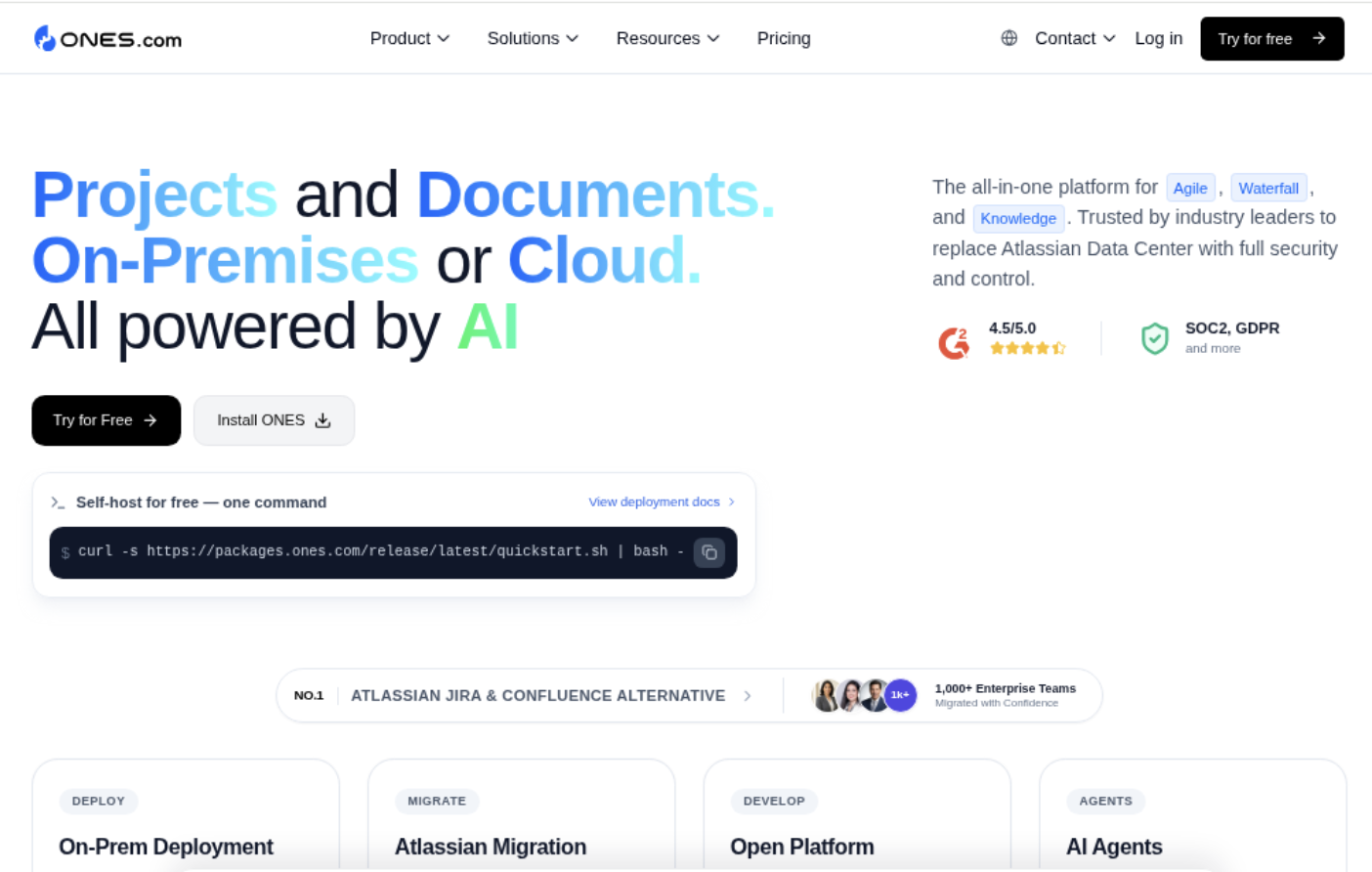
For teams comparing service operations, project workflows, and knowledge sharing together, ONES.com can be evaluated as part of a broader platform decision. The right choice depends on workflow depth, hosting requirements, migration effort, and the services your team actually needs.
Value Proposition
ONES.com can reduce reliance on multiple plugins by combining structured work management, reporting, custom workflows, and knowledge capabilities within one product family. It offers a free plan for up to 30 seats and four deployment options: Cloud, On-Premise, Private Cloud, and Air-gapped.
Core Capabilities
- Scattered project work → ONES Project provides Jira-compatible workflows → Teams can organize issues, backlogs, priorities, and ownership in a familiar structure.
- Inconsistent processes → Custom workflows and fields → Each team can capture the information and approval stages required for its work.
- Weak delivery visibility → Built-in reporting → Managers can review progress, workload, cycle trends, and bottlenecks without depending entirely on external reporting tools.
- Manual sprint coordination → Sprint management → Agile teams can plan iterations, assign work, and track completion in a consistent workspace.
- Repetitive administration → Automation → Routine transitions, notifications, and assignments can happen automatically when defined conditions are met.
- Plugin-heavy environments → Native capability parity between cloud and self-hosted versions → Teams can evaluate deployment flexibility without giving up the core feature set.
- Restricted-network requirements → Air-gapped deployment → Organizations with strict isolation requirements can consider an offline operating model.
- Separate project and knowledge spaces → ONES Project and ONES Wiki → Teams can connect delivery work with internal guidance while purchasing each product separately.
Application Scenarios
Regulated engineering team: A team operating in an air-gapped environment can use ONES Project for sprint planning, custom approvals, and reporting without relying on a public cloud connection.
Growing product organization: A product team moving beyond basic issue tracking can combine custom fields, automation, and built-in reports. ONES Wiki can hold product guidance when a separate knowledge product is appropriate.
Multi-team operations group: Project, operations, and support teams can assess shared workflows while preserving different fields, permissions, and process stages for each group.
Common Challenges and Practical Solutions
Unclear agent counts
Problem: Teams count every employee instead of counting people who need agent capabilities.
Solution: List each role, explain its access needs, and separate requesters, approvers, viewers, and active agents before requesting a quote.
Unexpected application costs
Problem: A low base estimate grows after teams add asset, reporting, approval, or time-tracking applications.
Solution: Create an application register with the owner, purpose, recurring charge, and renewal date. Review it before every renewal.
Over-customized workflows
Problem: Too many statuses, forms, and routing rules make the service desk difficult to use.
Solution: Start with the smallest workflow that supports the process. Add complexity only when a measurable operational need appears.
Annual commitment during rapid growth
Problem: A team signs an annual agreement before understanding hiring plans or service expansion.
Solution: Model three scenarios: current staffing, expected growth, and high-growth demand. Confirm seat adjustment rules before purchase.
Budgeting only for subscriptions
Problem: The budget ignores migration, administration, training, and ongoing workflow maintenance.
Solution: Separate one-time launch costs from recurring operating costs. Assign an owner for each category.
FAQs
How much does Jira Service Management Standard cost?
The commonly displayed cloud rate is approximately US$20 per agent per month at smaller seat counts. A 10-agent team would therefore estimate US$200 monthly or US$2,400 annually before taxes and extras. Your actual quote may change with seat tiers, billing terms, currency, regional taxes, promotions, and additional Atlassian products. Confirm the live price during checkout.
Do customers or employees who submit requests need paid seats?
People who only submit, view, or comment on requests through the portal generally do not need paid agent seats. Paid access usually applies to staff who triage, assign, resolve, configure, or administer service work. Review each role carefully because occasional support staff may still need agent permissions when they actively handle requests.
Is annual billing cheaper than monthly billing?
Annual billing may provide more predictable budgeting, but you should not assume it will always produce the lowest total. Annual pricing can use seat bands, commercial terms, and renewal rules that differ from a simple monthly calculation. Compare the complete annual quote with 12 months of expected monthly charges, including planned hiring and taxes.
What extra costs should I expect beyond the Standard subscription?
Common extras include additional Atlassian products, marketplace applications, implementation services, migration assistance, training, administration, and regional taxes. Asset management, advanced reporting, approval workflows, and time tracking may require additional capabilities or applications. Build a separate line for recurring extras and another for one-time setup work.
Can a small team start with Standard and upgrade later?
Yes, many teams begin with core service workflows and reassess their needs as request volume, staffing, and governance requirements change. Before starting, define the signals that would justify an upgrade, such as regional resilience needs, higher operational scale, or advanced administration. A clear review point helps prevent an upgrade driven by guesswork.
Conclusion
Jira Service Management Standard pricing is best estimated through the full operating picture. Start with active agent seats, then account for billing terms, taxes, connected products, applications, setup, and administration.
The practical planning formula is simple: paid agents multiplied by the displayed rate, plus recurring extras and one-time implementation costs. Test the calculation against current staffing and realistic growth.
The best part? A careful service catalog and disciplined application review can control spend without weakening the customer experience.
If your team is comparing broader work management options, evaluate ONES.com alongside workflow requirements, deployment preferences, reporting needs, and knowledge management plans. The right platform is the one that supports your process at a sustainable total cost.