Jira Software Cloud Pricing: A 2026 Cost Planning Guide
Planning Jira Software Cloud pricing for 2026? Compare plans, add-ons, taxes, and growth costs to avoid surprises. Read now to plan your budget.
Jira Software Cloud pricing can look simple until your team grows, adds premium features, or connects more services. A low per-user rate may become a large annual commitment after taxes and add-ons.
That uncertainty makes 2026 planning difficult. You may compare plan tiers while missing guest access, automation limits, marketplace apps, storage, or support requirements. A small planning mistake can create a costly renewal surprise.
Here’s the practical solution: calculate your full annual cost by team size, plan tier, add-ons, billing cycle, and expected growth. This guide shows you how to evaluate Jira Cloud costs clearly before you commit.
How to Plan Jira Software Cloud Costs in 2026
Jira Software Cloud pricing is the recurring cost of using Jira Software through Atlassian’s hosted platform. Your final spend depends on the plan, billable users, billing method, optional products, marketplace apps, and applicable taxes.
For a reliable estimate, use the current Atlassian pricing calculator or checkout estimate when you plan your purchase. Prices, limits, packaging, and promotional terms can change during 2026.
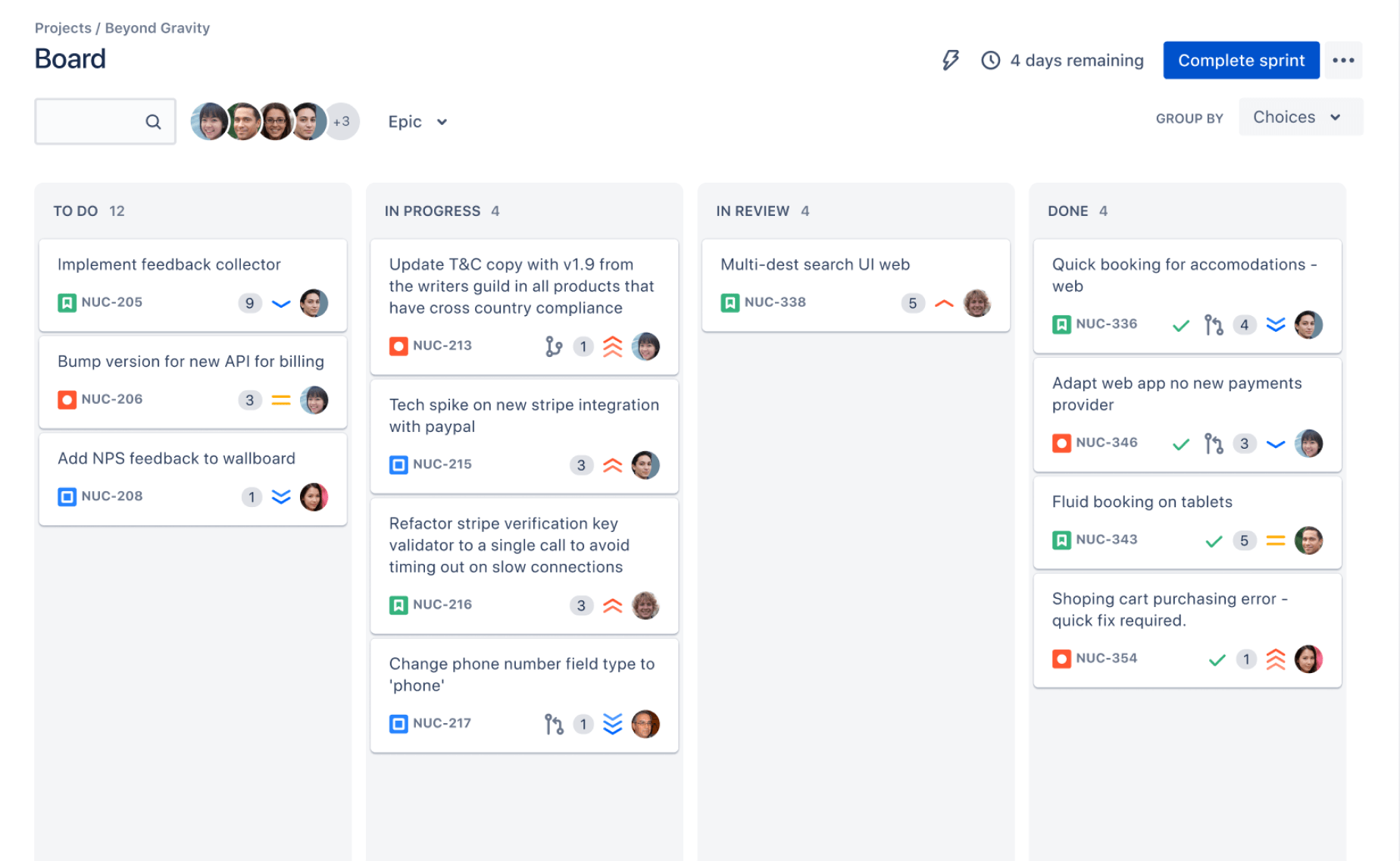
Start with the plan tier
Jira Cloud generally offers Free, Standard, Premium, and Enterprise options. Each tier supports a different level of team size, administration, security, reporting, and service management.
- Free: Useful for small teams testing Jira or managing lightweight work.
- Standard: Usually fits established teams that need broader collaboration and administration features.
- Premium: Suits organizations that need advanced planning, higher limits, and stronger continuity controls.
- Enterprise: Designed for larger organizations with multi-site governance, centralized administration, and commercial requirements.
Do not choose a tier only because it has more features. Match the plan to the requirements your team expects to use throughout the next contract period.
Count billable users carefully
Jira Cloud charges primarily according to the number of users covered by your subscription. A team with 25 people can have a very different cost from a team with 80 people.
Count employees, contractors, project managers, product owners, administrators, and occasional contributors who need access. Remove inactive accounts before renewal when your organization no longer needs them.
For example, a 60-person engineering group may initially need 45 Jira users. If sales, support, and leadership later join the same workspace, the subscription can move into a higher user band.
Separate product costs from app costs
Jira Software is only one part of many teams’ Atlassian spending. You may also need Confluence, Jira Service Management, Atlas, or marketplace applications.
Keep each product and app in a separate planning line. This makes it easier to see whether a higher Jira tier solves a real need or whether an extra app creates the larger increase.
| Cost category |
What to review |
| Jira plan |
Tier, user count, billing term, and included limits |
| Additional Atlassian products |
Confluence, Jira Service Management, and other subscriptions |
| Marketplace apps |
Per-user pricing, minimum user bands, and separate billing terms |
| Administration |
Migration, configuration, training, and ongoing ownership |
| Security and compliance |
Identity management, audit needs, governance, and approval requirements |
| Growth reserve |
Expected hiring, contractors, acquisitions, and seasonal usage |
Use a total-cost formula
A useful planning formula is:
Annual platform cost = subscription charge + additional products + marketplace apps + implementation work + administration + tax.
This calculation gives you a clearer view than the advertised monthly rate. It also helps you compare competing platforms using similar assumptions.
What Changes Your Jira Cloud Bill?
Several variables can change your final invoice. The largest usually include user growth, plan selection, billing frequency, optional applications, and contract structure.
User growth creates a compounding effect
Adding five people may appear minor. However, growth can move your account into a higher pricing band, increasing the cost for the whole subscription group.
Imagine a company that hires ten engineers, three product managers, and five contractors. Those 18 accounts may affect the total more than expected if they cross a user threshold.
Build three scenarios before approval:
- Current: The number of active users today.
- Expected: The likely number at the next renewal.
- Expansion: The number after planned hiring or organizational changes.
Monthly and annual billing serve different needs
Monthly billing offers flexibility when your team size changes frequently. Annual billing can simplify budgeting and may offer different commercial terms.
Compare both options using the same user count. A monthly estimate may seem attractive during experimentation, while an annual commitment may suit a stable team with predictable hiring.
You might be wondering: should you start monthly? Consider it when the team is still validating Jira. Annual billing becomes easier to justify after user demand and workflow requirements stabilize.
Plan limits can create indirect costs
Every tier has practical limits. These may relate to automation, storage, audit controls, administration, service availability, or advanced planning.
A lower tier can work well until your processes become more complex. Then teams may add apps or manual workarounds, creating more cost and administrative effort.
For example, a team may buy an app for reporting because its current plan lacks a preferred view. A higher Jira tier could be cheaper when the app, setup time, and maintenance are included.
Taxes, currency, and regional billing matter
Your displayed price may differ from the final amount because of taxes, currency conversion, regional billing rules, or invoicing arrangements.
Use the currency your finance team uses for planning. Record whether the estimate includes tax, and leave room for exchange-rate movement when the subscription is billed internationally.
Jira Cloud Free, Standard, Premium, and Enterprise Compared
The best plan depends on your operational requirements. A small team may need only issue tracking, while a global organization may prioritize governance and resilience.
| Plan direction |
Best fit |
Planning questions |
| Free |
Small teams and early trials |
Will the user limit, administration, and feature restrictions remain acceptable? |
| Standard |
Growing teams with regular delivery work |
Do you need more users, collaboration controls, and predictable administration? |
| Premium |
Organizations with advanced planning and continuity needs |
Will higher limits, advanced capabilities, and resilience justify the increase? |
| Enterprise |
Large or distributed organizations |
Do governance, centralized controls, and commercial support requirements justify a custom agreement? |
When Free may be enough
Free can suit a small product team with a simple backlog, limited contributors, and one administrator. It can also help you test Jira before committing to a paid tier.
Review the limits before relying on it for critical delivery work. A team that expects rapid growth may outgrow the plan quickly.
When Standard may make sense
Standard often fits teams that need a more established project environment. It can support regular sprint planning, issue tracking, permissions, and cross-functional collaboration.
Check whether the plan covers your expected user count and administration needs. A lower price can lose its advantage if the team spends significant time working around restrictions.
When Premium deserves consideration
Premium becomes relevant when larger teams require advanced planning, stronger service continuity, or higher operational limits.
Calculate the value of those capabilities using a real scenario. If a disruption would delay a major release, continuity features may influence the business case more than the monthly subscription difference.
When Enterprise requires a separate conversation
Enterprise planning often involves more than a public list price. Large organizations may need centralized controls, multiple business units, procurement review, and negotiated commercial terms.
Prepare an accurate user forecast and a list of governance requirements before requesting an enterprise estimate. Clear assumptions make the commercial discussion more useful.
A Practical 2026 Cost Planning Workflow
Use this workflow before selecting a Jira Cloud plan. It turns a vague subscription estimate into an approval-ready budget.
Step 1: Map every role that needs access
List each role that may require Jira access. Include engineers, testers, product managers, delivery leaders, administrators, contractors, and occasional reviewers.
Then mark each account as active, expected, or optional. This prevents temporary access from becoming a permanent recurring cost.
Step 2: Record current and projected headcount
Use current staffing as your starting point. Add planned hiring, contractor changes, acquisitions, and team transfers for the next 12 months.
Prepare a conservative scenario as well. A cautious estimate protects your budget when growth happens faster than planned.
Step 3: Identify required capabilities
Write down the capabilities your team actually needs. Examples include sprint management, automation, advanced reporting, audit controls, identity management, and stronger availability.
Map each requirement to the plan tier that supports it. This keeps the decision tied to business needs rather than feature volume.
Step 4: Review every connected app
Ask each team which apps they use for time tracking, roadmaps, testing, reporting, approvals, or release management.
Check whether each app charges separately. Also check whether the app’s pricing follows your Jira user count, active users, or a minimum subscription band.
Step 5: Estimate implementation effort
Include configuration, workflow design, permission setup, migration, training, and administrator time. These expenses may appear outside the subscription invoice, yet they affect the business case.
For example, a team may spend two weeks configuring workflows and training project leads. That effort belongs in the first-year estimate.
Step 6: Add a renewal buffer
Leave room for hiring, plan changes, currency movement, and newly required applications. The buffer should reflect your organization’s growth pattern.
A company with stable staffing may need a modest reserve. A rapidly expanding company should model several user bands instead.
Step 7: Recheck the estimate before approval
Validate the user count, billing term, plan tier, app list, tax treatment, and renewal assumptions.
Here's why: most subscription surprises come from incomplete assumptions. A short review can prevent months of avoidable budget pressure.
How to Compare Jira Cloud With Other Platforms
Compare platforms using the same scenario. Otherwise, one vendor may appear cheaper because you counted only its base subscription.
Use a consistent comparison model
Set a shared scenario, such as 75 users, three project types, two administrators, five integrations, and a three-year planning horizon.
Then compare subscription cost, implementation work, administration, customization, reporting, security, and exit requirements.
| Comparison area |
Questions to ask |
| Subscription |
What is the cost for current and projected users? |
| Workflow fit |
Can the platform support your approval, sprint, and release processes? |
| Administration |
How much specialist effort will configuration and maintenance require? |
| Integrations |
Which connections are native, and which require paid apps? |
| Hosting |
Does your organization require cloud, private hosting, or restricted-network deployment? |
| Exit flexibility |
How practical is it to export work and transition later? |
Measure cost per useful outcome
A platform’s value comes from completed work, reliable visibility, and reduced coordination effort. Include those outcomes in your evaluation.
For example, a tool that costs more may reduce manual status reporting by ten hours each week. A cheaper tool may require multiple paid apps and more administration.
The best part? You can test this with a small pilot. Track setup time, reporting effort, adoption, and workflow friction before expanding the subscription.
Jira Software Cloud Pricing Solution: ONES.com
Value Proposition
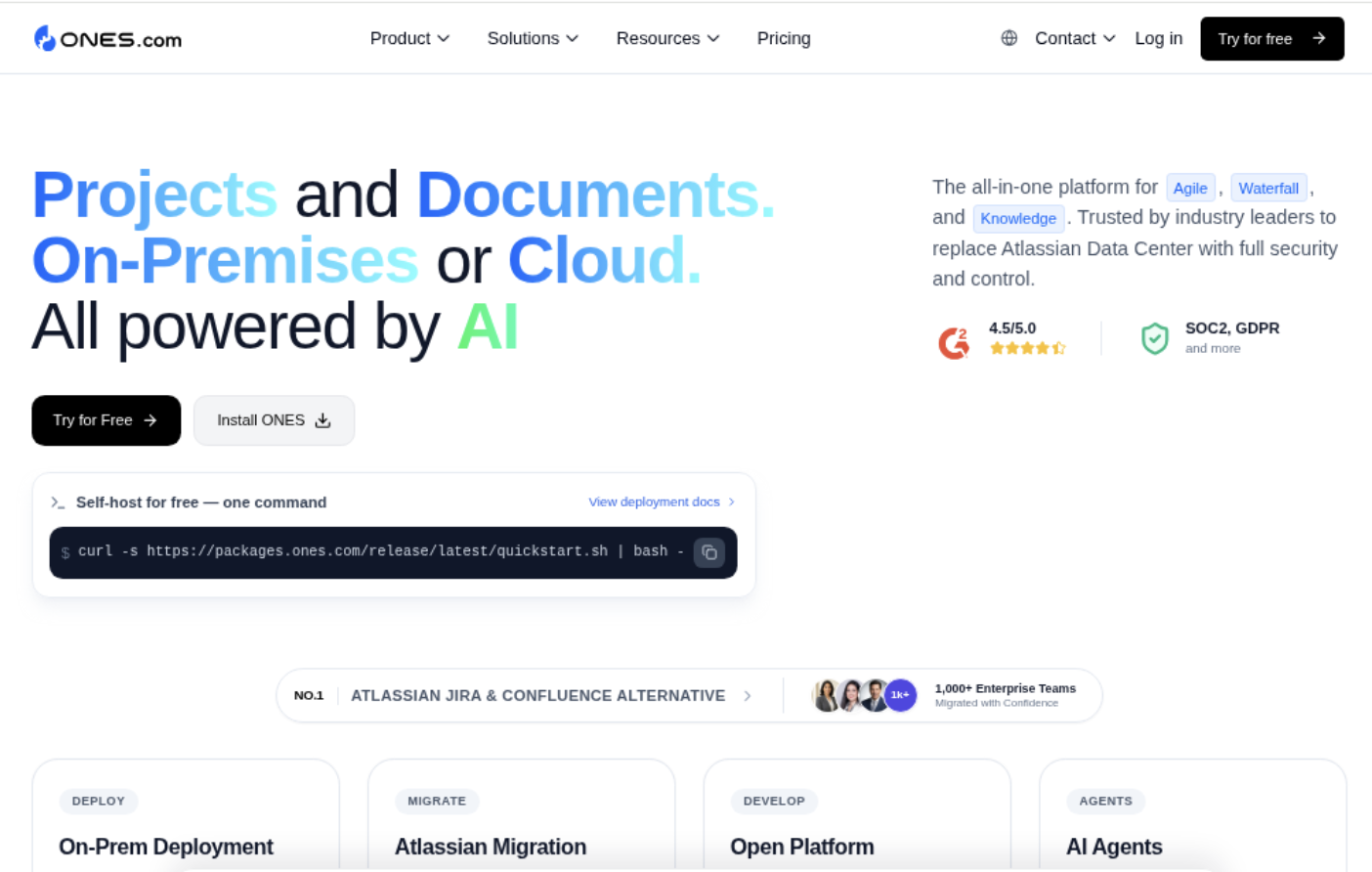
ONES.com combines project management and knowledge management in one platform. ONES Project provides Jira-compatible workflows, while ONES Wiki supports organized team knowledge.
ONES Project is sold separately from ONES Wiki. You can evaluate either product according to your team’s needs, with cloud and self-hosted deployment options available.
Core Capabilities
- Fragmented project tracking → ONES Project: Manage backlogs, issues, sprints, and releases in a unified project workspace. This can reduce the need to connect several basic tracking tools.
- Complex delivery processes → Custom workflows and fields: Configure statuses, approvals, fields, and transitions around your operating model. Teams can keep process rules visible inside project work.
- Limited planning visibility → Built-in reporting: Review delivery progress, workload, and project status through native reporting. This can reduce reliance on separate reporting utilities.
- Repetitive project administration → Automation: Automate routine transitions, assignments, notifications, and other recurring actions. Administrators spend less time handling predictable updates.
- Separate knowledge spaces → ONES Wiki: Organize product knowledge, team guidance, and project context alongside delivery work. This creates a closer connection between execution and shared knowledge.
- Restricted hosting requirements → Self-hosted deployment: Choose on-premise, private cloud, or air-gapped deployment when cloud-only access does not fit your environment.
- Different deployment behavior → Feature parity: Cloud and self-hosted versions provide full feature parity. Teams can choose a hosting model without giving up the core experience.
- Plugin dependence → Native capabilities: Use built-in project management features before adding multiple extensions. Fewer plugins may simplify administration and reduce recurring app costs.
- Migration concerns → Jira-compatible workflows: Teams familiar with Jira-style delivery processes can evaluate a similar operating approach. This may reduce retraining during platform assessment.
Application Scenarios
Scenario one: A regulated engineering team
A regulated team may need an air-gapped environment for sensitive product work. ONES Project can support project management in an air-gapped deployment while preserving the same core feature set.
Scenario two: A growing product organization
A product group may need sprint management, reporting, custom fields, and automation without assembling several plugins. ONES Project provides those capabilities within its project management environment.
Scenario three: A team connecting knowledge and delivery
A distributed team may struggle when requirements, decisions, and delivery tasks live in separate places. ONES Project and ONES Wiki can address those needs as separate products within the ONES.com platform.
Common Challenges When Estimating Jira Cloud Costs
Challenge: The user count is inaccurate
Problem: Inactive accounts, contractors, and occasional contributors make the estimate unreliable.
Solution: Review account activity, identify access owners, and create current, expected, and expansion scenarios before renewal.
Challenge: Marketplace apps are overlooked
Problem: Teams focus on the Jira subscription while separate apps increase the recurring bill.
Solution: Create an app inventory with owner, purpose, user band, renewal date, and cancellation impact.
Challenge: The cheapest tier creates manual work
Problem: A lower tier may require manual reporting, extra administration, or workaround processes.
Solution: Estimate staff time alongside subscription cost. Include configuration and recurring maintenance in the comparison.
Challenge: Growth crosses a pricing threshold
Problem: A small hiring increase can move the subscription into a higher user band.
Solution: Model pricing at several headcount levels. Use the highest realistic scenario for budget approval.
Challenge: The renewal arrives before review
Problem: Teams often inspect their subscription only when renewal is close.
Solution: Start a quarterly review of users, apps, plan fit, adoption, and upcoming organizational changes.
FAQs About Jira Cloud Cost Planning
Does Jira Software Cloud pricing depend on the number of users?
Yes, user count is usually one of the main factors. The final amount can also depend on the selected plan, billing term, additional Atlassian products, marketplace apps, taxes, and commercial arrangements. Count every person who needs access, including contractors and occasional contributors. Then model expected growth before selecting a tier.
Can I estimate my 2026 Jira subscription with today’s price?
You can use today’s displayed price as a planning reference, but treat it as provisional. Atlassian may change pricing, packaging, limits, taxes, or commercial terms before 2026 renewal. Recheck the live calculator or checkout estimate before approval. Keep a small budget reserve for user growth and pricing changes.
Is annual billing cheaper than monthly billing?
The answer depends on your plan, user count, billing arrangement, and current commercial terms. Monthly billing provides more flexibility when your team changes often. Annual billing can make budgeting easier for a stable organization. Compare both options using the same number of users and include taxes, apps, and expected growth.
Do Jira marketplace apps affect the total cost?
They can. Many apps have separate pricing, user bands, minimum charges, or renewal terms. Some apps calculate charges using your Jira user count even when only part of the organization uses them. Review every app before choosing a plan. A native capability in a higher tier may sometimes cost less than several external apps.
How should I budget for a growing team?
Create three scenarios: current users, expected users, and expansion users. Price each scenario across the plan tiers you are considering. Include new hires, contractors, acquisitions, and cross-functional contributors. This approach shows when your organization may cross a user threshold and gives finance a clearer range than one fixed estimate.
What should I include in a three-year comparison?
Include subscription charges, user growth, additional products, marketplace apps, implementation, administration, training, integrations, taxes, and renewal assumptions. Also consider migration effort and the cost of changing platforms later. A three-year view reveals recurring expenses that a first-year comparison can hide.
Conclusion
Jira Cloud cost planning becomes easier when you start with the complete annual picture. Count users carefully, select a tier around actual requirements, separate app costs, and model realistic growth.
But here's the truth: the displayed subscription rate is only one part of the decision. Administration, integrations, taxes, implementation, and workarounds can change the total significantly.
Use a current pricing estimate for your final numbers, then review the assumptions quarterly. If Jira’s structure, hosting model, or plugin requirements no longer fit, compare alternatives such as ONES.com using the same user scenarios and total-cost method.