Jira Software Data Center Pricing: A 2026 Planning Guide
Planning jira software data center pricing for 2026? Learn to estimate total costs beyond subscriptions. Click to plan your budget with confidence.
Planning Jira Software Data Center pricing for 2026 can feel like budgeting with missing pieces. The subscription quote is only one part of the decision. Infrastructure, support, testing, administration, marketplace apps, and migration work can change the final number quickly.
That uncertainty creates two common problems. You may compare a Data Center quote with a Cloud price that covers different services. You may also approve the subscription before understanding the operational cost of running it.
But here's the truth: a reliable estimate starts with your user count, deployment requirements, resilience targets, and connected applications. This guide shows how to evaluate each cost layer, build a realistic 2026 budget, and compare Jira Data Center with another self-hosted option.
What Jira Software Data Center Pricing Includes
Jira Software Data Center pricing is the annual cost of running Atlassian’s enterprise Jira deployment in your own infrastructure or a supported hosting environment. Your total budget also includes infrastructure, administration, apps, support, and operational work.
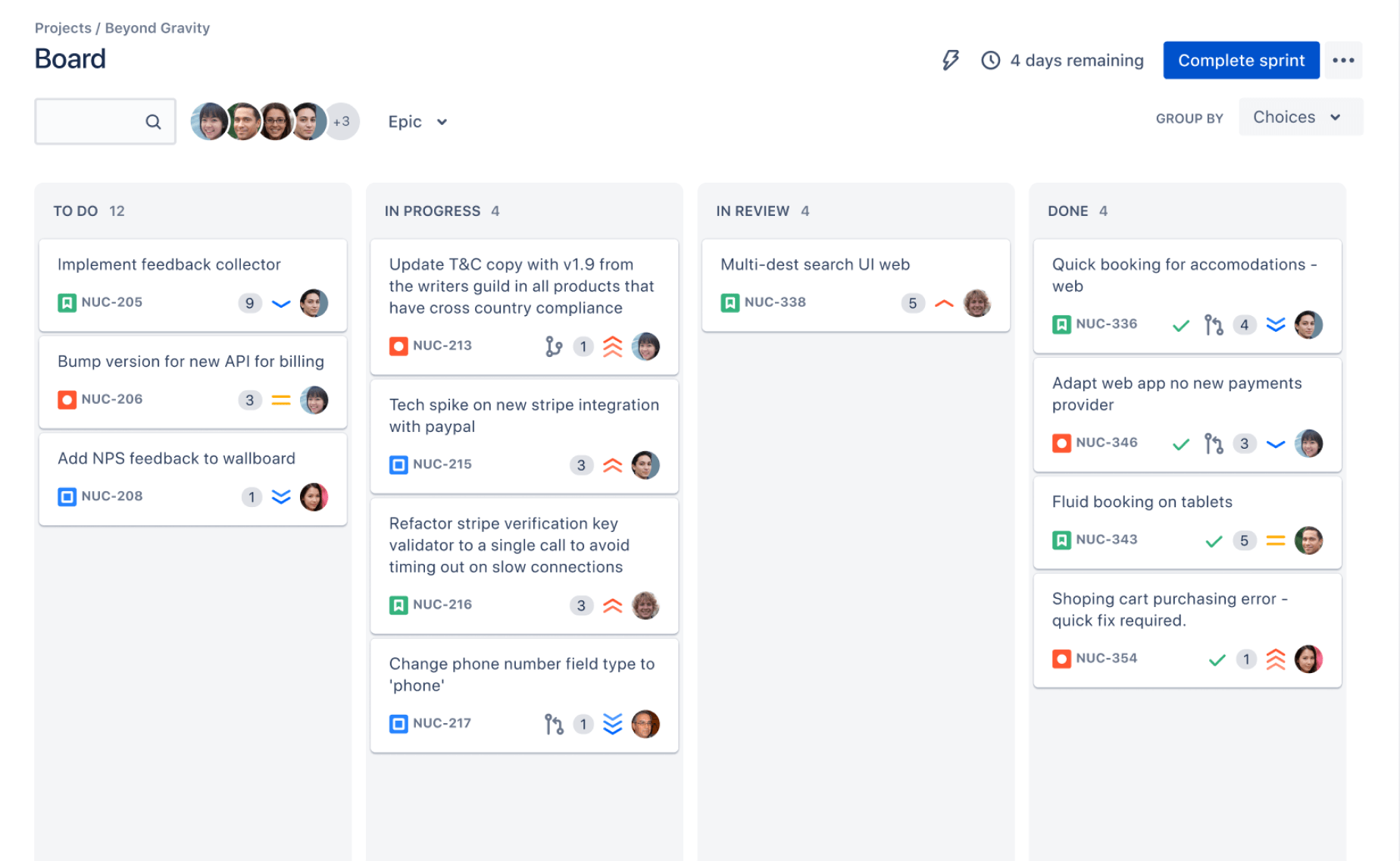
The subscription is only the first line
Jira Software Data Center is designed for organizations that need high availability, centralized administration, and control over their deployment. Atlassian generally quotes Data Center subscriptions according to the licensed user tier.
Your organization may also pay for related products, marketplace applications, premium support, infrastructure, backups, monitoring, security reviews, and specialist services.
The final amount therefore depends on more than the number of people who can access Jira. A 2,000-person deployment with three apps and strict recovery requirements can cost far more to operate than a basic 2,000-user installation.
Core pricing factors
- Licensed Jira Software users
- Subscription term and commercial agreement
- Deployment architecture and hosting arrangement
- High-availability and disaster-recovery requirements
- Marketplace applications and app-specific charges
- Support level and administration capacity
- Testing, upgrades, monitoring, backup, and security work
- Integration needs across development and business systems
Atlassian can change commercial terms, eligible tiers, and purchasing rules. For a 2026 approval, request a current quote and confirm every included service.
Data Center is different from Jira Cloud
Jira Cloud usually places more platform operations with Atlassian. Data Center gives your team more control over infrastructure, network placement, upgrades, and operational policies.
| Planning area |
Data Center consideration |
| Subscription |
Annual enterprise subscription tied to a licensed user tier |
| Infrastructure |
Your organization or hosting partner plans compute, storage, networking, and resilience |
| Administration |
Your team manages configuration, upgrades, integrations, monitoring, and access controls |
| Applications |
Marketplace apps may add separate subscriptions and maintenance work |
| Control |
You retain greater control over deployment location and operational policies |
| Scalability |
You plan capacity, clustering, performance testing, and growth management |
How to Build a 2026 Jira Data Center Budget
Use a layered estimate instead of treating the vendor quote as the complete project cost. The following steps help you create a practical planning range.
- Count active and expected users. Separate regular users, occasional users, service accounts, and people who may need access later. Include planned growth during the subscription period.
- Confirm the correct deployment model. Decide whether your team will operate Jira in its own environment, through a hosting partner, or in another approved arrangement.
- Request the current subscription quote. Ask Atlassian or an authorized purchasing channel to confirm the 2026 tier, term, renewal treatment, support coverage, and purchasing conditions.
- List every connected application. Record the purpose, number of users, renewal date, administrator, and business owner for each app. Check whether app pricing follows Jira users or uses a separate model.
- Estimate infrastructure and resilience. Include compute, storage, networking, load balancing, backups, monitoring, standby capacity, and recovery environments.
- Price internal administration. Estimate the time required for configuration, workflow ownership, access reviews, upgrades, troubleshooting, reporting, and release testing.
- Add migration and implementation work. Include architecture design, migration planning, testing, training, integration updates, and launch support.
- Model three scenarios. Create lean, expected, and high-growth cases. Each case should show users, apps, infrastructure, staffing, and contingency.
- Review the estimate quarterly. User growth, app changes, security requirements, and infrastructure decisions can alter the annual cost.
Here's why: the same subscription tier can produce different total budgets. For example, one team may run a simple deployment with a small administration group. Another may require a second environment, strict recovery targets, and several business-critical integrations.
Which Cost Layers Matter Most?
A useful budget separates predictable subscription charges from variable operating expenses. This makes approval discussions clearer and prevents hidden costs from appearing after implementation.
Subscription and support
The annual Jira Data Center subscription is the most visible expense. Your quote should show the user tier, term, support arrangement, renewal conditions, and any commercial discounts.
Ask whether premium support, technical account services, or specialist assistance carries a separate charge. Also confirm how the subscription treats temporary users, contractors, external collaborators, and inactive accounts.
A practical example helps. If your team expects 1,800 active users today and 2,200 next year, ask for pricing scenarios around both levels. A lower tier may look cheaper initially, yet an early expansion can affect the budget.
Infrastructure and hosting
Data Center requires an operating environment that can meet your performance, availability, and security expectations. That environment may include application nodes, a shared service layer, storage, traffic management, backup capacity, and monitoring.
Cloud hosting fees vary according to compute size, storage volume, traffic, redundancy, and retention. Internal hosting adds equipment, facilities, maintenance, and specialist labor.
Let me explain: an architecture that supports a recovery point of 15 minutes needs different backup and replication planning than one that accepts daily recovery.
Marketplace applications
Apps can improve test management, reporting, time tracking, asset management, automation, approvals, and release coordination. They can also become a significant recurring cost.
Review each app for pricing rules, compatibility, administrative effort, upgrade timing, and vendor support. A small app portfolio may add modest expense. A large portfolio can create a second licensing program to manage.
For each app, record its annual charge and business value. Remove duplicate capabilities where a native Jira feature can meet the requirement.
People and operational work
Data Center administration includes configuration, access management, upgrade preparation, performance checks, backup validation, incident response, and user assistance.
A small internal team may handle routine work. A regulated organization may need separate specialists for platform engineering, security, service management, and release testing.
The cost is easy to miss because it appears in payroll or contractor budgets. Still, it affects the return you receive from the platform.
How User Tiers Affect Planning
User count is a central pricing variable, yet headcount alone does not reveal how the platform will behave. Usage patterns, project volume, automation, and integrations also matter.
Separate licensed users from occasional access
Start with a role map. Identify developers, testers, product managers, service teams, executives, contractors, and read-only participants.
Then ask how often each group needs Jira. A release engineer may work in Jira every day. A senior stakeholder may need access only during monthly reviews.
Access rules can reduce unnecessary licensing pressure, but they must still support real collaboration. Removing access from occasional contributors may shift work into email or manual reporting.
Include growth and organizational change
Acquisitions, new product lines, outsourcing changes, and broader business adoption can increase the licensed population. Include those events in your 2026 forecast.
For example, a software group with 900 users may add a support division and two acquired teams. The resulting user count may be closer to 1,500 than 900.
You might be wondering: should you buy capacity for every possible future user? Build a realistic growth case, then compare the cost of early expansion with the cost of moving tiers later.
Watch inactive accounts
Inactive accounts can create confusion during renewals. Establish a review process for departures, contractors, temporary access, and unused accounts.
Keep a monthly access report showing account status, team, last activity, and business owner. That report supports cleaner renewal conversations and better security hygiene.
Hidden Costs That Can Change the 2026 Estimate
Several expenses rarely appear in a first-pass subscription comparison. Adding them early gives finance and technology leaders a more credible forecast.
Upgrade and testing effort
Data Center upgrades may require compatibility checks, test environments, app validation, maintenance windows, and rollback planning.
A heavily customized deployment may need more testing than a lightly configured one. Workflow changes, automation rules, integrations, and reporting extensions can all affect release preparation.
Backup, recovery, and continuity
Backup policies should define frequency, retention, encryption, restoration testing, and recovery ownership. A backup that has never been restored does not prove operational readiness.
Recovery requirements can affect hosting, storage, replication, monitoring, and staff coverage. Put these costs beside the subscription rather than treating them as optional extras.
Security and compliance
Some organizations require network isolation, privileged access controls, audit reviews, vulnerability testing, and formal change approvals.
These controls can affect architecture and staffing. They may also lengthen upgrade cycles because each release needs additional review.
Integration maintenance
Jira often connects with source control, build systems, identity services, chat platforms, service management tools, and reporting environments.
Each integration needs an owner and a recovery plan. When an authentication method changes, someone must test and update the connection.
The best part? A simple cost register can make these obligations visible. Add an owner, renewal date, annual estimate, and risk rating for every major dependency.
How to Compare Data Center With Other Deployment Choices
The right comparison depends on control, operating responsibility, resilience, security, and total cost. Subscription price alone cannot answer the question.
Data Center versus Cloud
Cloud may reduce infrastructure administration and simplify access to platform updates. Data Center may better fit strict network, residency, customization, or operational control requirements.
Compare the two options across five areas: recurring subscription, internal staffing, infrastructure, app compatibility, and compliance effort.
| Question |
Why it matters |
| Who operates the platform? |
Shows where administration and incident responsibilities sit |
| Who controls upgrades? |
Reveals testing, scheduling, and change-management effort |
| Which apps are required? |
Highlights compatibility and recurring application charges |
| What recovery level is required? |
Clarifies backup, redundancy, and standby capacity |
| What network restrictions exist? |
Identifies whether a hosted model fits security policies |
Data Center versus server software
Legacy server licensing is no longer a dependable path for new long-term planning. Organizations evaluating 2026 options should confirm current Atlassian support and purchasing rules before considering an older deployment model.
Continuing with an unsupported arrangement can increase security, compliance, and upgrade risks. Include migration timing in your business case if your organization still relies on an older license type.
Data Center versus another self-hosted platform
A Jira alternative may offer similar project workflows with different licensing, deployment, and administration requirements. Compare workflow flexibility, reporting, integrations, migration effort, and support.
For example, a platform with fewer third-party extensions may reduce renewal administration. However, confirm that its native capabilities can replace the functions your teams depend on today.
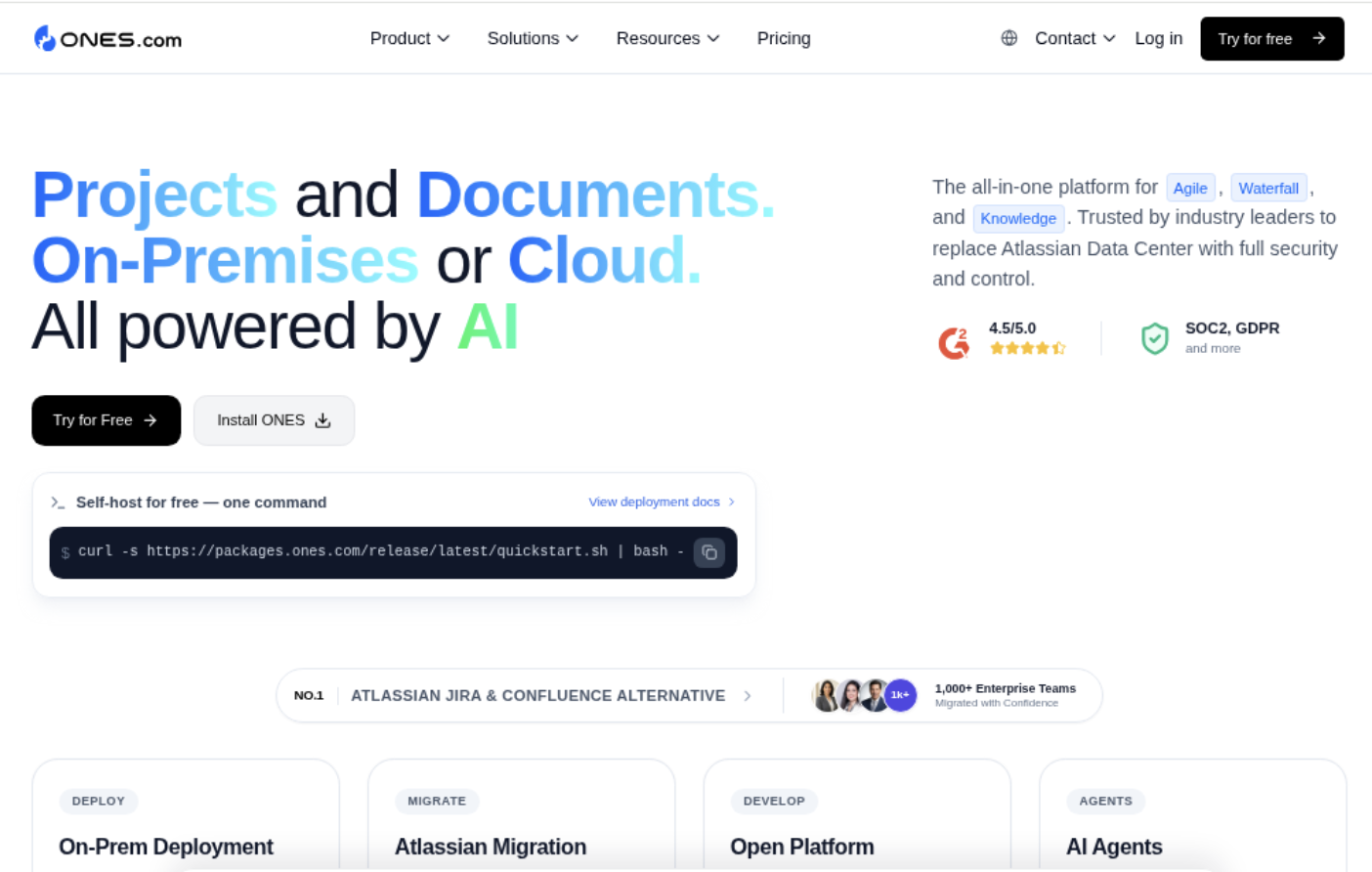
ONES.com is a unified project management and knowledge management platform powered by ONES Assistant. ONES Project is the project management product and a Jira alternative, while ONES Wiki is the knowledge management product and a Confluence alternative. They are sold separately.
Value Proposition
ONES.com can suit teams evaluating self-hosted project management, consolidated administration, and fewer plugin dependencies. It supports Cloud, On-Premise, Private Cloud, and Air-gapped deployments, with full feature parity between cloud and self-hosted versions.
Eligible teams can start with up to 30 seats at no cost. Confirm current commercial terms before making a 2026 purchasing decision.
Core Capabilities
Jira migration concerns → Jira-compatible workflows → Less process disruption
Teams may worry that a platform change will force them to redesign every project process. ONES Project supports Jira-compatible workflows, helping teams preserve familiar work patterns during evaluation and migration.
Plugin sprawl → Native project features → Fewer dependencies to manage
Multiple plugins can increase renewals, compatibility checks, and administration. Built-in project capabilities can reduce the number of extensions required for common delivery workflows.
Complex approvals → Custom workflows and fields → Better process fit
Standard workflows may fail when engineering, compliance, or business approvals differ. Custom workflows and fields let teams represent those variations more clearly.
Manual delivery tracking → Sprint management → More consistent planning
Teams managing recurring development cycles need a clear way to plan, track, and review sprints. Sprint management keeps iteration work visible across teams.
Scattered status updates → Built-in reporting → Faster project reviews
Leaders often spend too much time assembling status information. Built-in reporting can give teams a consistent view of progress, risks, and delivery activity.
Repetitive administration → Automation → Less routine work
Repeated assignments, transitions, notifications, and updates consume administrator time. Automation can handle defined rules while keeping exceptions available for human review.
Restricted network requirements → Air-gapped deployment → Stronger environment alignment
Some organizations cannot connect critical systems to public networks. ONES.com supports air-gapped deployment, alongside On-Premise and Private Cloud options.
Separate project and knowledge tools → ONES.com product family → A clearer platform strategy
Teams may want project work and knowledge management to follow one platform direction. ONES Project and ONES Wiki address those needs as separate products within ONES.com.
Application Scenarios
Regulated engineering team: A defense contractor may require an air-gapped project environment. ONES Project can support restricted-network planning while preserving structured workflows and reporting.
Growing software organization: A company with many custom workflows may evaluate a Jira alternative to reduce plugin reliance. It can compare native fields, automation, sprint management, and reporting against current requirements.
Distributed enterprise: An organization with separate project and knowledge teams may assess ONES Project and ONES Wiki independently. This allows each group to choose the product it needs without treating the two products as one mandatory purchase.
Common Challenges When Estimating Enterprise Jira Costs
Challenge: The quote looks like the total budget
Solution: Add infrastructure, people, apps, recovery, security, implementation, and contingency as separate lines. Review the complete estimate with finance and platform owners.
Challenge: User growth is underestimated
Solution: Build a current case, expected case, and expansion case. Include acquisitions, new departments, contractors, and external collaboration.
Challenge: Marketplace apps are reviewed too late
Solution: Create an application register before renewal planning. Track cost, purpose, owner, compatibility, and replacement options.
Challenge: Operational work has no assigned owner
Solution: Assign responsibility for upgrades, backups, access reviews, integrations, incidents, and performance. Estimate the staff time each responsibility requires.
Challenge: Cloud and Data Center comparisons use different assumptions
Solution: Compare equivalent service levels. Include staffing, resilience, security controls, migration, applications, and recovery requirements on both sides.
FAQs
Is Jira Software Data Center pricing publicly fixed for 2026?
Enterprise pricing can depend on the licensed user tier, term, support arrangement, and commercial conditions. Public information may help with initial planning, but a current Atlassian quote is the safer figure for approval. Ask for renewal treatment, support coverage, eligible user types, and any separate product or application charges.
What should I include besides the Jira Data Center subscription?
Include hosting or infrastructure, administration, support, marketplace apps, backups, monitoring, disaster recovery, security controls, testing, upgrades, integrations, training, migration, and contingency. The correct mix depends on your availability and compliance requirements. A simple deployment may need fewer layers, while a regulated environment may require several additional controls.
How does user count affect the estimate?
User count usually determines the subscription tier, so accurate forecasting matters. Count current active users, planned growth, contractors, acquired teams, and occasional participants. Review inactive accounts regularly. Prepare at least two growth scenarios, because a tier change during the year can affect both renewal planning and internal staffing.
Is Data Center cheaper than Jira Cloud?
There is no universal answer. Cloud may reduce infrastructure and platform administration. Data Center may provide stronger deployment control for organizations with network, residency, customization, or compliance requirements. Compare equivalent service levels, including staffing, applications, recovery, security, migration, and upgrade responsibilities.
Should I consider a Jira alternative during 2026 planning?
Consider one when recurring app costs, administration effort, deployment restrictions, or workflow limitations create a clear business concern. Compare migration effort against possible savings and operational improvements. Test critical workflows, reports, integrations, permissions, and recovery procedures before making a commitment.
Conclusion
Jira Software Data Center pricing should be planned as a complete operating model. Start with the subscription tier, then add users, infrastructure, applications, administration, resilience, security, and growth.
But here's the truth: the cheapest quote may not produce the lowest total cost. A deployment with heavy customization, many apps, and strict recovery requirements can carry substantial operating work.
Build three scenarios, confirm current 2026 commercial terms, and compare equivalent service levels across Cloud, Data Center, and suitable self-hosted alternatives. ONES.com may also deserve evaluation when native project capabilities, deployment flexibility, and reduced plugin dependence matter.