Jira Software Explained: A Clear Guide for New Users [2026]
What is Jira Software? Learn how issues, epics, sprints, backlogs, and workflows fit together in this beginner-friendly guide. Click to get started!
Jira Software can feel overwhelming when every screen introduces a new term: issues, epics, sprints, backlogs, workflows, and boards. You may understand that it helps software teams manage work, yet still wonder where to begin. That uncertainty creates real problems. A poorly configured project can bury priorities, confuse responsibilities, and turn a simple bug into a long trail of status changes. New users often click through menus without understanding the system behind them. The solution is a clear mental model. Once you see how Jira organizes work, supports Agile planning, and connects daily tasks to larger goals, the interface becomes easier to navigate. This guide explains what Jira Software is, how its main features work, and how you can use it confidently in 2026.
What Is Jira Software?
Jira Software is a project management platform for software teams that organizes work into issues, plans development cycles, tracks progress, and supports Agile methods such as Scrum and Kanban. Teams use it to manage bugs, feature requests, technical tasks, releases, and product priorities in one shared workspace.
Jira Software is part of Atlassian’s Jira product family. It is designed around work items called issues. An issue might represent a bug, a user story, a task, an improvement, or another piece of work.
Each issue can include a description, owner, priority, status, labels, comments, activity history, and related work. That structure gives your team a consistent way to understand what needs attention.
But here's the truth: Jira is easier to learn when you understand the workflow before exploring every menu.
What Jira Helps You Manage
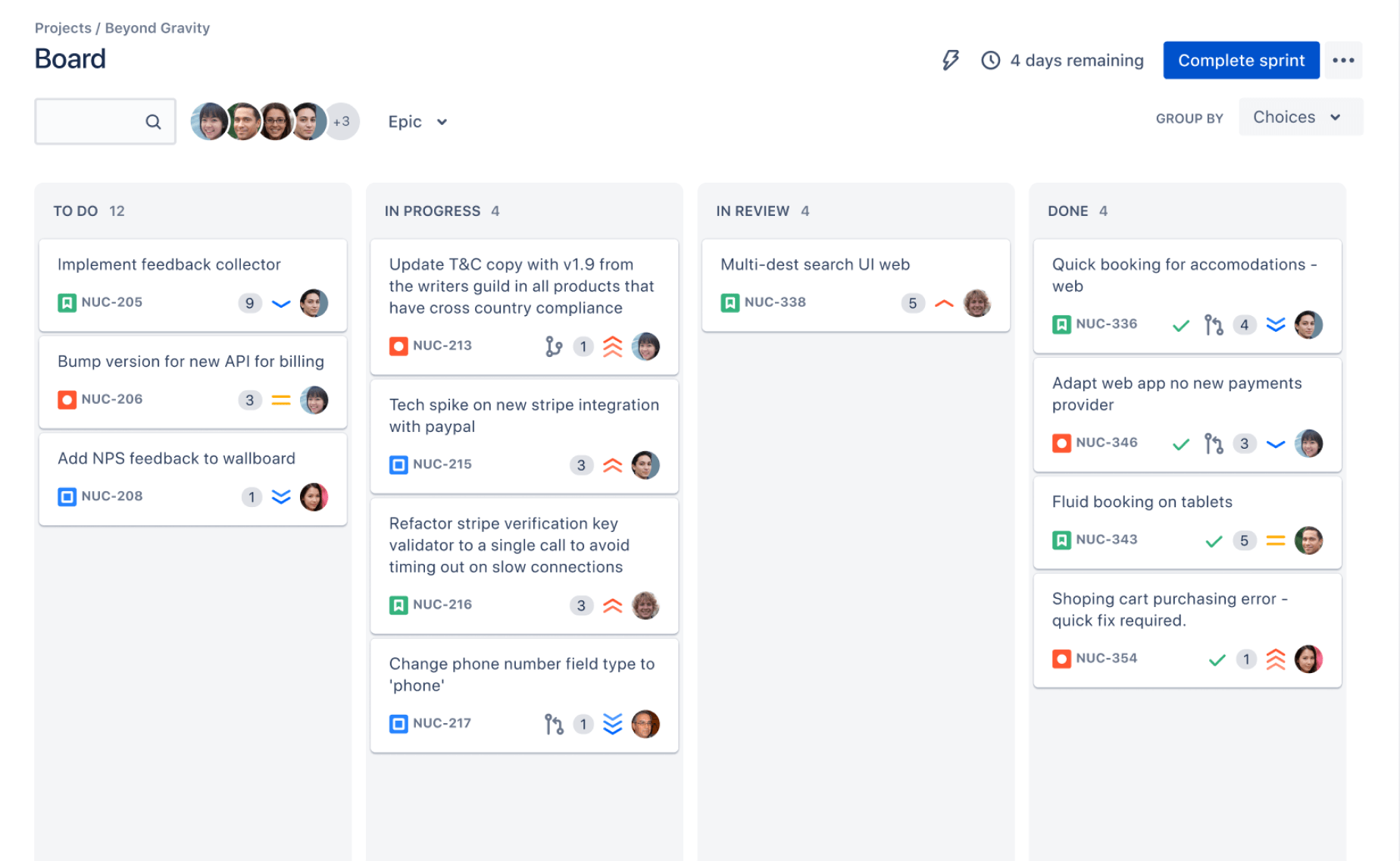
Jira Software helps software teams move work through a defined delivery process. A common path might look like this:
- A product manager creates a feature request.
- The team clarifies the request and adds acceptance criteria.
- A developer takes the work into an active sprint.
- A reviewer checks the implementation.
- The team marks the issue complete after validation.
You can adjust those stages to match your team. A small startup may use To Do, In Progress, and Done. A regulated engineering group may add analysis, review, testing, approval, and release stages.
Key Jira Concepts at a Glance
| Concept |
What it means |
| Issue |
A trackable piece of work, such as a bug, task, story, or improvement. |
| Project |
A workspace that groups related issues, settings, workflows, and reports. |
| Board |
A visual view of work arranged by status, often used with Scrum or Kanban. |
| Backlog |
A prioritized list of work waiting to be planned or completed. |
| Epic |
A larger initiative that groups several related issues. |
| Sprint |
A fixed work period used by Scrum teams to plan and complete selected issues. |
| Workflow |
The sequence of statuses and transitions an issue follows. |
| Version |
A planned product release or delivery milestone. |
How Jira Software Works in Practice
Jira connects planning, execution, and reporting through the issue lifecycle. You create work, organize it, assign responsibility, track movement, and review the outcome.
1. Create a Project
You usually begin by creating or joining a project. A project provides a shared space for related product or engineering work.
Jira offers project templates for approaches such as Scrum, Kanban, bug tracking, and general project management. The template affects the initial board, issue types, workflows, and planning screens.
For example, a mobile app team might create a Scrum project for feature development. A support engineering group may choose a Kanban project to handle incoming defects continuously.
2. Add and Define Issues
An issue should explain what needs to happen and why it matters. Strong issue descriptions reduce clarification later.
A useful feature issue might include:
- A short, specific summary.
- The customer or business problem.
- Acceptance criteria.
- Priority and affected product area.
- An expected owner or responsible team.
- Links to related issues.
For a login improvement, “Improve login” is vague. “Allow users to sign in with passkeys on Android” gives the team a clearer starting point.
3. Organize Work in the Backlog
The backlog is where teams collect and prioritize upcoming work. You can reorder issues so the most valuable or urgent items appear first.
Product managers often use epics to group related work. For example, an epic called “Faster checkout” might contain payment retries, saved cards, order confirmation improvements, and performance testing.
Prioritization should consider customer value, risk, effort, dependencies, and timing. A small security fix may deserve attention before a larger visual enhancement.
4. Plan a Sprint or Flow
Scrum teams select issues for a sprint, which commonly lasts one to four weeks. They discuss capacity, clarify requirements, and agree on a realistic sprint goal.
Kanban teams usually pull work continuously. Instead of planning a fixed batch, they limit the amount of active work and move issues forward as capacity becomes available.
Here's why: the board is more useful when it reflects real work limits. If every task appears active, your team cannot easily see where work is stuck.
5. Move Issues Through the Workflow
As work progresses, team members update issue statuses. A basic workflow may include To Do, In Progress, In Review, and Done.
Status changes should communicate meaningful progress. Moving an issue to In Review should mean that the implementation is ready for review, not simply that someone opened the issue.
You can also use rules that require specific information before a transition. For example, Jira may require a resolution note before an issue moves to Done.
6. Review Progress With Reports
Jira reports help teams inspect progress, delivery patterns, workload, and sprint outcomes. Common examples include burndown charts, velocity charts, cumulative flow diagrams, and control charts.
These reports are most helpful when you use them to ask practical questions:
- Why did several issues remain in review?
- Did the sprint goal match the team’s actual capacity?
- Where does work wait the longest?
- Are urgent requests disrupting planned work?
Jira Software Features New Users Should Learn First
You do not need to master every Jira feature on your first day. Focus on the features that affect daily planning and visibility.
Issues and Issue Types
Issue types create consistency. A bug records a defect, a story describes customer-facing value, and a task captures a specific piece of work.
Your team should keep issue types understandable. Too many specialized types make reporting harder and force people to debate classification instead of solving problems.
Boards
A board displays issues by status. Scrum boards emphasize sprint planning and completion, while Kanban boards emphasize continuous flow.
Columns should represent meaningful stages. If your team has six columns but most work sits in one of them, the board may need adjustment.
Backlogs
The backlog provides a planning queue. It allows you to capture future work without placing every idea on the active board.
A healthy backlog is regularly reviewed. Remove outdated requests, combine duplicates, and clarify items before they reach sprint planning.
Epics
Epics connect related issues to a larger objective. They are useful when a project involves several teams or delivery stages.
For example, an “Account security” epic could include multi-factor authentication, suspicious-login alerts, password reset improvements, and security testing.
Sprints
Sprints create a short planning horizon. They encourage teams to define a goal, select achievable work, and inspect the result at the end.
A sprint is not simply a container for every available task. It should represent a deliberate commitment that fits the team’s capacity.
Workflows
A workflow controls how issues move. It can include statuses, transitions, conditions, validators, and automation.
A simple workflow is often better for a new team. Add complexity only when a real approval, compliance, or handoff problem requires it.
Dashboards
Dashboards bring selected information into one view. A team dashboard might show assigned work, blocked issues, sprint progress, and recently updated items.
Keep dashboards focused. A screen with twenty gadgets can make important signals harder to notice.
JQL Searches
Jira Query Language, or JQL, lets you find issues with precise conditions. A simple query might locate unresolved high-priority bugs assigned to a particular team.
For example, a search can combine project, status, priority, label, and assignee conditions. Saved searches can then support dashboards, recurring reviews, and team queues.
Scrum and Kanban in Jira
Jira Software supports both Scrum and Kanban, but the methods solve different planning needs. Choosing the right approach depends on how work arrives and how your team delivers it.
When Scrum Fits
Scrum works well when your team can plan a focused group of work for a fixed period. A product team developing a new checkout experience may choose two-week sprints.
The team sets a sprint goal, selects issues, holds a daily check-in, and reviews the outcome. Retrospectives create a regular opportunity to improve the process.
Scrum can struggle when urgent work constantly interrupts planned commitments. In that case, the team may need a clearer emergency path or a Kanban approach.
When Kanban Fits
Kanban suits teams handling a steady stream of requests. A platform operations team may receive incidents, access requests, maintenance tasks, and reliability improvements throughout the week.
The team limits active work and focuses on flow. If the review column reaches its limit, team members help clear reviews before starting new tasks.
The goal is not to fill every column. The goal is to help work reach completion with fewer delays.
Can You Combine the Approaches?
Many teams use a hybrid approach. They may plan selected work in sprints while maintaining a separate path for urgent defects.
The important part is clarity. Everyone should know which work belongs in the sprint, what can interrupt it, and how urgent requests affect capacity.
Best Practices for New Jira Users
Jira becomes more useful when your team agrees on a few operating rules. These practices keep the system understandable without creating unnecessary administration.
- Write issue summaries that describe the action or problem.
- Keep acceptance criteria specific and testable.
- Assign one clear owner when accountability matters.
- Use labels consistently and avoid near-duplicate terms.
- Limit work in progress so blocked work becomes visible.
- Review stale issues during backlog maintenance.
- Keep workflows simple until a clear need for complexity appears.
- Close completed work promptly so reports remain reliable.
- Use comments for decisions that future teammates may need.
- Link related issues when dependencies affect delivery.
Let me explain: consistency matters more than configuration volume. A small team with a simple, trusted workflow often gets more value than a large team with an elaborate setup nobody follows.
Write Better Issues
Compare these two summaries:
- Weak: “Search problem.”
- Stronger: “Search returns empty results when a product name contains an apostrophe.”
The second summary gives developers a clearer investigation path. Add steps to reproduce, expected behavior, actual behavior, and relevant conditions when reporting a bug.
Use Clear Ownership
Unassigned work is easy to overlook. Assign an issue when someone is responsible for its next meaningful action.
Ownership can change during the lifecycle. A developer may own implementation, while a tester owns verification. Your workflow should make that handoff visible.
Separate Priority From Urgency
Priority helps compare work. Urgency describes timing pressure. A high-priority feature may be planned for next month, while a lower-priority production issue may require immediate attention.
Agree on definitions so the priority field does not become a general expression of frustration.
Common Jira Mistakes and How to Avoid Them
New teams often encounter the same problems during the first few months. Recognizing them early can prevent confusion.
Creating Too Many Statuses
A workflow with statuses such as Design Started, Design Complete, Development Started, Development Complete, Ready for Review, Review Started, and Review Complete may appear precise.
In practice, team members may update statuses inconsistently. Start with meaningful stages, then add detail only when a delay or approval requirement justifies it.
Treating the Backlog as a Storage Area for Every Idea
An unchecked backlog becomes difficult to trust. If hundreds of outdated requests remain, the team may stop using it for planning.
Schedule a regular review. Archive obsolete ideas, merge duplicates, and add enough context to worthwhile items.
Using Sprints as Deadlines for Everything
A sprint creates a planning window. It does not guarantee that every selected issue will finish, especially when requirements change or unexpected work appears.
Track the sprint goal and explain changes openly. That creates better learning than quietly carrying unfinished work forward.
Adding Plugins Before Fixing the Process
Extra apps can extend Jira, but they also add cost, permissions, maintenance, and training requirements.
First ask whether the issue comes from missing functionality or unclear team habits. A better workflow may solve a problem that appears to require another app.
ONES.com is a unified platform for project management and knowledge management, powered by AI through ONES Assistant. ONES Project provides project management capabilities as a Jira alternative, while ONES Wiki provides knowledge management capabilities as a Confluence alternative. You can purchase them separately.
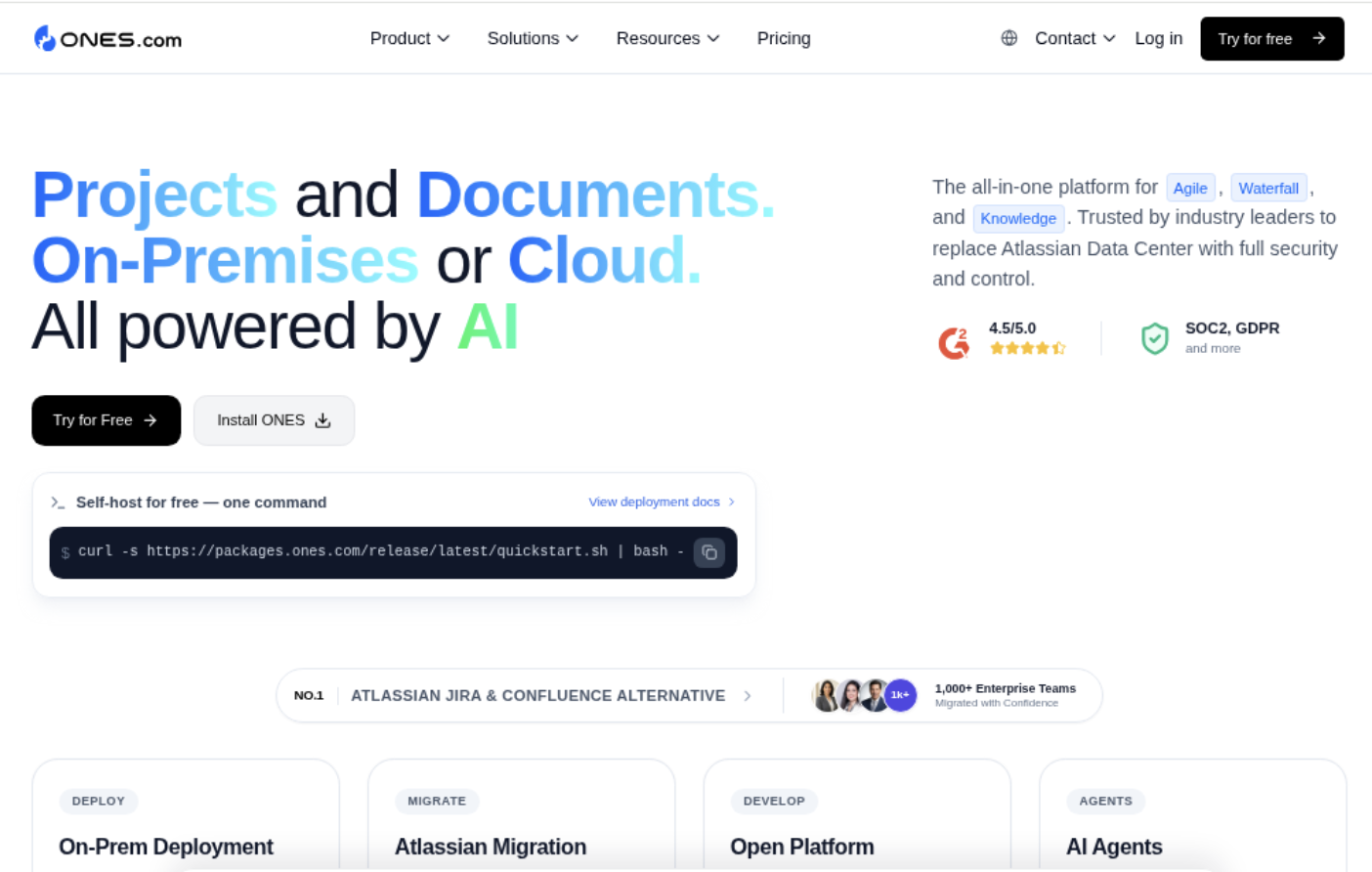
The platform supports Cloud, On-Premise, Private Cloud, and Air-gapped deployments. It offers a free plan for up to 30 seats, and its self-hosted version maintains feature parity with the cloud version.
Value Proposition
ONES.com suits teams that want Jira-compatible workflows, native reporting, and flexible deployment without depending on a large collection of plugins.
It can be especially relevant when on-premise or air-gapped operation matters alongside familiar Agile planning.
Core Capabilities
Issue Tracking for Scattered Work
Pain: Teams lose requests across chat messages, email threads, and disconnected task lists.
ONES capability: ONES Project centralizes issues with custom fields, ownership, priorities, comments, and relationships.
Result: You get a clearer view of responsibility and progress without asking several people for separate updates.
Jira-Compatible Workflows for Migration Concerns
Pain: Teams hesitate to change platforms because their current statuses, issue types, and Agile habits are deeply established.
ONES capability: ONES Project supports Jira-compatible workflows and customizable fields.
Result: Your team can preserve familiar planning patterns while evaluating a different project management environment.
Native Reporting for Visibility Gaps
Pain: Important progress signals may require multiple views or additional extensions.
ONES capability: Built-in reporting helps teams inspect progress, workload, sprint performance, and delivery patterns.
Result: Managers and contributors can review project health within the same platform.
Sprint Management for Agile Teams
Pain: Sprint planning becomes inconsistent when the backlog, active work, and progress views are disconnected.
ONES capability: ONES Project includes backlog organization, sprint management, boards, and issue tracking.
Result: Teams can plan a sprint, execute work, and review progress through a connected workflow.
Automation for Repetitive Handoffs
Pain: Manual status updates and recurring assignments consume time and create mistakes.
ONES capability: Automation can handle defined triggers, transitions, notifications, and routine actions.
Result: Your team spends less time maintaining workflow mechanics and more time completing meaningful work.
Custom Fields for Specialized Processes
Pain: Standard fields may not capture security impact, release risk, customer segment, or approval details.
ONES capability: Custom fields let teams adapt issue records to their operating requirements.
Result: Important context stays connected to the work item instead of being handled through separate tracking methods.
Flexible Deployment for Restricted Environments
Pain: Some organizations cannot place project information in a public cloud environment.
ONES capability: ONES.com supports On-Premise, Private Cloud, and Air-gapped deployments in addition to Cloud.
Result: Organizations can choose an operating model that fits their security and network requirements.
Knowledge Management Through ONES Wiki
Pain: Decisions, procedures, and project knowledge become difficult to find when they live in scattered locations.
ONES capability: ONES Wiki provides a knowledge management workspace that can be purchased separately from ONES Project.
Result: Teams can connect delivery work with the guidance and context needed to complete it.
Application Scenarios
Growing software company: A product team moving beyond basic task tracking can use boards, custom workflows, sprints, automation, and reporting without rebuilding its entire delivery method.
Security-sensitive engineering group: An organization with restricted network requirements can evaluate an air-gapped or on-premise deployment while keeping project planning capabilities available to its teams.
Multi-team product organization: A company can use ONES Project for engineering delivery and ONES Wiki for shared knowledge, purchasing the two products separately when that structure fits its needs.
Common Challenges When Learning Jira
Challenge: The Interface Feels Too Complex
Solution: Start with four areas: your board, backlog, issue view, and project settings. Learn advanced reports and administration after you can complete the daily workflow.
Challenge: The Team Uses Different Terminology
Solution: Define terms such as Done, Blocked, Ready for Review, and High Priority. Add those definitions to your team guidance so people interpret statuses consistently.
Challenge: Work Stays Stuck in Review
Solution: Track review capacity and set a working agreement for response times. A review column limit can encourage the team to help clear pending work.
Challenge: The Backlog Keeps Growing
Solution: Hold a short backlog review every week or two. Remove outdated requests and split large issues into smaller pieces that can be understood and planned.
Challenge: Reports Do Not Match Reality
Solution: Check whether team members update statuses, resolutions, estimates, and ownership consistently. Reporting quality depends on everyday habits.
FAQs About Jira Software
Is Jira Software only for software developers?
Jira Software is designed primarily for software teams, but many technical groups also use it. Quality assurance, security, infrastructure, product management, and operations teams can all track work there. The best fit depends on your workflow. If your team needs issue tracking, prioritization, approvals, Agile planning, and progress reporting, Jira may support those needs even when every contributor is not a developer.
Is Jira Software the same as Jira Work Management?
No. Jira Software focuses on software development workflows and includes capabilities for Scrum, Kanban, backlog planning, and development-oriented delivery. Jira Work Management is designed for broader business teams and general project work. Atlassian’s product packaging can change over time, so check the current plan names and included capabilities before choosing an edition for your organization.
What is the difference between an issue and a task in Jira?
An issue is the general Jira term for a trackable work item. A task is one type of issue. Other issue types may include bugs, stories, epics, and subtasks. For example, “Fix checkout timeout” could be a bug, while “Add payment retry settings” could be a task or story. Your project configuration determines which types are available.
Do I need Scrum to use Jira Software?
No. Jira Software supports Scrum, Kanban, and customized workflows. Scrum helps teams plan fixed work periods, while Kanban emphasizes continuous flow and limits active work. You can also combine elements of both approaches. Choose the method that matches how requests arrive, how often priorities change, and how your team reviews progress.
Can a small team use Jira effectively?
Yes, provided the team keeps its setup simple. A small team may need only a few issue types, a short workflow, one board, and a focused backlog. Complexity usually grows when teams add unnecessary statuses, fields, or approval steps. Start with the smallest structure that gives you visibility, then adjust it when a real delivery problem appears.
Conclusion
Jira Software is a structured workspace for organizing software work through issues, backlogs, boards, workflows, sprints, and reports. You can use it to plan product changes, manage bugs, coordinate reviews, and understand delivery progress.
Start with the basics: create clear issues, prioritize the backlog, choose Scrum or Kanban deliberately, and keep your workflow understandable. Then improve reporting and automation as your team gains experience.
But here's the truth: a project management platform cannot fix unclear ownership or constantly changing priorities by itself. Your team still needs shared definitions, realistic planning, and regular review.
If you need a Jira alternative with Jira-compatible workflows, built-in reporting, custom fields, automation, and flexible deployment options, ONES.com is worth evaluating. The right platform is the one your team can understand, maintain, and trust every day.