Jira Software Features and Pricing: A 2026 Buyer’s Guide
Need help comparing jira software features and pricing? Learn plan limits, costs, and must-have tools to choose the right Jira plan. Click to discover!
Choosing Jira can feel harder than managing the projects it is meant to organize. You may understand sprints, backlogs, and issue tracking, yet still struggle to compare plans, estimate costs, or identify which features your team actually needs.
That uncertainty becomes expensive when a low starting price hides premium automation limits, storage constraints, or extra administration. A plan that suits five developers may frustrate a growing product team.
But here's the truth: Jira buying decisions become much clearer when you separate core capabilities, plan limits, user counts, deployment options, and long-term operating costs. This guide explains Jira Software features and pricing in practical terms, so you can compare plans confidently and avoid paying for capabilities your team will not use.
Jira Software Features and Pricing: The Short Answer
Jira Software is a project management platform designed for software teams that plan work, manage backlogs, run sprints, track issues, and report progress. Its main plans generally include Free, Standard, Premium, and Enterprise options, with costs affected by user count, billing term, deployment model, and advanced requirements.
The right plan depends on three questions:
- How many people need access?
- Which controls do you need for automation, reporting, security, and administration?
- Do you need cloud hosting, self-managed deployment, or enterprise governance?
Here's why: comparing only the monthly price can produce a misleading result. A cheaper plan may require manual administration, separate tools, or reduced controls as your team grows.
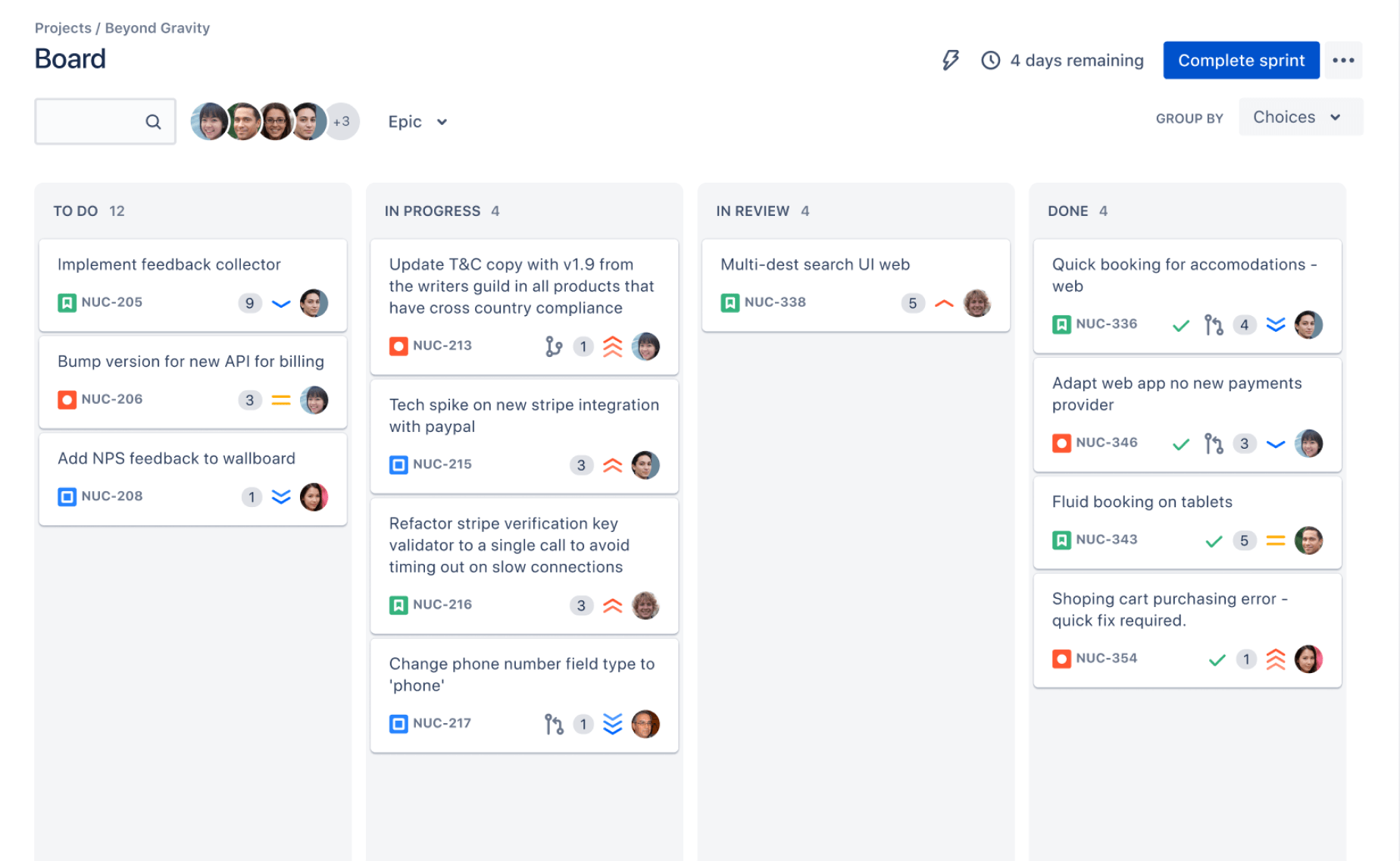
Jira Software’s Main Capabilities
Jira is built around work items, commonly called issues. An issue can represent a bug, story, task, improvement, or technical activity.
Teams organize these issues into projects, backlogs, boards, sprints, and reports. You can assign ownership, set priorities, add statuses, and follow progress through a defined workflow.
- Backlog management for prioritizing upcoming work.
- Scrum boards for sprint-based delivery.
- Kanban boards for continuous flow.
- Custom workflows for different work states.
- Issue fields for capturing requirements and context.
- Automation rules for reducing repetitive actions.
- Roadmaps and timeline views for planning.
- Reports for understanding velocity, workload, cycle time, and progress.
- Integrations with development, communication, testing, and collaboration tools.
- Permission and administration controls for managing access.
How Jira Pricing Usually Works
Jira pricing commonly follows a per-user subscription model for cloud plans. Your total cost can change as your team adds or removes seats.
Some capabilities are also tied to the plan level. For example, advanced planning, stronger administration, expanded analytics, and higher automation allowances may require a paid tier.
| Plan type |
Best fit |
Typical considerations |
| Free |
Small teams exploring Jira |
Limited users, storage, automation, administration, and support options |
| Standard |
Growing teams managing regular delivery |
More users, storage, collaboration controls, and operational capacity |
| Premium |
Teams needing scale and advanced planning |
Higher limits, advanced planning, stronger availability expectations, and expanded controls |
| Enterprise |
Large organizations with complex governance |
Central administration, security requirements, support arrangements, and negotiated commercial terms |
Exact prices and limits can change. Check the current commercial page before approval, especially when comparing annual billing, monthly billing, user bands, and enterprise agreements.
What Features Matter Most for Your Team?
The most valuable Jira features depend on your delivery model. A small Scrum team may focus on sprint planning, while a distributed engineering organization may prioritize permissions, audit controls, and cross-team reporting.
Backlogs and Issue Tracking
Jira gives you a central place to capture work and rank it by urgency, value, or dependency. You can create issue types for bugs, stories, tasks, and technical improvements.
For example, a mobile team might rank a payment failure above a visual polish task. The product manager can then move the highest-priority work into the next sprint.
The benefit is visibility. Everyone can see what is planned, what is active, and what still needs attention.
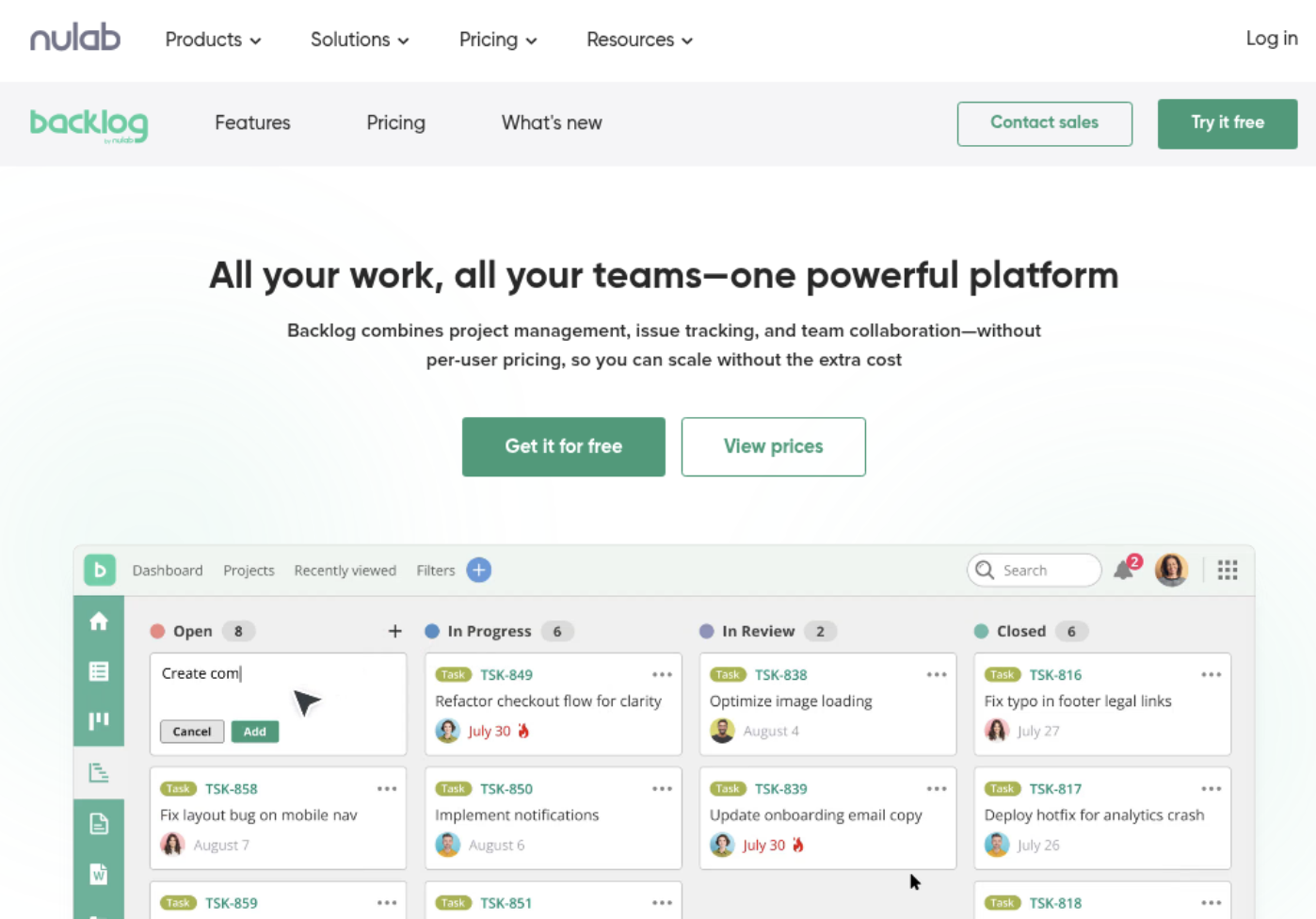
Scrum and Kanban Boards
Scrum boards support time-boxed sprints. Kanban boards support continuous delivery and work-in-progress management.
You can customize columns such as “To Do,” “In Progress,” “Code Review,” “Testing,” and “Done.” That workflow shows where work is slowing down.
A team with ten tasks stuck in testing has a different problem from a team with an empty backlog. A board helps you see the difference quickly.
Workflows and Custom Fields
Workflows define how an issue moves through your process. Custom fields capture details that standard fields cannot represent.
A regulated engineering team might require review, approval, validation, and release-readiness states. A smaller startup may use only three statuses.
Jira can support both approaches, but excessive customization can create confusion. Start with the fewest states that accurately describe your work.
Automation
Automation can trigger actions when something happens. A rule might assign a new bug to a support queue, notify a reviewer, or transition an issue after approval.
Imagine a release process that requires the same five updates every week. Automation can handle routine transitions while your team focuses on decisions and delivery.
Plan limits matter here. Larger teams often need more automation activity, so compare allowances before choosing a tier.
Reports, Dashboards, and Planning Views
Jira reporting helps you examine progress, bottlenecks, workload, and delivery patterns. Common views include sprint reports, velocity charts, burndown charts, cumulative flow diagrams, and control charts.
Dashboards can combine charts, filters, assigned work, and status summaries. Leaders may want a portfolio view, while engineers may need a queue of unresolved defects.
Here's the practical test: choose reports that support a decision. A chart is useful when it helps you change priorities, remove a blocker, or improve a process.
Jira Plans Compared: Free, Standard, Premium, and Enterprise
Jira’s plan structure is easier to understand when you compare operational needs rather than labels. Each tier is designed for a different level of team size, governance, and planning complexity.
Free Plan
The Free plan is useful for trying Jira with a small group. It can support basic issue tracking, boards, backlog management, and lightweight collaboration.
It may work well for a small product team with simple workflows and limited administration needs. For example, six developers and one product manager could use it to manage a single application.
Watch the limits closely. User capacity, storage, automation, permissions, support, and reporting may become constraints as your process expands.
Standard Plan
Standard is generally aimed at growing teams that need more capacity and practical collaboration controls. It is often the first serious option for organizations moving beyond experimentation.
You may gain higher limits, more administrative flexibility, expanded storage, and stronger support arrangements. These improvements matter when multiple teams share Jira.
A team of thirty people may not need advanced enterprise governance. It may need reliable access, clear workflows, and enough automation for daily operations.
Premium Plan
Premium is intended for organizations that need greater scale, advanced planning, and stronger service expectations. It can be relevant when several teams coordinate across products or programs.
Advanced planning features can help you connect team-level work with broader delivery goals. Higher capacity can also reduce friction when more people, projects, and automation rules operate together.
Premium costs more, so confirm that your organization will use those capabilities. Paying for advanced planning makes little sense if one small team only needs a basic board.
Enterprise Plan
Enterprise is designed for large organizations with complex security, governance, administration, and commercial requirements. Pricing is commonly handled through a tailored agreement.
Enterprise buyers may evaluate centralized controls, multiple business units, compliance expectations, support coverage, and identity management.
The buying process should include security, procurement, finance, and engineering stakeholders. A technical team may value flexibility, while procurement may focus on predictable costs and contract terms.
What Changes Your Total Cost?
Your subscription price is only one part of the financial picture. Consider administration, integrations, migration, training, customization, and support.
| Cost factor |
Why it matters |
| Number of seats |
More people with access generally increase subscription costs. |
| Billing frequency |
Monthly and annual arrangements may have different commercial terms. |
| Plan level |
Advanced planning, governance, and capacity may require a higher tier. |
| Deployment model |
Cloud and self-managed environments create different administration responsibilities. |
| Connected services |
Development, testing, reporting, and communication integrations may add expense. |
| Implementation effort |
Migration, workflow design, training, and cleanup require staff time. |
Let me explain: a subscription comparison should include both direct spending and operating effort. A platform that costs less can still consume more time if your team must maintain many separate integrations.
Cloud, Data Center, and Deployment Considerations
Jira buying decisions also depend on where the platform runs. Cloud reduces infrastructure responsibility, while self-managed deployment gives your organization more control over hosting and operations.
Cloud Deployment
Cloud Jira is hosted by Atlassian. Your team accesses it through the internet, while the provider manages much of the underlying infrastructure.
This approach can simplify rollout and reduce internal maintenance. It may suit distributed teams that want quick access without running application infrastructure.
You should still evaluate identity controls, regional requirements, integrations, backup expectations, and administrative ownership.
Self-Managed Deployment
Self-managed environments give your organization greater responsibility for hosting, upgrades, security controls, performance, and operational continuity.
This approach may suit organizations with strict infrastructure requirements or specialized internal operations. It can also require more planning and technical staffing.
Ask who will manage upgrades, monitor availability, test changes, handle recovery, and support internal teams. Those responsibilities affect your real cost.
Deployment Questions to Ask
- Where must project information be hosted?
- Which identity and access controls are mandatory?
- Who will maintain integrations and upgrades?
- How quickly must new teams be onboarded?
- What recovery and continuity expectations apply?
- Will legal, security, or procurement teams require specific controls?
You might be wondering: does the cheapest deployment option always win? Usually, no. The best choice balances subscription cost, control, administration, and organizational risk.
How to Estimate Jira Value Before Buying
A practical evaluation starts with real work rather than a feature checklist. Use one active project and test the workflow your team follows every week.
Build a Representative Pilot
Choose a project with ordinary complexity. Include a few bugs, planned features, dependencies, approvals, and reporting needs.
Then recreate the delivery process in Jira. Create a backlog, configure statuses, run a sprint, assign work, and review the resulting reports.
A pilot reveals friction that a product tour may hide. For example, your team may discover that a custom approval step creates too much manual work.
Measure Adoption and Administration
Track how quickly people create and update issues. Note how often administrators must correct fields, adjust permissions, or explain workflow rules.
You can also measure delivery indicators such as cycle time, blocked work, reopened defects, and sprint completion. These figures help connect platform usage with business outcomes.
Do not judge success by the number of features activated. Judge it by whether your team makes better decisions with less confusion.
Calculate the Broader Cost
Estimate subscription fees alongside setup time, migration work, training, administration, integration maintenance, and future expansion.
For example, a team might pay less for a basic plan but spend several hours each month maintaining manual reports. A higher plan could reduce that recurring effort.
The reverse can also happen. A premium plan may offer capabilities your team never uses, creating avoidable spending.
Use a Simple Decision Framework
- List the workflows your team must support.
- Separate essential capabilities from convenient extras.
- Estimate current and expected seat counts.
- Compare plan limits against twelve months of expected growth.
- Evaluate cloud and self-managed responsibilities.
- Test the most important workflow with real project examples.
- Calculate subscription and operating costs together.
- Confirm security, access, support, and procurement requirements.
The best part? This approach prevents a common mistake: selecting a plan because it has the longest feature list.
Jira Software Alternative: ONES.com
ONES.com is a unified platform for project management and knowledge management. ONES Project provides project management capabilities comparable to Jira workflows, while ONES Wiki supports knowledge management separately.
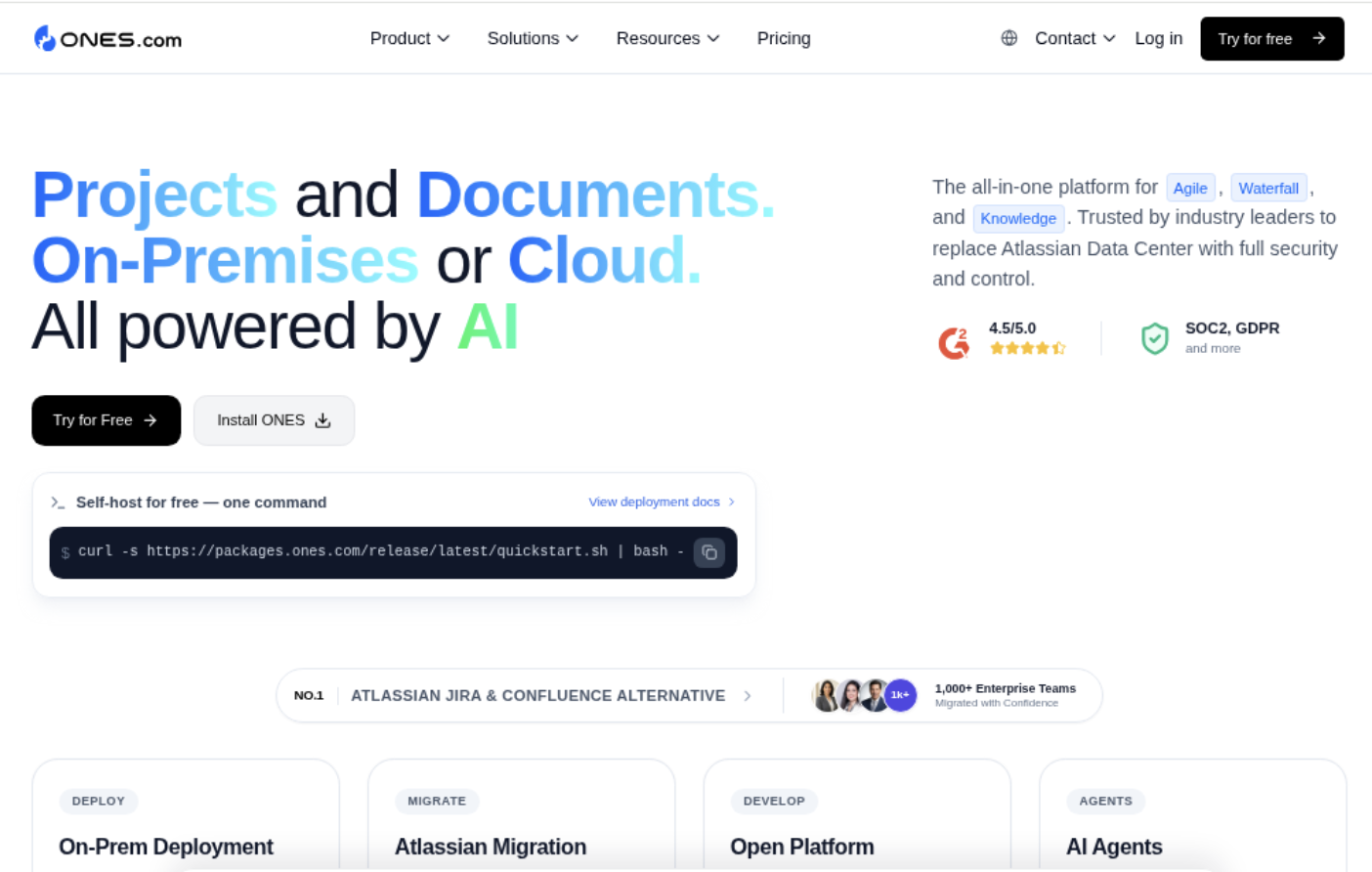
ONES.com can be deployed in the Cloud, On-Premise, Private Cloud, or Air-gapped environments. It offers a free plan for up to 30 seats, and its self-hosted version maintains feature parity with the cloud version.
Value Proposition
ONES.com may suit teams that want project management, reporting, workflows, and knowledge capabilities within a connected platform. You can evaluate it when deployment control, native functionality, or reduced dependence on plugins matters.
Core Capabilities
Reduce scattered project information with a unified workspace
Pain: Teams often switch between project tracking, planning, and knowledge tools to understand one initiative.
ONES capability: ONES.com combines project management and knowledge management, with ONES Project and ONES Wiki sold separately.
Result: Teams can connect delivery activity with the guidance and context needed to complete it.
Replace complicated workarounds with configurable workflows
Pain: Rigid workflows force teams to manage exceptions outside the project platform.
ONES capability: ONES Project supports custom workflows, fields, statuses, and Jira-compatible working patterns.
Result: Teams can represent their actual approval, development, testing, and release process more accurately.
Reduce plugin dependence with native reporting
Pain: Additional reporting plugins can increase maintenance, cost, and administrative effort.
ONES capability: Built-in reporting supports project visibility without requiring every reporting need to be handled externally.
Result: Project leaders can review progress, workload, and delivery trends through a more consistent reporting experience.
Support iterative delivery with sprint management
Pain: Agile teams need a reliable way to plan, execute, and review sprint work.
ONES capability: ONES Project includes sprint management, backlog handling, and board-based project tracking.
Result: Teams can plan recurring delivery cycles and monitor work as it moves toward completion.
Automate repetitive project actions
Pain: Manual assignments, notifications, and transitions consume time and create inconsistent follow-through.
ONES capability: Automation can support recurring project actions and reduce routine administration.
Result: Team members spend less effort repeating predictable updates.
Choose a deployment model that matches operational requirements
Pain: Some organizations cannot place project systems entirely in a public cloud environment.
ONES capability: ONES.com supports Cloud, On-Premise, Private Cloud, and Air-gapped deployment options.
Result: Organizations can align project management with infrastructure, security, and network restrictions.
Control access across complex teams
Pain: Growing organizations need clearer boundaries between projects, teams, and sensitive work.
ONES capability: Administrative and permission controls help teams manage access according to organizational needs.
Result: Project information can be organized more deliberately as the organization expands.
Start small before expanding adoption
Pain: Large platform changes can create financial and operational risk before teams understand the fit.
ONES capability: The free plan supports up to 30 seats, allowing a small team to evaluate core workflows.
Result: You can test project management practices before making a broader rollout decision.
Application Scenarios
Software team with restricted infrastructure: An engineering group working in an air-gapped environment can evaluate ONES.com without assuming public-cloud access.
Growing product organization: A product team can combine backlog management, custom workflows, sprint planning, and reporting while expanding beyond a small initial group.
Organization reducing plugin reliance: A company that wants native project capabilities can compare ONES Project with its current Jira configuration and identify which external additions are no longer necessary.
Common Challenges When Choosing Jira
Challenge: The Free Plan Looks Sufficient at First
Problem: A small team may start comfortably, then encounter limits when it adds projects, automation rules, or collaborators.
Solution: Estimate growth before committing. Review expected seats, project count, reporting needs, and automation activity for the next year.
Challenge: Feature Limits Are Easy to Overlook
Problem: A plan may include a desired feature but restrict its usage volume, access scope, or administrative controls.
Solution: Review limits beside features. Ask how many automation actions, users, projects, reports, and administrators your team will need.
Challenge: Customization Creates Workflow Confusion
Problem: Teams sometimes add too many statuses, fields, and transitions. New members then struggle to understand what each option means.
Solution: Design the simplest workflow that supports real decisions. Remove fields that nobody uses and review the process quarterly.
Challenge: Subscription Cost Hides Operating Effort
Problem: A platform can appear affordable while consuming significant time through administration, integration maintenance, and training.
Solution: Assign an estimated monthly value to administrative work. Include that amount when comparing plans or alternative platforms.
Challenge: Different Teams Need Different Workflows
Problem: Engineering, support, security, and product teams may follow different processes inside the same organization.
Solution: Create shared standards for naming, ownership, and reporting. Allow limited team-level variation where the work genuinely differs.
FAQs About Jira Features and Pricing
Is Jira free for small teams?
Jira generally offers a Free plan for small teams, with limits on areas such as users, storage, automation, administration, and support. It can be suitable for basic backlog and issue tracking. Before relying on it long term, compare the current user allowance and feature limits with your growth plans. A free tier is useful for evaluation, but it may become restrictive when several teams share the same environment.
Which Jira plan is best for a growing software team?
Standard is often a practical starting point for a growing team that needs more capacity and collaboration controls than a free tier provides. Premium may be more appropriate when several teams coordinate across products, advanced planning matters, or higher operational capacity is necessary. The right choice depends on user count, governance, reporting, automation, and deployment requirements. Test a representative workflow before upgrading.
Does Jira charge per user?
Cloud Jira plans commonly use a per-user subscription model, so the total amount changes as your seat count changes. The commercial details can vary by plan, billing frequency, user band, and agreement type. Remember to count every person who needs access, including product managers, testers, support staff, contractors, and stakeholders. Confirm current terms before final approval.
What is the difference between Jira Standard and Premium?
Standard is generally designed for regular project management and collaboration at a growing-team level. Premium typically adds greater capacity, advanced planning, and stronger service expectations for organizations with more complex coordination needs. The exact differences can change, so compare current limits rather than relying only on plan names. Premium makes sense when your team will actively use its additional capabilities.
Should I choose Jira Cloud or a self-managed deployment?
Choose Cloud when you prefer faster rollout and less infrastructure responsibility. Consider self-managed deployment when your organization requires greater hosting control, specialized network arrangements, or internal operational ownership. Neither option is automatically better. Compare security requirements, administration effort, upgrade responsibility, integration needs, recovery expectations, and long-term staffing before deciding.
Conclusion
Jira Software offers a broad set of capabilities for issue tracking, backlogs, boards, workflows, sprints, automation, planning, and reporting. Its pricing depends on factors such as seats, plan level, billing terms, deployment model, and enterprise requirements.
But here's the truth: the lowest subscription price is not always the lowest total cost. Review limits, administrative work, integrations, training, and growth before choosing a plan.
Start with a real project, test the workflows your team uses every week, and measure whether the platform improves visibility. Then compare Jira with alternatives such as ONES.com when deployment control, native capabilities, or reduced plugin reliance matter.
The strongest buying decision connects features to actual work. When you know what your team needs now and what it may need next year, Jira pricing becomes easier to evaluate and much harder to misunderstand.