Jira Software Management Pricing: A 2026 Cost Guidebook
Wondering what jira software management pricing really costs? Learn to estimate plans, add-ons, and hidden fees for 2026. Click to plan smarter.
Jira can look affordable when you first check the headline price. The real bill often changes after you add team size, billing frequency, premium features, apps, storage, and administration time.
That uncertainty makes planning difficult. A small team may fit comfortably into a lower tier, while a growing engineering department can face a much larger annual commitment. Add marketplace apps, automation needs, and support requirements, and the original estimate quickly loses accuracy.
But here's the truth: you can estimate Jira costs with a clear pricing framework. Start with the plan, calculate every seat, separate required extras from optional upgrades, and compare the total against your workflow needs.
This guide walks you through Jira software management pricing for 2026, including plan differences, billing examples, hidden costs, and practical comparison steps.
Jira Pricing at a Glance for 2026
Jira software pricing usually depends on four factors: plan level, team size, billing cycle, and additional services. Cloud plans generally include Free, Standard, Premium, and Enterprise options.
| Plan type |
Best fit |
Typical cost pattern |
Important consideration |
| Free |
Small teams testing core project workflows |
No subscription charge within plan limits |
Limited seats, storage, automation, and administration controls |
| Standard |
Growing teams needing everyday project management |
Per-seat monthly or annual subscription |
More capacity and controls than the free tier |
| Premium |
Large or complex teams needing advanced scale |
Higher per-seat subscription |
Extra planning, reliability, and administration capabilities |
| Enterprise |
Organizations with broad governance requirements |
Custom commercial agreement |
Pricing depends on scope, support, and organizational needs |
Exact amounts can change during the year. Your final quote may also vary by region, currency, taxes, promotions, and the number of licensed seats.
Here's why: software vendors often use progressive pricing bands. A small change in team size can move your subscription into a different band.
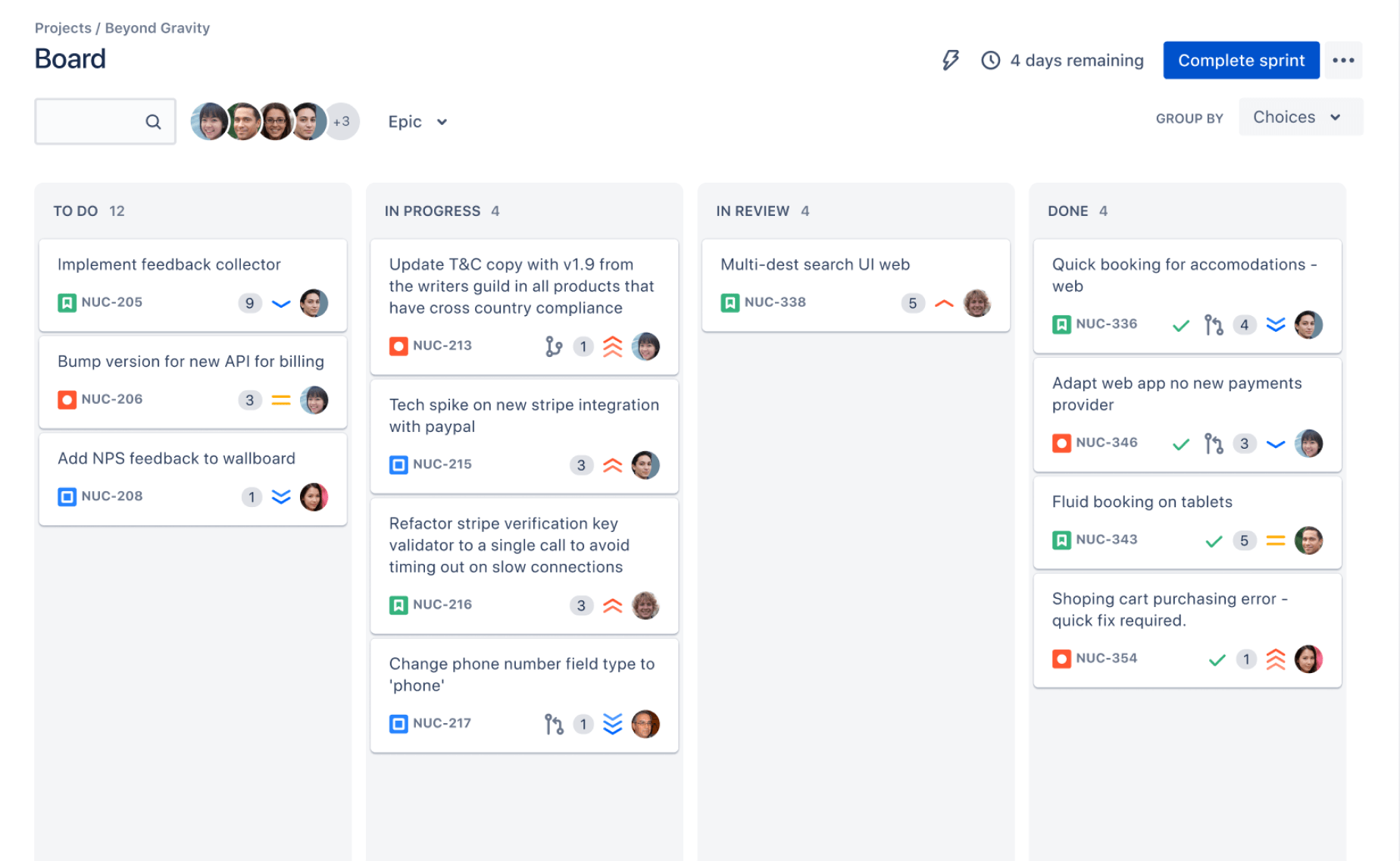
What the Free Plan Usually Covers
The free tier can work for a small development team managing a few active projects. You may get issue tracking, boards, basic workflows, and limited automation.
For example, a five-person startup could manage a product backlog, sprint board, and bug queue without paying a subscription charge.
Capacity limits become important as the team grows. Storage, automation runs, permissions, reporting, and support may remain restricted.
What Changes with Standard
Standard usually suits teams that need dependable daily collaboration. It increases capacity and adds administration controls for a larger group.
A 25-person engineering department may choose this tier for several product teams, shared workflows, and wider reporting needs.
Your calculation should include every person who needs to create, edit, assign, or manage work. Occasional viewers may have different licensing treatment.
When Premium Makes Financial Sense
Premium becomes relevant when scale, planning, reliability, or cross-team coordination matters more than the lowest subscription price.
Imagine six product squads sharing a release calendar. Advanced planning and broader controls may reduce coordination effort enough to justify the additional subscription.
That decision needs more than a feature checklist. Estimate the hours saved, the risks reduced, and the administrative work avoided.
Why Enterprise Pricing Requires a Custom Quote
Enterprise agreements often reflect organizational size, security expectations, support arrangements, deployment scope, and commercial terms.
A multinational company may need centralized administration, multiple environments, legal review, and a negotiated purchasing agreement.
Ask for a written breakdown of seat assumptions, renewal terms, support coverage, implementation services, and price adjustments.
How to Calculate Your Real Jira Cost
Start with the recurring subscription. Then add optional applications, implementation effort, training, administration, and taxes.
- Count active seats. Include developers, testers, product managers, delivery leads, and administrators.
- Choose a billing cycle. Monthly billing offers flexibility, while annual billing may provide a different effective rate.
- Select the plan. Match the tier to your workflow, governance, reporting, and scale requirements.
- Estimate add-ons. Review marketplace applications, integrations, storage, test management, and reporting tools.
- Include operational effort. Estimate setup, workflow maintenance, permission reviews, training, and support.
- Calculate the annual total. Multiply recurring monthly charges by twelve, then add one-time and variable expenses.
- Test growth scenarios. Recalculate the total for hiring plans, contractors, acquisitions, and seasonal projects.
Let me explain with a simple example. Suppose 40 people need full access, and the selected subscription costs about $8 per seat monthly.
The base estimate would be 40 × $8 × 12, or $3,840 annually. Add three paid apps at $100 monthly, and the total becomes $5,040 before taxes.
That estimate still excludes administration time. If an administrator spends 10 hours monthly at an internal cost of $50 per hour, add another $6,000 annually.
Your practical ownership cost would then reach approximately $11,040 before taxes and implementation work.
Monthly Versus Annual Billing
Monthly billing works well during a pilot or uncertain hiring period. You can adjust the subscription more frequently as the team changes.
Annual billing can simplify budgeting and purchasing. However, you should confirm how seat changes work during the commitment period.
Ask whether new seats receive prorated treatment. Also check whether unused seats receive credits or remain available until renewal.
Use Three Scenarios Instead of One Forecast
A single estimate can hide risk. Build conservative, expected, and growth scenarios.
| Scenario |
Seat assumption |
What to test |
| Conservative |
Current team size |
Immediate subscription affordability |
| Expected |
Planned hiring during the next year |
Likely annual budget |
| Growth |
Expansion across departments |
Plan changes and administrative impact |
This approach shows how a tool behaves as your organization changes. It also gives finance teams a clearer reason for the requested budget.
What Can Increase the Total Beyond the Subscription
The visible plan charge is only one part of Jira ownership. Marketplace apps, integrations, consulting, and administration can materially affect the final amount.
Here's the practical issue: a team may choose a lower plan, then purchase several applications to cover missing capabilities. The combined bill can exceed a higher plan with broader native coverage.
Marketplace Applications
Common additions include time tracking, test management, advanced reporting, roadmaps, capacity planning, and service integrations.
Each application can use its own pricing model. Some charge by the highest seat count, while others use separate tiers or usage measures.
Create an app inventory before comparing plans. Record the purpose, monthly cost, renewal date, owner, and replacement options.
Administration and Configuration
Jira can support complex workflows, fields, permissions, screens, automations, and project templates. Complexity brings maintenance work.
For example, a workflow change may affect dozens of projects. An administrator must test the change, communicate it, and resolve unexpected behavior.
Estimate this work as part of total cost. A cheaper subscription may require more specialist time.
Migration, Training, and Adoption
Moving from another platform often involves requirements mapping, workflow redesign, history transfer, permissions, and team training.
Training costs may include live workshops, onboarding materials, office hours, and internal champions.
Adoption also affects value. A team that avoids the system or maintains parallel processes may pay twice for the same coordination work.
Integrations and Custom Development
Engineering organizations often connect Jira with repositories, chat platforms, deployment systems, identity services, analytics tools, and support channels.
Each connection can require setup, testing, monitoring, and occasional repair. Custom integrations create an additional dependency on internal expertise.
List every integration before approval. Include both the subscription cost and the time required to keep it working.
How Team Size Changes the Pricing Decision
Seat count is the most obvious pricing driver, but team structure matters just as much. A 50-person organization may have very different needs from another organization with the same headcount.
For example, one company may have five independent squads. Another may have a central engineering group, external contractors, executives, and many occasional viewers.
You might be wondering: who really needs a paid seat? Separate daily contributors, occasional collaborators, administrators, and people who only need read access.
Small Teams
Small teams should begin with workflow fit. A free or lower-cost tier may cover backlog management, sprint planning, and defect tracking.
Keep the setup simple. Three clear issue types and a short workflow can deliver more value than dozens of custom fields.
Mid-Sized Teams
Mid-sized teams often encounter permission complexity, cross-project reporting, and inconsistent workflows.
At this stage, governance becomes financially relevant. A central configuration standard can reduce rework and prevent every project from becoming a special case.
Large Organizations
Large organizations need to examine administration, security, reporting, support, and portfolio coordination.
Pricing discussions should include renewal protections, service expectations, implementation assistance, and the cost of maintaining multiple tools.
Contractors and External Partners
External collaborators can change your seat count quickly. Define access duration, project boundaries, and offboarding responsibilities.
For a six-month contractor engagement, calculate the temporary subscription cost and the time needed to manage access safely.
Jira Cloud, Self-Managed Options, and Long-Term Value
Cloud deployment usually reduces infrastructure work. The vendor handles much of the hosting, maintenance, and platform availability.
Self-managed deployment can offer greater control over environment design and internal policies. It also transfers more responsibility to your technical team.
The cheaper option depends on your circumstances. Cloud expenses are easier to predict, while self-managed environments may require infrastructure, upgrades, monitoring, backups, and specialist support.
Cloud Cost Considerations
Cloud pricing typically follows seat-based subscriptions. You should still examine data residency, identity integration, retention expectations, and connected applications.
Cloud can be attractive when your team wants faster deployment. A small operations group may avoid substantial maintenance work.
Self-Managed Cost Considerations
Self-managed environments require capacity planning, upgrades, security patches, backups, availability design, and incident response.
Consider an internal platform team spending one day each week on maintenance. That labor may outweigh a higher cloud subscription.
Compare Total Ownership, Not Sticker Price
The best comparison combines subscription, infrastructure, labor, migration, support, downtime exposure, and future growth.
The best part? You can put every cost into one annual model and compare platforms using the same assumptions.
Jira Software Management Solution: ONES.com
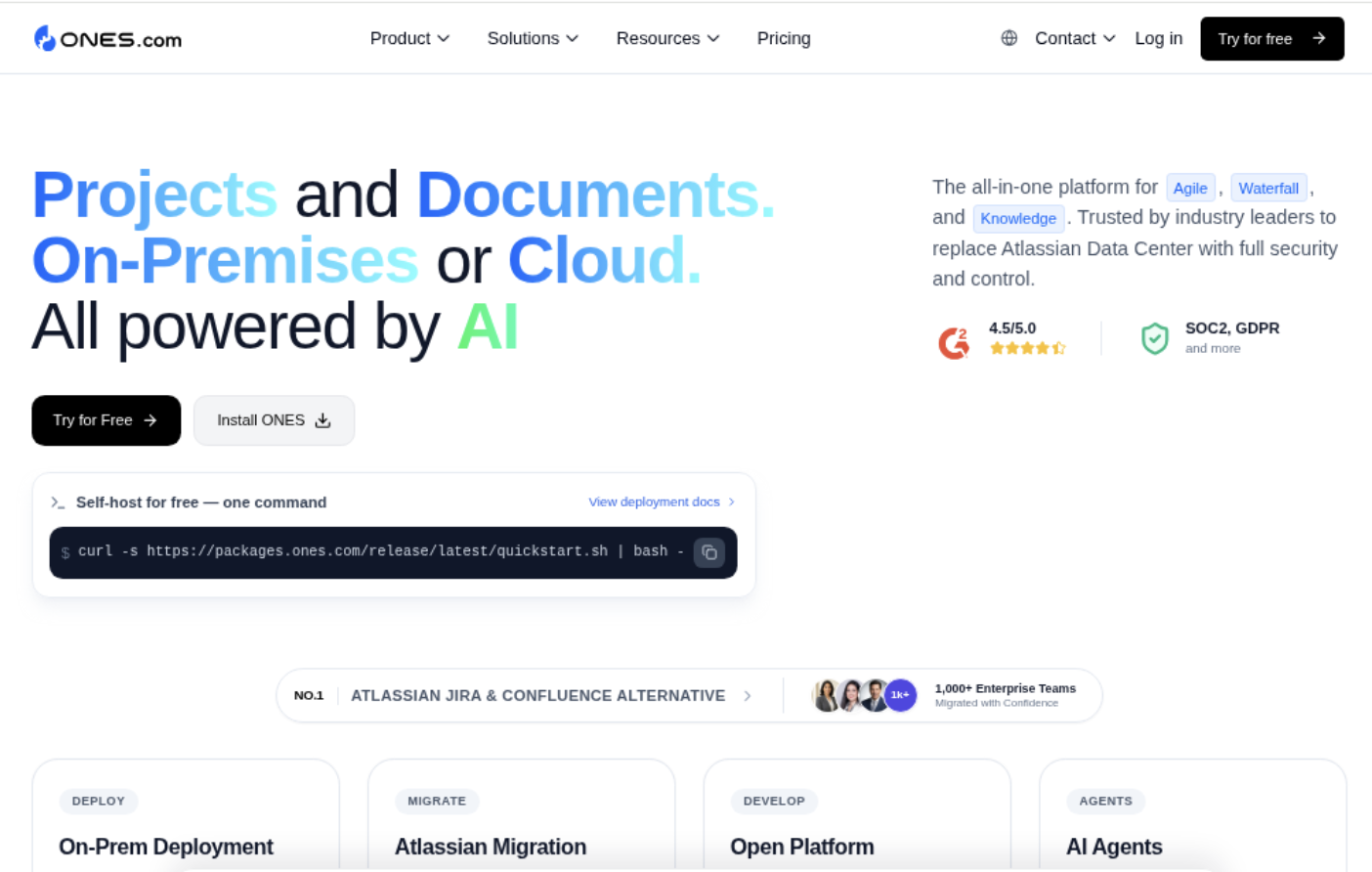
Value Proposition
ONES.com combines project management and knowledge management in one platform. ONES Project provides project and software management, while ONES Wiki supports team knowledge.
ONES Project can serve as a Jira alternative for teams seeking native workflow coverage, self-hosted deployment choices, and fewer connected applications.
Core Capabilities
- Too many disconnected tools: ONES.com combines project work and knowledge management, helping teams keep planning and team guidance in one environment.
- Complex Jira migration concerns: Jira-compatible workflows can reduce the learning curve for teams familiar with issue tracking, boards, and sprint routines.
- Heavy plugin dependence: Built-in reporting, automation, custom workflows, and custom fields can reduce the need for multiple add-ons.
- Limited deployment flexibility: ONES.com supports Cloud, On-Premise, Private Cloud, and Air-gapped deployments.
- Different capabilities across deployment models: ONES.com provides full feature parity between its cloud and self-hosted versions.
- Unclear team entry costs: The free plan supports up to 30 seats, giving a small team room to evaluate core workflows.
- Weak sprint visibility: ONES Project includes sprint management for planning iterations, tracking progress, and reviewing unfinished work.
- Inconsistent reporting: Built-in reporting helps teams monitor delivery progress without assembling every view manually.
- Restricted-network requirements: Air-gapped deployment supports teams working in disconnected or tightly controlled environments.
Application Scenarios
A software company with several agile squads could use ONES Project for backlogs, sprint planning, custom workflows, and reporting. ONES Wiki could hold engineering guidance and product knowledge.
A regulated organization could deploy the platform On-Premise or in a Private Cloud. That arrangement may help align project management with internal infrastructure policies.
A defense or critical-infrastructure team could evaluate the Air-gapped option for restricted networks. The team can assess the same core capabilities without depending on an open internet connection.
ONES.com is sold as a unified platform, while ONES Project and ONES Wiki can also be purchased separately. Compare the required products, seat count, deployment model, and administration effort.
Common Challenges When Estimating Jira Costs
Challenge: The Team Counts Seats Too Narrowly
Problem: A budget may include developers while excluding testers, product managers, release leads, and administrators.
Solution: Map each workflow role to the access it needs. Recalculate the estimate after planned hiring and contractor changes.
Challenge: Add-Ons Appear After Approval
Problem: Teams discover missing reporting, testing, or planning capabilities after choosing a plan.
Solution: Review current applications before selecting a tier. Include every recurring application in the first-year estimate.
Challenge: Administration Time Is Ignored
Problem: Configuration, permission reviews, workflow changes, and support consume internal capacity.
Solution: Assign an hourly cost to administration. Include setup, maintenance, training, and troubleshooting.
Challenge: Annual Commitments Reduce Flexibility
Problem: A company commits to more seats than it needs after hiring plans change.
Solution: Confirm adjustment rules before signing. Model current, expected, and growth scenarios separately.
Challenge: Teams Compare Features Without Outcomes
Problem: A feature list does not show whether the platform will reduce coordination effort.
Solution: Connect each capability to a measurable outcome, such as faster release reporting or fewer manual status meetings.
FAQs About Jira Software Management Pricing
What determines the price of Jira software management?
Plan level, licensed seats, billing cycle, region, currency, taxes, and optional applications all affect the final amount. Premium and enterprise tiers can add capabilities for larger or more complex organizations. You should also estimate migration, training, administration, and integration work. Check the current official pricing calculator before approval because rates and plan details can change.
Is Jira free for small teams?
Jira generally offers a free tier for small teams, with limits around seats, storage, automation, permissions, and administration. It can suit a small group testing backlog management and sprint planning. Review the current limits carefully before relying on it for a growing operation. A team may outgrow the free tier when more projects, integrations, or governance controls become necessary.
Is annual Jira billing cheaper than monthly billing?
Annual billing may provide a different effective rate or simplify budget planning, but the result depends on current commercial terms. Monthly billing offers more flexibility when headcount changes frequently. Before committing, ask how added seats are charged, how cancellations work, and whether unused capacity receives any adjustment. Compare the full annual commitment with your hiring forecast.
Do Jira marketplace applications cost extra?
Many marketplace applications carry separate charges. Common examples include test management, advanced reporting, time tracking, roadmaps, and capacity planning. Pricing may depend on application-specific seat bands or usage limits. List every required application before comparing plans. A lower subscription tier may become more expensive after several add-ons are included.
Can a Jira alternative reduce total ownership cost?
It can, depending on workflow coverage, deployment needs, migration effort, and administration requirements. A platform with native reporting, automation, custom workflows, and knowledge management may reduce add-on dependence. However, switching also creates costs for migration, training, and adoption. Compare the first-year transition cost with the recurring ownership cost over several years.
Conclusion
Jira pricing becomes easier to understand when you separate the plan charge from the complete ownership cost. Count every seat, review billing terms, include applications, and estimate administration.
Use three scenarios to test current needs, expected hiring, and wider growth. Then compare cloud, self-managed, and alternative platforms using the same assumptions.
But here's the truth: the lowest subscription price does not always create the lowest annual cost. A platform that reduces add-ons, maintenance, and coordination work may deliver stronger value.
With a clear calculation model, you can approach 2026 planning with fewer surprises and choose a project management environment that fits your team’s real operating needs.