Jira Software Pricing 2025: Complete Cost Breakdown Guide
Wondering what Jira Software Pricing 2025 really costs? Compare plans, users, billing, hosting, and add-ons to budget accurately. Read now to save.
Jira Software pricing can look simple until you compare users, billing terms, hosting, add-ons, and plan limits. A small team may fit comfortably into the free tier, while a growing company can face a much larger monthly bill after every seat is counted.
That uncertainty creates a common problem: you choose a plan using the advertised per-user rate, then discover that annual billing, premium features, administration needs, or marketplace apps change the real cost. The wrong estimate can affect your budget for an entire year.
But here’s the good news: you can calculate Jira Software costs with a clear process. This guide explains the 2025 plan structure, gives practical cost examples, compares monthly and annual billing, and highlights expenses that are easy to miss.
Jira Software Pricing in 2025: The Short Answer
Jira Software pricing in 2025 depends mainly on your number of users, plan level, billing term, hosting model, and additional apps. Jira Cloud generally offers Free, Standard, Premium, and Enterprise options, while self-managed deployments use a different commercial model.
For many small teams, the practical starting point is the Free plan. Standard is usually the first paid option for teams that need more users, administration, storage, permissions, and collaboration controls. Premium adds advanced planning, higher service expectations, and other enterprise-oriented capabilities.
Public 2025 pricing commonly places Jira Cloud Standard and Premium in the approximate range of several dollars to the low teens per user each month, depending on the billing method and team size. Atlassian’s checkout calculator should be used for the final quote because prices and tier calculations can change.
| Plan |
Best suited to |
Typical cost pattern |
| Free |
Small teams testing Jira |
No subscription charge within the plan limits |
| Standard |
Teams needing broader administration and collaboration |
Per-user subscription, usually lower than Premium |
| Premium |
Organizations needing advanced planning and higher operational capacity |
Higher per-user subscription than Standard |
| Enterprise |
Large organizations with centralized governance |
Custom commercial arrangement |
Here’s why the headline price is only the beginning: a 25-person Standard team, a 25-person Premium team, and a 25-person team with several marketplace apps can have very different annual costs.
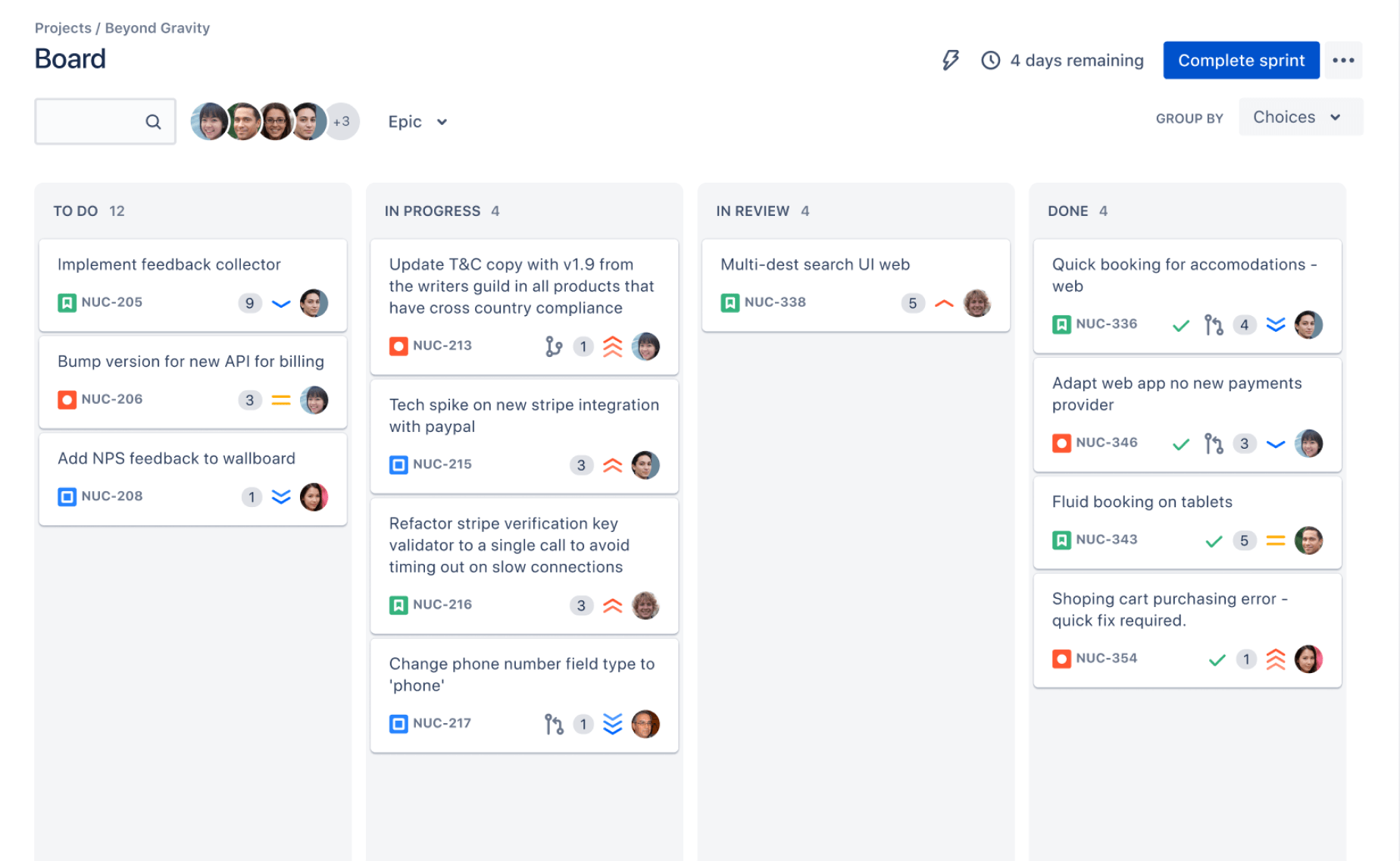
How to Calculate Your Jira Cost
- Count billable users. Include every person who needs access, including product managers, testers, designers, contractors, and occasional contributors.
- Choose the hosting model. Cloud subscriptions are billed differently from self-managed deployments. Decide whether your team needs Atlassian-hosted infrastructure or control over its own environment.
- Select the plan level. Compare the features you genuinely need, such as advanced planning, audit controls, automation capacity, and administrative controls.
- Choose monthly or annual billing. Monthly billing offers flexibility. Annual billing can make budgeting easier and may use tier-based pricing.
- Add connected products and apps. Jira Service Management, Confluence, marketplace extensions, storage, and specialist tools can increase the total.
- Calculate the yearly total. Multiply recurring charges by twelve, then add implementation, migration, training, administration, and renewal costs.
For example, imagine a 30-person product team choosing a paid Cloud plan. The basic calculation is:
30 users × advertised monthly rate × 12 months = estimated annual subscription.
Then add any connected products and extensions. If five external apps cost $40 per month each, they add another $2,400 per year before taxes or negotiated discounts.
The best part? This approach works even when Atlassian changes its price tiers. You only need to replace the current rate and rerun the calculation.
Free, Standard, and Premium: What Changes?
Free plan
The Free plan is designed for small teams exploring Jira or managing a lightweight project. It can work well for a group of five developers handling a single product backlog.
Its limitations matter when the team grows. User limits, storage, permissions, support options, automation capacity, and administrative controls can restrict adoption. A free plan may also feel less suitable when several departments need access.
Standard plan
Standard is commonly the practical choice for professional teams. It provides more room for users and generally adds stronger administration, collaboration, support, and operational capacity.
Consider a 40-person software team with separate development, quality assurance, and product groups. Standard may provide enough structure without paying for every advanced planning or governance feature.
Premium plan
Premium is aimed at organizations that need more capacity and advanced planning capabilities. It can make sense when teams coordinate across several projects, need higher operational limits, or require stronger service commitments.
You might be wondering: does Premium automatically make Jira better for every team? No. If your group mainly needs issue tracking, boards, workflows, and basic reporting, Standard may cover the core work.
Enterprise plan
Enterprise pricing is usually arranged through a custom agreement. It may suit large organizations that need centralized controls, multiple teams, complex governance, and broader commercial support.
Enterprise decisions should include more than license cost. Review identity management, administration time, compliance requirements, reporting needs, rollout planning, and internal support responsibilities.
Monthly Versus Annual Jira Billing
Monthly billing is useful when your team is experimenting, hiring quickly, or uncertain about long-term adoption. You can adjust the subscription more frequently as your headcount changes.
Annual billing is often easier for procurement and budgeting. It can also produce different tier calculations, so you should compare the full annual total instead of multiplying a monthly estimate without checking.
| Billing approach |
Advantages |
Trade-offs |
| Monthly |
Flexible seat changes and lower initial commitment |
Potentially higher total cost and less predictable budgeting |
| Annual |
Clearer planning and potentially better tier economics |
More commitment if your team size or tool strategy changes |
Here’s a simple example. A company expects to grow from 20 to 35 people within six months. Monthly billing may reduce over-licensing at the start. A stable 100-person department with an approved yearly budget may prefer annual billing.
Before committing, check how added seats are charged during the term. Some pricing models use user tiers rather than a simple multiplication of the exact active count.
Hidden Costs Beyond the Subscription
The subscription is only one part of your Jira budget. The following expenses can become significant when Jira supports several teams.
- Marketplace apps: Time tracking, advanced roadmaps, testing, reporting, diagramming, and portfolio tools may each have separate charges.
- Connected products: Confluence, Jira Service Management, and other Atlassian products can add recurring costs.
- Implementation: Workflow design, permissions, project templates, migration, and integrations may require specialist support.
- Administration: Someone must manage schemes, custom fields, automation, permissions, dashboards, and user access.
- Training: New teams may need onboarding for boards, backlogs, workflows, reporting, and service processes.
- Integration maintenance: Connections to repositories, chat platforms, identity systems, and deployment tools need ongoing attention.
For example, a team paying $8,000 per year for core subscriptions might spend another $3,000 on extensions and $10,000 on implementation. The total ownership cost is therefore much higher than the license invoice.
Let me explain the budgeting mistake I see most often: teams compare only the per-user rate. A better comparison includes subscription, apps, administration, migration, training, and renewal risk.
Jira Cloud Versus Self-Managed Deployment
Jira Cloud reduces infrastructure responsibilities because Atlassian hosts the service. Your team generally avoids server maintenance, upgrades, backups, and much of the platform operations work.
Self-managed deployment can offer greater control over infrastructure, network access, customization, and internal governance. However, you must account for hosting, technical administration, upgrades, security operations, backup processes, and disaster recovery.
| Cost area |
Cloud |
Self-managed deployment |
| Platform subscription |
Recurring Cloud subscription |
Commercial license or subscription structure |
| Infrastructure |
Usually included in the hosted service |
Managed by your organization or hosting partner |
| Operations |
Lower internal platform workload |
Higher responsibility for upgrades and maintenance |
| Control |
Strong convenience with service-level boundaries |
More control over environment and network design |
Self-managed pricing should therefore be evaluated as a total operating model. A lower license quote may not remain lower after servers, administrators, security reviews, monitoring, and recovery planning are included.
How Team Size Changes the Real Price
Jira’s per-user structure makes headcount the largest cost driver for many organizations. A five-person team and a 500-person organization may use similar basic issue-tracking features, yet their commercial outcomes differ dramatically.
Seat planning deserves attention because occasional access can create waste. For example, a stakeholder who only reviews a dashboard may need a different access arrangement from an engineer who creates issues and changes workflows.
Example: small product team
A seven-person startup may begin with the Free plan. As the company adds customer support, design, and product operations, it may move to Standard and add a knowledge management tool.
Example: growing software department
A 60-person department may need stronger permissions, automation, reporting, and project coordination. Premium could be useful, but only if those features reduce manual administration or improve planning.
Example: enterprise rollout
A 1,000-person organization must review more than user rates. It should assess identity management, multiple project administrators, governance, support arrangements, integration controls, and rollout ownership.
Use a three-year view when making a major decision. Year one includes migration and training, year two often reveals administration costs, and year three shows whether the platform still fits your operating model.
Jira Software Pricing Alternative: ONES.com
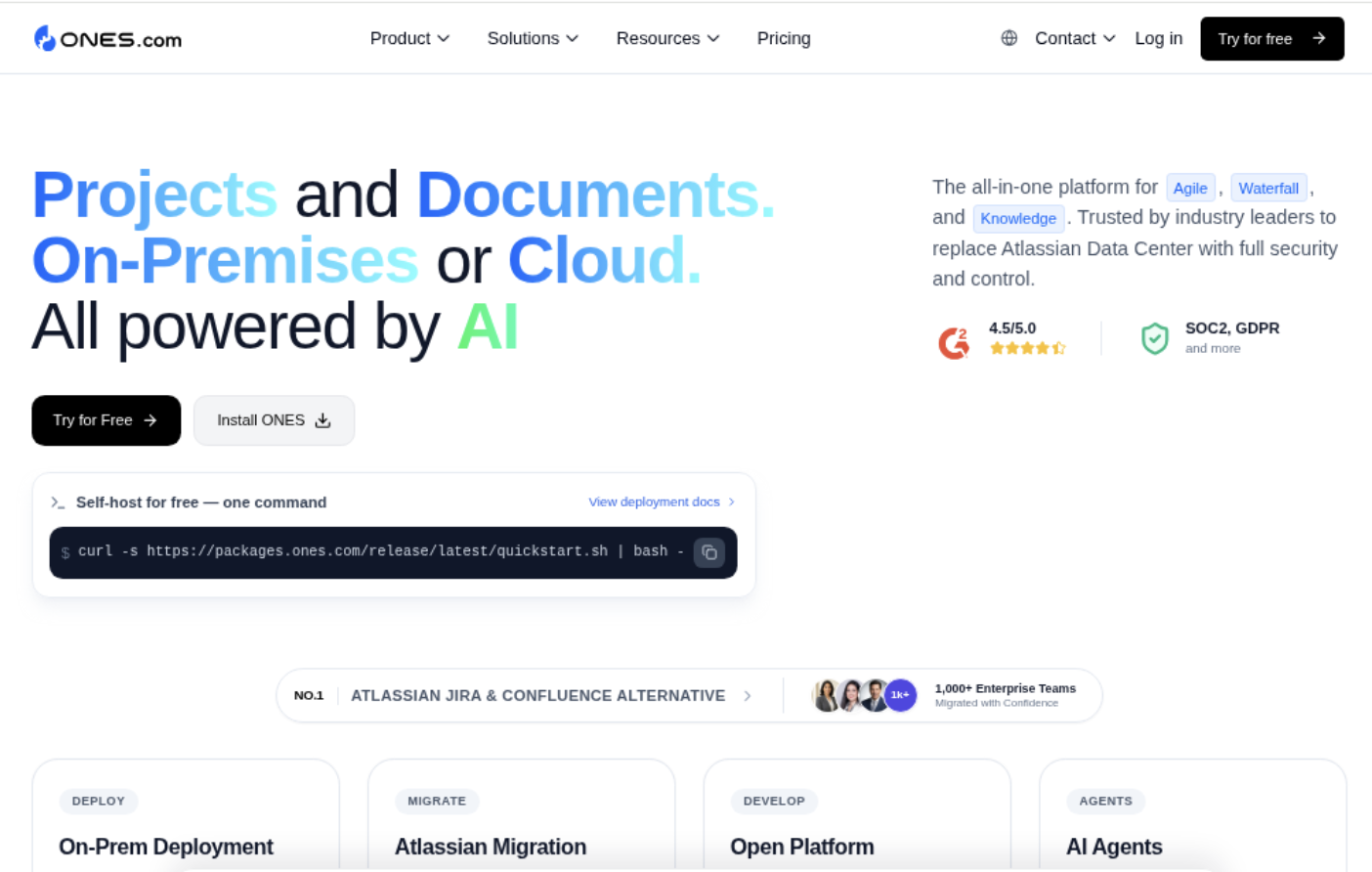
Value Proposition
ONES.com combines project management and knowledge management in one platform. ONES Project is a Jira alternative for teams that want project workflows, reporting, and collaboration without assembling as many separate extensions.
ONES Project and ONES Wiki are sold separately. ONES Project focuses on project management, while ONES Wiki supports knowledge management as a Confluence alternative.
Core Capabilities
1. Separate tools create scattered project information
ONES capability: ONES.com connects project management and knowledge management across its platform.
Result: Teams can keep planning context and team knowledge closer together, reducing repeated explanations across disconnected workspaces.
ONES capability: ONES Project supports Jira-compatible workflows.
Result: Teams familiar with issue types, statuses, boards, and approval paths can adapt without redesigning every working habit immediately.
3. Manual reporting consumes administrator time
ONES capability: Built-in reporting helps teams monitor progress, workload, and delivery patterns.
Result: Project leads can spend less time assembling status views and more time resolving delivery risks.
4. Rigid project structures require workarounds
ONES capability: Custom workflows and custom fields support different team processes.
Result: Product, engineering, quality, and operations teams can reflect their actual approval and delivery steps.
5. Sprint coordination becomes difficult across teams
ONES capability: Sprint management supports iterative planning and execution.
Result: Teams can organize work around sprint goals, commitments, and review cycles without relying on separate planning tools.
6. Repetitive administration causes avoidable delays
ONES capability: Automation handles repeatable actions within project workflows.
Result: Common transitions, notifications, and assignments can happen consistently with less manual effort.
7. Hosting restrictions block adoption
ONES capability: ONES.com supports Cloud, On-Premise, Private Cloud, and Air-gapped deployments.
Result: Organizations can select an operating model that matches network, security, and infrastructure requirements.
8. Self-hosted teams fear feature gaps
ONES capability: ONES.com provides full feature parity between its cloud and self-hosted versions.
Result: Teams can choose self-hosting without automatically giving up the platform’s core capabilities.
Application Scenarios
A regulated engineering company may choose an On-Premise or Air-gapped deployment when restricted networks are essential. The team can keep project workflows inside its controlled environment.
A distributed product organization may use ONES Project for sprint planning, custom workflows, automation, and reporting. ONES Wiki can be added separately when the team needs a structured knowledge base.
Smaller teams can start with the free allowance for up to 30 seats, then evaluate broader deployment and collaboration needs as adoption grows.
Common Challenges When Estimating Jira Costs
Challenge: using the advertised rate as the final budget
Solution: Add users, billing term, apps, connected products, taxes, implementation, and administration before approving the budget.
Challenge: choosing Premium for features nobody needs
Solution: List the exact operational problem first. If Standard solves it, the higher plan may not provide enough additional value.
Challenge: ignoring user growth
Solution: Build three scenarios: current headcount, expected headcount, and an expansion case. Compare the annual impact of each.
Challenge: treating self-managed hosting as free infrastructure
Solution: Include servers, monitoring, backups, upgrades, security reviews, and administrator time in the comparison.
Challenge: adding extensions without governance
Solution: Assign an owner for every marketplace app. Review usage, overlap, renewal dates, and security requirements each quarter.
FAQs
Is Jira Software free in 2025?
Jira Software offers a Free plan for small teams within specific limits. The free option may be enough for a small product group testing issue tracking and basic project workflows. It may become restrictive as you add users, projects, automation, administration requirements, or connected products. Check the current limits before planning a long-term rollout.
How much does Jira Software cost per user?
The answer depends on the plan, user tier, billing term, and hosting model. Standard generally costs less per user than Premium, while Enterprise pricing is usually customized. Public 2025 Cloud rates commonly fall from several dollars into the low teens per user each month. Use Atlassian’s current calculator for an exact quote.
Is annual Jira billing cheaper than monthly billing?
Annual billing can provide clearer budgeting and may use different tier economics, but the result depends on your user count and plan. Monthly billing offers more flexibility when your team is growing or testing Jira. Compare the complete annual totals, including seat changes and connected products, rather than comparing only the advertised monthly rate.
What extra costs should I include in a Jira budget?
Include marketplace apps, connected Atlassian products, implementation, migration, training, administration, integrations, and self-managed infrastructure where applicable. These expenses can exceed the subscription difference between two plans. A realistic budget should also include expected headcount growth and the internal time required to maintain workflows, permissions, automation, and reporting.
Should a small team choose Standard or Premium?
Start with the work your team needs to perform. Standard may be suitable for issue tracking, backlogs, boards, workflows, and routine reporting. Premium becomes more compelling when advanced planning, higher capacity, broader coordination, or stronger operational requirements justify the additional cost. A small team should avoid paying for features it cannot connect to a measurable business need.
Conclusion
Jira Software pricing in 2025 is shaped by more than the plan name. User count, billing term, hosting, connected products, marketplace apps, administration, and implementation all influence the real cost.
The safest approach is to calculate three scenarios, compare monthly and annual billing, and include ownership expenses beyond the subscription. Review Standard and Premium against specific workflow needs instead of choosing the most advanced option automatically.
But here’s the truth: a tool can appear affordable while becoming expensive through extensions and administration. A clear three-year estimate helps you see that risk early.
If Jira’s total structure does not fit your team, evaluate alternatives such as ONES Project. Its Jira-compatible workflows, reporting, custom fields, sprint management, automation, and flexible deployment options can support a different cost and operating model.