Jira Software Pricing Calculator: A Practical 2026 Guide
Unsure what Jira will really cost? Use this jira software pricing calculator guide to estimate plans, seats, apps, and billing. Read now!
Jira Software pricing can feel simple until you add team size, billing frequency, plan level, apps, and deployment needs. A small change in seats may alter your monthly estimate, while annual billing can produce a very different total.
That uncertainty makes budgeting difficult. You might compare a headline price with your expected bill, then discover that marketplace apps, premium support, automation limits, or administrator tools create extra costs.
Here’s the solution: use a repeatable pricing calculation. This guide shows you which numbers matter, how to estimate Jira Software costs for 2026, how to compare monthly and annual billing, and how to evaluate alternatives without missing important expenses.
How to Use a Jira Software Pricing Calculator
A Jira Software pricing calculator estimates your subscription cost by combining your plan, number of users, billing cycle, hosting choice, and optional services. The calculator gives you a planning figure, while the final checkout amount may depend on current regional pricing and account details.
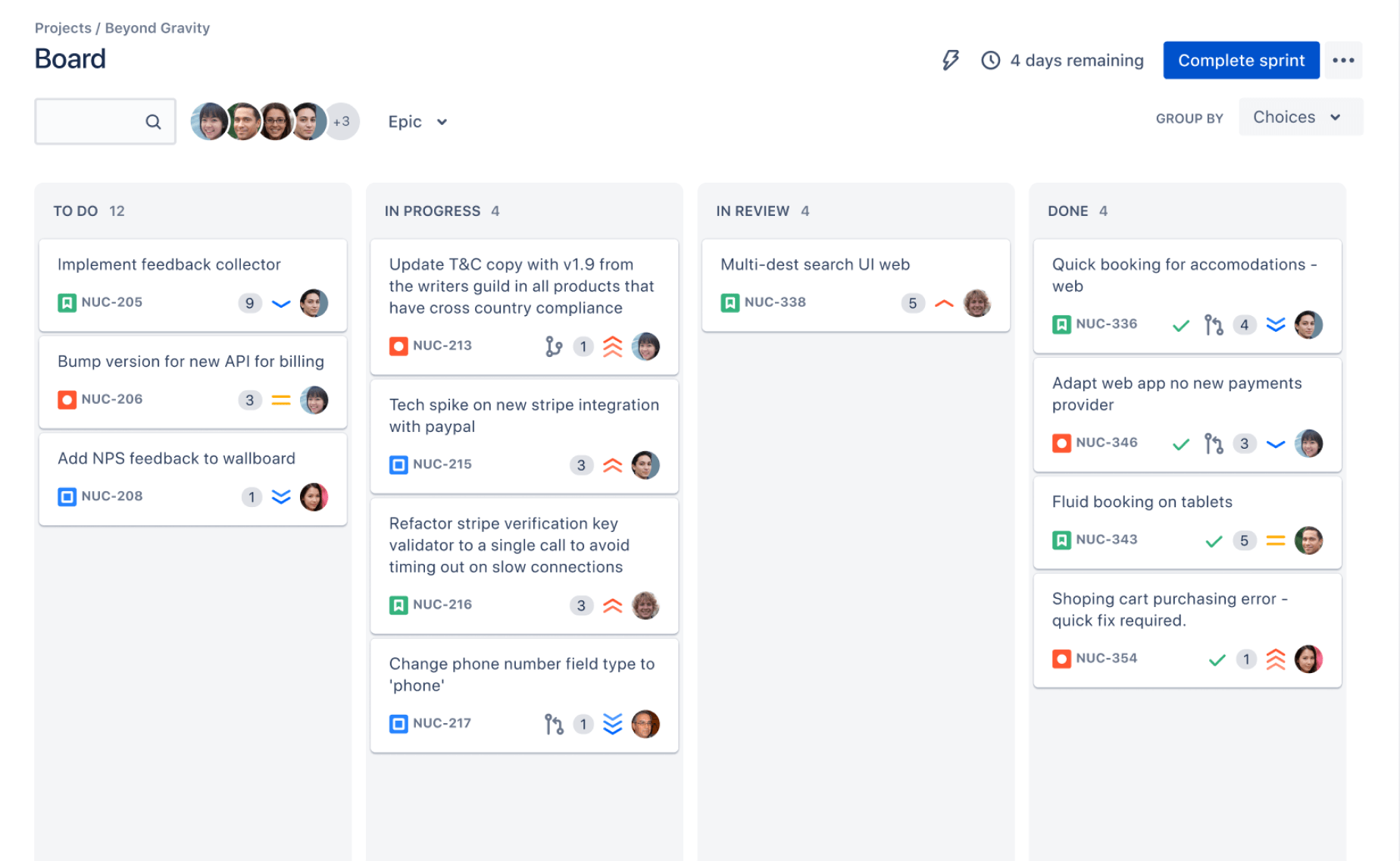
1. Count the People Who Need Access
Start with the number of people who need Jira Software access. Include developers, product managers, testers, designers, delivery leads, and other contributors who will actively use the platform.
For example, a team may include 18 engineers, four testers, three product managers, and two delivery leads. That creates an estimated user count of 27.
Keep occasional collaborators separate from full users when the plan allows different access levels. A contractor who checks one project every month may require a different arrangement than an engineer working daily.
2. Select the Jira Plan
Jira Software generally offers Free, Standard, Premium, and Enterprise options. Each tier changes the available controls, limits, administration features, support level, and scalability.
- Free: Suitable for small teams testing core project tracking features.
- Standard: Designed for teams that need broader collaboration and administration controls.
- Premium: Built for larger teams that need advanced planning, higher limits, and stronger service capabilities.
- Enterprise: Intended for organizations managing multiple teams, sites, governance requirements, and complex purchasing arrangements.
Your calculator estimate should begin with the tier that matches your operating requirements. Choosing the cheapest tier first can produce an unrealistic budget if your team soon needs premium capabilities.
3. Choose Monthly or Annual Billing
Monthly billing gives you flexibility when the team size may change. Annual billing can make forecasting easier and may offer different effective pricing.
Run both scenarios. For example, calculate the cost for 27 users over one month, then calculate the annual commitment for the same team. Compare the total cash requirement, effective monthly rate, and cancellation flexibility.
Remember that team growth can change the calculation. A 27-person team that expects to reach 45 people should run a second estimate before committing to an annual arrangement.
4. Check Hosting and Deployment Requirements
Jira Software may be used through cloud services, while some organizations may need self-managed or specialized deployment arrangements. Hosting affects licensing, administration, infrastructure, maintenance, and support planning.
Cloud pricing usually focuses on subscriptions and user tiers. Self-managed environments may require additional planning for servers, upgrades, backups, security controls, and internal administration.
Ask your technical team which deployment model fits your compliance and operating requirements before comparing totals.
5. Add Marketplace Apps and Services
Jira Software often works alongside apps for reporting, time tracking, testing, planning, workflow automation, portfolio management, and integrations.
Each app can add a separate subscription. Some vendors calculate pricing by Jira user count, while others use their own tiers or usage limits.
Create a second estimate that includes the apps your team already relies on. For example, a reporting app costing a modest monthly amount can become a meaningful annual expense when combined with test management and time tracking tools.
6. Include Support and Administration Costs
Subscription pricing does not capture every cost. You may also need an administrator, implementation assistance, training, migration support, or consulting.
For a small team, one internal administrator may handle configuration. A larger organization may need several people to manage permissions, workflows, integrations, audit controls, and team onboarding.
Include those activities in your total cost of ownership estimate. This creates a more useful budget than a subscription-only calculation.
7. Calculate the Total Cost
Use this simple formula:
Total estimated cost = Jira subscription + marketplace apps + implementation + administration + training + infrastructure
For a cloud team, infrastructure may be minimal. For a self-managed environment, infrastructure and maintenance can become significant.
Prepare three estimates:
- Base estimate: The Jira subscription alone.
- Working estimate: The subscription plus essential apps and administration.
- Growth estimate: The expected cost after adding users, projects, integrations, and higher service requirements.
What Changes the Final Jira Subscription Cost?
The number of users is usually the most visible factor, yet it is only one part of the calculation. Your final amount can change when several commercial and technical variables interact.
User Tiers and Seat Growth
Many software subscriptions use user bands rather than a simple per-person multiplication. Adding one person can sometimes move your account into a higher tier.
For example, a team with 10 users and a team with 11 users may fall into different pricing bands. Test the next tier whenever your hiring plan is close to a threshold.
Plan Features and Service Limits
A lower tier may cover issue tracking and basic project coordination. A higher tier may add advanced planning, stronger administration, larger limits, or enhanced support.
Compare the features your team actually needs. Paying for a higher tier only makes sense when its capabilities reduce operational friction or support a business requirement.
Billing Currency and Region
Prices may vary by currency, tax treatment, billing location, and commercial agreement. Your estimate should use the currency that appears on your expected invoice.
Taxes may also appear separately. Leave room for applicable taxes when you calculate the amount required for approval.
Apps and Integrations
Jira Software rarely operates alone in a mature delivery environment. Teams often connect it with source control, communication, testing, time tracking, analytics, and identity management services.
List every connected service and mark whether it is essential, useful, or optional. This helps you see which costs are required for daily work.
Contract Terms
Annual commitments, renewal dates, user increases, and negotiated agreements can affect the amount you pay over time. Ask your purchasing team to confirm the commercial terms before final approval.
A calculator is valuable for planning. The account quote remains the right place to confirm the payable amount.
Monthly Versus Annual Jira Cost Estimates
Monthly billing works well when your team is experimenting, hiring rapidly, or testing whether Jira fits the workflow. It reduces commitment and makes changes easier to absorb.
Annual billing can support predictable budgeting. It may also make procurement easier when your organization prefers one planned renewal cycle.
| Consideration |
Monthly billing |
Annual billing |
| Budget flexibility |
Higher flexibility when team size changes |
More predictable annual planning |
| Cash flow |
Smaller recurring payments |
Potentially larger committed payment |
| Team growth |
Easier to adjust during expansion |
Requires careful forecasting |
| Procurement |
Useful for pilots and smaller purchases |
Often fits formal renewal processes |
Here’s why this comparison matters: the lowest monthly estimate may create the highest annual commitment if you misjudge growth or add several apps.
Run a sensitivity check with three team sizes. Use your current headcount, expected headcount, and a high-growth estimate. The result gives you a practical range instead of one fragile number.
How to Build a More Accurate Budget
A good estimate reflects how your team will operate after adoption. It should account for setup work, ongoing administration, and the tools that make the workflow usable.
Separate Required and Optional Costs
Mark each expense as required, recommended, or optional. A required testing app belongs in the working estimate. An experimental reporting add-on belongs in the optional scenario.
This separation makes approval conversations easier. Decision-makers can see the minimum viable cost and the cost of a more capable setup.
Estimate Onboarding Effort
New users need project access, workflow guidance, permissions, templates, and training. A team may also need to reorganize existing work before migration.
For example, a 40-person engineering group might need several administrator sessions and role-based training. Those hours belong in your implementation estimate.
Review Automation and Usage Limits
Automation can reduce repetitive work, though each plan may impose limits. Review how many rules your team expects to run and whether those rules affect critical delivery processes.
A workflow that creates tasks, assigns owners, updates statuses, and sends notifications can consume more automation capacity than a simple issue tracker.
Plan for Governance
Large organizations often need consistent permissions, naming standards, approval controls, audit reviews, and lifecycle management. These requirements can influence your plan selection and administration effort.
Write down the controls your organization must maintain. Then check whether the selected tier and deployment approach can support them.
Common Mistakes When Estimating Jira Costs
Most inaccurate estimates come from missing a small detail that later becomes recurring. A short review can prevent those surprises.
- Counting only developers: Include every person who needs regular access.
- Ignoring apps: Review reporting, testing, planning, time tracking, and integration subscriptions.
- Using today’s headcount: Add a growth scenario for the expected contract period.
- Forgetting taxes: Leave room for regional tax treatment and invoice adjustments.
- Ignoring administration: Estimate configuration, permissions, training, and ongoing maintenance.
- Comparing plans by price alone: Match features and limits to actual workflow requirements.
But here’s the truth: a low subscription estimate can become expensive when your team needs several add-ons and extensive administration.
Use the calculator as the beginning of your review. Then validate the operational assumptions with engineering, finance, security, and procurement stakeholders.
Jira Software Pricing Calculator Alternative: ONES.com
Value Proposition
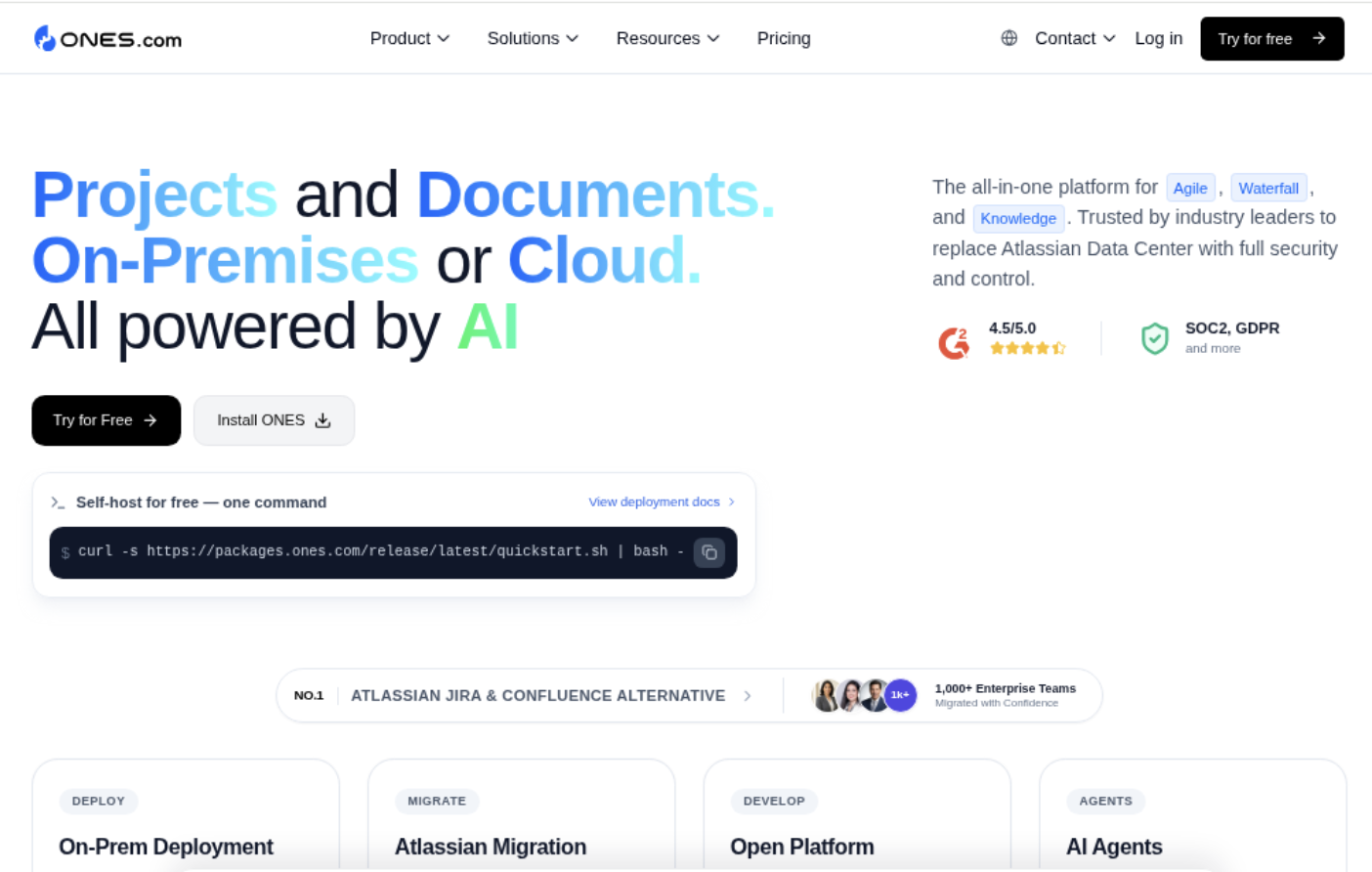
ONES.com combines project management and knowledge management in one platform, powered by ONES Assistant. ONES Project is a Jira alternative, while ONES Wiki is a Confluence alternative, and each product is sold separately.
This approach can simplify cost planning when your team wants project tracking, reporting, workflows, and internal knowledge capabilities with fewer separate plugins.
Core Capabilities
- Scattered project tools → ONES Project: Jira-compatible workflows, sprint management, and project controls bring delivery work into one project environment.
- Complex workflow changes → Custom workflows and fields: Teams can reflect approval paths, issue categories, ownership rules, and delivery stages without rebuilding the entire process.
- Limited visibility → Built-in reporting: Managers can review progress, workload, and delivery patterns through native reporting capabilities.
- Too many extensions → Native feature parity: Common project management needs are handled within the platform, which can reduce dependence on plugins.
- Restricted deployment requirements → Four deployment choices: Cloud, on-premise, private cloud, and air-gapped options support different security and infrastructure models.
- Different cloud and self-hosted experiences → Full feature parity: Teams can select a deployment model without giving up core capabilities.
- Repetitive coordination → Automation: Automated rules can handle routine assignments, status changes, notifications, and workflow actions.
- Separate project and knowledge environments → ONES Wiki: Teams can connect delivery work with structured internal knowledge when they purchase the knowledge management product.
- Uncertain initial commitment → Free plan: Teams can start with up to 30 seats while evaluating the platform and its fit.
Application Scenarios
Growing product team: A product group with engineers, testers, and managers can use sprint planning, custom fields, and reporting in ONES Project. The team can assess its needs before adding broader organizational controls.
Restricted-network environment: A company handling sensitive work may require an air-gapped deployment. ONES.com supports that deployment model while preserving feature parity with its cloud offering.
Project and knowledge coordination: A software organization may use ONES Project for delivery tracking and ONES Wiki for team knowledge. This can reduce the need to connect several separate systems.
Common Challenges When Calculating Jira Costs
Challenge: Your Team Size Keeps Changing
Solution: Calculate current, expected, and high-growth headcounts. Use the high-growth figure when an annual commitment would make later changes difficult.
Challenge: Add-On Pricing Is Hard to Track
Solution: Create an app inventory with the product name, purpose, user scope, billing cycle, and renewal date. Review the inventory every quarter.
Challenge: The Cheapest Plan Lacks a Critical Capability
Solution: List essential requirements before comparing tiers. If advanced planning, automation, administration, or support is mandatory, include that capability in the first estimate.
Challenge: Stakeholders Disagree About the Right Estimate
Solution: Present a range with clear assumptions. Show the base, working, and growth scenarios so stakeholders can discuss trade-offs instead of debating one unexplained number.
Challenge: Subscription Cost Hides Operational Work
Solution: Estimate administration, training, migration, security reviews, and maintenance. These activities affect the real cost of running the platform.
FAQs
What should I include in a Jira Software cost estimate?
Include the plan, active users, billing cycle, currency, taxes, marketplace apps, deployment requirements, implementation, training, and administration. Add a growth scenario if your team may expand during the commitment period. For a useful comparison, calculate both the subscription-only amount and the expected operating cost after your essential integrations are included.
Is a Jira pricing calculator exact?
A calculator provides an estimate rather than a guaranteed invoice total. The result may change with regional pricing, taxes, seat tiers, annual terms, negotiated agreements, app subscriptions, or account-specific conditions. Use the estimate for planning, then confirm the final amount through the current commercial quote before purchase or renewal.
Should I choose monthly or annual billing?
Monthly billing can suit a pilot, a rapidly changing team, or an organization still testing its workflow. Annual billing may suit a stable team with predictable funding and a clear renewal process. Compare both options using current headcount, expected growth, and the cost of required apps before deciding.
Do Jira Marketplace apps affect the total cost?
Yes. Marketplace apps can add recurring charges for reporting, testing, time tracking, planning, automation, or integrations. Their pricing may use different user tiers or usage rules. List every required app separately, then include its recurring cost in your working and growth estimates.
Can ONES.com replace Jira Software?
ONES Project is positioned as a Jira alternative and supports Jira-compatible workflows, sprint management, custom workflows, custom fields, automation, and built-in reporting. ONES.com also offers cloud, on-premise, private cloud, and air-gapped deployments. Evaluate your workflows, migration needs, integrations, security requirements, and team size before making a platform decision.
Conclusion
A reliable Jira Software estimate starts with users, plan level, billing cycle, deployment, and required apps. It becomes more useful when you add growth, administration, training, taxes, and implementation effort.
Here’s the practical takeaway: calculate a base cost, a realistic operating cost, and a growth cost. Compare monthly and annual commitments, then validate every assumption with the teams responsible for finance, security, and delivery.
The problem is rarely the arithmetic. The challenge is recognizing every recurring and operational expense. Once you make those costs visible, you can choose Jira Software or evaluate a Jira alternative such as ONES Project with greater confidence.