Jira Software Standard Pricing 2024: A Clear Cost Guide
Unsure about jira software standard pricing 2024? Compare plans, user costs, taxes, and add-ons—read now to budget with confidence.
Jira Software Standard pricing can look simple until you compare monthly billing, annual commitments, user bands, taxes, and add-ons. A team may see a per-user figure and still pay a different total at checkout.
That uncertainty makes budgeting harder. A small team can overestimate its annual spend, while a growing team may overlook how quickly extra seats and marketplace apps increase the bill.
Here’s the practical answer: in 2024, Jira Software Cloud Standard was commonly priced at about USD 8.15 per user per month on monthly billing, with a 10-user minimum of roughly USD 81.50 per month. Annual pricing used user bands, with the smallest band commonly listed at about USD 800 per year, before taxes and additional apps.
Jira Software Standard Pricing in 2024 at a Glance
Jira Software Standard pricing in 2024 generally referred to Atlassian’s mid-tier cloud plan for software teams. The plan provided more capacity and administration features than Free, while costing less than Premium and Enterprise tiers.
The most useful headline figures were:
- Monthly cloud pricing: approximately USD 8.15 per user per month.
- Smallest monthly bill: approximately USD 81.50 for up to 10 users.
- Annual pricing: commonly about USD 800 per year for the smallest 1–10 user band.
- Billing basis: monthly plans generally followed active seat counts, while annual plans used user bands.
- Extra costs: taxes, marketplace apps, premium integrations, and other Atlassian products could increase the final amount.
These figures describe the Jira Software Cloud Standard plan in 2024. Atlassian pricing can vary by currency, billing region, tax treatment, and account configuration.
What Standard included
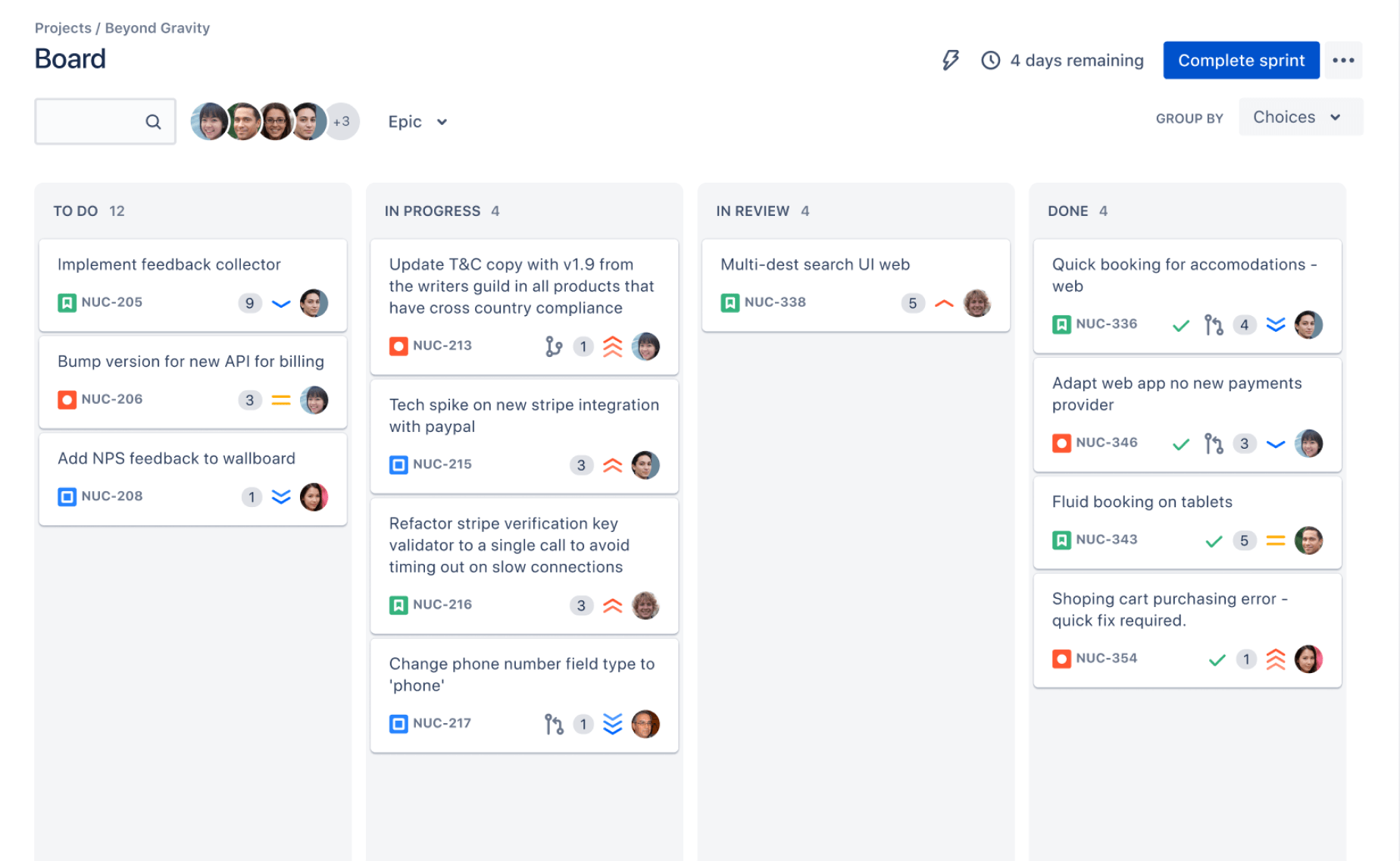
Standard was designed for teams that needed more than basic issue tracking. Common capabilities included Scrum and Kanban boards, backlog management, workflows, reports, dashboards, roadmaps, project permissions, and integrations.
Storage and audit features were also more generous than the Free tier. The exact limits mattered when you planned long-running projects, large attachments, or formal administrative controls.
What Standard did not automatically include
A Jira Standard subscription covered Jira Software itself. It did not automatically include every Atlassian product or marketplace app.
For example, Jira Product Discovery, Confluence, Atlas, premium testing apps, time-tracking tools, and advanced reporting extensions could carry separate charges. This distinction often explains why a monthly invoice exceeds the simple per-user calculation.
How the 2024 Pricing Model Worked
Jira’s cloud pricing required you to look at three things together: the number of seats, the billing cycle, and the plan level. The per-user figure gave you a starting point, while the billing method determined the final structure.
Monthly billing
With monthly billing, the common Standard rate was around USD 8.15 per user per month. A team of 10 therefore started near USD 81.50 monthly.
A team of 25 could estimate its base subscription like this:
- 25 users × USD 8.15 per month
- Estimated base cost: USD 203.75 per month
- Estimated annualized cost: USD 2,445 before taxes and extras
This calculation was useful for planning, although the checkout total could differ because of regional pricing and account-specific billing rules.
Annual billing
Annual billing used tiered user bands rather than a simple monthly multiplication. The smallest band commonly covered 1–10 users for about USD 800 per year.
That figure worked out to roughly USD 66.67 per month when spread across 12 months. However, the annual commitment applied to the selected band, even if your team used fewer seats during part of the year.
For a stable team, annual billing could simplify budgeting. For a fast-changing startup, monthly billing could provide more flexibility.
Taxes and currency
Published prices were generally displayed before applicable taxes. Your final charge could include sales tax, value-added tax, or another regional levy.
Currency conversion also affected comparisons. A USD estimate should not be treated as the exact amount appearing on a local-currency invoice.
| Cost element |
Why it matters |
| Base Jira Standard plan |
Covers the core Jira Software subscription. |
| Number of seats |
Changes the monthly estimate or annual pricing band. |
| Billing cycle |
Determines whether you pay by active monthly seats or an annual tier. |
| Taxes |
May be added according to your billing location. |
| Marketplace apps |
Can add recurring charges for testing, time tracking, reporting, or automation. |
| Other Atlassian products |
Jira and Confluence subscriptions are usually priced separately. |
Jira Standard Compared With Free, Premium, and Enterprise
The Standard plan made sense when your team had outgrown basic collaboration and needed stronger administration. Choosing it required comparing practical requirements rather than focusing only on the monthly rate.
| Plan |
Typical fit |
Main pricing consideration |
| Free |
Small teams testing Jira or running lightweight projects. |
Limited capacity and administration features. |
| Standard |
Growing software teams needing broader collaboration and controls. |
Per-seat subscription with monthly or annual billing. |
| Premium |
Organizations needing advanced scale, planning, and reliability features. |
Higher per-user pricing and additional enterprise-oriented capabilities. |
| Enterprise |
Large organizations with complex governance and multiple teams. |
Custom commercial arrangements and broader administration needs. |
When Free may be enough
Free could work for a small team with a few active projects, limited reporting requirements, and no need for advanced controls.
For example, a five-person development group planning a single product might manage comfortably within the free limits. The decision changed when the team needed more storage, broader permissions, or formal administration.
When Standard became the practical middle ground
Standard was often suitable for teams with regular sprint planning, several projects, external collaborators, and a need for stronger control over access.
Imagine a 20-person product organization running three active releases. Standard could provide the required Jira features without immediately moving to Premium-level pricing.
When Premium or Enterprise made sense
Premium became more relevant when you needed advanced planning, higher operational resilience, or support for larger organizational complexity.
Enterprise addressed requirements such as centralized administration across many teams and broader governance. The higher cost needed to be weighed against operational risk, compliance requirements, and the value of consolidated management.
How to Calculate Your Real Jira Cost
The safest approach was to separate the subscription estimate from the total ownership cost. Start with seats, then add the services your team actually needs.
- Count active seats. Include developers, product managers, testers, administrators, and other people who need Jira access.
- Choose monthly or annual billing. Compare flexibility against the potential savings or predictability of a yearly commitment.
- Multiply by the applicable rate or band. Use the 2024 Standard estimate as a planning figure rather than a guaranteed checkout amount.
- List required apps. Include testing, time tracking, reporting, planning, documentation, and integration tools.
- Add taxes and currency effects. These items can change the amount charged to your organization.
- Review seat growth. Estimate the cost at your current size and at the size you expect six or 12 months later.
Here’s a simple example. A 30-person team using the approximate monthly rate would begin with USD 244.50 per month before taxes and extras.
If that team also paid for three marketplace apps at USD 100 per month combined, its planning total would rise to about USD 344.50 monthly. Over 12 months, that difference would reach approximately USD 1,200.
Include hidden operational costs
Your invoice is only one part of the financial picture. Administration, workflow maintenance, app configuration, training, and migration can also require time.
A low subscription price may become less attractive when several plugins need separate configuration and ongoing ownership. That is why a total-cost review should include both subscription charges and operational effort.
Common Pricing Changes to Watch During a 2024 Review
Pricing comparisons became unreliable when teams mixed different Jira products or compared a current plan with an older quote. Jira Software, Jira Work Management, and Confluence served different purposes and could have separate billing.
Another common issue was counting every person in an organization as a paid Jira seat. You generally needed to count people who required access to Jira projects, boards, issues, or reports.
App charges also created surprises. A team might begin with Jira Standard, then add a test management app, advanced roadmaps, time tracking, and a reporting extension. Each addition could be reasonable alone, while the combined bill became substantial.
But here’s the truth: the best plan depends on your workflow, not just the advertised rate. A team with fewer plugins may spend less overall on a slightly different platform with the capabilities it needs built in.
Value Proposition
ONES.com combines project management and knowledge management in one platform. ONES Project serves as a Jira alternative for software teams, while ONES Wiki provides a separate knowledge base product similar in purpose to Confluence.
You can purchase ONES Project and ONES Wiki separately. This gives you room to match the subscription structure to your team’s actual needs.
Core Capabilities
- Plugin complexity slows administration: ONES Project includes Jira-compatible workflows and core project controls, helping reduce reliance on multiple extensions.
- Teams need flexible delivery processes: Custom workflows and custom fields let you reflect approval, development, testing, and release stages.
- Sprint planning becomes scattered: Built-in sprint management keeps backlog work, active iterations, and progress tracking connected.
- Manual updates delay routine work: Automation can handle recurring transitions, notifications, and workflow actions.
- Managers lack a clear progress view: Built-in reporting helps teams review delivery trends and project status.
- Restricted environments limit cloud choices: ONES.com supports Cloud, On-Premise, Private Cloud, and Air-gapped deployments.
- Self-hosted teams fear feature gaps: ONES.com provides full feature parity between its cloud and self-hosted versions.
- Small teams need a low-risk starting point: The free plan supports up to 30 seats.
- Project and knowledge work become disconnected: ONES.com brings project management and knowledge management into one platform, with ONES Project and ONES Wiki sold separately.
Application Scenarios
Software team replacing several Jira plugins: A 25-person engineering group may need custom fields, workflow automation, sprint management, and reporting. Consolidating these capabilities can make administration easier to control.
Organization with restricted infrastructure: A regulated team may require an air-gapped or on-premise deployment. ONES.com supports those deployment models while retaining the same core feature set as its cloud version.
Growing team comparing annual subscriptions: A startup can begin with up to 30 free seats, test its project workflow, and evaluate whether ONES Project meets its needs before expanding its plan.
Common Challenges When Estimating Jira Standard Costs
Challenge: confusing the per-user rate with the minimum bill
Problem: A team multiplies USD 8.15 by five and expects to pay USD 40.75 monthly.
Solution: Check the minimum seat requirement and the billing calculator. The smallest monthly charge could apply to a 10-user group even when fewer people actively work in Jira.
Challenge: comparing annual and monthly prices incorrectly
Problem: A yearly quote looks cheaper because the team divides it by the wrong number of seats or ignores its pricing band.
Solution: Compare both options over the same 12-month period. Include expected growth and the cost of unused capacity.
Challenge: forgetting marketplace applications
Problem: The base Jira estimate fits the budget, but testing, reporting, and time-tracking apps push the total higher.
Solution: Create an app inventory before approving the subscription. Mark each app as essential, useful, or replaceable.
Challenge: using outdated pricing assumptions
Problem: A 2024 estimate remains in a planning sheet after pricing, currency, tax, or product packaging changes.
Solution: Recheck the current commercial terms before renewal. Keep the 2024 figure as historical context rather than a promise about today’s price.
FAQs About Jira Software Standard Pricing in 2024
How much did Jira Software Standard cost in 2024?
The commonly quoted Jira Software Cloud Standard rate was about USD 8.15 per user per month on monthly billing. A 10-user team therefore started near USD 81.50 monthly. Annual pricing commonly placed 1–10 users near USD 800 per year. Taxes, currency, account details, and additional apps could change the final charge.
Was Jira Standard billed per user?
Monthly billing generally reflected the number of active seats, subject to applicable minimums and pricing rules. Annual billing used user bands, so you paid for the selected band rather than recalculating the charge every month. Check the applicable band before choosing an annual commitment, especially when your team may grow or shrink.
Did Jira Standard include Confluence?
No. Jira Software and Confluence were separate Atlassian products with separate subscriptions. A team using Jira for delivery planning and Confluence for internal knowledge needed to account for both products. Marketplace applications and other Atlassian services could create additional recurring charges.
Was Jira Standard suitable for a small software team?
It could be suitable when a team needed more capacity, administration, reporting, and collaboration controls than the Free plan provided. A small team with one lightweight project might remain comfortable on Free. A team running several releases or requiring more formal permissions could find Standard more practical.
How could I reduce the total cost?
Start by auditing inactive seats, unnecessary apps, duplicate capabilities, and unused projects. Then compare monthly and annual billing against your expected team size. Consolidating tools can also reduce recurring charges, although migration effort and training should be included in the decision.
Conclusion
Jira Software Standard pricing in 2024 was commonly estimated at USD 8.15 per user per month, with a monthly minimum near USD 81.50 for 10 users and annual pricing near USD 800 for the smallest band.
The final cost depended on billing frequency, seat growth, taxes, currency, marketplace apps, and other Atlassian products. A reliable estimate therefore required more than multiplying a headline rate.
But here’s the practical takeaway: count seats, compare billing cycles, list every add-on, and review the total cost over 12 months. If plugin sprawl or deployment restrictions are major concerns, evaluate platforms such as ONES.com alongside Jira.