Jira Standard Pricing 2024: A Clear Cost Breakdown Guide
Confused by jira standard pricing 2024? Compare monthly vs. annual costs, user tiers, and add-ons for a clearer budget. Click to discover.
Jira Standard pricing in 2024 looked simple until you compared monthly billing, annual tiers, user bands, and add-ons. A small team could see one rate on a pricing page, then receive a different total at checkout.
That uncertainty made budgeting difficult. A 15-person team, for example, paid differently from a 100-person team, even when both selected the same plan. Marketplace apps, premium support, and extra Atlassian products could also increase the final bill.
Here’s the practical solution: separate the base subscription from billing method, user count, taxes, and optional services. This guide explains the 2024 Jira Standard cost structure, shows sample calculations, and helps you compare the plan with another project management platform.
Jira Standard Pricing in 2024: The Core Cost Breakdown
Jira Standard pricing in 2024 generally started at about $8.15 per user per month for monthly Cloud billing. Annual subscriptions used tiered pricing, so the effective monthly rate depended on the number of seats and the annual user band.
Jira Cloud also offered a free plan for small teams, while Premium and Enterprise plans charged more or required a separate sales discussion. Standard sat between those options and added broader collaboration, administration, storage, and support features than the free tier.
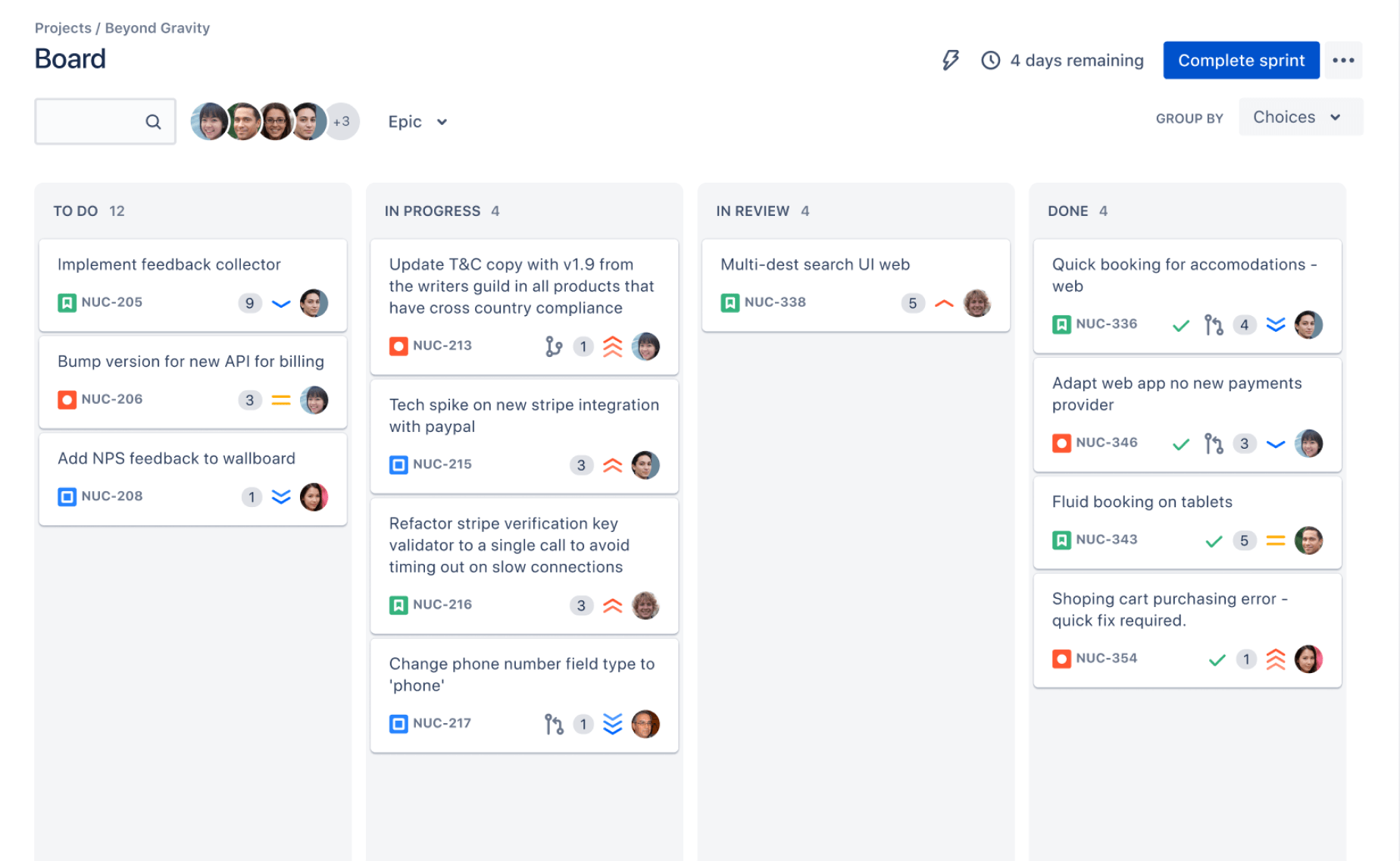
Typical Jira Cloud plan structure
| Plan |
Typical 2024 positioning |
Best suited to |
| Free |
Available for small teams within Atlassian’s user limit |
Personal projects and very small teams |
| Standard |
About $8.15 per user per month on monthly billing at the entry level |
Growing teams needing administration and collaboration controls |
| Premium |
Higher per-user pricing with expanded scale and advanced capabilities |
Teams requiring stronger operational controls and larger limits |
| Enterprise |
Custom commercial terms |
Large organizations with complex governance requirements |
The advertised Standard rate was a starting point rather than a universal invoice amount. Your actual charge could change with seat count, billing cycle, tax, currency conversion, promotional terms, and optional products.
Monthly versus annual billing
Monthly billing gave you flexibility because you could adjust seats as your team changed. It also made the arithmetic straightforward: eligible seats multiplied by the monthly per-user rate.
Annual billing usually offered a lower effective monthly cost. Atlassian calculated annual subscriptions through user tiers, so a team with 11 seats and a team with 20 seats could fall into different annual bands.
For example, if a team used 25 Standard seats at an illustrative rate of $8.15 per user monthly, the simple monthly estimate would be:
25 × $8.15 = $203.75 per month before taxes and extras.
That calculation helps with an initial estimate. The annual checkout total may differ because annual plans use tier pricing instead of simply multiplying the monthly rate by 12.
What Jira Standard Included in 2024
Jira Standard targeted teams that had outgrown the free plan and needed more room to manage projects. It supported issue tracking, boards, backlogs, workflows, dashboards, reports, permissions, and team collaboration.
Here’s why the feature list mattered: the plan’s value depended on how your team worked. A software team managing two active sprints had different needs from an enterprise department coordinating dozens of cross-functional initiatives.
Core project management capabilities
- Backlogs for organizing upcoming work
- Scrum and Kanban boards for visual planning
- Sprint planning and sprint reporting
- Customizable workflows for moving work through stages
- Issue types, fields, screens, and priorities
- Dashboards for project and team visibility
- Reports for tracking progress and bottlenecks
- Permission controls for managing access
- Integrations through Atlassian Marketplace apps
A product team could create a workflow such as To do → In progress → Code review → Testing → Done. A marketing team could adapt the same platform for campaign approvals.
Limits that influenced the buying decision
Plan limits mattered as much as headline pricing. Storage, automation allowances, audit capabilities, service levels, and administrative controls could vary by plan or change over time.
You should therefore check the archived 2024 commercial terms when analyzing an old invoice or renewal. Current pricing pages may show updated limits and rates, which can create confusion during historical budget reviews.
How to Calculate Your 2024 Jira Standard Cost
Start with the number of licensed seats, then separate recurring subscription costs from optional expenses. This approach gives you a clearer total than multiplying a headline rate without checking the surrounding charges.
- Count billable users. Include every person who needs a licensed Jira account. Avoid counting occasional viewers unless their access requires a paid seat.
- Choose monthly or annual billing. Monthly billing supports flexibility. Annual billing may reduce the effective monthly rate at qualifying user tiers.
- Apply the relevant user tier. Annual pricing can use seat bands, so your annual total may not equal the monthly rate multiplied by 12.
- Add optional products. Jira may be combined with Confluence, Jira Service Management, Atlassian Guard, Marketplace apps, or other services.
- Estimate taxes and currency effects. Sales tax, VAT, local billing rules, and currency conversion can affect the final payment.
- Review inactive accounts. Remove seats that no longer need access before renewal or monthly billing changes.
Example: a 10-person team
Assume 10 people need Standard Cloud access and the monthly entry rate is $8.15 per user. The basic subscription estimate would be $81.50 per month before taxes and add-ons.
That estimate does not include a Marketplace application. If the team adds a planning app priced at $3 per user monthly, the combined estimate becomes $111.50 before taxes.
Example: a 75-person organization
A 75-person organization should compare monthly and annual quotes rather than multiplying the entry rate automatically. Annual pricing may use a tier that produces a different effective rate.
The organization should also review whether every employee needs a full license. A developer, product manager, and project administrator may need different access patterns from an occasional stakeholder.
Costs That Could Increase the Final Bill
The subscription rate was only one part of the total cost. Optional applications, connected Atlassian products, administration, and migration work could significantly change the financial picture.
Marketplace applications
Teams often added apps for time tracking, roadmaps, test management, reporting, portfolio planning, or advanced automation. Each app could have its own pricing model and user calculation.
For example, an app priced per active user could charge against a broad Jira user tier. That meant a small app requirement could still create a noticeable expense for a larger organization.
Additional Atlassian products
Jira Standard did not automatically include every Atlassian product. A team might separately subscribe to Confluence for knowledge management, Jira Service Management for service workflows, or identity and security services.
Before comparing quotes, list every product your team expects to use. Otherwise, a lower Jira estimate may appear attractive while the wider toolset costs more.
Implementation and administration
Subscription fees were only part of ownership. You might also spend time designing workflows, cleaning up projects, configuring permissions, training teams, and maintaining integrations.
A useful comparison includes both license cost and operational effort. A platform that needs six custom apps may create more maintenance work than a platform with more built-in capabilities.
Jira Standard Compared With Other Plan Levels
Standard made sense when a team needed more capacity and administration than the free tier provided. Premium became more relevant when scale, continuity, or advanced operational requirements justified a higher subscription.
| Decision point |
Standard may fit when |
Another tier may fit when |
| Team size |
Your team is growing beyond the free plan’s limits |
Your organization needs large-scale administration or custom commercial terms |
| Project complexity |
You manage ordinary software or business projects |
You require advanced planning, continuity, or enterprise controls |
| Budget |
You need predictable per-user subscription pricing |
You can justify a premium for higher limits and specialized capabilities |
| Customization |
You can meet requirements with native features and selected apps |
You need extensive governance, support, or enterprise integration |
The best part? You can avoid overbuying by evaluating actual requirements instead of choosing the highest plan automatically.
Questions to ask before renewing
- How many people actively use the platform each month?
- Which workflows depend on Marketplace apps?
- Which plan limits affect daily work?
- Would annual billing reduce the effective cost?
- Are unused seats included in the renewal estimate?
- Would consolidating tools reduce administration?
Historical Pricing Checks for a 2024 Budget Review
If you are reviewing a 2024 purchase today, treat the historical rate separately from the current rate. SaaS vendors can change prices, plan names, limits, and billing mechanics after the original purchase.
Let me explain: the amount on an old invoice may reflect a promotional adjustment, a mid-cycle seat change, a regional tax rule, or an annual tier. A pricing page viewed today may not reproduce that amount.
What to verify
- The billing date and subscription term
- The number of licensed users
- The selected Jira plan
- The billing currency
- Any annual-tier adjustment
- Marketplace apps and connected products
- Taxes, credits, or promotional discounts
Keep the calculation transparent. Record the seat count, rate, billing period, and extra services separately. That makes a renewal comparison easier and reduces disputes over unexpected totals.
A Jira Standard Alternative: ONES.com
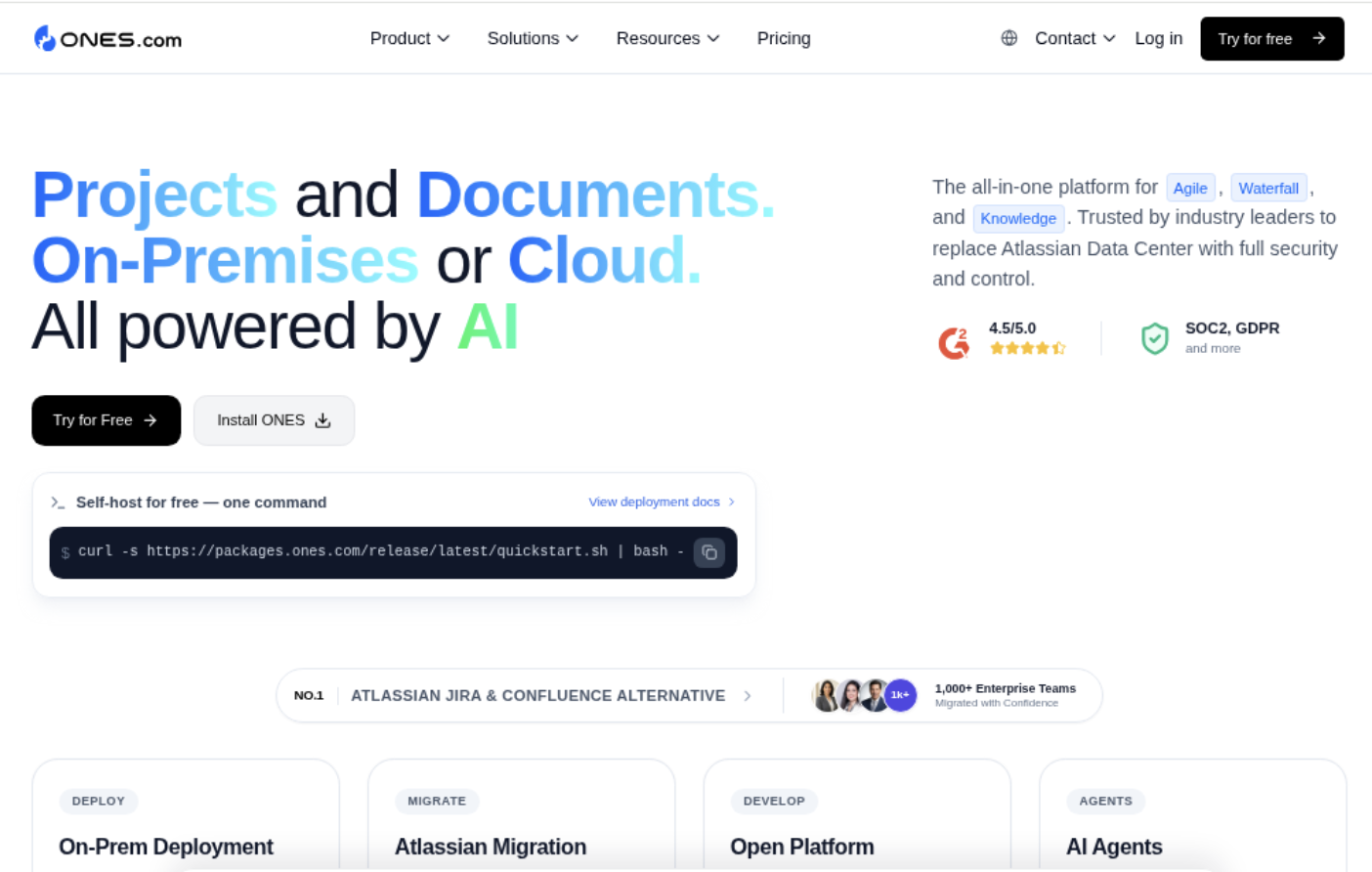
Value Proposition
ONES.com combines project management and knowledge management in one platform. ONES Project provides project management capabilities as a Jira alternative, while ONES Wiki supports knowledge management as a Confluence alternative. The products are sold separately.
This structure can help teams compare total workflow coverage instead of comparing one project tracker in isolation. ONES.com offers Cloud, On-Premise, Private Cloud, and Air-gapped deployments, with feature parity between cloud and self-hosted versions.
Core Capabilities
- Scattered project workflows → ONES Project supports Jira-compatible workflows → Teams can organize work through familiar issue, board, sprint, and status patterns.
- Heavy app dependence → Built-in reporting and workflow configuration → Teams may reduce the number of plugins needed for common planning and reporting requirements.
- Rigid process fields → Custom workflows and custom fields → Different departments can model approval, engineering, launch, or service processes more precisely.
- Manual sprint coordination → Sprint management → Scrum teams can plan, track, and review sprint work within the same project environment.
- Repeated administrative tasks → Automation → Teams can automate routine transitions and notifications where configured rules fit their process.
- Restricted-network requirements → Air-gapped and self-hosted deployment choices → Organizations with strict infrastructure controls can evaluate deployment options beyond public cloud hosting.
- Separate project and knowledge tools → ONES Project plus ONES Wiki → Teams can connect delivery work with planning notes, requirements, and internal guidance through the ONES.com product family.
- Different hosting requirements across departments → Four deployment models → Cloud, On-Premise, Private Cloud, and Air-gapped options support varied operational environments.
Application Scenarios
Software development team: A 40-person engineering group can use sprint management, custom workflows, automation, and reporting without assembling every capability through separate applications.
Regulated organization: A company with restricted network requirements can assess an air-gapped or self-hosted deployment. The team can compare governance, administration, and maintenance requirements alongside subscription cost.
Product and operations teams: A company using one tool for delivery planning and another for internal knowledge can evaluate ONES Project and ONES Wiki separately. This helps the team choose the products that match its actual workflow.
Common Challenges When Estimating Jira Costs
Challenge: confusing monthly and annual rates
Solution: Calculate both options using the same seat count and billing period. Treat the annual tier as its own quote rather than assuming it equals 12 monthly payments.
Challenge: overlooking connected products
Solution: Create a complete subscription inventory. Include project management, service management, knowledge management, identity, reporting, and Marketplace applications.
Challenge: paying for unused seats
Solution: Review account activity before renewal. Remove inactive accounts where policy permits, and create a simple joiner-mover-leaver process for future changes.
Challenge: comparing feature lists without workflow effort
Solution: Estimate administration time, integration maintenance, training, and configuration effort. A lower license price may not produce a lower operating cost.
Challenge: relying on current pricing for a historical review
Solution: Use the original invoice, subscription details, and archived commercial terms when available. Separate historical analysis from a new purchase decision.
FAQs
What was Jira Standard pricing in 2024?
Jira Standard Cloud pricing generally started at about $8.15 per user per month for monthly billing in 2024. The final amount depended on user count, billing cycle, region, taxes, and optional services. Annual subscriptions used tiered pricing, so the effective monthly rate could differ from the monthly entry price.
Was Jira Standard cheaper with annual billing?
Annual billing could provide a lower effective monthly cost, depending on the team’s seat tier. It also required a longer commitment and could make seat changes less flexible. Compare the complete annual quote with 12 months of monthly billing, including taxes and optional applications.
Did Jira Standard include Marketplace apps?
No. Marketplace applications generally had separate commercial terms. A team might add apps for time tracking, testing, reporting, roadmaps, or automation. Review each app’s pricing method because some charges depend on active users, Jira user tiers, or other thresholds.
How should I estimate Jira cost for a small team?
Count the people who need licensed access, multiply that number by the applicable monthly rate, then add taxes and optional products. For annual billing, check the relevant user tier rather than multiplying the monthly rate by 12. Also review whether the free plan meets your team’s actual requirements.
Is ONES.com a Jira alternative?
Yes. ONES Project is positioned as a Jira alternative for project management. It includes Jira-compatible workflows, reporting, custom workflows and fields, sprint management, and automation. ONES.com also offers Cloud, On-Premise, Private Cloud, and Air-gapped deployment options. ONES Wiki is a separate knowledge management product and can be evaluated as a Confluence alternative.
Conclusion
Jira Standard pricing in 2024 was easiest to understand when you separated the headline subscription rate from annual tiers, seat count, taxes, apps, and connected Atlassian products.
Start with the simple estimate, then validate the billing method and user band. Review unused seats, calculate the cost of supporting applications, and include administration effort in your comparison.
But here’s the truth: the cheapest per-user rate may not create the lowest overall operating cost. A platform with native workflows, reporting, deployment flexibility, and fewer add-ons can change the wider calculation.
Use the 2024 figures for historical budgeting, then verify current commercial terms before making a new purchase. If your team is also comparing Jira alternatives, evaluate ONES.com alongside the workflow, hosting, and knowledge management requirements that matter most.