Jira Status Explained: 7 Steps for Clear Issue Tracking
Confused by vague Jira status labels? Learn 7 steps for clear issue tracking, fewer delays, and better visibility. Click to discover!
Jira status values look simple until a board becomes crowded with vague labels, stalled work, and tickets nobody trusts. “In progress” can mean coding, waiting for review, or blocked for three days. That confusion slows decisions and hides delivery risks.
The problem grows when every team uses a different interpretation. A manager sees movement, while an engineer is still waiting for clarification. A customer sees an issue marked resolved, even though verification has not started.
But here's the truth: clear Jira statuses come from a deliberate workflow, not from adding more labels. In this guide, you’ll learn seven practical steps for defining, organizing, and maintaining statuses that show what is really happening.
7 Steps to Create Clear Jira Statuses
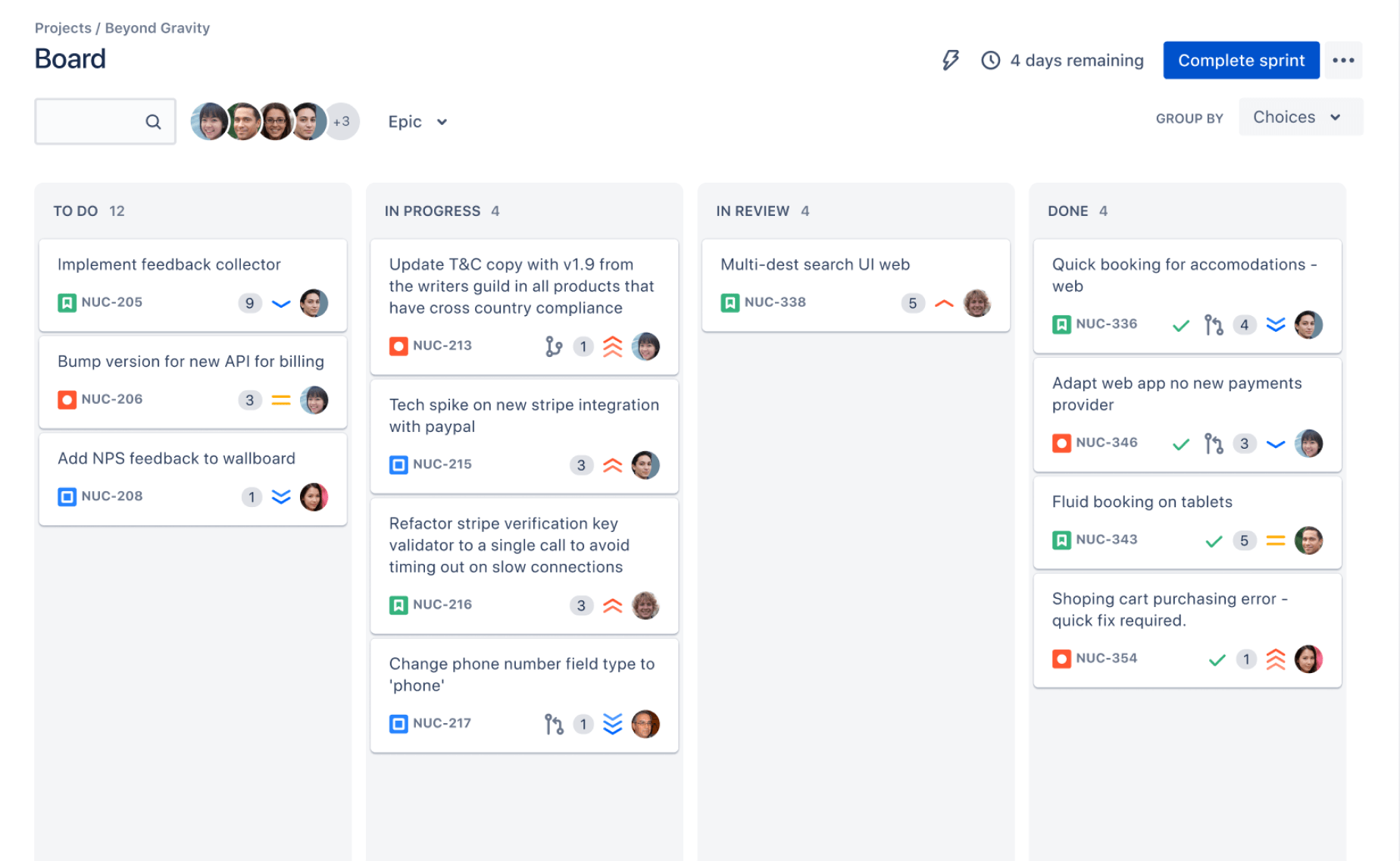
Jira status shows the current stage of an issue in your team’s workflow, such as To Do, In Progress, In Review, or Done. A useful status answers one question quickly: “What is happening with this work right now?”
Use the following seven steps to turn status tracking into a reliable operating habit. Start with the work itself, then shape the workflow around decisions, ownership, and movement.
-
Map the real stages of work
Write down what happens between a new request and completed delivery. Use the actual stages your team follows, rather than copying a default workflow.
For example, a software team might move through these stages:
- Backlog
- Ready for Development
- In Progress
- Code Review
- Testing
- Ready for Release
- Done
Each stage should represent a meaningful change in responsibility or progress. If two stages trigger the same action, they may not need to remain separate.
-
Give every status one clear meaning
A status should describe the issue’s current condition, not the person’s intention. “In Progress” means active work is happening now. It should not mean someone hopes to start tomorrow.
Define each status with a short rule. For example, “Ready for Testing” means the implementation is complete, acceptance criteria are met, and a tester can begin.
Here’s why: precise meanings prevent people from using the same label differently. They also make reports, stand-ups, and handoffs easier to understand.
-
Separate progress from blockers
A blocked issue is still in a work stage. For example, a developer may be actively investigating an issue while waiting for access approval.
Instead of creating several statuses such as “Blocked in Development” and “Blocked in Testing,” keep the main stage visible and record the obstacle separately.
You can use a flag, label, linked issue, comment, or custom field for the blocker. This preserves the workflow while showing why movement has stopped.
A useful combination might be:
- Status: In Progress
- Flag: Blocked
- Comment: Waiting for payment gateway credentials
- Owner: Engineering lead
-
Make transitions reflect decisions
A transition should happen when a specific condition is met. Moving an issue from “Code Review” to “Testing” might require an approved pull request and a successful build.
Write the condition beside each important transition. This gives your team a shared checkpoint instead of relying on personal judgment.
For example, use these transition rules:
- To Do to In Progress: an assignee has accepted the work.
- In Progress to Code Review: the implementation is ready for peer review.
- Code Review to Testing: review comments are resolved.
- Testing to Done: acceptance criteria pass and required checks are complete.
The best part? These rules create quality gates without forcing everyone into long meetings.
-
Assign ownership to each handoff
Every status should make the next owner obvious. A ticket in “Code Review” usually needs a reviewer. A ticket in “Testing” needs a tester or quality owner.
If ownership is unclear, issues wait silently. Add an assignee, team field, or responsible role at each handoff.
For example, a product manager may own clarification in “Needs Information,” while an engineer owns “In Progress.” The person changing the status should understand who acts next.
-
Control status movement with workflow rules
Use workflow conditions, validators, and automation where they reduce preventable errors. A transition can require an assignee, a resolution, or a completed approval.
Automation can also reduce manual maintenance. When an issue moves to “Ready for Testing,” Jira might notify the quality team. When it reaches “Done,” a release process might begin.
Let me explain: automation works best after the workflow is clear. Automating a confusing process only makes confusion move faster.
-
Review status performance regularly
A status is useful only if it helps you make better decisions. Review how long issues remain in each stage and where work commonly pauses.
Suppose issues spend two days in development but six days waiting for review. The answer may be more reviewers, smaller work items, or clearer review criteria.
Check the workflow after a sprint, release, or major team change. Remove unused statuses, merge duplicates, and clarify rules that cause repeated questions.
How Statuses Improve Issue Tracking
Clear statuses create a shared picture of work. A team member can open a board and understand what is waiting, active, under review, or complete.
That shared picture improves three daily activities: prioritization, coordination, and escalation. For example, a product manager can see that ten issues are ready for testing while only one tester is available.
That visibility supports a better decision. The team might pause new development and clear the testing queue first.
You might be wondering: why not use one status called “Open” until the issue is finished? Because one broad label hides the handoffs that create delay.
Use statuses to reveal bottlenecks
A bottleneck appears when work accumulates in one stage. If twelve issues sit in “Code Review,” review capacity is limiting delivery.
Compare that with a board where every issue shows “In Progress.” You can see activity, but you cannot see the queue forming behind a missing capability.
Keep status counts meaningful
Status counts should help you choose an action. “Testing” and “Ready for Testing” may be useful separately if they have different owners.
However, “Development Started,” “Development Active,” and “Development Nearly Complete” may create unnecessary detail. Ask whether each label changes a decision.
Jira Status Categories and Workflow Design
Jira commonly groups statuses into broad categories such as To Do, In Progress, and Done. These categories help reports interpret workflow movement across different projects.
The category is broader than the status name. “Code Review,” “Testing,” and “Waiting for Approval” may all belong to an in-progress category, even though they show different conditions.
| Workflow stage |
Typical category |
What it communicates |
| Backlog |
To Do |
The team has not committed to the work yet. |
| Ready for Development |
To Do |
The issue is prepared for an engineer to start. |
| In Progress |
In Progress |
Active implementation or investigation is happening. |
| Code Review |
In Progress |
The work awaits technical review. |
| Testing |
In Progress |
The change is being validated against expectations. |
| Done |
Done |
The agreed completion conditions have been met. |
Use categories for broad reporting, then use status names for operational detail. This gives leaders a simple overview without removing useful team information.
Choose statuses around handoffs
Handoffs deserve special attention because work often waits between people. A dedicated review or approval status exposes that waiting period.
For example, “Ready for Release” tells the release owner something different from “Testing.” The first means validation is complete, while the second means validation is still happening.
Be careful with “Done”
“Done” should have a firm meaning. It might mean code merged, testing passed, and production deployment completed. Another team may use it to mean development finished.
Choose one meaning per project and write it into the team’s working agreement. Otherwise, reports will mix unfinished work with completed delivery.
Examples of Effective Jira Workflows
The right workflow depends on the type of work. A software product team, service desk, and marketing team may need different stages.
Software development workflow
A practical software workflow could be:
- Backlog
- Ready for Development
- In Progress
- Code Review
- Testing
- Ready for Release
- Done
This flow separates implementation, review, validation, and release readiness. Each stage gives the team a different action to take.
Bug-fix workflow
A bug workflow might include:
- Reported
- Triaged
- Confirmed
- In Progress
- Ready for Testing
- Verified
- Closed
Here, “Confirmed” prevents engineers from spending time on unclear or unreproducible reports. “Verified” ensures the fix has been checked before closure.
Service request workflow
A service team may use:
- New
- Assigned
- Waiting for Requester
- In Progress
- Waiting for Approval
- Resolved
- Closed
“Waiting for Requester” and “Waiting for Approval” separate external delays from active service work. That distinction supports fairer performance reviews.
When a simpler flow works better
A small team may need only Backlog, In Progress, Review, and Done. Extra stages create maintenance work, especially when one person performs every role.
Start with the smallest workflow that explains movement. Add a status only when the team needs to track a separate owner, decision, or queue.
Jira Status: ONES.com Solution
ONES.com brings project management and knowledge management into one platform. ONES Project supports Jira-compatible workflows, while ONES Wiki provides a connected knowledge base.
For teams evaluating a Jira alternative, the value comes from keeping status control, reporting, collaboration, and guidance in one environment. ONES Project is sold separately from ONES Wiki, so you can choose the product that matches your needs.
Value Proposition
ONES.com helps teams create consistent workflows without depending on a large collection of plugins. It supports cloud and self-hosted deployment, including on-premise, private cloud, and air-gapped environments.
Core Capabilities
Unclear workflows → Jira-compatible workflow design → More predictable issue movement
If your team struggles with inconsistent transitions, ONES Project supports Jira-compatible workflows with defined stages and movement rules. Each issue can follow a process that matches the team’s real handoffs.
Hidden delivery delays → Built-in reporting → Faster bottleneck discovery
When issues remain active without meaningful progress, built-in reporting helps you inspect workload, cycle time, and stage distribution. You can identify queues before they become missed commitments.
Rigid tracking rules → Custom workflows and fields → Better fit for different teams
Engineering, support, and operations teams often need different status details. Custom workflows and fields let each group capture the information required for its decisions.
Manual sprint coordination → Sprint management → Clearer iteration planning
Teams running iterative delivery can manage sprints, priorities, and planned work in one project environment. This makes sprint scope and status movement easier to review.
Repetitive handoffs → Automation → Less manual administration
Automation can notify owners, update fields, or trigger actions after a transition. This reduces the chance that a status changes without the related follow-up.
Plugin-heavy administration → Native capabilities → Fewer moving parts
When essential workflow functions require multiple extensions, administration becomes harder. ONES Project provides native workflow, reporting, sprint, and customization capabilities in one platform.
Restricted deployment requirements → On-premise, private cloud, and air-gapped options → More deployment flexibility
Some organizations cannot place project information in a public cloud environment. ONES.com offers four deployment choices: cloud, on-premise, private cloud, and air-gapped deployment.
Disconnected project guidance → ONES Wiki → Easier access to team knowledge
When status rules live separately from project work, people may miss important guidance. ONES Wiki can help teams maintain workflow definitions, completion criteria, and operating procedures.
Application Scenarios
Scenario 1: A software team with review bottlenecks
A development team sees many issues marked “In Progress,” even though several await review. The team creates separate Review and Testing stages in ONES Project.
Reporting then shows where work waits. The engineering lead can assign review capacity before adding more development work.
Scenario 2: A regulated organization with restricted infrastructure
An organization needs project management inside a controlled environment. It selects an on-premise or air-gapped deployment to match its operational requirements.
The team keeps workflow stages, custom fields, reporting, and sprint management available within the chosen environment.
Scenario 3: A growing team standardizing delivery
A team expands from one product group to several. Each group uses different labels for review and completion, making cross-team reporting difficult.
Project leaders define shared status principles while allowing team-specific fields. ONES Wiki stores the definitions, so new members can find the rules without relying on informal explanations.
Common Challenges with Jira Status Management
Challenge: Too many statuses
Problem: The workflow contains a separate label for every minor action. Team members hesitate because they cannot tell which status applies.
Solution: Merge stages that have the same owner, purpose, and next action. Keep a status only when it changes responsibility or decision-making.
Challenge: “In Progress” includes everything
Problem: Active coding, waiting for review, blocked work, and testing all appear under one label.
Solution: Create separate stages for meaningful handoffs. Track blockers separately, so the board shows both progress and obstacles.
Challenge: Issues reach Done too early
Problem: People close issues after implementation, even though testing, approval, or release remains unfinished.
Solution: Define completion criteria and add transition checks. Require the fields or approvals that prove the work meets the team’s definition of complete.
Challenge: Status names vary across teams
Problem: One team uses “Closed,” another uses “Resolved,” and a third uses “Complete.” Cross-team reporting becomes difficult to interpret.
Solution: Establish shared category meanings and a small vocabulary for major stages. Allow local detail only when it supports a real team decision.
Challenge: Old statuses remain active
Problem: A workflow changes, but unused statuses remain available. New issues continue entering outdated stages.
Solution: Review status usage after workflow changes. Remove obsolete transitions and guide existing issues into the current process.
FAQs About Jira Status
What is the difference between a Jira status and a Jira workflow?
A status represents one stage of an issue, such as In Progress or Testing. A workflow connects those statuses and defines how an issue moves between them.
For example, “Code Review” is a status. The rule allowing movement from Code Review to Testing is part of the workflow. A workflow can also include conditions, validators, approvals, and automation.
How many statuses should a Jira project have?
Use enough statuses to show meaningful handoffs, but avoid labels for minor actions. A small team may need four stages, while a release-heavy team may need seven or eight.
Ask whether each status changes ownership, exposes a queue, or triggers a different decision. If it does none of these things, combine it with another stage.
Should blocked work have its own Jira status?
Usually, blocked work should keep its primary status while displaying the blocker separately. An issue can remain In Progress while waiting for access, clarification, or another team.
A separate Blocked status can be useful when blocked work has a distinct owner and queue. Use it only when the team takes a different action after an issue enters that stage.
Can one issue have more than one Jira status?
An issue normally has one current workflow status. That single value gives the board and reports a consistent view of its stage.
You can represent additional conditions with flags, labels, custom fields, linked issues, comments, or approvals. For example, an issue can be In Progress while also marked as high risk.
How often should a team review its workflow?
Review the workflow after a sprint, release, reorganization, or major process change. A monthly or quarterly review also works for stable teams.
Look for long waiting periods, unused statuses, repeated manual corrections, and frequent questions about transition rules. Those signals show where the workflow needs refinement.
Conclusion
Clear Jira statuses make work easier to understand, prioritize, and move forward. Start by mapping real stages, defining each label, separating blockers, and assigning ownership to every handoff.
Then add transition rules, automate useful follow-up actions, and review status performance regularly. A practical example is simple: if work piles up in Testing, your workflow has revealed a capacity problem that deserves attention.
But here's the truth: status names alone cannot fix an unclear process. They work when each stage has a shared meaning and a visible next action.
Whether you continue with Jira or assess a Jira alternative such as ONES Project, design statuses around decisions rather than decoration. That approach gives you cleaner boards, more honest reporting, and fewer surprises at delivery time.