Jira Story Points: A Practical Guide to Better Estimation
Struggling with estimates? Learn how Jira story points improve sprint planning, consistency, and forecasts. Read now to estimate with confidence.
Jira story points can make sprint planning clearer, yet many teams still argue over whether a task deserves three, five, or eight points. That confusion creates slow meetings, unreliable forecasts, and pressure to treat estimates like promises. The problem grows when teams compare points across squads or convert them directly into hours. Soon, a planning tool becomes a source of friction instead of a way to understand workload. But here's the truth: story points work well when your team measures relative effort, complexity, and uncertainty consistently. This guide shows you how to estimate with confidence, run better planning discussions, interpret velocity, and avoid common traps. You will also see practical examples for Jira workflows and ways ONES.com can support similar estimation practices.
What Jira Story Points Mean
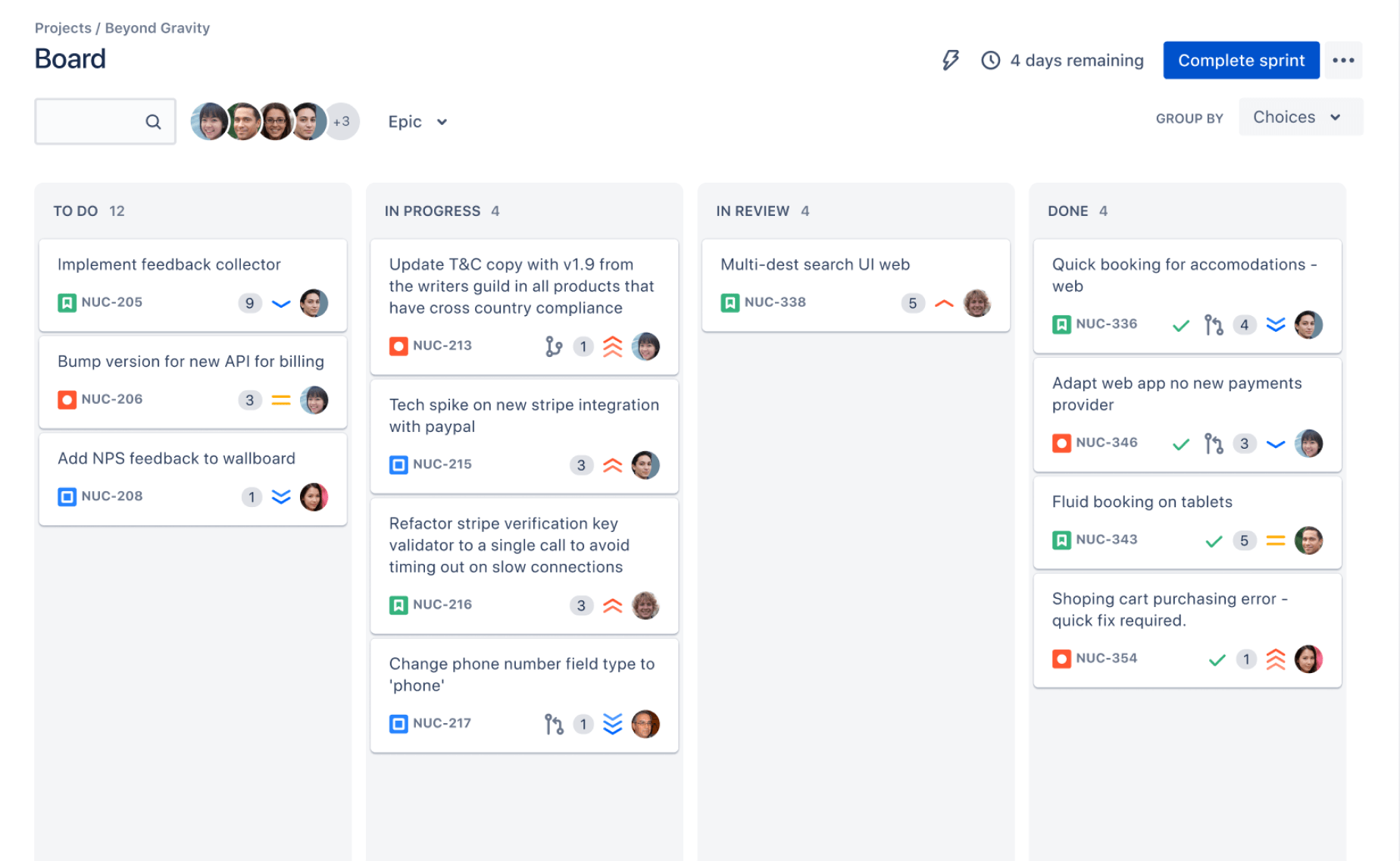
Jira story points are relative estimates that represent the effort, complexity, and uncertainty involved in completing a user story. They help a team compare work items without assigning exact hours to every task.
A story worth eight points should feel substantially more demanding than a story worth two points. The number itself has no universal meaning. Your team creates the meaning through repeated comparison and shared experience.
The Three Factors Behind an Estimate
Story points usually combine three ideas. Treating these factors separately helps your team explain an estimate clearly.
- Effort: How much work will the team need to perform?
- Complexity: How difficult are the technical or product decisions?
- Uncertainty: How much remains unknown about the work?
For example, updating a button label may require little effort and minimal uncertainty. A payment integration could involve moderate coding effort, complex security requirements, and several unknowns.
That payment task might receive eight points even when the final code is short. The estimate reflects the overall challenge, including testing, review, coordination, and risk.
Why Teams Use a Relative Scale
Exact hour estimates often create false precision. A developer may say a task needs six hours, then encounter an unexpected dependency after two hours.
Relative sizing creates a more useful conversation. Your team can ask, “Is this closer to our two-point login text change or our five-point password reset flow?”
Many teams use a modified Fibonacci sequence:
- 1 point
- 2 points
- 3 points
- 5 points
- 8 points
- 13 points
- 21 points
The gaps become larger as uncertainty increases. A jump from eight to thirteen signals that the team may need more discovery or a smaller story.
How to Estimate Stories in Jira
Use a repeatable process for every planning session. The goal is shared understanding, consistent comparison, and a visible reason behind each estimate.
- Clarify the story. Confirm the user need, acceptance criteria, and expected outcome before discussing points.
- Check the boundaries. Identify what the story includes and what belongs in another story.
- Compare with reference stories. Choose completed examples that represent one, three, and five points.
- Discuss effort, complexity, and uncertainty. Ask what could make the work larger than expected.
- Estimate privately. Each participant selects a number before the group discussion begins.
- Reveal estimates together. This prevents the first person speaking from anchoring everyone else.
- Discuss the widest differences. Ask the highest and lowest estimators to explain their reasoning.
- Revise the story or estimate. Split oversized work, clarify acceptance criteria, or keep the estimate when uncertainty is legitimate.
- Record the final value in Jira. Keep the estimate attached to the story so planning and reporting remain connected.
- Review patterns after several sprints. Look for oversized stories, repeated surprises, and inconsistent comparisons.
Step 1: Prepare Reference Stories
Choose several completed stories that your team understands well. These examples become anchors for future discussions.
For instance, your team might use these references:
| Reference work |
Example estimate |
Why it helps |
| Change a label and update a test |
1 point |
Shows a small, predictable change |
| Add a simple profile preference |
3 points |
Shows moderate coding and testing effort |
| Build a password reset flow |
5 points |
Shows multiple screens and validation rules |
| Connect an external payment service |
8 points |
Shows integration risk and higher uncertainty |
Your anchors should reflect your own product and technology. Another team’s five-point story may be a two-point task for you.
Step 2: Run Planning Poker
Planning poker combines individual judgment with group discussion. Each person selects an estimate before anyone explains their choice.
Suppose three team members select three points, while one selects eight. The difference deserves attention. The eight-point estimate may reveal a missing security requirement or a hidden dependency.
After discussion, vote again. The team does not need endless agreement. It needs enough shared understanding to plan responsibly.
Step 3: Split Large Stories
A story above eight points often contains multiple outcomes. A large account settings feature might include notification preferences, language selection, privacy controls, and email verification.
Split the work vertically when possible. Each smaller story should deliver a usable slice of value.
- Create notification preferences.
- Allow language selection.
- Add privacy controls.
- Verify changes through email.
Splitting by technical layer can hide risk. Stories such as “build the API,” “create the interface,” and “add tests” may leave every part unusable until the end.
How Story Points Work With Velocity
Velocity is the number of story points a team completes during a sprint. It helps you forecast future capacity after several sprints reveal a stable pattern.
Imagine a team completing 24, 27, 22, and 25 points across four sprints. Its average velocity is 24.5 points. Planning around roughly 24 points may be more sensible than selecting 40 points because the backlog looks large.
Here's why: velocity describes observed delivery capacity, not personal productivity. It includes review time, testing, interruptions, meetings, and normal variation.
Use a Range Instead of a Single Promise
A single average can hide important variation. In the example above, the team completed between 22 and 27 points.
A forecast could therefore show a likely range of 22 to 27 points for a similar sprint. If the team has planned time away or major support work, reduce the range.
Velocity becomes more useful when you combine it with:
- Recent sprint results
- Team availability
- Known product risks
- Unfinished work
- Expected support requests
Velocity Is Local to Each Team
One team’s velocity cannot be compared fairly with another team’s velocity. Their point scales, product areas, team sizes, and technical constraints may differ.
If Team A completes 40 points and Team B completes 20, that does not prove Team A delivers twice as much value. The numbers may use different reference stories.
Use velocity for planning within the same team. For broader reporting, focus on outcomes, cycle time, release progress, and customer impact.
Common Estimation Mistakes and Better Alternatives
Most estimation problems come from using points for purposes they were never designed to serve. A few simple adjustments can restore useful conversations.
Turning Points Into Hours
A team may notice that three points often take two days and start treating points as a hidden time unit. That practice weakens the relative scale.
Use calendar estimates when stakeholders need timing. Keep story points for comparing work and understanding capacity.
Using Points to Judge Individuals
Individual performance metrics encourage people to choose larger estimates or avoid complex work. They also punish collaboration, mentoring, and quality improvements.
Story points belong to the team. Review delivery patterns and product outcomes instead of ranking people by completed points.
Changing the Scale Midstream
If a team treats a familiar task as three points in one sprint and five points later, velocity becomes difficult to interpret.
Recalibration is sometimes necessary after a major technology or team change. When that happens, record the change and restart the comparison period.
Estimating Before Clarifying the Work
Vague acceptance criteria create wide disagreement. A story named “improve search” could involve ranking, filters, performance, accessibility, or analytics.
Clarify the expected behavior first. Then estimate the work that remains.
Ignoring Uncertainty
A technically simple task can still deserve a higher estimate when an external service, approval, or migration creates risk.
Use a spike when the team needs investigation before committing to a larger implementation. A short research task can reduce uncertainty and improve the next estimate.
Practical Examples for Jira Planning
Concrete examples make relative sizing easier to apply. Consider a retail application adding account recovery.
Example One: Small Interface Change
The team needs to change “Save” to “Save preferences” on an existing screen. The behavior remains unchanged, and one test needs an update.
The team compares it with its one-point reference and assigns one point. There is little uncertainty and no external dependency.
Example Two: Multi-Step User Flow
The team must add password recovery. The flow includes an email request, a secure token, a reset screen, expiration rules, error messages, and automated tests.
The team compares it with its five-point reference and assigns five points. The work crosses several areas, but the requirements are understood.
Example Three: Unclear Integration
The team needs to connect a new tax service. The service has limited test coverage, unclear error behavior, and approval requirements from another group.
The team assigns eight points or creates a discovery spike first. The estimate reflects uncertainty rather than pretending the integration is fully understood.
Example Four: Oversized Feature
A request called “launch team billing” includes plans, invoices, payment methods, permissions, notifications, and reporting.
Assigning 21 points may accurately signal size, yet it gives poor planning detail. Split the request into smaller vertical stories and estimate each one separately.
Jira Story Points: ONES.com Solution
ONES.com combines project management and knowledge management in one platform. ONES Project supports Jira-compatible workflows, while ONES Wiki supports team knowledge management, and each product is sold separately.
Value Proposition
If your team wants structured estimation without stitching together many plugins, ONES.com provides planning, workflow, reporting, and knowledge capabilities across cloud and self-hosted deployments.
Core Capabilities
- Scattered planning details → Unified project workspace → Keep stories, estimates, sprint work, and status updates connected in ONES Project.
- Inconsistent workflows → Custom workflows and fields → Adapt statuses, estimation fields, and approval steps to your team’s process.
- Limited sprint visibility → Sprint management → Plan work against capacity and review completed points after each sprint.
- Manual repetitive updates → Automation → Trigger routine actions when stories change status, receive estimates, or meet defined conditions.
- Weak progress visibility → Built-in reporting → Review velocity, sprint progress, workload, and delivery trends without assembling separate tools.
- Migration concerns → Jira-compatible workflows → Preserve familiar planning patterns while moving toward a Jira alternative.
- Plugin dependency → Native feature parity → Use core planning and reporting capabilities with fewer add-ons to maintain.
- Restricted deployment requirements → Multiple deployment choices → Choose Cloud, On-Premise, Private Cloud, or Air-gapped deployment.
- Knowledge scattered across team spaces → ONES Wiki → Connect planning discussions with reusable team knowledge through a Confluence alternative.
Application Scenarios
Growing software team: A team can define custom story fields, use sprint planning, and review velocity trends in one project environment. Product and engineering can share consistent planning context.
Regulated organization: A company with strict infrastructure requirements can choose On-Premise, Private Cloud, or Air-gapped deployment. Full feature parity between cloud and self-hosted versions supports a consistent workflow.
Cross-functional product group: Product managers can maintain requirements in ONES Wiki while engineering tracks stories, estimates, and releases in ONES Project. The team spends less time searching across disconnected systems.
ONES.com offers a free plan for up to 30 seats. You can evaluate whether its project and knowledge workflows fit your estimation process before expanding usage.
Common Challenges With Story Point Estimation
Challenge: Estimates Become Commitments
Problem: Stakeholders treat a five-point story as a guaranteed delivery date. The team then inflates estimates to protect itself.
Solution: Explain that points support forecasting through velocity. Pair them with sprint capacity, risks, and a delivery range.
Challenge: Stories Have Different Sizes
Problem: Some stories are tiny while others contain several outcomes. A single point total hides the difference.
Solution: Set a practical upper limit, such as eight points. Split larger work into vertical slices before sprint planning.
Challenge: Estimates Drift Over Time
Problem: New team members, technology changes, or evolving requirements make old reference stories less useful.
Solution: Review reference stories during retrospectives. Recalibrate deliberately and explain how the change affects velocity.
Challenge: Remote Discussions Lack Participation
Problem: One or two voices dominate online planning, while quieter specialists hold useful concerns.
Solution: Use private voting, invite explanations from the highest and lowest estimates, and capture unresolved risks before closing the story.
FAQs
What do story points measure in Jira?
Story points measure relative effort, complexity, and uncertainty. They do not represent fixed hours or days. A three-point story should be comparable to other three-point stories within the same team. Your team establishes the scale through reference work and repeated planning. Use the estimate to support sprint selection and forecasting, then review actual delivery patterns over time.
Should one story point equal one hour?
No. Converting points into hours removes the main benefit of relative estimation. Hours suggest precision that may disappear when requirements, dependencies, or technical risks change. If stakeholders need a time forecast, use velocity and team capacity to create a delivery range. Keep points focused on comparing work rather than tracking individual effort.
What is a good story point scale?
A modified Fibonacci scale works well for many teams because larger numbers create visible separation between small and uncertain work. Common values include 1, 2, 3, 5, 8, 13, and 21. Your exact scale matters less than consistent use. If your team frequently chooses 13 or 21, investigate whether stories need clearer boundaries or smaller slices.
Can different Jira teams compare velocity?
Usually, no. Teams may use different reference stories, technology stacks, team sizes, and estimation habits. A 30-point velocity for one team may represent less work than a 20-point velocity for another. Compare velocity within the same team and use broader measures, such as cycle time or customer outcomes, for organization-level discussions.
When should a team use a spike?
Use a spike when uncertainty prevents a responsible implementation estimate. Examples include an unfamiliar integration, unclear performance behavior, or a technical approach that needs testing. Give the spike a defined question and time limit. Afterward, the team can split the work, clarify requirements, and estimate the remaining implementation with better confidence.
Can story points be used in Kanban?
Yes, although Kanban teams often focus more on cycle time and throughput. Story points can help compare work sizes and identify unusually large items. Avoid forcing sprint-style velocity onto a continuous flow system. Track how long different sizes take, then use that information to improve workflow policies and delivery forecasts.
Conclusion
Jira story points work best as a shared language for relative effort, complexity, and uncertainty. They help your team compare work, plan sprints, and forecast delivery without pretending every task has a perfectly predictable duration.
Start with clear reference stories, estimate privately, discuss major differences, and split oversized work. Treat velocity as a team planning signal rather than an individual performance score.
But here's the truth: estimation cannot rescue unclear requirements or overloaded teams. Clarify the work, expose uncertainty, and review patterns after each sprint. With that foundation, Jira or a Jira alternative such as ONES Project can support calmer planning and more dependable delivery.