Jira Structure Pricing Explained: Plans, Costs, and Value
Confused by jira structure pricing? Compare plans, costs, hosting, and value to choose the right tier for your team. Click to discover the true total cost.
Jira Structure pricing can feel confusing because you may pay for Jira, the Structure app, hosting, and sometimes implementation separately. A simple plan comparison rarely shows the full cost.
That confusion creates two common problems. You either overpay for a hierarchy tool your team barely uses, or choose a cheaper tier that cannot support portfolio planning, reporting, or cross-team visibility.
But here's the truth: the right choice depends on your Jira edition, billable seat count, deployment model, and how deeply your team uses Structure. This guide explains the main pricing factors, shows how to estimate the real cost, and helps you compare Structure’s value with a broader project management platform.
How Jira Structure Pricing Works
Jira Structure pricing is the cost of adding the Structure hierarchy and portfolio-planning app to Jira. Your total usually depends on Jira Cloud or Data Center, the number of licensed seats, billing frequency, and optional services.
Structure is commonly associated with Tempo’s Structure app for Jira. It helps you arrange issues into hierarchies, group work into initiatives, create roll-ups, and view progress across projects.
Here’s the important point: Structure pricing is usually an additional subscription beside your Jira subscription. Buying Jira does not automatically include every Structure capability.
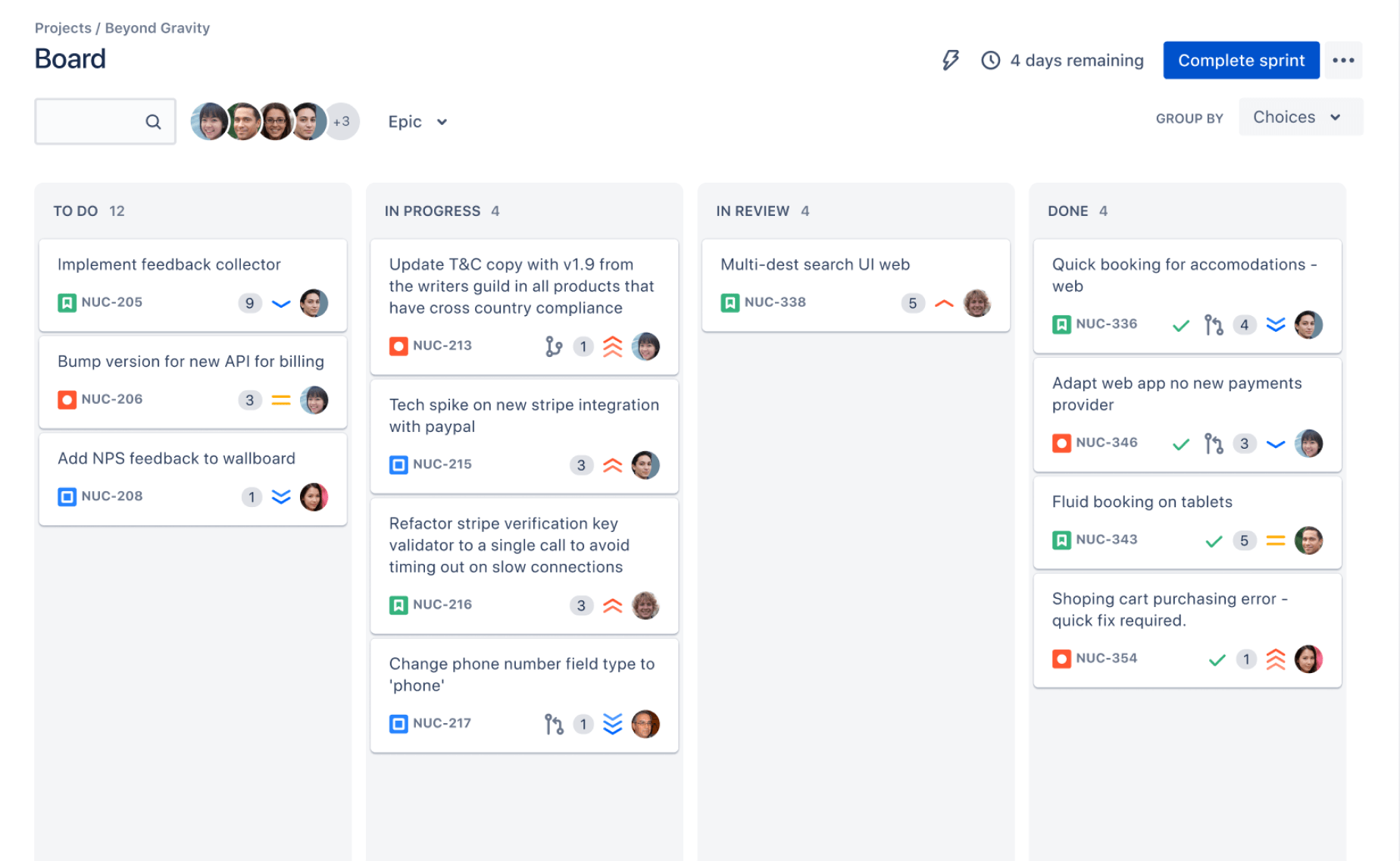
The main cost components
- Jira subscription: You still need the relevant Jira plan for the people who access your projects.
- Structure subscription: The app adds its own charge, commonly tied to your Jira edition and licensed seat tier.
- Deployment costs: Cloud and self-managed environments have different administration and infrastructure requirements.
- Implementation work: Complex hierarchies, permission models, and reporting practices may require internal setup time or specialist support.
- Growth costs: Your bill can change as more people receive Jira access or as your planning needs expand.
For example, a 50-person product team may need Jira for delivery work and Structure for portfolio roll-ups. The real monthly budget includes both subscriptions, even if only 15 people actively build hierarchies.
Cloud, Data Center, and older self-managed editions
Structure availability and billing differ by deployment. Cloud plans are generally subscription-based and administered through Atlassian Marketplace. Data Center arrangements may use annual pricing and can involve different commercial rules.
Older Server licensing follows a different model, and availability can be restricted because Atlassian ended support for Jira Server. Check the current compatibility and commercial terms before planning a new deployment.
| Cost factor | What to check |
|---|
| Jira edition | Cloud, Data Center, or an older self-managed installation |
| Licensed seat tier | How many Jira accounts can access the environment |
| Billing term | Monthly flexibility versus annual commitment |
| App coverage | Which people need Structure access and which only view results |
| Administration | Time required for hierarchy design, permissions, training, and maintenance |
Plans, Seat Tiers, and Billing Factors
Structure quotes are often easier to understand when you separate the plan label from the billing unit. The plan describes capability and support, while the seat tier determines how much access you are purchasing.
Seat counts can shape the bill
Many Jira Marketplace apps use tiered pricing. That means you may pay for a band rather than an exact count. If your team has 101 licensed accounts, the next pricing band may apply even when only 70 people actively use Structure.
That makes account hygiene important. Remove inactive accounts, review external access, and separate occasional viewers from people who need advanced planning permissions.
You might be wondering: does every Jira account require the same level of Structure use? Often, the answer is no. Your commercial terms still depend on the app’s licensing rules, so verify how viewers, collaborators, and administrators are counted.
Monthly and annual billing
Monthly billing suits a pilot, a temporary program, or a team still testing its hierarchy model. Annual billing may provide predictable budgeting and can make sense after adoption is proven.
Use a 12-month comparison before deciding. A lower monthly commitment may cost more over a full year, while an annual commitment can create waste if the app does not become part of everyday planning.
Cloud pricing versus self-managed cost
Cloud pricing usually places more infrastructure responsibility with the vendor. Self-managed deployments can give you more control over hosting, network boundaries, and upgrade timing.
However, self-managed value includes more than the license. Add hosting, backups, upgrades, monitoring, security reviews, and administrator time. A cheaper subscription can become expensive when your IT team must maintain the environment.
What You Get for the Money
Structure’s value comes from turning separate Jira issues into a navigable planning hierarchy. Instead of scanning several project boards, you can arrange initiatives, epics, stories, and tasks in one structured view.
Hierarchy and roll-up visibility
A product initiative might contain three epics, 18 stories, and several operational tasks. Structure can organize that work and roll selected values upward, such as estimates, logged effort, or completion.
That helps a product director answer a practical question: “Which initiative is slipping, and which team is creating the delay?” The answer becomes easier to inspect than a collection of unrelated boards.
Flexible views for different planning needs
One team may need a roadmap view. Another may need a sprint breakdown. A finance partner may care about cost or effort totals.
Structure can support multiple ways to arrange and inspect Jira work. The value increases when each view serves a clear decision rather than becoming another dashboard nobody checks.
Reporting and capacity discussions
Structure can help connect delivery activity with broader planning. For example, a program manager can group work by release, team, or strategic theme, then compare progress across those groups.
The benefit depends on consistent Jira practices. If teams use different issue types, estimates, or status rules, roll-ups may appear precise while hiding inconsistent meaning.
How to Calculate the Total Value
Start with the annual subscription cost, then add the operational effort required to make the app useful. This produces a more realistic estimate than comparing the license line alone.
A practical calculation
- Record Jira’s annual cost: Include the edition and current licensed seat tier.
- Add Structure’s annual cost: Use the current Marketplace quote for your deployment and seat band.
- Estimate administration: Include hierarchy design, permissions, upgrades, training, and support.
- Estimate avoided effort: Consider time saved during portfolio reviews, status preparation, and cross-team coordination.
- Review adoption: Confirm that the people who need the views will actually use them.
Suppose a portfolio manager spends six hours each week manually preparing leadership updates. If a structured planning view cuts that effort to two hours, the saved time may justify the app.
Here's why: the same subscription can be excellent value for a portfolio office and poor value for a small team that only needs a simple backlog.
Questions that reveal value
- How many planning meetings depend on cross-project Jira information?
- How much time do managers spend reconciling status manually?
- Do teams need hierarchy views, or would standard Jira boards be enough?
- Will executives, clients, or finance partners need controlled visibility?
- Can your administrators maintain the structure as projects change?
When Structure Is Worth Considering
Structure is most useful when your work has several layers. A software release may include strategic goals, programs, products, epics, stories, and operational tasks.
For example, an enterprise migration can span security, infrastructure, application, training, and compliance work. A hierarchy helps connect those streams to a shared outcome.
Good-fit situations
- You manage several Jira projects as one portfolio.
- Leadership needs progress summaries that connect to detailed work.
- Teams need flexible grouping by release, product, customer, or initiative.
- You already rely heavily on Jira and want to extend its planning model.
- Your organization can maintain consistent issue fields and status practices.
Situations that deserve caution
Structure may add unnecessary complexity when one small team needs only a backlog, sprint board, and basic reporting. In that case, the extra app can create another layer to configure and explain.
It may also struggle to deliver reliable roll-ups when teams use Jira inconsistently. A hierarchy cannot correct missing estimates, unclear ownership, or stale status updates.
The best part? A short pilot can reveal this quickly. Choose one active initiative, define three useful views, and measure whether meetings become clearer.
Value Proposition
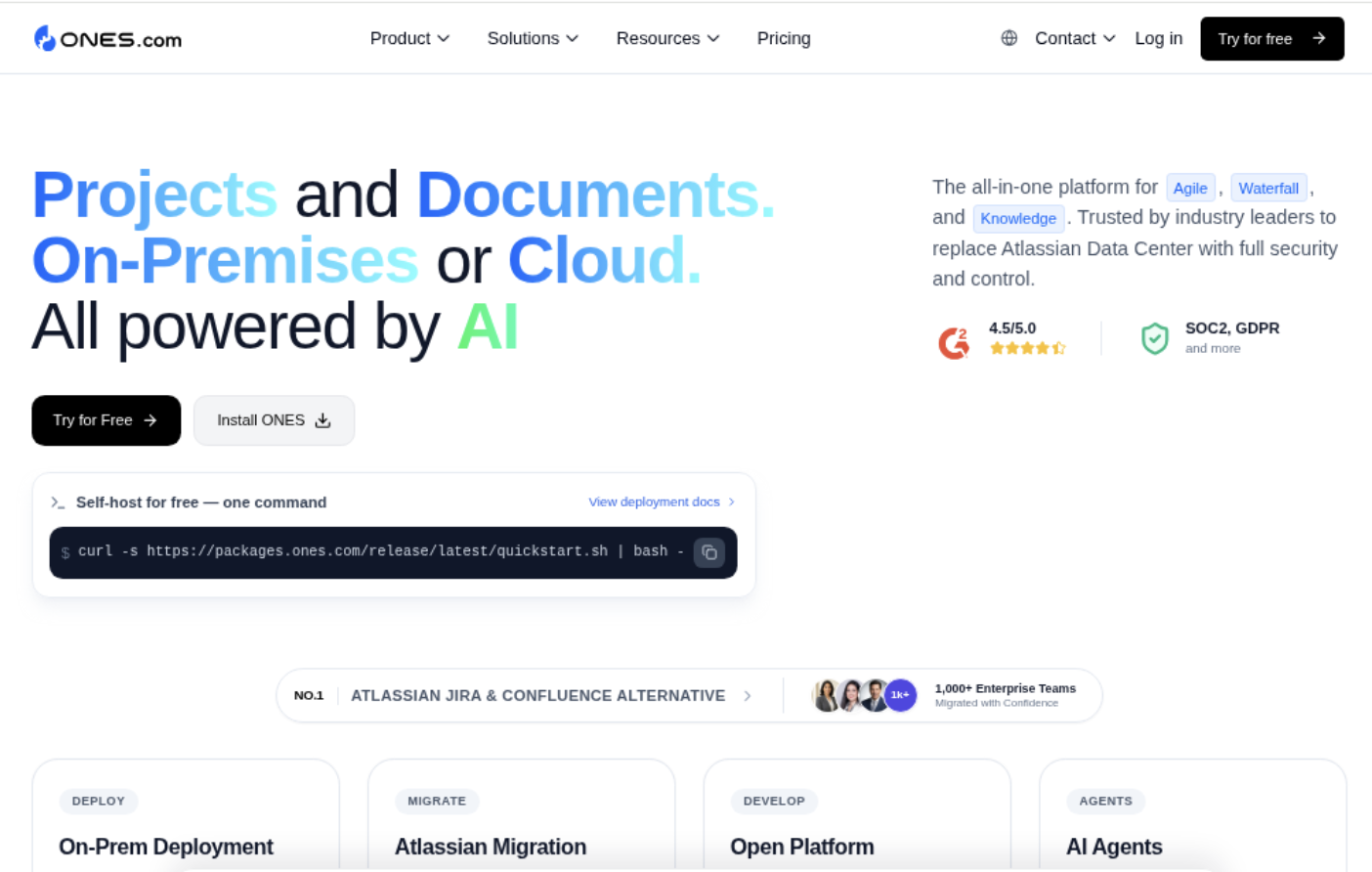
ONES.com combines project management and knowledge management in one platform powered by ONES Assistant. ONES Project is a Jira alternative sold separately from ONES Wiki, giving teams a broader planning environment without requiring a large plugin stack.
Core Capabilities
- Scattered project views → unified planning: ONES Project brings initiatives, epics, tasks, sprints, and reports into one project management workspace, helping teams follow work from planning through delivery.
- Rigid workflows → custom workflows and fields: You can adapt statuses, fields, and approval paths to match different teams while preserving shared governance.
- Manual progress summaries → built-in reporting: Reporting connects delivery activity with planning conversations, reducing repeated status preparation.
- Plugin-heavy Jira setups → native capabilities: Sprint management, automation, reporting, and workflow controls are available within the platform, which can reduce dependence on separate extensions.
- Jira migration concerns → Jira-compatible workflows: Teams familiar with Jira-style planning can move into a comparable working model without abandoning familiar delivery concepts.
- Restricted hosting requirements → multiple deployment choices: ONES.com supports Cloud, On-Premise, Private Cloud, and Air-gapped deployments.
- Different cloud and self-hosted behavior → feature parity: The self-hosted version is designed to provide full feature parity with the cloud version.
- Small-team budget pressure → accessible starting point: The free plan supports up to 30 seats, which gives a small team room to evaluate core workflows.
Application Scenarios
Scenario one: a regulated engineering group. The team needs restricted-network project management and cannot place planning activity in a public cloud environment. An air-gapped or on-premise deployment can support that operating model.
Scenario two: a growing product organization. Product, engineering, and support teams need shared release planning, custom approvals, and reporting. ONES Project can provide the project layer, while ONES Wiki can hold related knowledge when the team purchases it separately.
Scenario three: a plugin-heavy Jira environment. A team spends time maintaining several extensions for workflow, reporting, and planning. A platform with more native capability may reduce administration and simplify ownership.
Common Challenges and Practical Solutions
Challenge: the quoted price does not match your expected bill
Solution: Confirm the Jira edition, Structure seat tier, billing term, taxes, and renewal rules. Ask how viewers and inactive accounts are counted before approving the purchase.
Challenge: only a small group uses advanced views
Solution: Map access needs by role. Test whether your licensing terms allow limited participation, then remove unnecessary accounts and control permissions carefully.
Challenge: hierarchy design becomes too complicated
Solution: Begin with three levels, such as initiative, epic, and task. Add another level only when a real planning decision requires it.
Challenge: roll-up results look unreliable
Solution: Standardize estimates, ownership, status definitions, and completion rules. Review those conventions before building executive views.
Challenge: administrators become the only people who understand the setup
Solution: Create short naming rules, view ownership guidelines, and onboarding examples. Rotate responsibility so the hierarchy remains understandable after team changes.
FAQs About Structure Costs and Alternatives
Is Structure included with Jira?
Usually, Structure is treated as a separate Jira app subscription. You generally need a Jira subscription and a compatible Structure plan. The exact commercial relationship depends on your Jira edition, seat tier, and current Marketplace terms. Review both charges together, because the app price alone does not represent your total project-planning cost.
Does Structure charge by active app users?
Pricing commonly relates to the licensed Jira tier rather than the number of people who actively create hierarchy views each week. Licensing rules can vary by edition and commercial agreement. Before purchasing, ask how licensed accounts, viewers, collaborators, and inactive accounts affect the bill. This prevents a small planning group from unexpectedly inheriting a much larger seat charge.
Is annual billing better than monthly billing?
Annual billing can suit a mature team with stable adoption and a predictable budget. Monthly billing is safer during a pilot or organizational transition because you retain more flexibility. Compare the full 12-month cost, renewal terms, and expected seat growth. A small discount matters less if your team stops using the app after the first quarter.
Does Structure replace Jira?
No. Structure extends Jira’s planning and hierarchy capabilities. You normally still rely on Jira for issue management, permissions, workflows, and core delivery activity. If you want a broader project management environment that can operate as a Jira alternative, evaluate whether a unified platform fits your workflow better than adding another app to Jira.
Can ONES.com replace a Structure-centered Jira setup?
ONES Project can be evaluated as a Jira alternative when you want project management, custom workflows, sprint planning, automation, and reporting in one platform. It also supports Cloud, On-Premise, Private Cloud, and Air-gapped deployments. Compare migration effort, required integrations, team habits, and reporting needs before making a change.
Conclusion
Structure pricing is only one part of the decision. Your real cost includes Jira, the Structure subscription, seat growth, administration, training, and the time required to keep planning practices consistent.
But here's the truth: Structure tends to create the most value when your organization already depends on Jira and needs multi-level portfolio visibility. A small team with simple delivery work may gain little from the added complexity.
Start with a focused pilot, calculate the annual cost, and measure time saved in portfolio reviews. Then compare that result with a broader option such as ONES.com, especially when native capabilities, self-hosting, air-gapped deployment, or reduced plugin administration matter.