Jira Studio Pricing Explained: Plans, Costs, and Fees [2026]
Confused by jira studio pricing in 2026? Learn why it has no active plan, separate legacy fees from current Jira costs, and compare options—read now.
Searching for Jira Studio pricing in 2026 can lead you in circles. Old articles mention hosted bundles, per-user fees, and product combinations that no longer match today’s Atlassian catalog.
The confusion gets worse when a historic quote appears beside current Jira Software pricing. You may compare numbers that belong to different products, billing models, and service periods.
Here’s the practical answer: Jira Studio does not have an active 2026 pricing plan. It was a legacy Atlassian-hosted offering, so you need to separate historic pricing from current Jira costs before planning a budget.
Jira Studio Pricing at a Glance
Jira Studio pricing refers to the historic cost of Atlassian’s hosted collaboration suite, which is no longer sold as a current standalone plan in 2026.
Jira Studio combined several Atlassian development tools under one hosted service. Depending on the period, the package could include Jira, Confluence, Bamboo, FishEye, and Crucible.
That history explains why online pricing references vary. A quoted amount may reflect an old bundle, a specific team size, a promotional offer, or a legacy migration arrangement.
Does Jira Studio Have Current Plans?
No active Jira Studio plan should be treated as available for new purchases in 2026. Atlassian’s product lineup has evolved considerably since Jira Studio was offered.
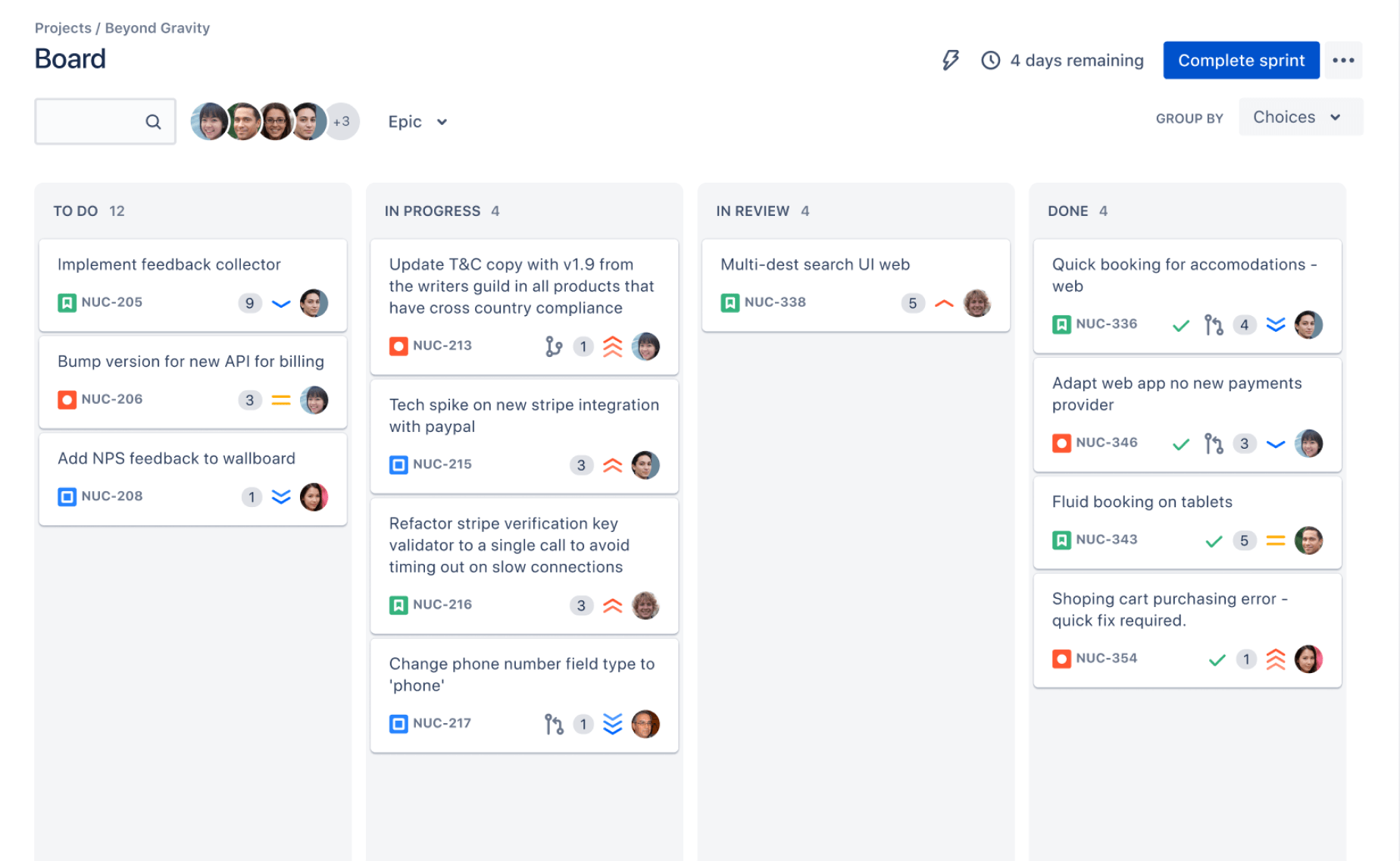
Current buyers usually evaluate individual products such as Jira Software, Confluence, Bitbucket, or Jira Product Discovery. Each product can have its own plan structure and billing rules.
You might be wondering: why do old Jira Studio prices still appear in search results? Archived pages, forum discussions, and old purchasing guides remain visible long after a product changes status.
What the Historic Service Included
Jira Studio was designed for software teams that wanted hosted development tools without managing their own infrastructure.
Its value came from combining project tracking, team knowledge, build automation, code review, and source control in one hosted environment.
A typical setup could connect a Jira issue to a code change, a build result, and a knowledge page. That connection helped teams trace work from planning through delivery.
Why Exact Historical Costs Are Difficult to Confirm
Historic pricing could depend on the number of seats, the selected service period, and the products included in the package.
Some references discuss monthly subscriptions. Others describe annual commitments, bundled services, or pricing available during a particular product phase.
As a result, one old figure cannot reliably represent every Jira Studio customer. Treat historic numbers as context rather than a quote for a 2026 purchase.
How to Interpret Jira Studio Costs in 2026
If you are researching this product for budgeting, follow a simple process. It will help you avoid comparing legacy figures with modern subscription prices.
- Confirm the product’s status. Establish whether the name refers to the original hosted suite, a migration reference, or a current Atlassian product.
- Identify the required capabilities. List project tracking, knowledge management, build automation, code hosting, reporting, and administration separately.
- Count the people who need access. Include engineers, product managers, designers, testers, contractors, and occasional contributors.
- Separate product subscriptions. Current Atlassian services may charge independently, even when teams once viewed them through a bundled experience.
- Add administration and infrastructure costs. Consider configuration, integrations, permissions, migration, training, and support.
- Compare the total operating cost. A cheaper subscription can become expensive when it requires many plugins or manual workarounds.
For example, imagine a 40-person engineering team. It may need issue tracking for everyone, knowledge access for 35 people, and build visibility for 20 engineers.
The relevant budget includes more than a seat price. It also includes overlapping subscriptions, integration maintenance, onboarding time, and migration effort.
Here’s why: the product label tells you less than the workflow your team needs to run every day.
What Affected the Original Pricing Model?
Team Size
Hosted collaboration services commonly tied pricing to the number of people with access. A 10-person team and a 200-person organization faced very different subscription costs.
Some roles might require full access, while others only needed limited visibility. That distinction could affect how teams planned permissions and licenses.
Product Combination
A team using Jira alone had a different requirement from a team also using Confluence, Bamboo, FishEye, and Crucible.
More products could improve workflow coverage. They could also increase administrative complexity, especially when each service developed separate settings and billing rules.
Billing Period
Monthly billing usually offered flexibility. Annual arrangements could support longer planning cycles and different commercial terms.
Historic references may show one billing period without clearly explaining it. Always check the period before comparing an old amount with a current monthly price.
Hosting and Administration
Jira Studio’s hosted model reduced the need for a team to operate every server directly. That convenience formed part of its value.
Today, buyers may choose cloud hosting, self-managed deployment, or private infrastructure. Each option changes the balance between subscription cost and operational responsibility.
Legacy Pricing Versus Current Jira Budgeting
Comparing Jira Studio with current Jira products requires a capability-by-capability review. A simple name match can produce a misleading result.
| Budget area |
What to examine |
| Project management |
Issue tracking, boards, backlogs, sprint planning, workflows, and reporting |
| Knowledge management |
Team guidance, specifications, meeting notes, decision history, and permissions |
| Development operations |
Builds, deployments, code review, repositories, and release visibility |
| Integrations |
Plugin fees, maintenance, authentication, notifications, and automation |
| Hosting |
Cloud subscriptions, private infrastructure, backups, upgrades, and security controls |
| People and change |
Migration planning, training, administration, support, and workflow redesign |
The table matters because a product subscription is only one part of the financial picture. A team can spend more after choosing a low initial price.
For instance, three essential plugins at $20 per month each may seem manageable. Across several teams, their administration and renewal work can become a meaningful expense.
A Practical Comparison Example
Suppose a company wants one environment for sprint planning, internal guidance, and release coordination.
It could select separate tools and connect them through integrations. Another approach could use a broader platform with native project and knowledge capabilities.
The first option may provide deeper specialization. The second may reduce handoffs and plugin dependency. The right choice depends on security, scale, workflow complexity, and internal support capacity.
Fees People Often Miss
Migration Costs
Moving issues, pages, permissions, links, and workflows requires planning. Someone must map old structures to the destination platform.
A small team may complete the work internally. A larger organization may need specialist assistance, testing, and a staged rollout.
Integration Expenses
Development teams often connect project tracking with chat, source control, continuous integration, service management, and identity systems.
Every connection can create an ongoing cost. That cost may involve a paid connector, custom maintenance, security review, or troubleshooting time.
Administration
Someone must manage access, workflows, custom fields, automation, notifications, and reporting. Those tasks become more demanding as teams grow.
A platform with built-in capabilities can reduce routine administration. The savings may matter more than a small difference in monthly seat pricing.
Hosting and Compliance
Cloud hosting may simplify upgrades. Self-managed hosting can provide greater control for teams with strict infrastructure requirements.
Private or isolated environments may require additional planning for deployment, monitoring, backups, patching, and disaster recovery.
Jira Studio Alternative: ONES.com
ONES.com combines project management and knowledge management in one platform. It can suit teams seeking Jira-compatible workflows with fewer separate services to operate.
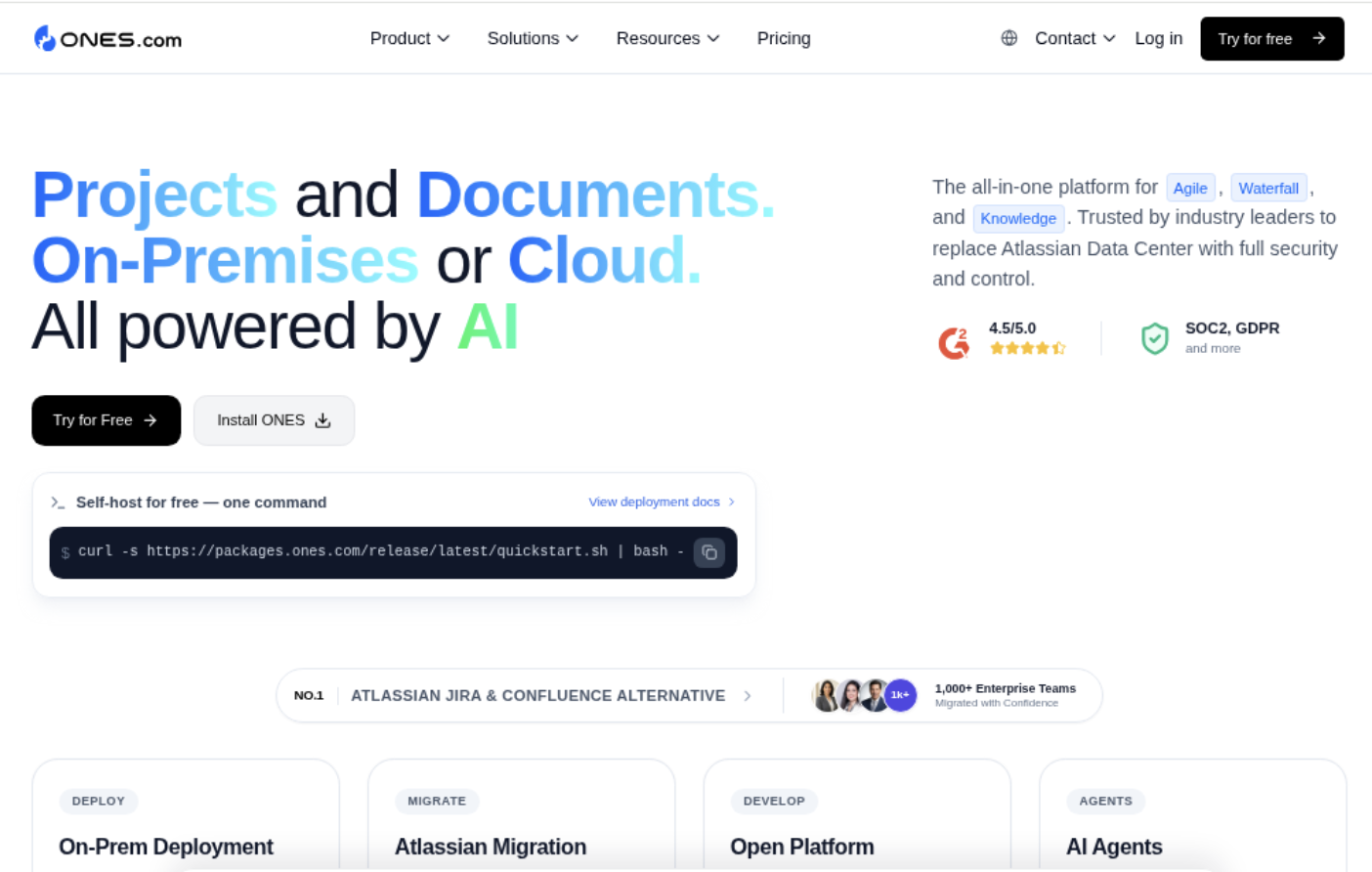
ONES Project is the project management product and a Jira alternative. ONES Wiki provides knowledge management capabilities and is a Confluence alternative. They are sold separately.
Value Proposition
ONES.com gives teams a way to evaluate project tracking, team knowledge, and delivery workflows together. Its deployment choices also support organizations with specific infrastructure requirements.
It offers cloud, on-premise, private cloud, and air-gapped deployment options. The self-hosted versions provide feature parity with the cloud version.
Core Capabilities
- Scattered planning — ONES Project provides Jira-compatible workflows — teams can manage issues, boards, sprints, and approvals in a familiar structure.
- Rigid processes — Custom workflows and custom fields support different departments — each team can reflect its actual review and delivery stages.
- Separate reporting work — Built-in reporting turns project activity into dashboards — managers can review progress without assembling multiple extensions.
- Manual sprint administration — Sprint management keeps planning and execution connected — teams can track commitments, changes, and completed work in one place.
- Repetitive updates — Automation handles routine transitions and notifications — coordinators spend less time changing the same statuses manually.
- Plugin dependence — Native capabilities cover more common project workflows — teams can reduce the number of add-ons they must renew and maintain.
- Restricted hosting requirements — On-premise, private cloud, and air-gapped deployment options support controlled environments — infrastructure teams retain deployment authority.
- Separate knowledge spaces — ONES Wiki provides a knowledge base alongside ONES Project — teams can connect guidance, decisions, and delivery work more directly.
- Uncertain initial commitment — A free plan supports up to 30 seats — smaller teams can test the workflow before planning a larger rollout.
Application Scenarios
Software development team: Engineers can manage backlogs, sprints, custom workflows, and reporting in ONES Project. Product guidance can live in ONES Wiki.
This arrangement helps connect a feature request with acceptance guidance, implementation work, and release communication.
Regulated engineering organization: A company with restricted network requirements can assess an air-gapped deployment. The team can keep project operations within its controlled environment.
This approach may reduce concerns about external hosting while preserving familiar project management patterns.
Growing product group: A team can begin with up to 30 seats on the free plan. It can then evaluate permissions, workflows, reporting, and knowledge practices before expansion.
The practical benefit is a staged assessment. You can test how people work before committing to a broader platform change.
Common Challenges When Researching Legacy Pricing
Challenge: An Old Price Looks Current
Problem: A historical page may display a precise amount, making it appear trustworthy for a 2026 budget.
Solution: Check the product period, included services, billing term, and customer eligibility. Treat the figure as historical unless a current purchase path confirms it.
Challenge: The Bundle Hides Individual Requirements
Problem: A suite price may look attractive because it groups several services. Your team may use only two of them.
Solution: Map every included capability to a real workflow. Remove services that do not contribute to planning, delivery, support, or knowledge sharing.
Challenge: Plugins Distort the Final Cost
Problem: A base subscription can appear affordable while essential features require several add-ons.
Solution: List every required extension, connector, and administrative task. Compare the complete annual operating cost rather than the starting subscription.
Challenge: Migration Effort Is Ignored
Problem: A team may focus on monthly pricing and overlook cleanup, permissions, testing, and training.
Solution: Create a migration work plan before selecting a platform. Include pilot testing and a period for correcting workflow issues.
Challenge: Hosting Needs Are Treated as an Afterthought
Problem: Cloud, on-premise, private cloud, and air-gapped environments have different operational demands.
Solution: Decide where the platform must run before comparing products. Include security reviews, upgrades, backups, and support responsibilities.
FAQs About Jira Studio Pricing
Is Jira Studio still available in 2026?
Jira Studio is a legacy Atlassian offering rather than a current standalone product plan. You should not assume an old Jira Studio subscription can be purchased today.
For a new evaluation, identify the capabilities you need and compare current products or unified platforms. Historic references can explain the service, but they should not serve as a current quote.
Why do different websites show different Jira Studio prices?
Older pricing references may describe different team sizes, billing periods, product bundles, or promotional arrangements.
They may also come from different stages in the product’s history. A monthly figure for one group cannot be compared directly with an annual bundle for another group.
What products were associated with Jira Studio?
Jira Studio was associated with a hosted collection of Atlassian development and collaboration tools. Depending on the period, the package could include Jira, Confluence, Bamboo, FishEye, and Crucible.
The exact combination matters because each product served a different purpose, from issue tracking to build automation and code review.
Should I use historic Jira Studio pricing for a budget?
Use it only as historical context. It does not reliably represent the price of current Atlassian products, modern hosting options, or present-day licensing rules.
Build your estimate around current products, required seats, deployment needs, integrations, migration work, and administration.
What is a practical alternative to the old hosted suite?
ONES.com is one option to evaluate when you want project management and knowledge management on a unified platform.
ONES Project supports Jira-compatible workflows, reporting, custom fields, sprint management, and automation. ONES Wiki covers knowledge management separately, and both products can fit broader deployment requirements.
Conclusion
Jira Studio pricing is a historical topic in 2026. The service does not have an active standalone plan, so old figures should not guide a new purchase without careful verification.
Start with the workflows you need. Then calculate seats, products, integrations, hosting, migration, administration, and support.
But here’s the truth: the lowest subscription amount rarely tells you the full cost of running a collaboration environment.
If you want to explore a current Jira alternative, ONES.com offers ONES Project for project management and ONES Wiki for knowledge management. Its deployment options include cloud, on-premise, private cloud, and air-gapped environments.