Jira Subscription Pricing: A Practical Cost Planning Guide
Unsure about jira subscription pricing? Learn to estimate plans, seats, add-ons, and growth costs accurately. Read now to plan your budget.
Jira can look affordable until your team adds more seats, premium features, extra products, and annual growth. Then a simple subscription becomes a moving target.
That uncertainty makes budgeting difficult. A small pricing mistake can affect hiring plans, renewal decisions, department budgets, and the total cost of your project operations.
But here's the truth: you can estimate your Jira investment with a practical cost model. Start with the plan, calculate active seats, separate recurring fees from optional services, and test several growth scenarios.
This guide shows you how to plan Jira subscription pricing clearly. You’ll learn which cost factors matter, how to compare monthly and annual billing, and how to identify alternatives when the total no longer fits your team.
How to Plan Jira Subscription Costs
Jira subscription pricing is the recurring amount your organization pays for access to Jira, usually determined by the selected plan, number of users, billing cycle, and optional products or services.
To plan accurately, use this simple sequence:
- Choose the Jira product. Decide whether you need Jira for software development, Jira Service Management, or another Atlassian product.
- Select the likely plan. Compare the features your team actually needs, such as advanced permissions, reporting, automation, support, or administration controls.
- Count billable users. Include employees, contractors, administrators, service agents, and occasional contributors who need access.
- Compare monthly and annual billing. Monthly billing offers flexibility, while annual billing can make long-term budgeting easier and may use different pricing bands.
- Add connected products. Include tools for knowledge management, service management, planning, collaboration, or development operations when your team needs them.
- Estimate growth. Model the cost at your current headcount, expected headcount, and a higher-growth scenario.
- Review non-subscription costs. Account for migration, administration, training, integrations, support, and internal maintenance.
- Recheck the estimate before purchase. Pricing, packaging, regional taxes, and product limits can change, so confirm the live quote before approval.
Here’s a quick planning formula:
Estimated annual cost = subscription fees + connected product fees + implementation costs + administration costs + expected taxes.
The formula is simple. The difficult part is identifying every factor that affects the total.
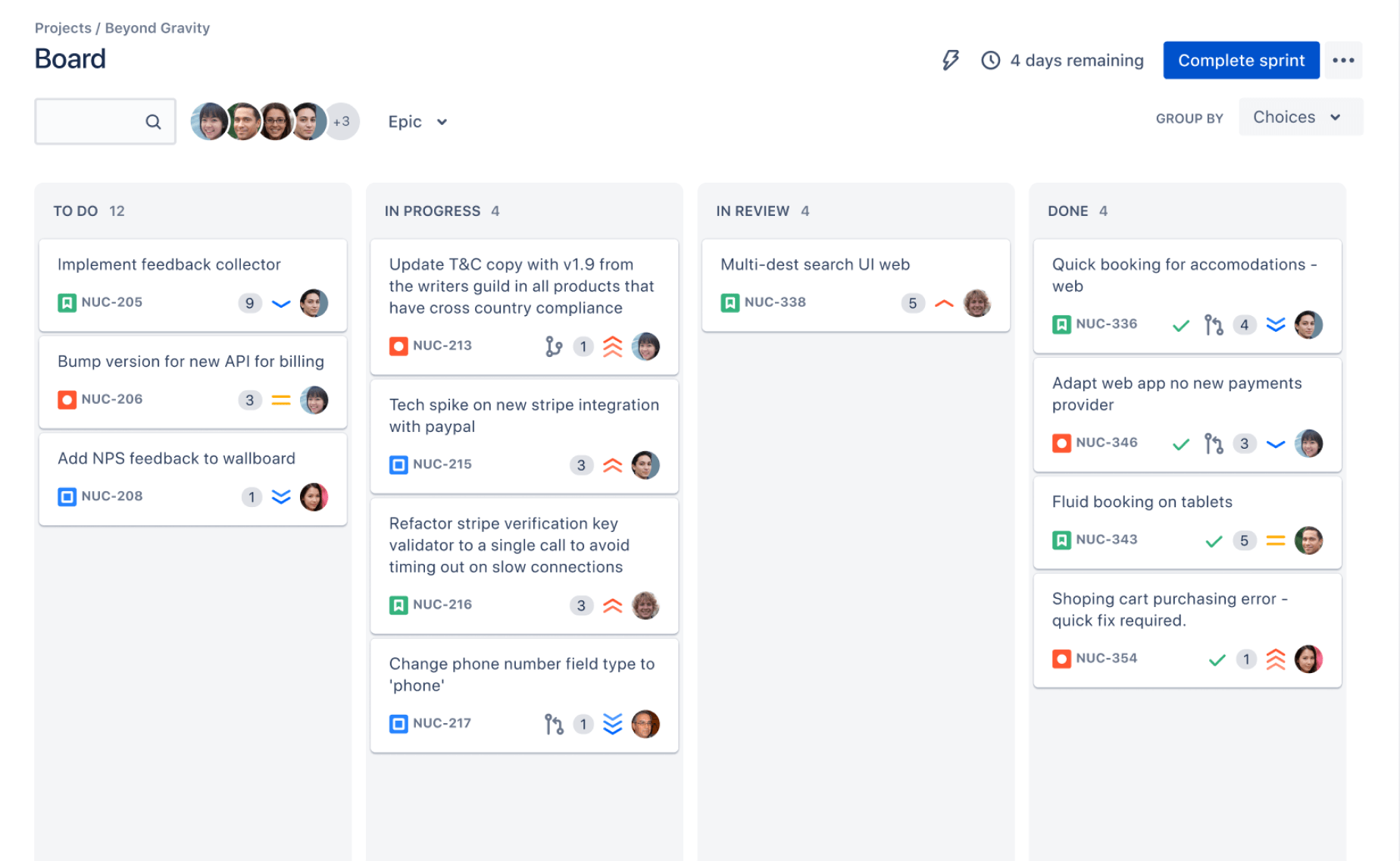
What Determines Your Jira Bill?
Plan level and feature requirements
Each plan usually targets a different operating model. A small team may need issue tracking, boards, basic workflows, and standard reporting. A larger organization may need stronger controls and broader administration features.
For example, a ten-person product team might only require sprint planning and backlog management. A regulated enterprise may also need detailed permissions, audit controls, advanced automation, and centralized administration.
Here’s why: the cheapest plan is only economical when it supports your workflow without expensive workarounds.
Number of users and user types
Seat count is often the largest variable in a subscription estimate. A team with 50 active contributors has a different cost profile from a company with 50 employees and 300 occasional viewers.
Separate people into practical groups:
- Full-time project contributors
- Product managers and delivery managers
- Developers, testers, and designers
- Executives and occasional viewers
- External contractors
- Service agents or support staff
- Administrators and reporting specialists
You might be wondering: do all employees need access? Usually, no. Count the people who need to create, update, review, or report on work.
Billing cycle and commitment period
Monthly billing can suit a project with uncertain staffing. Annual billing can suit a stable organization that wants predictable renewal planning.
Compare both options using the same seat count. Then test what happens if your team grows halfway through the year. An annual commitment may simplify budgeting, while monthly billing may reduce the risk of paying for seats you no longer need.
Additional products and connected services
Jira rarely operates alone in a mature organization. You may also need knowledge management, customer support, incident management, collaboration, reporting, or development tools.
For example, a team might begin with Jira and later add a knowledge base for requirements, a service platform for internal requests, and integration tools for deployment workflows.
The result is a portfolio cost rather than a single-product cost. Planning each product separately can hide the combined total.
Regional taxes and commercial terms
Your final invoice may differ from the public plan price because of taxes, currency conversion, contract terms, or regional billing rules.
Keep a small contingency in your budget. A planning estimate should help you make a decision, but the final commercial quote should guide purchase approval.
Monthly Versus Annual Billing
Monthly billing gives you more flexibility. It works well when your team changes quickly, a project may end soon, or you are testing a new workflow.
Annual billing gives you a clearer renewal date and a stable planning window. It can also make procurement easier because finance teams handle one planned commitment instead of recurring monthly approvals.
The best choice depends on uncertainty, not habit.
| Consideration |
Monthly billing |
Annual billing |
| Best for |
Changing teams, pilots, and short-term projects |
Stable teams and long-term operations |
| Budget control |
Flexible but variable |
More predictable across the commitment period |
| Headcount risk |
Lower commitment risk |
Higher risk if planned seats go unused |
| Procurement effort |
More frequent billing activity |
Usually easier to schedule and approve |
| Growth planning |
Easy to adjust as needs change |
Requires stronger forecasting |
For example, imagine a team expects to grow from 40 to 75 people within six months. Monthly billing may offer better flexibility during the hiring period. A mature 200-person team with stable staffing may value annual predictability more.
Let me explain: the right billing cycle is the one that matches your staffing confidence and cash-flow priorities.
How to Build a Realistic Cost Model
Start with active usage
Do not begin with your total employee count. Begin with the people who need meaningful access.
Suppose your organization has 120 employees:
- 55 people actively manage project work
- 20 people review progress regularly
- 15 people manage service requests
- 30 people do not need direct access
Your first estimate should reflect the access pattern, not simply the headcount of 120.
Create three planning scenarios
A single estimate creates false confidence. Build at least three scenarios:
- Current state: the people who need access today
- Expected state: planned hiring and known project expansion
- Growth state: additional teams, contractors, or business units
For instance, calculate the annual subscription at 55, 75, and 110 seats. This shows when the next pricing band could affect your budget.
Separate recurring and one-time costs
Subscription fees repeat. Implementation costs usually do not, although administration and support continue.
Include these categories in your planning worksheet:
- Recurring product subscriptions
- Connected applications
- Migration and configuration
- Integration development
- Training and onboarding
- Administration and governance
- Renewal support and contingency
This separation helps leadership understand whether a larger first-year cost will decline later.
Measure the cost per active contributor
Cost per active contributor gives you a useful comparison between teams. Divide the annual platform cost by the number of people who actively create or manage work.
For example, a platform costing $24,000 annually with 80 active contributors costs $300 per active contributor each year.
This measure does not replace the total budget. It simply helps you compare adoption efficiency across departments.
Jira Subscription Pricing Compared With Total Ownership Cost
The subscription invoice is only one part of the financial picture. A platform can appear inexpensive while requiring significant administration and customization.
Imagine two teams:
- Team A pays less for subscriptions but maintains many integrations and custom workflows.
- Team B pays slightly more for a broader platform but needs fewer add-ons and less manual administration.
Team B may have a lower total ownership cost despite the higher subscription line.
The best part? You can evaluate this without complicated finance models. Ask five practical questions:
- How many hours does administration take each month?
- How many add-ons are essential to daily work?
- How often do integrations break or require updates?
- How much training does each new contributor need?
- How much time does the team spend working around platform limitations?
If administrators spend 20 hours each month maintaining disconnected tools, that time belongs in the cost discussion. Internal labor is still an expense, even when no vendor invoice shows it.
Ways to Control Subscription Spend
Review access regularly
Remove inactive accounts and reassess occasional contributors. A quarterly access review can reveal people who changed roles, left the company, or no longer need direct access.
Keep a clear rule for access requests. For example, require a project owner to confirm the business need before adding a new seat.
Reduce unnecessary customization
Customization can improve a workflow, but every additional rule creates maintenance responsibility. Start with the simplest workflow that supports the team’s decisions.
A five-step approval process may look thorough. If most requests only need one review, the extra steps create delay and administrative overhead.
Control add-on growth
Review every marketplace application and integration annually. Ask whether the capability is still essential, duplicated elsewhere, or used by only a small group.
One add-on may seem inexpensive. Ten add-ons can create a second subscription portfolio with separate renewals, permissions, and support requirements.
Standardize team practices
Different teams often configure the same platform in different ways. Standard naming, issue types, workflows, and reporting conventions reduce training and maintenance effort.
Standardization also makes cross-team reporting easier. Leaders can compare delivery trends without translating every team’s custom terminology.
Forecast headcount before renewal
Do not wait until renewal week to estimate growth. Review hiring plans, contractor usage, product launches, and departmental expansion at least one quarter earlier.
A forecast gives you time to compare plan levels, remove unused access, and negotiate internal approval before the renewal deadline.
ONES.com is a unified platform for project management and knowledge management. ONES Project provides project management capabilities, while ONES Wiki supports knowledge management, and each product is sold separately.
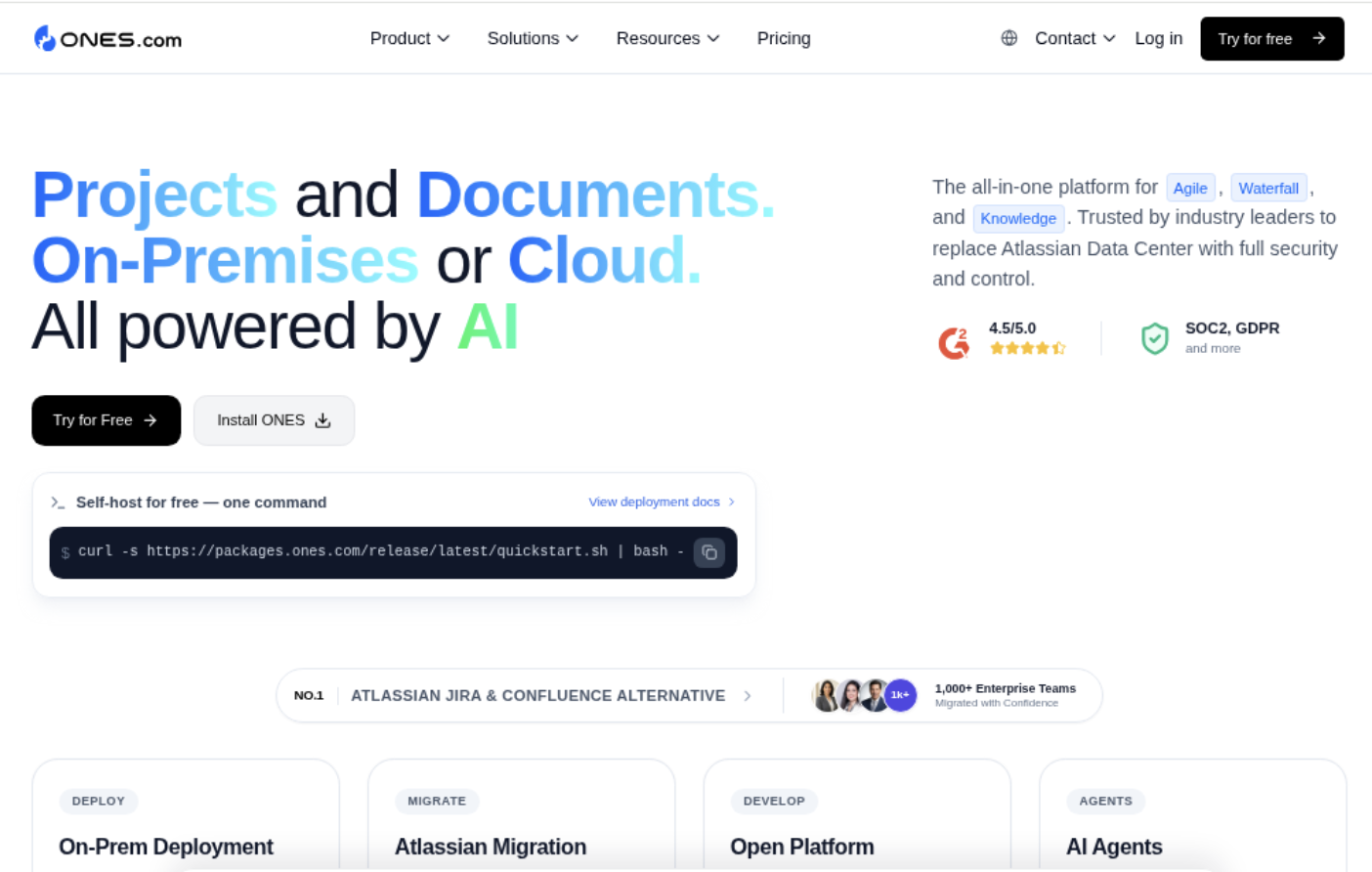
For teams evaluating Jira subscription costs, ONES.com can be a practical comparison point when native capabilities, deployment control, and reduced dependence on plugins matter.
Value Proposition
ONES.com combines structured project work and team knowledge in one platform family. It supports cloud and self-hosted deployment, including on-premise, private cloud, and air-gapped environments.
The free plan supports up to 30 seats, and the platform offers four deployment choices. Cloud and self-hosted versions provide full feature parity.
Core Capabilities
- Fragmented project workflows → ONES Project: Jira-compatible workflows help teams manage planning, execution, and delivery in a familiar structure.
- Heavy plugin dependence → Native capabilities: Built-in reporting, sprint management, automation, custom workflows, and custom fields can reduce the number of extensions required.
- Limited deployment choice → Four deployment models: Cloud, on-premise, private cloud, and air-gapped deployment support different security and infrastructure requirements.
- Separate knowledge silos → ONES Wiki: A dedicated knowledge management product gives teams a place to organize requirements, procedures, and internal guidance.
- Unclear delivery progress → Built-in reporting: Reporting features help managers review workload, sprint progress, and project status without assembling several disconnected views.
- Inconsistent team processes → Custom workflows and fields: Teams can represent approval stages, ownership, risk, and delivery status according to their operating model.
- Manual repetitive work → Automation: Rule-based automation can handle routine transitions, notifications, assignments, and project actions.
- Security-sensitive environments → Air-gapped support: Organizations with restricted networks can run a self-hosted deployment without requiring continuous public-network access.
- Growing administration effort → Unified platform approach: Project and knowledge capabilities can be planned together, which may reduce the overhead of managing several disconnected systems.
Application Scenarios
Software product team: A development group can use ONES Project for backlogs, sprint planning, custom workflows, and delivery reporting. Product guidance and working practices can live in ONES Wiki.
Regulated enterprise: A company with strict infrastructure rules can evaluate the on-premise, private cloud, or air-gapped deployment options. This approach gives the organization more control over where the platform operates.
Growing project organization: A business replacing scattered tools can begin with project management and add knowledge management where teams need a shared workspace. The free plan can support an initial group of up to 30 seats.
Common Challenges When Estimating the Cost
Challenge: Counting employees instead of active contributors
Solution: Map access to real responsibilities. Separate full contributors, reviewers, service agents, and people who need no direct access.
Challenge: Ignoring connected products
Solution: List every product required for planning, support, knowledge management, reporting, and collaboration. Calculate the combined annual commitment.
Challenge: Comparing plans by feature count alone
Solution: Connect every feature to a business need. A feature matters when it replaces manual work, reduces risk, or supports a required control.
Challenge: Underestimating internal administration
Solution: Track time spent managing permissions, workflows, integrations, reports, and onboarding. Add that effort to your ownership assessment.
Challenge: Treating today’s seat count as permanent
Solution: Create current, expected, and growth scenarios. Review those scenarios before renewal and after major hiring or restructuring decisions.
FAQs
What is included in a Jira subscription?
A Jira subscription generally includes access to the selected product plan and its plan-specific capabilities. The exact package depends on the product, tier, user count, deployment model, and commercial terms. Connected Atlassian products, marketplace applications, implementation help, and some support arrangements may create additional costs. Review the full configuration rather than judging the base plan alone.
Is annual billing always cheaper than monthly billing?
Not necessarily. Annual billing may offer stronger predictability and can suit stable teams, but monthly billing may be more practical when staffing changes often. Compare both options using your expected seat count, growth timing, and commitment risk. A lower recurring rate does not help if you pay for unused access throughout the commitment period.
How should I estimate Jira costs for a growing team?
Build at least three scenarios: current seats, expected seats, and higher-growth seats. Include planned employees, contractors, service agents, and occasional contributors. Then identify the pricing bands where additional seats could change the total. Recalculate before renewal, especially after hiring plans or organizational changes.
Should I include administration in the subscription budget?
Yes. Administration is part of the platform’s total ownership cost. Include permission management, workflow maintenance, report creation, integration upkeep, onboarding, and internal support. For example, 15 hours of monthly administration can become a meaningful annual expense when multiplied by the responsible employee’s loaded labor cost.
When should I compare a Jira alternative?
Compare alternatives when your tool portfolio has become difficult to manage, essential workflows require many plugins, deployment restrictions create problems, or the total ownership cost keeps rising. Start by listing the capabilities your teams actually use. Then compare workflow fit, deployment choices, migration effort, administration, reporting, and long-term subscription structure.
Conclusion
Planning Jira subscription pricing requires more than multiplying a seat count by a plan rate. You need to evaluate the plan, active contributors, billing cycle, connected products, growth, taxes, administration, and implementation effort.
But here's the truth: the lowest invoice does not always produce the lowest operating cost. A platform that reduces add-ons, manual maintenance, and workflow complexity may deliver better financial value over time.
Start with three scenarios, review access regularly, and include the work required to run the platform. If your team needs a Jira alternative with flexible deployment and native project capabilities, ONES.com is worth adding to the comparison.