Jira Support Desk Pricing: A Practical Cost Guide for 2026
Unsure about jira support desk pricing? Get a practical 2026 cost guide covering plans, agents, add-ons, and hidden fees. Read now.
Jira support desk pricing can look simple until you add agents, service projects, Assets, premium features, and marketplace apps. A small help desk may fit comfortably within a starter budget, while a growing support operation can face several separate charges.
That uncertainty makes annual planning difficult. You may compare plan prices and still miss agent growth, customer portals, automation limits, implementation work, or add-ons. A seemingly affordable plan can become expensive after your support process expands.
Here’s the practical solution: separate the bill into platform licensing, support-team size, optional capabilities, operating costs, and future growth. This guide shows you how to estimate the real cost for 2026 without relying on a single headline number.
Jira Support Desk Pricing: The Core Cost Structure
Jira support desk pricing is the total cost of running Jira Service Management, including the selected plan, agent seats, optional capabilities, marketplace apps, implementation, and ongoing administration.
At a high level, Jira Service Management usually has several plan levels. The exact amount can change by region, billing term, agent count, taxes, and Atlassian’s current commercial terms.
But here’s the truth: the plan price is only one part of your support budget. You should calculate the full operating cost before choosing a tier.
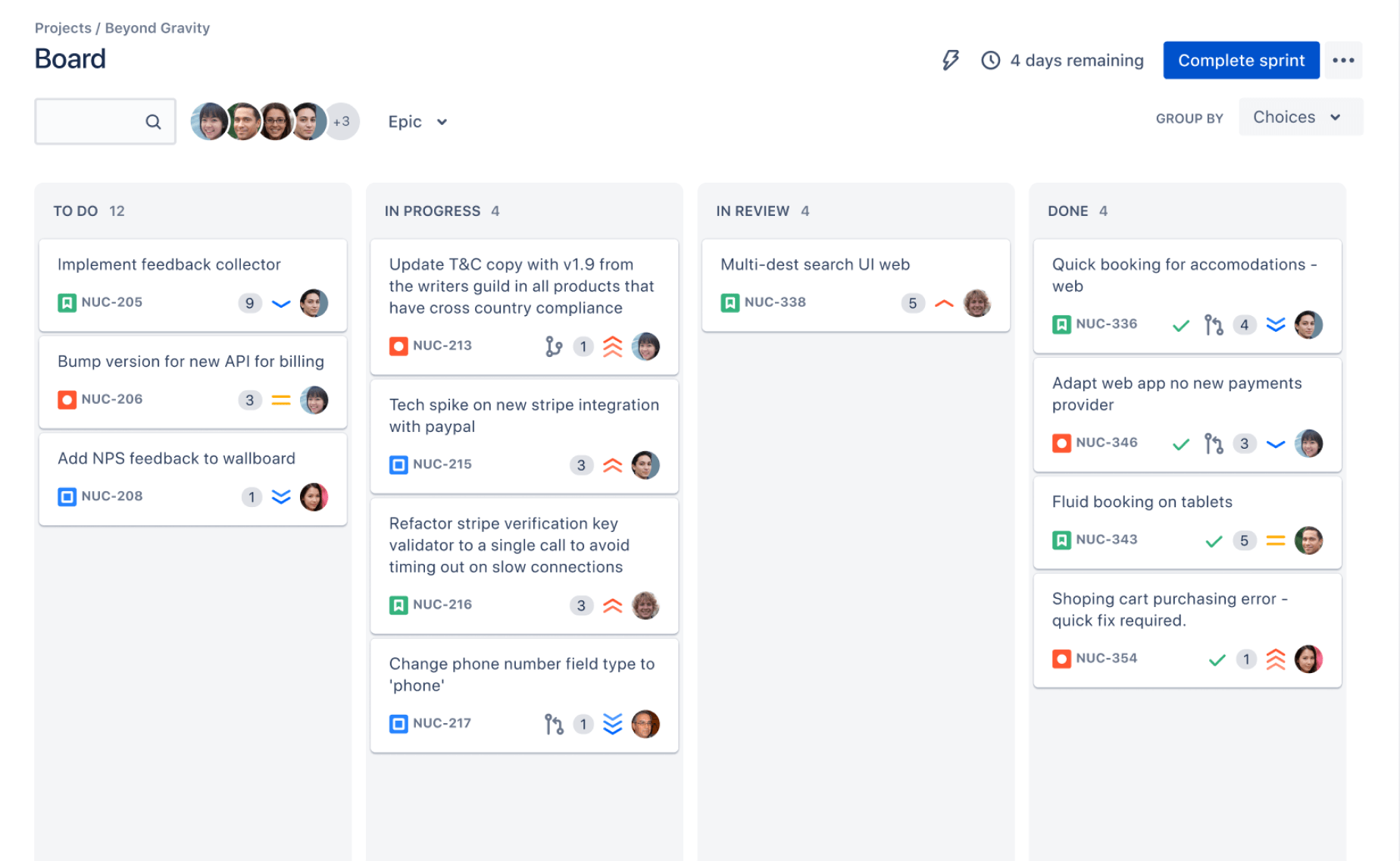
The five costs you need to estimate
- Agent licensing: You typically pay for the people who configure queues, handle requests, manage incidents, and resolve tickets.
- Plan features: Higher tiers may add advanced reporting, stronger governance, larger limits, or enterprise controls.
- Optional products: Asset management, incident tools, analytics, and other capabilities may affect your monthly bill.
- Marketplace apps: Time tracking, approval tools, surveys, phone integration, and advanced reporting can create separate charges.
- Operating work: Administration, training, migration, workflow design, and maintenance can cost more than expected.
A simple 2026 budgeting formula
Use this formula when preparing an internal estimate:
Estimated annual cost = annual subscription + optional products + app subscriptions + implementation + administration + contingency
For example, imagine a 12-person support team. You may have eight regular agents, two team leads, one service manager, and one backup administrator. Your calculation should cover all people who need agent permissions.
You should then add expected growth. If your team may reach 16 agents within a year, budgeting for only eight seats can create an avoidable midyear increase.
Illustrative cost planning table
| Cost area |
Questions to ask |
Why it matters |
| Plan subscription |
Which tier supports your required workflows and controls? |
The lowest tier may not support future operational needs. |
| Agent seats |
How many people actively handle or administer requests? |
Seat growth is often the largest recurring cost driver. |
| Optional capabilities |
Do you need asset tracking, advanced incident management, or deeper reporting? |
Additional capabilities can change the total subscription cost. |
| Marketplace apps |
Which integrations or specialist functions require an app? |
Several small app subscriptions can become a major annual expense. |
| Implementation |
Who will design workflows, permissions, forms, and integrations? |
Configuration work affects launch time and adoption. |
| Administration |
Who will maintain queues, reports, automation, and service policies? |
Ongoing ownership protects the value of the platform. |
How Jira Service Management Plans Affect Your Budget
Jira Service Management generally uses plan tiers that target different levels of support complexity. Your best choice depends on the work you need to control, not simply the number of agents.
Free or entry-level use
An entry-level plan can suit a small internal help desk, a new team, or a limited pilot. It may cover basic request intake, queues, knowledge resources, and simple automation.
Consider a six-person IT team handling password requests and equipment questions. A basic plan may be enough if the team does not need complex approvals or strict reporting.
Still, check limits carefully. User caps, automation allowances, storage, reporting depth, and service management features can influence whether the plan remains practical.
Standard plans
A standard tier usually fits a growing support operation with several service projects and more structured processes. You may need separate portals for IT, human resources, facilities, and finance.
This tier often becomes the realistic starting point for companies that need reliable workflows without extensive enterprise controls.
Here’s why: a support desk becomes harder to manage when every team shares one queue. Separate request types and service policies can reduce confusion.
Premium plans
A premium tier may make sense when your support environment requires stronger scale, advanced incident practices, higher resilience, or more sophisticated administration.
For example, an online retailer may need coordinated incident response during a payment outage. A basic ticket queue alone may not provide the visibility and escalation discipline the team requires.
Premium pricing deserves a business-case review. Compare the subscription increase with the cost of downtime, manual coordination, and delayed resolution.
Enterprise arrangements
Large organizations may need enterprise controls, procurement support, centralized governance, or a commercial arrangement covering several teams.
Enterprise pricing may not resemble a simple public per-agent calculation. Contract length, organizational scale, security requirements, and purchasing terms can influence the final amount.
You might be wondering: should every company choose the highest tier for future growth? Usually, no. Choose the smallest tier that supports your current requirements and a credible near-term plan.
Which Factors Change the Final Price?
Two companies with the same number of agents can receive very different annual estimates. The difference usually comes from capabilities, integrations, and operating complexity.
Agent count and role design
Start by identifying who needs an agent license. Include service desk staff, team leads, administrators, incident managers, and occasional responders.
Do not automatically license every employee who submits requests. Customers commonly use a portal or email channel without needing the same permissions as agents.
A practical example is a 30-person support organization with 24 full-time agents and six managers. If all managers need configuration access, your licensed count may be 30.
Number of service projects
One service project may be enough for a small IT team. Larger organizations often create multiple projects for different departments or service domains.
More projects can improve ownership, but they can also increase administration. Each project may require request types, queues, permissions, automation, service policies, and reporting.
Asset and configuration management
Asset tracking can add value when support teams need relationships between people, devices, applications, locations, and services.
For instance, a laptop replacement request becomes easier to manage when the team can see the assigned employee, warranty status, and related service history.
Before adding this capability, estimate the number of assets, update frequency, ownership rules, and integration needs.
Automation and service policies
Automation can reduce repetitive work, such as assigning requests, sending reminders, escalating overdue tickets, and closing inactive requests.
However, automation limits may matter when you process thousands of requests monthly. Estimate your current volume and include seasonal peaks.
A university help desk may receive a large surge before each semester. A workflow that works in June may reach its limits in August.
Marketplace applications
Apps can fill gaps in time tracking, approvals, customer surveys, telephony, reporting, and team collaboration.
The risk is subscription layering. Five inexpensive apps can create a larger annual commitment than one carefully selected platform capability.
Review each app by asking three questions: Does it solve a high-value problem? Can native functionality handle the need? Who will maintain it?
How to Calculate a Realistic Annual Estimate
A useful estimate has three layers: recurring subscription costs, one-time launch costs, and internal operating costs.
Step 1: Count active agents
List each role that needs to create, assign, edit, escalate, or report on support requests. Separate these people from customers and occasional requesters.
Then add a growth allowance. A 15% to 25% planning buffer may help if hiring is expected, though your business should choose a realistic figure.
Step 2: Define required capabilities
Create a short requirements list before comparing plans. Include request intake, email handling, approvals, service policies, reporting, asset tracking, incident response, and integrations.
Mark each capability as essential, useful, or optional. This keeps premium features from becoming automatic purchases.
Step 3: Review subscription terms
Check whether pricing differs between monthly and annual billing. Review taxes, currency conversion, renewal rules, seat adjustments, and any minimum commitments.
Commercial terms can change, so confirm the current amount shortly before approval. Treat online estimates as planning figures until procurement validates them.
Step 4: Add implementation work
Implementation may include process workshops, portal design, request forms, workflow configuration, permissions, reporting, integrations, testing, and training.
A small team may complete the work internally. A complex service environment may need specialist assistance to avoid fragile workflows.
Step 5: Include ongoing administration
Someone must maintain the service desk after launch. Typical responsibilities include reviewing automation, updating forms, managing access, improving reports, and removing obsolete queues.
Even a few hours each week becomes a meaningful annual cost. Include that time when comparing platforms.
Step 6: Model three scenarios
| Scenario |
Typical assumption |
Planning purpose |
| Lean |
Current team, essential capabilities, minimal app usage |
Shows the lowest practical operating cost. |
| Expected |
Likely hiring, standard integrations, normal request growth |
Provides the main budget recommendation. |
| Expansion |
Additional departments, higher volume, advanced controls |
Shows when the next tier may become necessary. |
Hidden Costs That Can Distort Your Estimate
The most common budgeting mistake is counting only the subscription. A service desk also consumes time, attention, and operational capacity.
Migration and cleanup
Moving historical requests, customer accounts, service categories, and workflows can require significant preparation. Poorly organized records may need review before migration.
For example, merging five inconsistent request categories into one clean catalog takes more work than simply transferring the existing structure.
Integration maintenance
Identity management, email, chat, monitoring, asset tools, and development systems may all connect to the service desk.
Each connection can fail after an API change, permission update, or platform revision. Assign an owner for every important integration.
Training and adoption
Agents need to understand queues, priorities, service policies, escalation rules, and reporting expectations. Customers need clear instructions for submitting requests.
If people bypass the portal and use private messages, the platform cannot provide a reliable view of demand. Training protects the investment.
Workflow complexity
Complex workflows often look impressive during design sessions. They can become difficult to troubleshoot when every department adds exceptions.
Start with a small number of clear paths. Add complexity only when a measurable service problem requires it.
Renewal and expansion risk
A service desk may begin with ten agents and grow to 40. Forecast your likely staffing path before accepting a long-term commitment.
Also review unused seats and inactive apps at renewal. Removing unnecessary subscriptions can reduce waste without changing your core process.
Jira Service Management Alternatives: ONES.com
ONES.com is a unified platform for project management and knowledge management, powered by ONES Assistant. ONES Project serves as a Jira alternative for project management, while ONES Wiki serves as a Confluence alternative for knowledge management. They are sold separately.
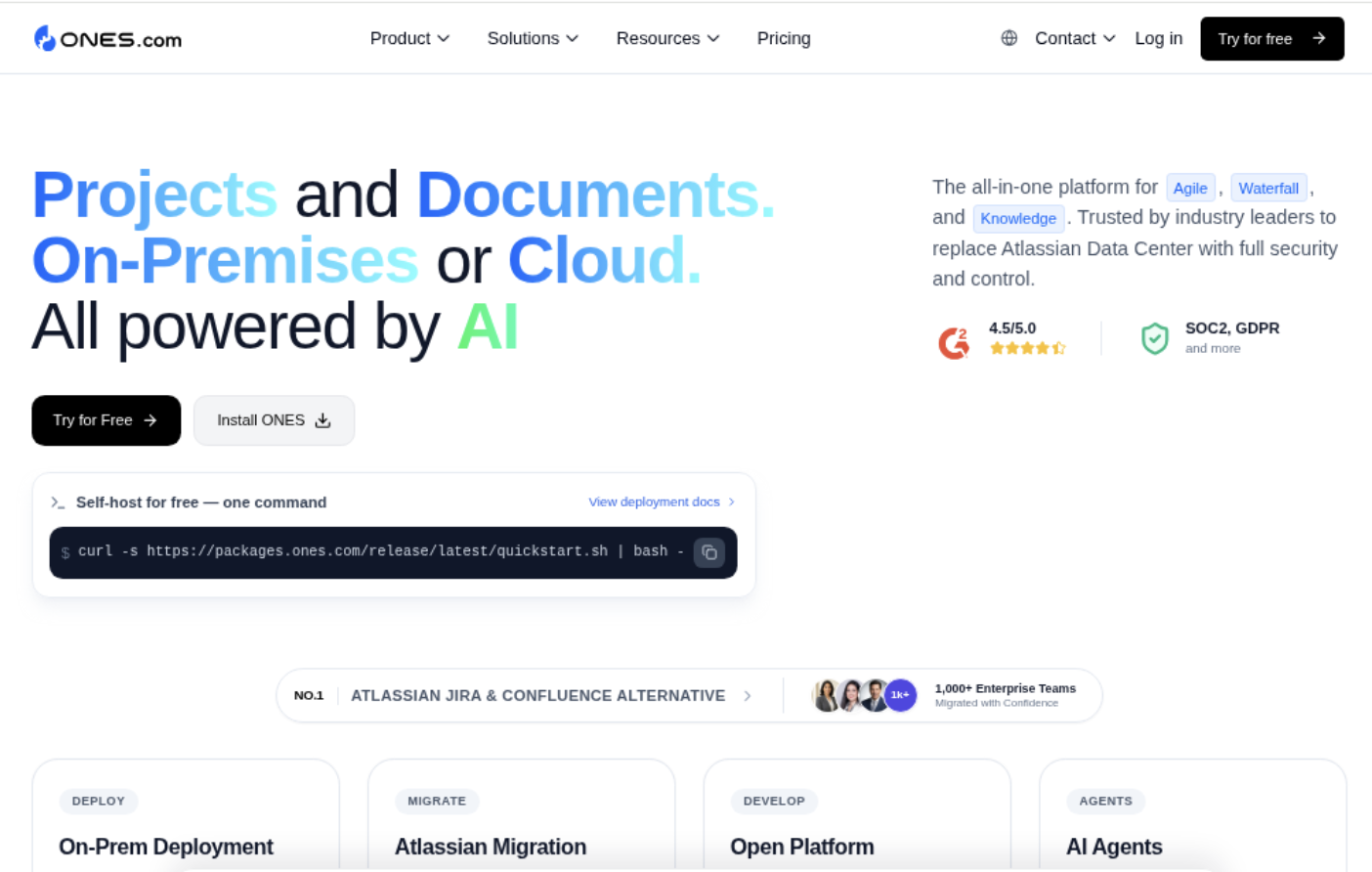
The platform can suit teams that want structured work management, internal knowledge, and support-related processes across flexible deployment options. It provides four deployment choices: Cloud, On-Premise, Private Cloud, and Air-gapped.
Value proposition
ONES.com can help you reduce tool sprawl when your support operation connects service requests with project work and internal knowledge. Its self-hosted options may also suit teams with strict infrastructure or network requirements.
Core capabilities
Disconnected project and support work
Pain: Support teams often pass recurring issues to development teams through separate tools and manual messages.
ONES capability: ONES Project supports Jira-compatible workflows, sprint management, custom workflows, custom fields, automation, and built-in reporting.
Result: Your team can connect operational requests with planned project work using fewer plugins.
Scattered internal knowledge
Pain: Agents may repeatedly answer the same questions because troubleshooting guidance is difficult to maintain.
ONES capability: ONES Wiki provides knowledge management capabilities as a Confluence alternative.
Result: Support teams can organize reusable guidance and improve self-service resources.
Restricted network requirements
Pain: Some organizations cannot place operational work in a public cloud environment.
ONES capability: ONES.com supports On-Premise, Private Cloud, and Air-gapped deployments in addition to Cloud.
Result: You can align deployment with internal security and network requirements.
Uneven feature access across environments
Pain: Self-hosted systems sometimes provide fewer features than their cloud versions.
ONES capability: ONES.com provides full feature parity between cloud and self-hosted versions.
Result: Deployment decisions do not require giving up core functionality.
Plugin-heavy customization
Pain: A growing collection of plugins can increase costs, maintenance work, and compatibility concerns.
ONES capability: Custom workflows, custom fields, automation, sprint management, and built-in reporting are available as native capabilities in ONES Project.
Result: You may reduce dependence on separate extensions for common operational needs.
Limited entry access
Pain: A small team may hesitate to test a platform when early licensing costs are high.
ONES capability: ONES.com offers a free plan for up to 30 seats.
Result: A small team can evaluate its working model before committing to a larger rollout.
Disconnected work management
Pain: Service improvements, product fixes, and operational tasks can become difficult to prioritize together.
ONES capability: ONES Project combines structured task management with Jira-compatible workflows and sprint planning.
Result: Teams can create a clearer path from recurring support problems to planned improvements.
Complex deployment decisions
Pain: A single deployment model may not suit every department or regulatory environment.
ONES capability: ONES.com supports Cloud, On-Premise, Private Cloud, and Air-gapped deployments.
Result: You can select an operating model that fits your infrastructure strategy.
Application scenarios
Internal IT support with restricted access
A government contractor may need an air-gapped environment for sensitive operational work. ONES.com can support that deployment model while preserving feature parity with its cloud version.
Product support connected to engineering
A software company may route recurring customer problems into engineering sprints. ONES Project can provide a Jira alternative with custom workflows, fields, automation, and reporting.
Support knowledge for a growing team
A scaling operations team may need a central knowledge hub for troubleshooting steps, onboarding guidance, and internal procedures. ONES Wiki can serve as a Confluence alternative for that need.
Common Challenges When Estimating Support Desk Costs
Challenge: confusing customers with agents
Problem: You may overestimate licensing by counting every person who submits a request.
Solution: Separate portal customers from people who manage, configure, report on, or resolve requests. Validate the distinction with your licensing administrator.
Challenge: selecting a plan before defining requirements
Problem: Teams sometimes choose a tier because it appears popular, then discover that an essential capability requires an upgrade.
Solution: Write a requirements list first. Test each plan against the actual workflow you expect to run.
Challenge: underestimating administration
Problem: A support desk can become outdated when nobody reviews forms, queues, permissions, or automation.
Solution: Assign an owner and reserve regular maintenance time. Include that effort in your cost comparison.
Challenge: adding too many apps
Problem: Teams may install an app for every gap without checking native capabilities or long-term maintenance.
Solution: Create an app review process. Keep an app only when its value exceeds its subscription and administration cost.
Challenge: ignoring growth
Problem: A plan that works for one department may become restrictive after several teams join.
Solution: Model current, expected, and expansion scenarios. Review the estimate before hiring or launching a new service area.
FAQs About Jira Service Desk Costs
Is Jira Service Management free?
Jira Service Management may offer a free plan with limits on users, capabilities, and scale. Whether it is practical depends on your team size and service requirements.
Check the current Atlassian pricing page for regional terms and present limits. A free plan can support an early pilot, but it may not cover advanced governance or large request volumes.
Do customers need paid agent licenses?
Customers who submit requests through a portal or approved channel generally have a different role from agents who manage those requests.
Your cost estimate should focus on people who need agent permissions. Confirm the exact licensing treatment for your channels, roles, and selected plan before purchase.
What is usually the biggest cost driver?
Agent count is often the clearest recurring driver, especially when the support organization grows quickly. Higher plan tiers and optional capabilities can also increase the total.
Marketplace apps and administration may become significant over time. Review all recurring charges together rather than comparing only the base subscription.
Should I choose monthly or annual billing?
Annual billing may provide more predictable budgeting, while monthly billing can offer flexibility during a pilot or uncertain growth period.
Compare the total commitment with your hiring forecast. Annual terms can be less convenient if your team size or platform requirements may change soon.
Can I reduce Jira service desk costs without changing platforms?
Yes. Review inactive agents, remove unused apps, consolidate duplicate workflows, and reduce unnecessary service projects.
You can also improve request forms and knowledge resources. Better self-service may lower repetitive ticket volume and reduce pressure on the support team.
When should I compare alternatives?
Compare alternatives when your current platform requires too many plugins, cannot meet deployment requirements, or creates a higher total cost as your team expands.
Use the same requirements for every platform. Compare licensing, implementation, administration, integrations, reporting, security, and future growth together.
Conclusion
Jira support desk pricing is easier to understand when you separate plan licensing from seats, optional capabilities, apps, implementation, and administration.
Start with your agent count and required workflows. Then model lean, expected, and expansion scenarios before reviewing current commercial terms.
But here’s the truth: the cheapest subscription is not always the lowest-cost service desk. A platform that needs constant customization can consume more time than its headline price suggests.
If your team wants a Jira alternative with native workflows, custom fields, automation, sprint management, reporting, and flexible deployment, ONES.com is worth evaluating alongside your shortlist.
The right choice gives you predictable costs, manageable operations, and enough flexibility to support the next stage of your service organization.