Jira Tempo Pricing Guide: Plans, Costs, and Limits 2026
Confused by jira tempo pricing? Compare 2026 plans, costs, seat rules, and limits to budget accurately. Click to discover the best fit.
Jira Tempo pricing can feel confusing because your final bill depends on several moving parts. You may need Jira seats, one or more Tempo apps, a billing interval, and possibly premium capabilities. A simple per-user estimate can become inaccurate quickly.
That uncertainty creates practical problems. You might compare a monthly app price with an annual quote, overlook minimum seat rules, or pay for features your team rarely uses. A small pricing mistake can affect forecasts, procurement, and renewal planning.
Here’s the solution: separate the cost into clear layers. First, identify the Tempo product you need. Then check the Jira edition, licensed users, billing term, plan limits, and add-ons. This guide shows you how to calculate the likely total and compare it with another project management platform.
How Jira Tempo Pricing Works
Jira Tempo pricing is the total cost of using Tempo products with Jira, usually shaped by selected apps, licensed users, plan features, billing frequency, and usage limits.
Tempo is a collection of Jira apps rather than one single feature. Depending on your workflow, you may evaluate time tracking, resource planning, financial management, team capacity, or portfolio planning capabilities.
Because those needs vary, two companies with the same number of Jira users can receive very different totals. A ten-person software team may need basic time tracking, while a consulting firm may require billing controls and capacity planning.
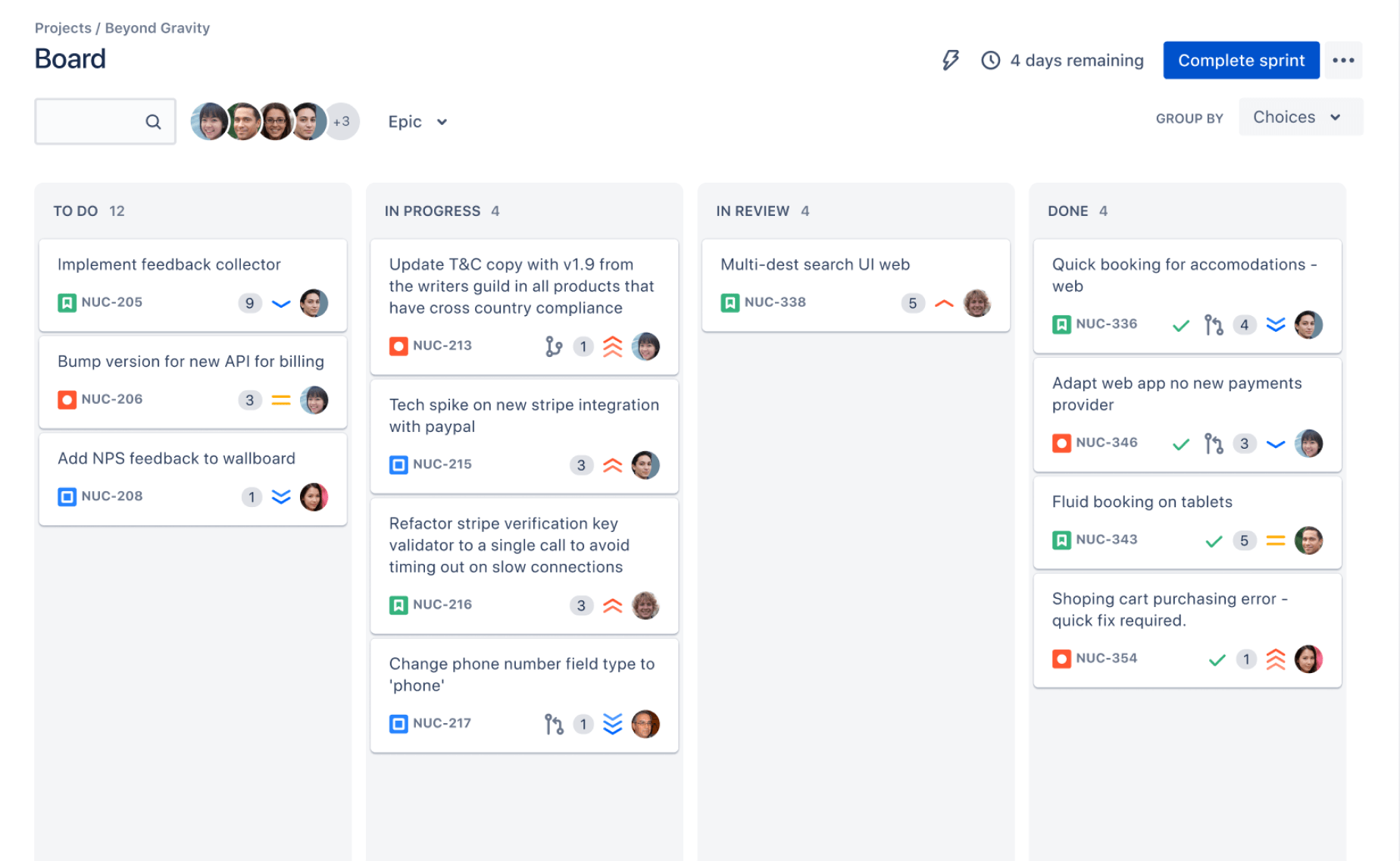
1. Identify the Tempo products you need
Start with the work you want Tempo to support. List each requirement before looking at price.
- Timesheets for recording work hours
- Planner for scheduling people and planned work
- Budgets for tracking project costs
- Capacity planning for comparing workload and availability
- Financial controls for project profitability and billing visibility
Separate essential capabilities from optional improvements. This prevents you from comparing a narrow plan with a broad bundle.
2. Confirm your Jira environment
Jira Cloud and self-managed Jira environments can follow different commercial rules. Your Jira edition, hosting model, and marketplace arrangement may affect eligibility and administration.
Check whether your team uses Jira Cloud, Jira Data Center, or another supported setup. Confirm compatibility before calculating the subscription.
3. Count billable users carefully
Most Jira marketplace apps calculate pricing around licensed users or a user tier. The relevant number may differ from the people actively entering time.
For example, 30 employees may have Jira access, while only 18 submit timesheets. If Tempo pricing uses the Jira license tier, paying for 18 active contributors may not be possible.
4. Compare monthly and annual billing
Monthly billing usually gives you more flexibility. Annual billing can simplify forecasting and may offer different commercial terms.
Compare the full annual cost rather than multiplying one visible monthly number by 12. Check whether user tiers, discounts, taxes, or renewal terms change the result.
5. Review limits before choosing a plan
Price matters only alongside limits. Examine reporting depth, approval workflows, planning capacity, permissions, historical visibility, integrations, and administrative controls.
A cheaper plan may work for a small team today. However, it can become expensive if growth forces a higher tier or separate add-on later.
6. Calculate the complete yearly total
Use this simple model:
Estimated annual cost = Jira subscription + Tempo apps + required add-ons + taxes or fees − eligible discounts
Add implementation time and administration effort separately. A low subscription price may still create a high operational burden if managers need manual reconciliation.
What Affects the Final Tempo Bill?
Several pricing variables interact. Looking at only the advertised starting price can hide the cost drivers that matter most to your team.
Product scope and app selection
A team that only needs time entry has a different requirement from a department managing budgets, resource allocation, and project profitability.
Think of each app as a separate layer. Adding layers can increase capability, yet it also increases subscription complexity and setup work.
User tiers and license rules
Marketplace apps often group customers into user bands. Moving from one band to another can increase the bill even when only a few additional people join.
Ask how inactive users, Jira administrators, contractors, and occasional contributors are counted. These details can materially change your estimate.
Jira edition and hosting model
Your Jira hosting model affects administration, upgrades, security responsibilities, and commercial planning. Cloud subscriptions often follow recurring billing, while self-managed environments may involve different terms.
For a regulated team, hosting control can matter as much as price. A lower subscription can lose its advantage if it requires extra infrastructure work.
Plan capabilities and usage boundaries
Limits may apply to reports, permissions, planning views, approval steps, historical periods, integrations, or automation.
Here’s why: a limit becomes a cost issue when your team must purchase a higher tier to preserve a routine workflow. Test your most important scenario before choosing.
How to Estimate Costs for Different Team Sizes
A practical estimate begins with team behavior, not headcount alone. Consider who needs access, who approves work, and who manages financial information.
| Team profile |
Likely requirements |
Pricing questions |
| Small delivery team |
Time entry, approvals, basic reporting |
What is the minimum user tier? Are standard reports included? |
| Growing product department |
Capacity planning, sprint visibility, resource allocation |
Which planning features require a higher plan? |
| Consulting organization |
Billable hours, budgets, approvals, profitability |
Are financial controls included, and how are external users counted? |
| Enterprise portfolio office |
Cross-team planning, permissions, governance, advanced reporting |
Is a negotiated agreement needed for scale or support? |
Example: a 12-person product team
Imagine 12 people working in Jira. Eight engineers enter time, two managers approve it, and two leaders review reports.
Do not assume the bill covers only the eight contributors. The app may use the Jira license tier, which can include everyone with access.
Example: a 75-person consultancy
Suppose 75 staff members use Jira, but only 50 work on client projects. The company also needs budgets and utilization reporting.
The correct estimate should include all relevant Jira users, the required Tempo products, approval needs, and any professional services. A basic timesheet estimate would understate the real cost.
Example: a self-managed enterprise
A security-focused organization may prioritize self-managed deployment and internal control. Its comparison should include administration, upgrades, hosting, and support effort.
The subscription figure is only one part of the decision. Operational ownership can influence the five-year cost more than the first invoice.
Tempo Limits You Should Check Before Buying
Limits often matter more than headline price. Review them with a realistic workflow that includes normal exceptions.
Reporting and historical visibility
Ask how far back your team can analyze time, cost, utilization, and project performance. A finance team may need several years of history for planning and audits.
Check whether reports can be filtered by project, team, role, customer, issue type, or billing category. Limited filtering can create manual work outside Jira.
Approvals and corrections
Time tracking becomes difficult when people submit late entries or correct an approved period. Review who can edit entries and how managers reopen a period.
For example, a consultant may discover a missing Friday entry after the month closes. Your workflow should handle that correction without compromising approval controls.
Resource planning and capacity
Planning features may have boundaries around teams, roles, availability, skills, or scheduling views. Ask whether part-time work and shared responsibilities are supported.
A plan that works for one team can become awkward when people split time across four projects. Test cross-project allocation before committing.
Permissions and governance
Large organizations often need different visibility for employees, managers, finance teams, and clients. Confirm whether roles and permissions match your reporting structure.
Strong governance reduces accidental exposure of commercial details. It also makes approval ownership easier to audit.
How to Compare Tempo With Other Options
Compare outcomes, recurring cost, and operational effort together. A direct feature checklist is useful, yet it should not be the only measure.
Compare the complete workflow
Map the journey from work planning to time capture, approval, reporting, and financial review. Then identify where information moves between systems.
Every handoff adds friction. If a team copies planning details into another platform, the labor cost may exceed the subscription difference.
Compare native capabilities with add-ons
A Jira-centered setup may require several marketplace apps. Each add-on can introduce separate billing, configuration, permissions, and upgrade decisions.
A unified platform may reduce those handoffs. However, you should test feature depth rather than assume consolidation automatically delivers a better result.

Compare deployment and control
Cloud deployment may reduce infrastructure duties. Self-hosted deployment may suit organizations with strict network or governance requirements.
Choose the model that fits your operating constraints. A technically attractive plan is weak if your security team cannot approve it.
Use a five-year view
Estimate subscriptions, administration, training, migration, integration maintenance, and renewal changes. Include likely headcount growth.
The best option often becomes clearer when you compare the cost of running the workflow, not just buying the software.
Jira Tempo Pricing Alternative: ONES.com
ONES.com combines project management and knowledge management in one platform. ONES Project serves as a Jira alternative for planning, tracking, reporting, and delivery workflows, while ONES Wiki supports team knowledge management.
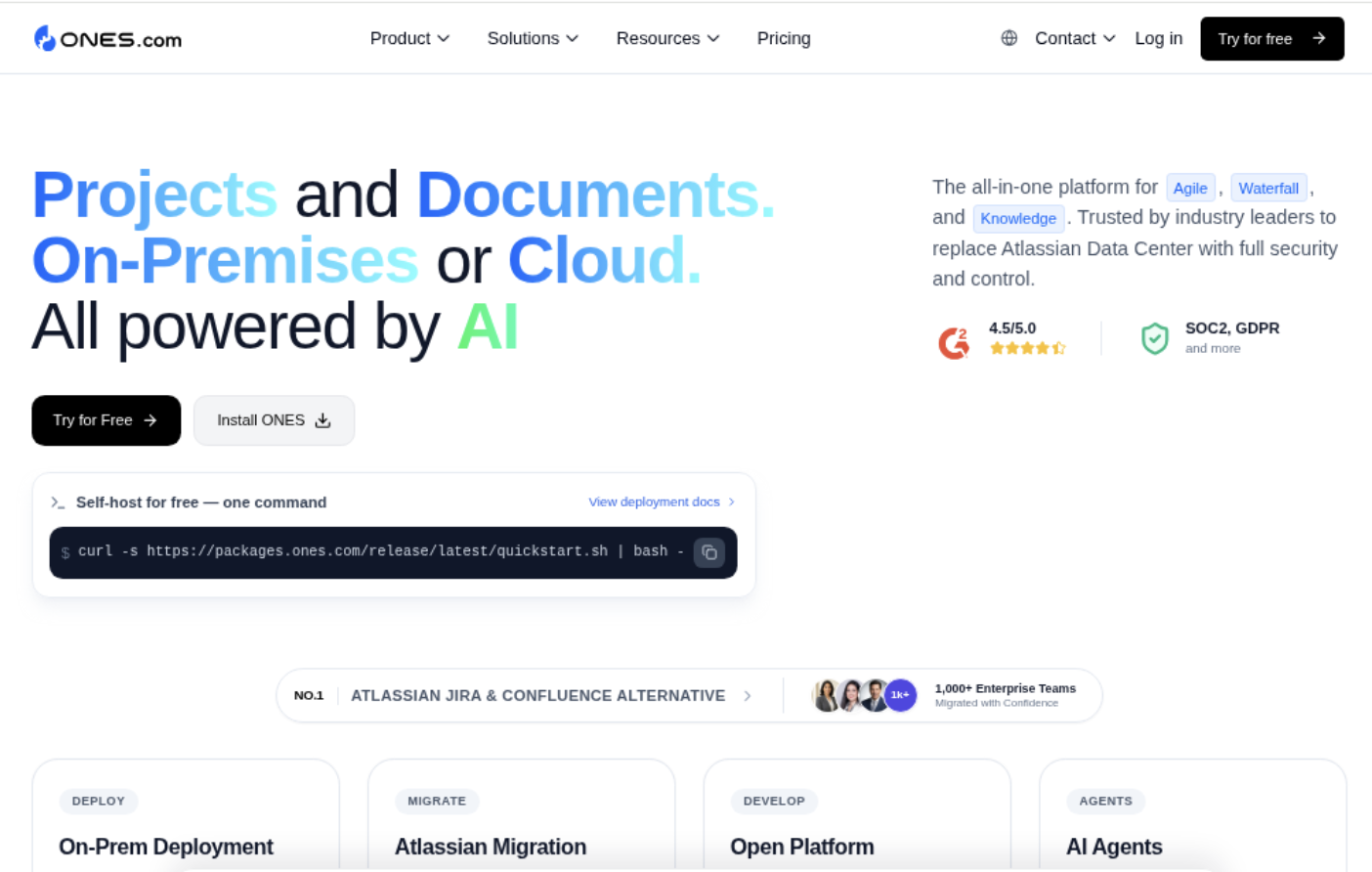
ONES Project and ONES Wiki are sold separately. ONES.com supports Cloud, On-Premise, Private Cloud, and Air-gapped deployments, with full feature parity between cloud and self-hosted versions. A free plan supports up to 30 seats.
Core capabilities
Separate tools create duplicated administration
ONES capability: ONES Project brings project tracking, sprint management, custom workflows, custom fields, automation, and reporting into one Jira-compatible work environment.
Result: Your team can reduce context switching while preserving familiar delivery practices.
Plugin-heavy workflows increase maintenance
ONES capability: Built-in reporting, workflow controls, sprint functions, and automation reduce reliance on multiple extensions.
Result: Administrators can manage fewer moving parts and review fewer independent renewal decisions.
Self-hosting requirements limit platform choices
ONES capability: ONES.com supports on-premise, private cloud, and air-gapped deployment options alongside cloud deployment.
Result: Security-sensitive organizations can evaluate a Jira alternative without limiting the comparison to public cloud hosting.
Different tools divide project context
ONES capability: ONES Project handles project management, while ONES Wiki provides a connected knowledge management environment.
Result: Teams can keep delivery work and team knowledge closer together when both products fit their needs.
Complex Jira configurations slow adoption
ONES capability: Jira-compatible workflows help teams transfer familiar issue, sprint, field, and approval patterns.
Result: A migration can focus on improving the operating model instead of rebuilding every process from scratch.
Reporting gaps create manual review work
ONES capability: Built-in reporting supports project visibility without requiring a separate reporting layer for common management needs.
Result: Leaders can review progress, workload, and delivery signals in a more consistent workspace.
Rigid workflows force teams into workarounds
ONES capability: Custom workflows and fields allow teams to reflect approval stages, risk controls, ownership, and project categories.
Result: Your process can match the organization’s operating rules more closely.
AI experimentation can be difficult to scale
ONES capability: ONES Assistant uses a three-layer AI usage model. The basic allowance supports low-barrier trials and limited requests.
Result: Individuals can begin with core AI features before the team commits to broader usage.
Personal AI allowances may become insufficient
ONES capability: Assistant Credit provides 3,000 credits per user each month in addition to the basic allowance.
Result: Regular individual usage has a clearer allowance for recurring AI-supported work.
High-frequency AI work needs shared capacity
ONES capability: Extra Credit is a team-shared pool for situations where personal credits are insufficient. It costs USD 10 per 1,000 credits, with a minimum order of 5,000 credits.
Result: Teams can support heavier adoption without describing the allowance as unlimited. This model helps work continue when individual credits run short.
Application scenarios
Software product team: A team can use ONES Project for backlog planning, sprint execution, custom workflows, and built-in reporting. ONES Wiki can hold delivery guidance and team knowledge.
Regulated engineering group: An organization with restricted network requirements can assess an air-gapped deployment. Full feature parity with the cloud version supports a consistent capability review.
Growing enterprise: A company can begin with individual AI experimentation, use Assistant Credit for regular work, and add team-shared Extra Credit for high-frequency adoption.
Common Challenges With Tempo Cost Planning
Challenge: The public estimate looks lower than the invoice
Solution: Add every required app, user tier, billing term, tax, and commercial adjustment. Request a written estimate that reflects your actual Jira environment.
Challenge: You count only active time submitters
Solution: Confirm whether pricing follows active contributors, Jira license tiers, or another user definition. Include managers and occasional users in your model.
Challenge: Your team outgrows the original plan
Solution: Test growth scenarios before purchase. Model your cost at the current size, next hiring milestone, and expected renewal size.
Challenge: Limits appear after implementation
Solution: Test approvals, historical reporting, permissions, planning, and integrations with realistic examples. Include exceptions such as late time entries.
Challenge: Several apps create administrative overhead
Solution: Compare the total number of vendors, renewal dates, permission models, and configuration tasks. A unified alternative may reduce operational complexity.
Frequently Asked Questions
Is Jira Tempo pricing based only on the number of people entering time?
Usually, you should not assume that. The applicable user tier may relate to Jira-licensed users or another commercial definition. Confirm how administrators, managers, contractors, and occasional contributors count. A 30-person Jira environment may therefore cost more than an estimate built around eight active timesheet users.
Does Tempo have one price for every capability?
Tempo provides several capabilities for different planning and financial needs. Your total can depend on which products or modules you select. Time tracking alone may require a different commercial arrangement from a setup that includes resource planning, budgets, capacity management, or advanced reporting.
Should I compare monthly or annual pricing?
Compare both when possible. Monthly billing can suit a pilot or uncertain headcount. Annual billing can make forecasting easier and may have different commercial terms. Calculate the full 12-month amount, including user growth, taxes, add-ons, and any renewal assumptions.
How can I check whether a Tempo plan has the right limits?
Write down your critical workflows and test them against plan capabilities. Include approval corrections, historical reporting, permissions, cross-project planning, integrations, and automation. Ask specifically what happens when your team exceeds a limit. That answer can reveal future upgrade costs.
Is ONES.com a Jira alternative?
ONES Project is a Jira alternative with Jira-compatible workflows, sprint management, custom workflows and fields, automation, and built-in reporting. ONES.com also includes ONES Wiki for knowledge management, though ONES Project and ONES Wiki are sold separately. Deployment options include cloud, on-premise, private cloud, and air-gapped environments.
How does ONES.com handle AI usage costs?
ONES.com uses three AI usage layers. The basic allowance supports trying core features and handling limited requests. Assistant Credit adds 3,000 credits per user each month. Extra Credit is a shared team pool when personal credits are insufficient, costing USD 10 per 1,000 credits with a 5,000-credit minimum order.
Conclusion
Jira Tempo pricing becomes easier to understand when you separate product scope, user rules, Jira environment, billing frequency, plan limits, and operational effort.
Start with your workflow. Count every relevant user, identify every required capability, test the limits, and calculate a full yearly and five-year estimate.
But here’s the truth: the cheapest visible subscription may not produce the lowest overall cost. If several apps create handoffs or administration work, a unified platform deserves a fair comparison.
ONES.com gives you another route to evaluate, especially when you need Jira-compatible project management, built-in reporting, self-hosted deployment, or a connected knowledge management option. A careful comparison can turn an uncertain renewal decision into a clear platform choice.