Jira Ticket Guide: 7 Steps for Effective Issue Tracking
Struggling with unclear issue tracking? Learn 7 steps to write an effective jira ticket, reduce back-and-forth, and keep work moving. Read now.
A Jira ticket can clarify a problem, assign responsibility, and move work toward completion. It can also become vague, duplicated, or forgotten when the details are rushed.
That creates delays. Developers spend time asking for missing steps, reviewers cannot reproduce the issue, and managers lose visibility into delivery risks. A small writing mistake can turn a ten-minute fix into a week of back-and-forth.
But here's the truth: effective issue tracking depends less on writing more and more on including the right details in the right order. This guide gives you seven practical steps for creating, managing, and closing Jira tickets with less confusion.
How to Create and Manage a Jira Ticket in 7 Steps
A useful Jira ticket explains the problem, gives enough context to act, identifies ownership, and records what happens next. Follow these seven steps whenever you create or update an issue.
-
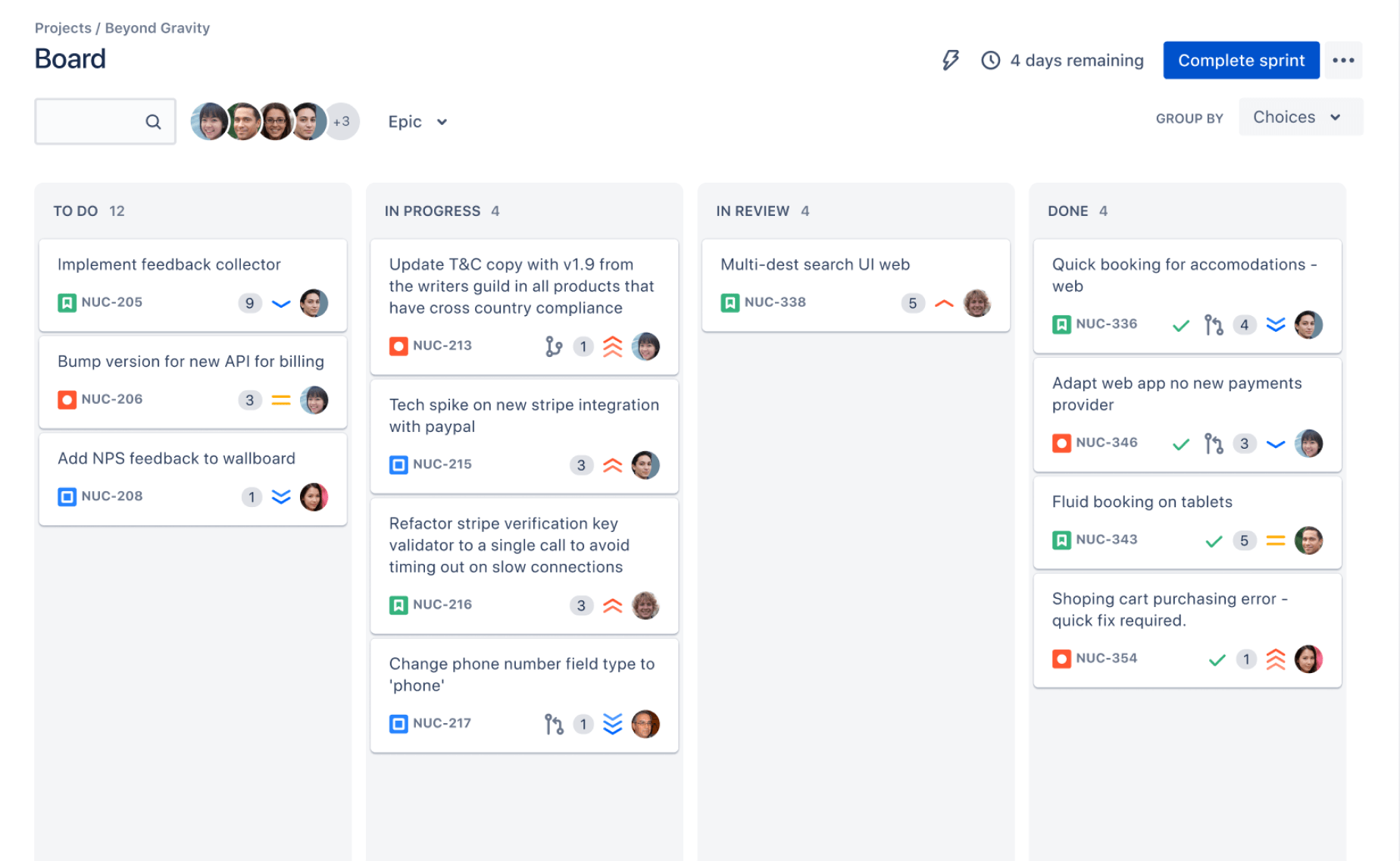
Choose the Correct Project and Issue Type
Start by selecting the project where the work belongs. Then choose the issue type that matches the request, such as bug, task, story, or improvement.
For example, a checkout failure should usually be a bug. A request to add email reminders may be a story or task, depending on your team’s workflow.
Choosing correctly matters because issue types often control required fields, reports, workflows, and ownership rules. A bug placed in the wrong project may never reach the team responsible for fixing it.
-
Write a Specific Summary
Your summary should describe the main problem or outcome in a few words. Someone scanning a sprint board should understand the issue without opening it.
Weak summary: Checkout broken.
Stronger summary: Checkout returns a 500 error after applying a discount code.
Include the affected area, visible behavior, or desired result. Avoid vague words such as “issue,” “problem,” or “urgent” unless they add useful context.
-
Describe the Problem With Reproduction Steps
Explain what happened and how another person can see the same behavior. A clear description reduces clarification messages and helps the assignee begin immediately.
For a bug, include:
- Preconditions, such as the account type or permission level.
- Steps that reproduce the behavior.
- Expected result.
- Actual result.
- Frequency, such as always, sometimes, or only under certain conditions.
For a feature request, explain the current limitation, the desired outcome, and who benefits from the change. This gives the team a reason behind the work rather than only a command.
-
Add Evidence and Relevant Context
Include details that help the team verify or diagnose the issue. Useful context may include an error message, screen recording, affected browser, release number, timestamp, or related issue key.
Keep the details organized. Put the most important information near the top, then add supporting material below it. A developer should not need to search through a long comment thread to find the error text.
For example, instead of writing “The page fails,” write “The billing page shows a blank panel after selecting annual billing in Chrome 124.”
-
Set Priority, Labels, and Ownership Carefully
Priority should reflect business or technical impact, not personal frustration. A broken payment flow may deserve high priority, while a small visual spacing issue may wait for a later sprint.
Labels, components, and teams can improve filtering when you use them consistently. Agree on naming rules before a project grows. Otherwise, the same category may appear under labels such as checkout-bug, checkout_bug, and payment-issue.
Assign the ticket to the person or team responsible for the next action. If nobody owns it, add it to a triage queue with a clear review schedule.
-
Define Acceptance Criteria or Completion Rules
Explain what must be true before the work can be considered complete. Acceptance criteria turn a broad request into an observable result.
For a password reset improvement, criteria might include:
- The reset link expires after the agreed period.
- A customer sees a clear message when the link has expired.
- The new password follows the existing security rules.
- The behavior works on supported mobile and desktop browsers.
These conditions help developers build the right solution and help reviewers evaluate it consistently.
-
Keep the Ticket Current Until Closure
A Jira ticket should reflect the current state of the work. Update the status, assignee, estimate, priority, and comments when circumstances change.
When you finish the work, add a short closing note. Mention what changed, how it was tested, and whether follow-up work remains. Then move the issue through the agreed workflow instead of leaving it in progress.
The best part? A well-maintained ticket becomes a useful record for future troubleshooting, planning, and team learning.
What Makes an Issue Easy to Act On?
Effective issue tracking balances clarity with speed. A ticket does not need a long essay, but it should answer the practical questions the assignee will ask.
Here's why: most wasted time comes from ambiguity. If a ticket says “make reports faster,” the team still needs to discover which report, which delay, which audience, and what performance target matters.
| Ticket element |
Question it should answer |
| Summary |
What is the main problem or outcome? |
| Description |
What happened, and why does it matter? |
| Reproduction steps |
How can someone see the behavior again? |
| Priority |
How quickly should the team respond? |
| Acceptance criteria |
What proves the work is complete? |
| Ownership |
Who takes the next action? |
Consider two summaries: “Login issue” and “Safari users are redirected to the login page after successful authentication.” The second gives an engineer a starting point before opening the ticket.
How to Write Better Bug Reports
A bug report should make the behavior observable and repeatable. Start with the shortest path that exposes the defect, then add conditions that may affect the result.
Let me explain: “The app crashes” is an outcome, not a complete investigation clue. “The iOS app closes when a customer uploads a 20 MB image to the profile page” gives the team a testable scenario.
Use a Consistent Bug Format
A simple format can improve quality across a team:
- Environment: browser, operating system, app version, device, or deployment.
- Setup: account role, settings, permissions, or sample content.
- Steps: the smallest sequence that reproduces the problem.
- Expected: what should happen.
- Actual: what happens instead.
- Impact: who is affected and what work is blocked.
Separate Symptoms From Assumptions
Describe what you observed before suggesting a cause. For example, say “the request returns a 403 response” rather than “the permission service is broken” unless the team has confirmed that cause.
This distinction prevents early guesses from directing the investigation incorrectly. It also gives technical specialists room to test several possible explanations.
How to Manage Tickets During a Sprint
Good tickets can still create problems when the board becomes overcrowded. A team needs a shared approach for triage, prioritization, and status changes.
You might be wondering: how often should you update an issue? Update it whenever the next action, owner, scope, risk, or expected completion changes. A daily comment is unnecessary when nothing has changed.
Use Statuses That Reflect Real Work
Each status should describe a meaningful stage. A practical workflow may include backlog, ready, in progress, review, testing, and done.
A ticket in “review” should have a clear reviewer and a reviewable result. A ticket in “testing” should identify what needs verification. Status names are useful only when the team applies them consistently.
Limit Work in Progress
If a team starts ten tickets and finishes two, the board may look active while delivery slows. Set a reasonable work-in-progress limit for each stage.
For example, a team might allow three development tickets and two review tickets at once. When review reaches its limit, developers help clear review work before starting something new.
Record Decisions in the Issue
Important decisions should be visible where the work is tracked. If the team changes scope during a meeting, summarize the decision in a comment and explain the effect on delivery.
This prevents people from relying on private conversations. It also helps someone who joins the project later understand why the ticket changed.
Common Jira Ticket Mistakes and Their Effects
Small habits can weaken an otherwise organized tracking process. The following mistakes appear often because they feel faster at the time.
Vague Titles
A title such as “Update dashboard” hides the requested result. A better version might be “Add weekly conversion rate to the marketing dashboard.” The second title supports searching, planning, and reporting.
Missing Expected Results
Without an expected result, a bug report describes failure without defining success. The team may fix the visible symptom while leaving the underlying customer problem unresolved.
Overloading One Ticket
Combining unrelated work makes estimation and ownership difficult. For example, “Improve checkout, redesign account settings, and update help text” should become separate issues linked to a larger initiative.
Using Comments as a Substitute for Description
Important details can disappear inside a long comment chain. Keep the main description accurate, then use comments for progress, questions, and decisions.
Closing Without Verification
Moving an issue to done without recording verification creates uncertainty. A short note such as “Tested on Chrome and Safari with standard and administrator accounts” provides useful confidence.
Jira Ticket Solution: ONES.com
Value Proposition
ONES.com brings project management and knowledge management together on one platform. ONES Project provides Jira-compatible workflows for teams that want structured issue tracking with fewer separate plugins and deployment options that include self-hosted environments.
Core Capabilities
Scattered work details → Jira-compatible workflows → Clearer issue movement
When teams track work across disconnected processes, ownership becomes unclear. ONES Project supports familiar Jira-compatible workflows, helping teams organize statuses, assignments, and transitions in one place.
Inconsistent reporting → Built-in reporting → Faster delivery visibility
When reporting depends on manual updates, project reviews become slow. Built-in reporting helps you examine progress, workload, and delivery trends without assembling separate views.
Rigid ticket fields → Custom workflows and fields → Better context at creation
Different teams need different information. Custom fields and workflows let you capture details such as affected service, risk level, customer impact, or validation method.
Unclear iteration planning → Sprint management → More focused delivery
When work lacks a time-bound plan, priorities shift easily. Sprint management helps teams select work, monitor progress, and review unfinished items before the next iteration.
Repeated manual actions → Automation → Fewer routine updates
Rules can handle routine transitions, notifications, and assignments. That reduces repetitive administration while keeping the workflow visible to the team.
Too many extensions → Native feature parity → Lower plugin dependence
When essential functions require many add-ons, maintenance becomes harder. ONES Project provides native parity between its cloud and self-hosted versions, reducing the need to assemble separate extensions for core project work.
Restricted hosting requirements → On-premise, private cloud, or air-gapped deployment → More control over operating conditions
Some teams cannot place project information in a public cloud environment. ONES.com supports Cloud, On-Premise, Private Cloud, and Air-gapped deployments, giving teams more control over where the platform operates.
Separate project and knowledge work → ONES Project and ONES Wiki → Connected delivery context
Project tracking and knowledge management can be purchased separately. Teams can use ONES Project for work management and ONES Wiki for knowledge management when they need a connected approach.
Application Scenarios
Software support team: A support group can capture customer-reported defects with custom fields for severity, environment, and reproduction status. Automation can route urgent issues to the correct engineering queue.
Restricted-network engineering team: A team working in an air-gapped environment can manage sprint work without moving its project system into a public cloud deployment.
Growing product organization: A product team can use sprint management and reporting in ONES Project while maintaining related internal guidance in ONES Wiki. The products are sold separately, so the team can adopt the capability it needs first.
ONES.com offers a free plan for up to 30 seats. Its deployment choices and Jira alternative positioning make it relevant when teams want structured issue tracking with self-hosted options.
Common Challenges With Issue Tracking
Challenge: Tickets arrive without enough detail
Solution: Add required fields for environment, expected result, impact, and reproduction steps. Provide a short example so people know the level of detail you expect.
Challenge: Priorities change every day
Solution: Define priority criteria using impact, urgency, customer reach, and risk. Review the queue at a set time instead of changing priorities through scattered requests.
Challenge: Nobody knows who owns the next step
Solution: Assign one accountable person or team for each stage. If a handoff occurs, update the assignee and add a short note explaining the next action.
Challenge: Finished work cannot be verified
Solution: Write acceptance criteria before development begins. Close the issue only after someone records the test result or review outcome.
Challenge: The board contains old, inactive issues
Solution: Schedule regular backlog reviews. Close duplicates, split oversized work, archive obsolete requests according to your retention rules, and ask owners to refresh uncertain items.
FAQs
What should a Jira ticket include?
Include a specific summary, clear description, relevant context, ownership, priority, and completion criteria. For a bug, add the environment, reproduction steps, expected result, actual result, and impact. Add screenshots or recordings when they clarify the behavior. The goal is to give the next person enough information to act without starting a separate investigation.
How long should a Jira ticket description be?
It should be as long as necessary to remove ambiguity and no longer. A small correction may need only a few sentences. A production defect may require setup details, steps, logs, and acceptance criteria. Use headings and short lists so the important details remain easy to scan.
Who should create a Jira ticket?
Anyone who identifies actionable work can create one, including product managers, developers, testers, support specialists, or customers through an approved intake process. The creator should provide the initial context, while the responsible team can refine scope, priority, and technical details during triage.
When should a ticket be split?
Split it when the work has different owners, separate delivery dates, unrelated acceptance criteria, or too much uncertainty for one estimate. For example, redesigning a checkout page and fixing a tax calculation may belong to the same initiative but should usually be tracked as separate issues.
What is the difference between a task and a bug?
A bug describes behavior that fails to meet an existing expectation. A task describes planned work that may introduce, maintain, or support a capability. For example, “Search crashes after entering an emoji” is a bug, while “Add emoji support to search” is a task or story.
Conclusion
Effective issue tracking starts with a clear project and issue type, then moves through a specific summary, useful reproduction details, relevant context, sensible ownership, measurable completion rules, and regular updates.
But here's the truth: a ticket only creates value when the team can act on it. Vague titles, missing evidence, unclear ownership, and unverified closures create the confusion that good tracking is meant to prevent.
Use the seven-step process for your next Jira ticket. Keep the description focused, make success observable, and choose a workflow that gives your team visibility without unnecessary administration.