Jira Ticketing System: A Practical Guide for Support Teams
Losing track of support requests? Learn how a jira ticketing system streamlines workflows and speeds responses. Read now to improve your team’s support.
Support teams can lose hours chasing ticket updates, repeating questions, and guessing which requests deserve attention first. When every issue arrives through a different channel, urgent customer problems can sit beside routine requests with no clear owner.
That confusion creates slower replies, missed service targets, and frustrated customers. It also makes performance difficult to measure because important details stay scattered across conversations and personal notes.
But here's the truth: a Jira ticketing system can give your team one organized workflow for capturing, prioritizing, assigning, resolving, and reviewing support requests. This guide explains how it works, where it helps, and how to design a practical setup.
What Is a Jira Ticketing System?
A Jira ticketing system is a structured support workflow that records customer or internal requests as tickets, then routes each ticket through assignment, prioritization, investigation, resolution, and closure.
Jira began as a project and issue-tracking platform. Support teams can adapt its issue types, fields, workflows, queues, automation, and reporting features to manage service requests.
A ticket normally contains the request description, requester details, priority, status, owner, conversation history, related work, and resolution. These details give you a shared view of what needs attention.
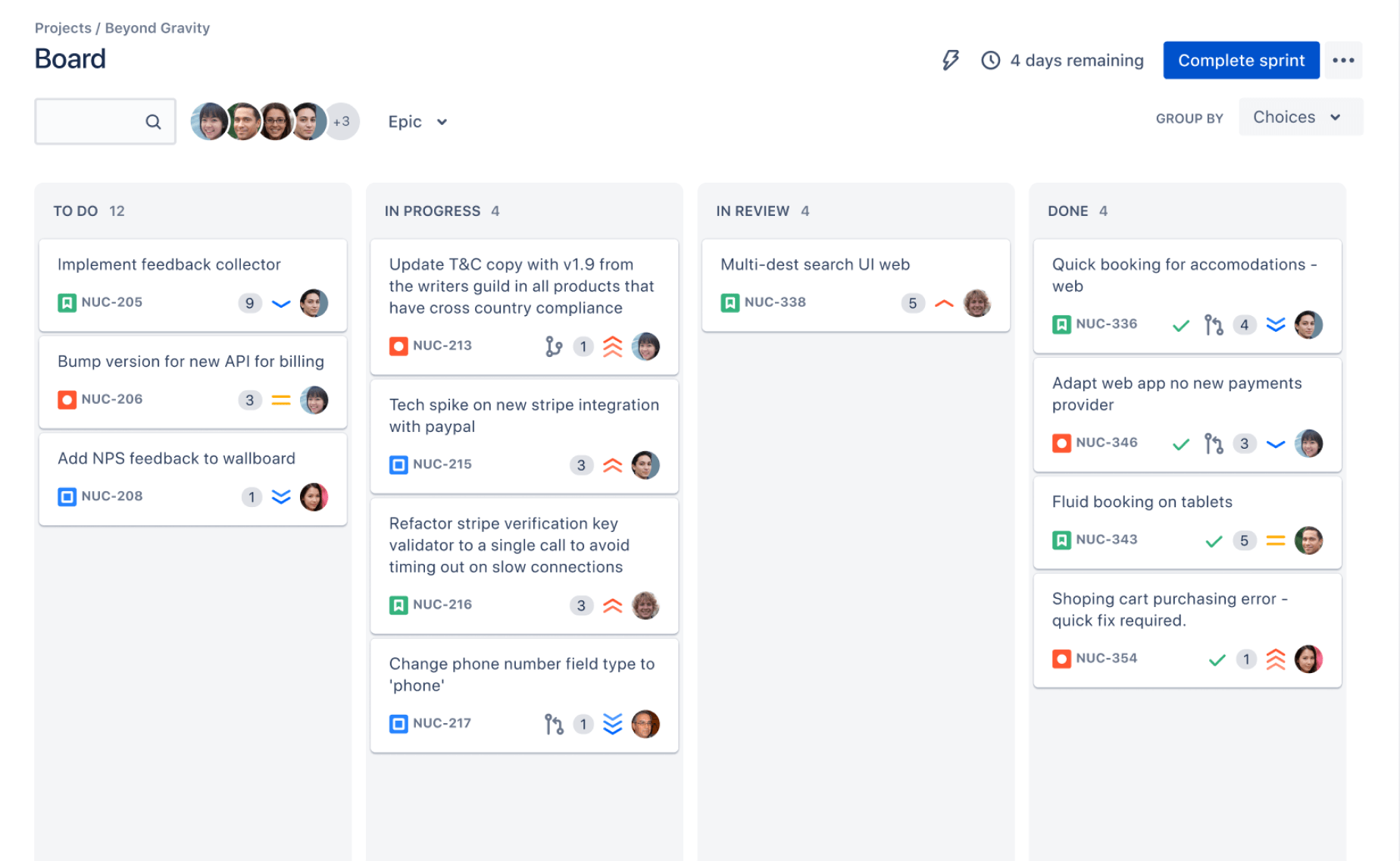
How the Workflow Works
- Capture: A customer, employee, or support agent creates a ticket through an approved channel.
- Classify: The team identifies the request type, affected service, urgency, and business impact.
- Assign: Jira routes the ticket to an appropriate queue, team, or specialist.
- Investigate: An agent reviews the request, asks follow-up questions, and records progress.
- Resolve: The agent provides a fix, explanation, replacement, or workaround.
- Close: The ticket closes after confirmation, a defined waiting period, or an approved closure rule.
- Review: Managers examine trends, response times, backlog size, and recurring problems.
Core Elements of a Support Setup
Jira support workflows usually combine several elements. Issue types distinguish incidents, service requests, questions, access requests, and defects.
Statuses show progress, such as Open, In Progress, Waiting for Customer, Resolved, and Closed. Fields capture practical details, including product area, impact, urgency, customer tier, and escalation reason.
Queues help agents focus on work that needs action. Reports help managers spot patterns, such as a rise in login problems after a product release.
How to Build a Jira Support Workflow
You can create a useful ticketing process without making it complicated. Start with the customer journey, then add only the controls your team needs to handle requests consistently.
1. Define the Requests You Handle
List the main categories your support team receives. For example, a software company may handle login issues, billing questions, feature requests, bug reports, and account changes.
Keep the first version manageable. Five clear request categories are easier to maintain than twenty labels that agents interpret differently.
For each category, decide what information is essential. A billing request may need an account number, while a technical incident may need the affected product area and error message.
2. Create Ticket Types and Required Fields
Use ticket types that match real support work. A practical starting point includes Incident, Service Request, Question, Problem, and Feature Request.
Required fields can improve routing, though too many mandatory questions may discourage complete submissions. Ask for information that changes the next action.
- Request category
- Impact level
- Urgency
- Customer or team affected
- Product area
- Environment or version
- Preferred contact method
For example, an outage ticket may require the affected region and start time. A general product question may need only the product area and a clear description.
3. Design Clear Statuses
Status names should tell agents what happens next. A long list of vague stages creates hesitation and inconsistent reporting.
A support workflow might use New, Triage, In Progress, Waiting for Customer, Waiting for Engineering, Resolved, and Closed.
Each status needs an owner and exit condition. “Waiting for Customer” should mean the team has asked a specific question. “Resolved” should mean a solution has been provided and closure rules can begin.
4. Set Priority Rules
Priority should reflect business impact and urgency. A single “High” label means little when every ticket receives it.
Create practical examples for each level. A complete service outage affecting many customers could be Critical. One customer unable to complete a key task might be High. A cosmetic issue with a workaround could be Low.
Write these rules where agents can see them. Two agents should reach a similar priority decision when they review the same situation.
5. Build Queues for Daily Work
Queues turn a large ticket list into focused work areas. Useful queues may include Unassigned, Critical Issues, Waiting for Customer, Aging Tickets, and Tickets Near Service Target.
Try a simple morning routine. An agent checks urgent work first, reviews tickets without owners, follows up on waiting requests, and then handles the remaining queue.
For example, a queue showing tickets without an update for 48 hours can prevent silent delays that customers notice before managers do.
6. Add Automation Carefully
Automation can assign tickets, send reminders, update fields, and escalate aging requests. It works best when the rule has a clear purpose and an easy-to-understand outcome.
You might route billing requests to the finance support group or notify a team lead when a Critical ticket remains untouched for 30 minutes.
Test each rule with realistic cases. A poorly designed rule can create duplicate alerts, wrong assignments, or status changes that hide unfinished work.
7. Connect Related Work
Support often depends on engineering, product, security, or finance. Link related tickets so agents can explain progress without copying every detail into multiple places.
For example, several customer reports may connect to one engineering defect. Agents can then provide consistent updates while the technical team investigates the underlying problem.
8. Review and Improve the Workflow
Set a regular review cycle. Examine where tickets wait, which fields agents skip, and which request categories create repeated escalations.
If most tickets remain in Triage for two days, the issue may be unclear ownership or insufficient routing information. Adjust the process instead of simply telling agents to work faster.
Why Support Teams Use Jira for Ticket Management
A Jira ticketing system gives support teams a repeatable way to manage work. Every request can move through the same visible process, even when several teams contribute to the resolution.
That consistency matters when the team grows. A new agent can learn the queue structure, status meanings, escalation rules, and required fields without relying entirely on informal coaching.
Better Visibility Across Teams
Support agents can see ownership, progress, linked engineering work, and recent communication in one place. This reduces the need to ask several colleagues for updates.
Imagine a customer asking whether a payment issue will be fixed today. The agent can check the linked technical task, review its current status, and provide a specific response.
More Consistent Prioritization
Shared priority rules reduce personal judgment differences. A serious incident receives attention because it meets defined impact criteria, rather than because one agent happens to notice it first.
This approach also helps managers balance customer impact, technical risk, and available capacity during busy periods.
Stronger Trend Analysis
Reports can reveal recurring request categories, rising backlog, long waiting periods, and workload differences across teams.
For example, a monthly review may show that password-related requests consume a large portion of support time. The team could then improve self-service guidance or simplify account recovery.
Jira Support Metrics Worth Tracking
Metrics help you understand whether the workflow supports customers effectively. Choose measures that lead to useful action rather than collecting numbers without a decision attached.
| Metric |
What It Shows |
Useful Follow-Up |
| First response time |
How quickly an agent acknowledges a request |
Review staffing, queues, and urgent-ticket alerts |
| Resolution time |
How long tickets take to reach a solution |
Find approval delays, handoff problems, or complex categories |
| First-contact resolution |
How often an issue ends after the first meaningful response |
Improve agent access to answers and troubleshooting steps |
| Reopen rate |
How often resolved tickets return |
Check solution quality and closure communication |
| Backlog age |
How long open tickets remain unresolved |
Create an aging-ticket review and escalation path |
| Customer satisfaction |
How customers rate the support experience |
Compare ratings with response and resolution patterns |
Here's why: one metric rarely explains a support problem. A fast response with a slow resolution may show that agents acknowledge tickets quickly but lack access to the right specialists.
Use metrics together. If resolution time rises while reassignment also rises, unclear ownership may be the real issue.
Common Jira Ticketing Mistakes
Overcomplicating the Workflow
Too many statuses make tickets difficult to understand. Agents spend time deciding where an issue belongs instead of moving it forward.
Start with the smallest workflow that reflects actual work. Add a new stage only when it improves ownership, reporting, or customer communication.
Making Every Field Mandatory
Large forms can slow urgent requests and encourage vague placeholder answers. Required fields should support routing or resolution.
Keep optional fields available for deeper investigation. An agent can add technical details after triage rather than blocking the initial submission.
Using Priority Without Definitions
Priority labels lose value when each person interprets them differently. “Urgent” should describe a clear business condition.
Write examples beside the priority choices. Include customer impact, affected scope, and acceptable response expectations.
Closing Tickets Too Quickly
Premature closure creates reopened tickets and weakens customer confidence. Give the requester a useful resolution summary and explain any next steps.
For inactive requests, define a reminder schedule and closure rule. A clear process is fairer than closing tickets randomly.
Ignoring Repeated Causes
Agents may resolve the same symptom many times while the underlying problem continues. Review recurring categories and connect related requests to a problem investigation.
For example, repeated access failures may point to an identity configuration issue. Solving that cause can remove dozens of future tickets.
Jira Ticketing System Solution: ONES.com
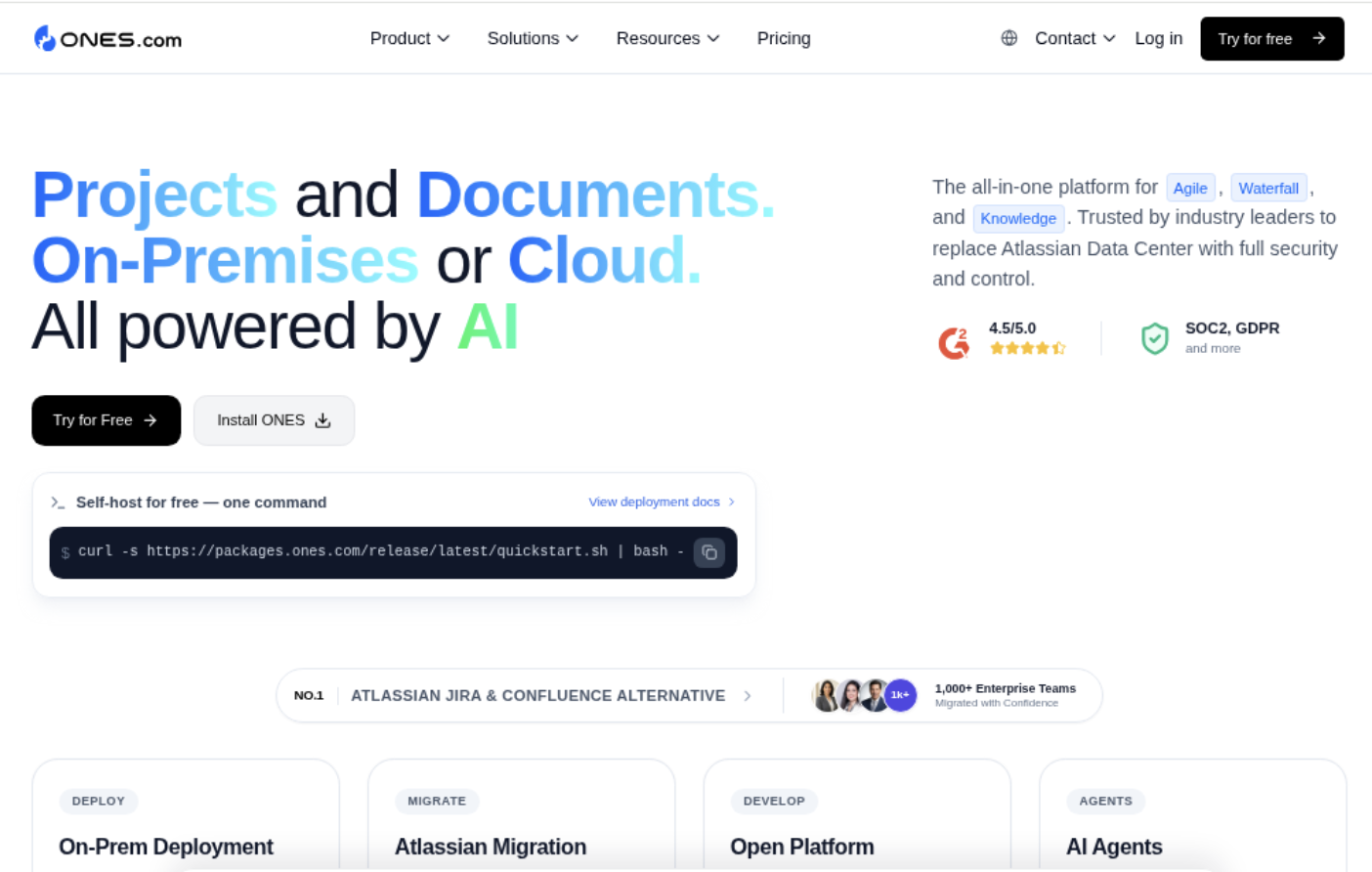
Value Proposition
ONES.com combines project management and knowledge management in one platform, powered by ONES Assistant. ONES Project is a Jira alternative for project and support workflows, while ONES Wiki provides knowledge management separately.
You can deploy ONES.com in the Cloud, On-Premise, Private Cloud, or an air-gapped environment. The platform offers a free plan for up to 30 seats and maintains feature parity between cloud and self-hosted versions.
Core Capabilities
1. Support Requests Need a Consistent Workflow
ONES capability: ONES Project supports custom workflows, statuses, fields, and issue types.
Result: You can model intake, triage, investigation, escalation, resolution, and closure around your team’s actual support process.
2. Teams Need Familiar Project Practices
ONES capability: Jira-compatible workflows and sprint management help teams use familiar planning patterns.
Result: Support and engineering can coordinate work with less process disruption when a ticket requires technical follow-up.
3. Managers Need Reliable Operational Visibility
ONES capability: Built-in reporting provides views into workload, progress, aging work, and team performance.
Result: Managers can identify delays and recurring workload patterns without assembling separate reports manually.
4. Repetitive Routing Consumes Agent Time
ONES capability: Automation can support assignments, notifications, transitions, and escalation rules.
Result: Routine actions happen consistently, giving agents more time for investigation and customer communication.
5. Plugin Dependence Can Increase Maintenance
ONES capability: ONES.com provides native project and knowledge management capabilities within its platform.
Result: Teams can reduce reliance on multiple add-ons while keeping related work connected.
6. Restricted Environments Need Deployment Flexibility
ONES capability: ONES.com supports On-Premise, Private Cloud, and air-gapped deployment options.
Result: Organizations with strict network or security requirements can operate support workflows within approved infrastructure.
7. Support Answers Need a Shared Knowledge Space
ONES capability: ONES Wiki provides a knowledge base for procedures, troubleshooting guidance, and internal support references.
Result: Agents can find consistent answers and improve self-service content as recurring questions emerge.
8. Teams Want AI Assistance With Clear Adoption Paths
ONES capability: ONES Assistant adds AI support to the broader ONES.com environment.
Result: Teams can explore AI-assisted work gradually while keeping project and knowledge workflows connected.
Application Scenarios
Software support team: A support group can create request types for incidents, product questions, and defects. Agents route technical issues to engineering, connect related work, and use reporting to track aging requests.
Internal IT team: An IT department can manage access requests, equipment needs, and service interruptions through structured workflows. Air-gapped or self-hosted deployment can support restricted environments.
Growing product organization: Product, engineering, and support teams can use compatible workflows to connect customer feedback with sprint planning. ONES Wiki can hold troubleshooting guidance while ONES Project manages active work.
Common Challenges and Practical Solutions
Challenge: Tickets Arrive With Missing Details
Solution: Use a short intake form with category-specific questions. Ask for the affected service, impact, reproduction steps, and contact details when those details change triage.
Challenge: Agents Keep Reassigning Work
Solution: Clarify ownership rules and create routing queues. Review reassignment reasons weekly to identify unclear categories or missing specialist coverage.
Challenge: Customers Ask for Updates Repeatedly
Solution: Set update expectations for active and waiting tickets. Add reminders when a ticket has remained unchanged for a defined period.
Challenge: Reports Show Numbers Without Answers
Solution: Connect every metric to a management question. For example, use backlog age to decide which work needs escalation, rather than treating the metric as a score alone.
Challenge: Support and Engineering Lose Context
Solution: Link related tickets and define the information engineering needs for investigation. Use a shared knowledge space for stable troubleshooting guidance.
FAQs
Can Jira work as a customer support ticketing system?
Yes. Jira can support customer service workflows when you configure suitable issue types, fields, queues, permissions, automation, and reports. It works especially well when support tickets often require engineering or product involvement. You should design the workflow around support needs rather than copying a software development process without changes.
What should every support ticket include?
At minimum, include the requester, request category, description, priority, owner, status, and recent activity. Technical issues may also need product area, environment, version, reproduction steps, and error details. Keep the initial form short enough for urgent requests, then collect deeper details during triage.
How many statuses should a support workflow have?
There is no universal number, though a short workflow is easier to maintain. Many teams can begin with New, Triage, In Progress, Waiting, Resolved, and Closed. Add another status only when it clarifies ownership or creates a useful management view. Each status should have a clear meaning and exit condition.
Should support tickets use sprints?
Sprints can help when support and engineering coordinate planned fixes, maintenance, or recurring improvement work. They may be less suitable for urgent incoming requests that need immediate handling. You can keep real-time support queues separate while placing planned technical fixes into an engineering sprint.
When should a support ticket become a problem investigation?
Escalate when the same issue affects multiple requests, returns after resolution, creates significant business impact, or lacks a clear cause. The original support ticket can remain linked to the broader investigation. This preserves customer context while allowing technical teams to address the underlying condition.
Is ONES.com suitable for teams that need a Jira alternative?
ONES.com can suit teams seeking Jira-compatible project workflows with built-in reporting, custom fields, automation, sprint management, and flexible deployment. ONES Project handles project and work management, while ONES Wiki supports knowledge management. You can evaluate the platform against your support workflow, security requirements, integrations, and team size.
Conclusion
A strong Jira ticketing system gives your support team a clear path from request intake to resolution. The essential pieces are simple: useful categories, practical fields, visible ownership, defined priorities, focused queues, careful automation, and meaningful reporting.
Start with the support problems customers experience most often. Then build a workflow that helps agents act quickly, keeps other teams informed, and makes recurring causes easier to see.
The best part? You do not need a complicated process to create control. A well-designed ticket flow can reduce missed requests, improve response quality, and give managers a reliable view of support performance.
For teams comparing Jira alternatives, ONES.com adds project management, knowledge management, AI assistance, native reporting, and flexible deployment options. The right choice is the platform that fits your operating environment and helps people resolve issues with less friction.