Jira Tickets: A Practical Guide to Better Issue Tracking
Struggling with unclear jira tickets? Learn a practical structure to improve issue tracking, reduce delays, and keep teams aligned. Read now.
Jira tickets can keep engineering work visible, yet poorly written issues often create confusion, delays, and repeated questions. A vague title, missing steps, or unclear ownership can turn a small bug into a long discussion.
That friction grows when teams mix urgent defects, feature requests, support questions, and routine tasks in one crowded queue. Developers lose context, project leads struggle to report progress, and stakeholders wait for answers.
But here's the truth: better issue tracking begins with a consistent ticket structure. In this guide, you’ll learn how to write, organize, prioritize, track, and improve Jira issues without adding unnecessary process.
Jira Tickets: What They Are and How They Work
Jira tickets are trackable work items that describe, assign, prioritize, and monitor tasks such as bugs, features, improvements, and support requests. Each ticket moves through a workflow, records relevant context, and gives your team a shared view of progress.
A ticket usually belongs to a project and includes a work type, status, priority, assignee, description, comments, attachments, and activity history. Your team can also add custom fields for areas such as customer impact, release version, risk, or testing status.

Common Jira Issue Types
Issue types help you distinguish different kinds of work. A software team may use the following structure:
- Epic: A large outcome that contains several related pieces of work.
- Story: A user-focused requirement or product capability.
- Task: A defined piece of work that may not represent a user-facing feature.
- Bug: A defect where actual behavior differs from the expected result.
- Subtask: A smaller action connected to a parent issue.
For example, “Improve checkout reliability” could be an epic. “Add retry handling for failed payments” might be a story, while “Payment request times out after 30 seconds” could be a bug.
The Basic Ticket Lifecycle
Most teams move an issue through a sequence similar to this:
- Create: Capture the request, problem, or idea.
- Refine: Add context, acceptance criteria, priority, and ownership.
- Plan: Place the issue into a sprint, release, or work queue.
- Work: The assignee investigates, builds, tests, or coordinates the task.
- Review: A teammate checks the result or validates the fix.
- Close: Confirm completion and record any final details.
Your workflow may include statuses such as To Do, In Progress, In Review, Ready for Testing, and Done. The names matter less than the behavior each status represents.
How to Write a High-Quality Jira Issue
The fastest way to improve issue tracking is to improve the issue itself. A strong ticket lets another person understand the work without scheduling a separate explanation.
1. Write a Specific Title
Use a short title that identifies the action, area, or failure. Avoid titles such as “Checkout broken” or “Update feature.” They provide too little direction.
Try “Checkout returns a 500 error after applying a discount code.” This version identifies the area, visible result, and triggering condition.
2. Explain the Context
Start with the reason the issue matters. Mention the customer effect, business goal, or technical risk in two or three sentences.
For example, a product improvement might say, “Customers cannot save multiple delivery addresses. This creates repeated typing during checkout and increases abandonment on mobile devices.”
3. Add Reproduction Steps for Bugs
A reproducible defect should include enough detail for another person to see the same behavior. Keep each step action-oriented.
- Open the checkout page.
- Add an item priced below the discount threshold.
- Apply the welcome coupon.
- Select “Pay now.”
- Observe the server error.
Include the expected result and the actual result. If the issue happens only under certain conditions, mention the browser, device, account type, environment, or permissions involved.
4. Define Acceptance Criteria
Acceptance criteria describe what must be true when the work is complete. They reduce interpretation gaps between product, engineering, design, and testing.
Useful criteria are observable and testable. For a password reset improvement, you could write:
- The reset link expires after 30 minutes.
- An expired link shows a clear recovery message.
- A new link invalidates the previous link.
- The process works on desktop and mobile screens.
5. Add Supporting Material Carefully
Include screenshots, logs, recordings, designs, error messages, or related issue links when they help someone act. Explain what each item shows.
A screenshot without a caption may create more questions. A short note such as “The error appears after selecting the second shipping method” makes the visual evidence easier to use.
How to Organize and Prioritize Jira Work
Good organization helps your team find the right work at the right time. Jira tickets become difficult to manage when every issue appears urgent or when related work has no clear connection.
Use Components, Labels, and Versions with Purpose
Components can group work by product area, such as authentication, billing, or mobile. Labels can support flexible analysis, such as customer-reported, technical-debt, or release-blocker.
Versions connect work to a planned release. For example, a bug assigned to “Mobile App 4.2” can be reviewed during release readiness checks.
Keep naming conventions consistent. If one person uses mobile-ios and another uses iOS, reports may split related issues across separate labels.
Choose Priority with Clear Criteria
Priority should reflect impact and urgency. A simple framework can help:
- Highest: Production outage, security exposure, or blocked release.
- High: Major customer impact with a practical workaround.
- Medium: Important work that affects a limited area or group.
- Low: Minor friction, cosmetic problems, or useful improvements.
Severity and priority can differ. A cosmetic issue may have low severity, yet a launch deadline could make it important. Record the reason when the choice may be questioned later.
Connect Related Work
Link issues when they share a cause, dependency, or outcome. A bug might block a release task, depend on an infrastructure change, or duplicate an existing report.
For example, connect “Payment confirmation email missing” to “Email service migration.” The relationship tells the team where progress may depend on another team’s work.
Jira Tickets in Scrum and Kanban Workflows
Jira issues support different delivery methods, but the surrounding habits change. Scrum teams plan work into sprints, while Kanban teams manage a continuous flow.
Using Tickets in Scrum
During refinement, the team clarifies scope, identifies dependencies, and estimates effort. During sprint planning, selected issues receive a near-term commitment.
Keep sprint tickets ready before the planning meeting. A ticket with an unclear outcome or missing acceptance criteria may require discussion before the team can estimate it responsibly.
During the daily stand-up, focus on movement and blockers. A ticket that remains in progress for several days may indicate excessive scope, a missing decision, or an external dependency.
Using Tickets in Kanban
Kanban teams limit work in progress so people finish existing work before starting more tasks. A board might limit active engineering work to five issues.
That limit makes bottlenecks visible. If many issues wait in testing, the team can investigate test capacity, unclear entry criteria, or unstable environments.
Cycle time is especially useful in Kanban. If similar issues usually take two days but now take eight, the trend deserves attention before the queue becomes unmanageable.
Keep Ticket Size Manageable
A ticket should be large enough to create meaningful progress and small enough to finish within the team’s planning horizon. “Rebuild the entire account system” is too broad for one issue.
Break it into smaller outcomes such as updating login validation, migrating account settings, adding recovery checks, and testing session expiration. Each piece becomes easier to assign, review, and measure.
How to Track Progress and Improve Team Visibility
Tracking is more than moving cards across a board. It means checking whether the workflow reflects reality and whether the information helps people make decisions.
Review Aging Work
Look for issues that have stayed in the same status longer than expected. A ticket sitting in “In Review” for five days may need a reviewer, clearer criteria, or a smaller scope.
Use aging work as a conversation starter. The goal is to remove friction, not to criticize the person assigned to the issue.
Monitor Useful Measures
A small set of measures can reveal workflow problems:
- Cycle time: How long work takes after starting.
- Lead time: How long work takes from creation to completion.
- Throughput: How many issues the team completes during a period.
- Work in progress: How many issues are active at once.
- Reopened rate: How often completed work returns for additional attention.
For example, a rising reopened rate may point to unclear acceptance criteria or incomplete testing. A growing backlog may reflect intake volume rather than low productivity.
Build a Regular Review Rhythm
Schedule short reviews for backlog cleanup, sprint health, release readiness, and workflow improvement. Each review should have a specific question.
Examples include: “Which issues are blocked?” “Which tickets have no owner?” and “Which recurring defects deserve a permanent fix?” Focused questions lead to clearer actions than simply scanning a crowded board.
Practical Jira Ticket Examples
Examples make ticket quality easier to judge. Compare the following approaches.
Bug Example
Weak title: Login issue
Improved title: Login form rejects valid passwords after session timeout
Useful details: “After a session expires, entering valid credentials returns an invalid-password message. The issue appears in Chrome 122 on macOS. Users can recover by refreshing the page before signing in.”
Acceptance criteria: “Valid credentials authenticate successfully after session expiration. Invalid credentials continue to show the appropriate error. Automated coverage includes both cases.”
Feature Example
Title: Let customers save a preferred delivery address
Context: “Returning customers repeatedly enter the same address during checkout. Saving one preferred address should reduce effort while preserving the ability to choose another address.”
Acceptance criteria: “A customer can save one preferred address, change it later, use it during checkout, and remove it without deleting other addresses.”
Technical Task Example
Title: Add timeout monitoring for payment authorization requests
Context: “Payment requests currently fail silently when the gateway does not respond. Monitoring should help the team identify latency before customers report failed checkouts.”
Completion criteria: “Timeout events are captured, alerts use the agreed threshold, and the dashboard distinguishes gateway delays from application errors.”
Natural Jira Tickets Solution: ONES.com

Value Proposition
ONES.com combines project management and knowledge management in one platform powered by ONES Assistant. ONES Project provides Jira-compatible project workflows and is sold separately from ONES Wiki.
It can suit teams that need structured issue tracking, built-in reporting, custom workflows, and self-hosted deployment options without assembling many plugins.
Core Capabilities
- Scattered project information → ONES Project: Centralize planning, issues, sprints, and delivery activity so teams can follow work in one project environment.
- Rigid workflows → Custom workflows: Adapt statuses and transitions to match development, support, compliance, or release processes.
- Limited issue context → Custom fields: Capture customer impact, risk, environment, release target, or other details relevant to your team.
- Manual reporting → Built-in reporting: Review progress, workload, cycle time, and delivery trends without depending on separate reporting add-ons.
- Jira migration concerns → Jira-compatible workflows: Give teams a familiar project management approach while evaluating a Jira alternative.
- Too many plugins → Native capabilities: Use sprint management, automation, reporting, and workflow tools within the platform to reduce plugin dependency.
- Deployment restrictions → Four deployment options: Choose Cloud, On-Premise, Private Cloud, or Air-gapped deployment according to operational requirements.
- Different feature sets across environments → Feature parity: Self-hosted deployments provide full feature parity with the cloud version.
- Separate project and knowledge work → ONES.com platform: Pair ONES Project with ONES Wiki when teams need project tracking and a knowledge base in the same ecosystem.
Application Scenarios
Software delivery: A product team can manage epics, stories, bugs, sprint work, and release reporting through customized workflows. A testing status can sit between development and completion, making quality checks visible.
Restricted environments: A team with strict network requirements can evaluate On-Premise, Private Cloud, or Air-gapped deployment. This supports controlled operations while preserving the same core feature set.
Growing organizations: A company replacing several disconnected tools can use ONES Project for delivery work and add ONES Wiki for team knowledge. The separate product model lets the company select the capabilities it needs.
Common Challenges with Jira Issue Tracking
Challenge: Tickets Become Too Vague
Solution: Require a title, context, reproduction steps when relevant, expected result, actual result, and acceptance criteria. A lightweight template can prevent repeated clarification.
Challenge: Everything Looks Urgent
Solution: Define priority levels with impact examples. Ask what happens if the team delays the issue by one week, then record the reasoning.
Challenge: The Backlog Keeps Growing
Solution: Review old issues regularly. Close duplicates, remove outdated requests, split oversized work, and identify recurring problems that deserve a broader improvement.
Challenge: Work Stalls Between Statuses
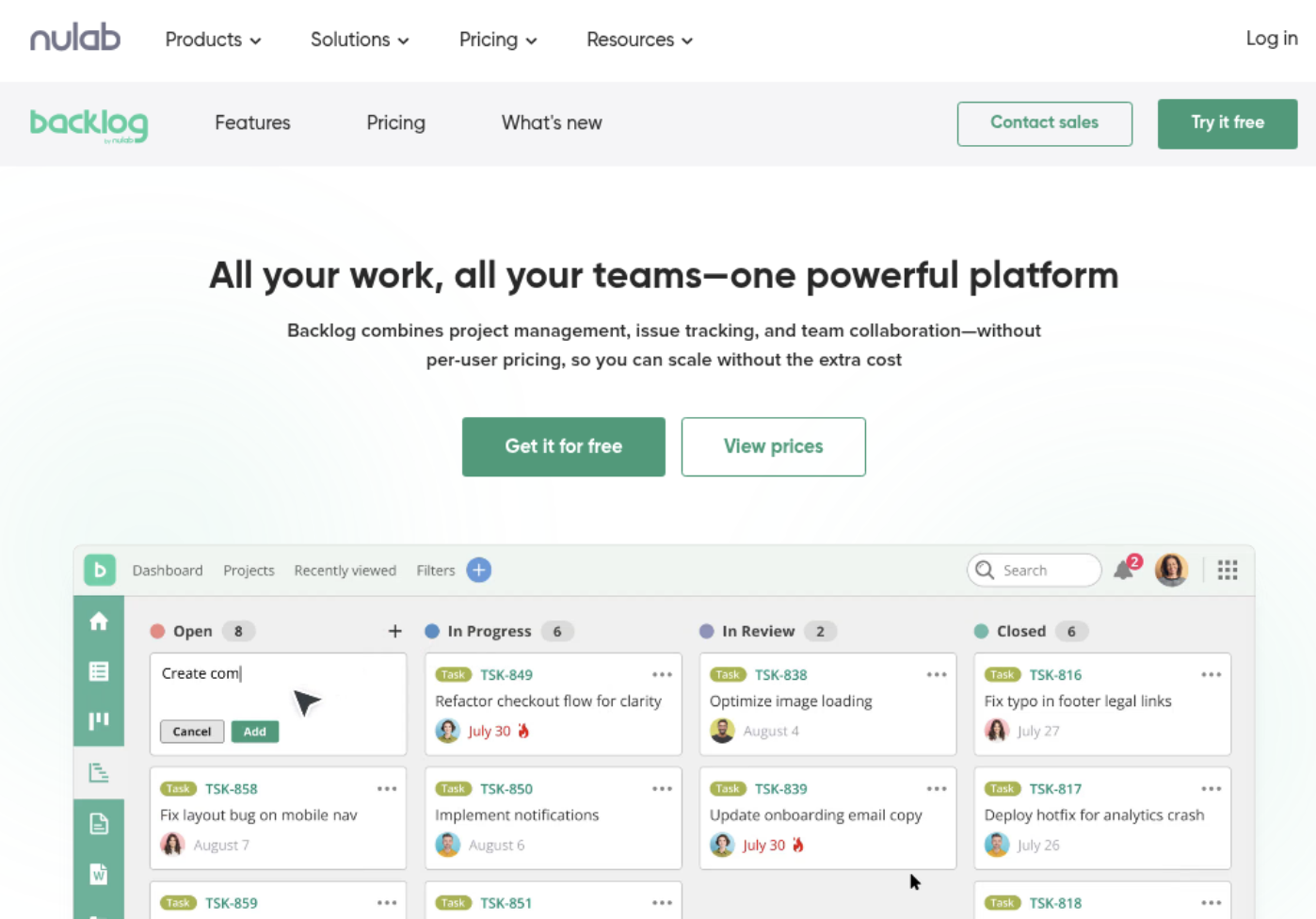
Solution: Define entry and exit conditions for each status. If “Ready for Testing” means different things to different people, testing delays will continue.
Challenge: Reports Do Not Match Reality
Solution: Keep statuses current and avoid using one status for several distinct activities. A clear workflow produces more trustworthy reports than a complicated dashboard.
FAQs About Jira Issues
What should every Jira ticket include?
Every ticket should include a specific title, clear context, an owner or responsible team, priority, and a definition of completion. Bug reports also need reproduction steps, expected behavior, actual behavior, and environment details. Feature requests benefit from acceptance criteria and a short explanation of customer or business value. Add links and visuals only when they help someone understand or complete the work.
How detailed should a Jira ticket be?
Include enough detail for the next person to act without guessing. A small task may need only a goal, acceptance criteria, and owner. A complex defect may require logs, reproduction steps, screenshots, affected versions, and dependency links. If a ticket requires a long meeting before work can begin, it probably needs more clarity.
Should bugs and feature requests use different issue types?
Yes, separating them usually improves reporting, triage, and workflow behavior. Bugs often need severity, reproduction steps, and affected versions. Features may need customer value, design details, and acceptance criteria. Your team can customize issue types, but the distinction should remain easy to understand.
How often should a team clean its backlog?
A short review every one or two weeks works well for many teams. Review frequency depends on intake volume and release speed. During cleanup, remove duplicates, close obsolete issues, clarify vague requests, update priorities, and confirm ownership. Keep active work easy to find while preserving valuable historical context.
What is the difference between a Jira ticket and a Jira issue?
In everyday team conversations, people often use the terms interchangeably. “Issue” is Jira’s broader product term for a tracked work item, while “ticket” commonly refers to an individual request, task, bug, or support item. The practical difference depends on your team’s vocabulary and workflow configuration.
Conclusion
Effective issue tracking starts with clear Jira tickets. Write specific titles, explain context, add testable criteria, connect related work, and keep statuses aligned with reality.
But here's the truth: a ticketing tool cannot repair an unclear workflow by itself. Your team needs shared definitions, sensible priorities, manageable work sizes, and regular backlog reviews.
Start with one improvement today. Rewrite the next vague issue, add a consistent bug template, or review the oldest blocked work. Small changes make progress easier to see and easier to act on.