Jira User Pricing Explained: A Clear Cost Guide for 2026
Wondering how Jira user pricing really works? Compare 2026 plans, seat tiers, billing, and add-ons to estimate costs. Click to discover!
Jira can look affordable until you calculate the plan tier, seat range, billing cycle, add-ons, and administration time together. A small team may fit comfortably within the free plan, while a growing organization can face a much higher effective cost after upgrades and extra products.
That uncertainty makes planning difficult. You might compare the advertised per-user figure, then discover that your team falls into a different pricing band or needs features reserved for a higher tier. A few optional apps can also change the monthly total.
But here's the truth: Jira user pricing becomes easier when you separate the subscription fee from seat count, product scope, billing terms, and supporting tools. This guide shows you how to estimate the real cost for 2026 and compare plans without relying on a headline number.
Jira User Pricing Explained: The Core Cost Model
Jira user pricing is the amount you pay for access to Jira based on the product, plan, number of seats, billing cycle, and selected services. Your final cost usually depends on more than a simple per-person calculation.
For a practical estimate, use this formula:
Estimated subscription cost = plan charge for your seat tier + extra products + marketplace apps + applicable taxes
Start with the number of people who need access, then identify the Jira product and plan that match their work. After that, check whether annual billing, premium features, or additional applications change the total.
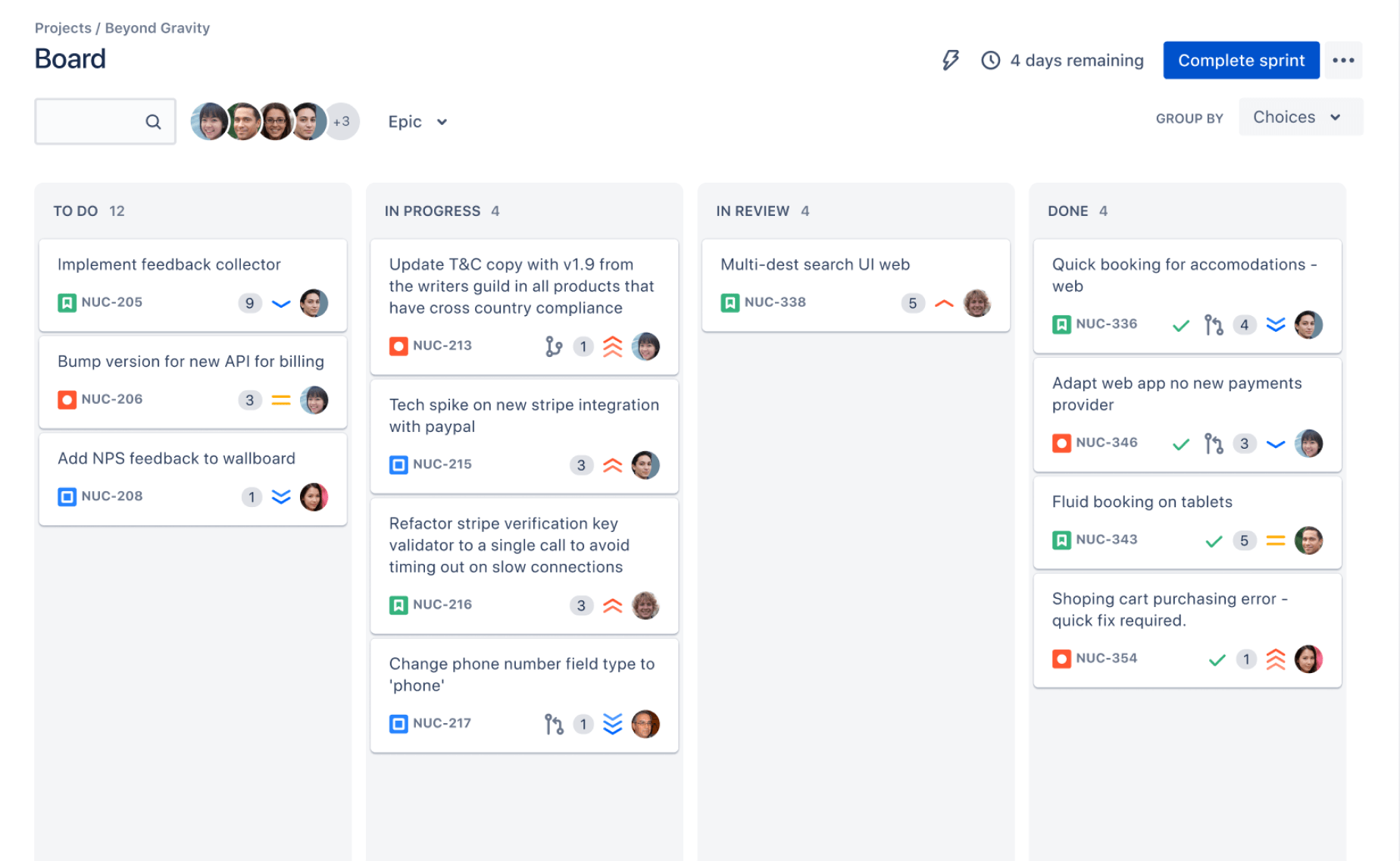
1. Count the seats you actually need
Separate people who actively work in Jira from people who only need occasional visibility. A developer, project manager, and product owner may need regular access, while an executive may only need reports.
For example, a 22-person team might include 15 active contributors, four project leads, and three occasional viewers. Your access model should reflect those differences where Jira permits them.
2. Choose the correct Jira product
Jira Software generally serves software development and agile delivery teams. Jira Work Management supports broader business projects, while Jira Service Management focuses on service desks, requests, incidents, and internal support.
These products can have separate pricing structures. Confirm which product your team needs before comparing plan amounts.
3. Select a plan tier
Jira commonly groups plans into Free, Standard, Premium, and Enterprise options. Each tier can change your available automation, administration controls, reporting, security, support, and scale.
Free may suit a small team testing Jira. Standard often fits established teams that need core project tracking. Premium can help when you need advanced reliability, planning, or administrative features. Enterprise usually targets complex organizations with broader governance requirements.
4. Apply the seat tier or per-user rate
Cloud pricing may use user bands or a calculated rate that changes as your team grows. That means the price per person can vary between a 10-person team and a 100-person team.
Use the pricing calculator or checkout estimate for your exact seat count. A general per-user figure can provide direction, while the final tier determines your real bill.
5. Add related services
Your total may rise when you add Jira Service Management, Confluence, premium support, marketplace applications, or other Atlassian services.
Keep each product separate during your estimate. Combining several subscriptions too early can hide which service creates the largest increase.
6. Compare monthly and annual billing
Monthly billing gives you flexibility when your team size changes. Annual billing may provide a lower effective rate or more predictable budgeting, depending on the current commercial terms.
Use annual billing only when you expect stable adoption. Paying for 100 seats all year can cost more than monthly billing if your team will remain at 60 active contributors.
What Changes the Amount You Pay?
The advertised rate is only one part of the decision. Your effective cost depends on how many people need access, which features they require, and how much administration the setup creates.
Seat count and pricing bands
Pricing bands can create a sudden change in cost. A team that grows from 10 to 11 people may need to move into a different commercial tier, depending on the current rules.
Before hiring or onboarding a department, model three cases: your current headcount, expected headcount, and a high-growth scenario. This gives you a clearer budget range.
Monthly versus annual commitments
Monthly billing works well for seasonal teams, pilots, contractors, and uncertain growth. Annual billing can simplify procurement and reduce recurring administrative work.
For example, a consulting team with changing project staffing may prefer monthly flexibility. A permanent engineering department with stable headcount may prefer an annual commitment.
Plan features
A lower tier can appear attractive until you need advanced controls, expanded automation, stronger governance, or more sophisticated planning. Moving up later may also require internal training and configuration work.
List the capabilities your team needs before choosing the cheapest tier. A lower subscription can become expensive if it forces manual work every week.
Marketplace applications
Teams often extend Jira with time tracking, test management, roadmaps, reporting, approvals, or portfolio planning apps. Each application can introduce another recurring charge.
Review every installed app before estimating the annual total. A handful of small subscriptions can become a meaningful portion of your project management budget.
Administration and maintenance
Subscription pricing excludes the time required to manage permissions, workflows, fields, dashboards, integrations, and automation rules.
If an administrator spends 10 hours each month resolving configuration issues, that effort belongs in your cost assessment. A tool with a lower license price may still require more operational attention.
How to Calculate Your 2026 Jira Budget
Use a simple three-stage calculation: establish the current requirement, model growth, and add the surrounding costs. This approach gives you a working estimate even when your final quote depends on current commercial terms.
Step 1: Build a seat forecast
Write down your current active contributors, occasional participants, contractors, and planned hires. Review this list every quarter because unused access can quietly inflate your bill.
- Core contributors who work in Jira every week
- Project leads who need planning and reporting access
- Stakeholders who need limited visibility
- Temporary contributors and contractors
- Expected hires during the next 12 months
Step 2: Match capabilities to the plan
Create a short requirement list. For example, your team may need advanced automation, structured permissions, cross-team planning, or stronger administrative controls.
Then compare that list with each available tier. Avoid paying for a higher plan because of one feature that a smaller application could provide at a lower total cost.
Step 3: Estimate the subscription
Use your expected seat tier and billing cycle to calculate the base subscription. Keep this number separate from other products and optional apps.
For illustration, assume a hypothetical plan costs $8.60 per active seat each month. Thirty seats would equal $258 per month before taxes, extra services, or add-ons. This example explains the calculation rather than predicting a live rate.
Step 4: Add supporting costs
Include marketplace apps, consulting, migration, training, administration, and integration work. Some costs occur once, while others repeat monthly.
A useful estimate has two totals: first-year cost and ongoing annual cost. Migration and training may make the first year higher, while recurring subscriptions determine your long-term budget.
Step 5: Add a growth buffer
Plan for growth without buying far more capacity than you need. A 10% to 20% planning buffer can help you model likely hiring while keeping the estimate realistic.
Review the result after three months of actual adoption. You may discover that some invited people rarely need access or that one team requires a different workflow.
Cloud, Self-Hosted, and Enterprise Cost Considerations
Cloud pricing usually emphasizes subscription convenience. Self-hosted arrangements shift more responsibility toward infrastructure, upgrades, security, backups, and internal administration.
Neither approach is automatically cheaper. A cloud subscription may cost more in licensing while reducing operational work. A self-hosted setup may provide greater control while requiring skilled technical staff.
Cloud considerations
Cloud plans typically reduce the need for you to manage servers and routine platform maintenance. You still need to review permissions, integrations, workflows, and retention policies.
Cloud costs are easier to forecast when your headcount stays stable. Rapid growth can move your team into a higher pricing tier.
Self-hosted considerations
Self-hosted deployment can suit organizations with strict infrastructure, compliance, or network requirements. Your budget should include hosting, monitoring, backups, upgrades, security reviews, and recovery testing.
For example, a company may save on some subscription expenses while adding an internal engineer for platform operations. Compare the complete operating cost rather than the license alone.
Enterprise considerations
Large organizations may need centralized governance, advanced security, multiple teams, procurement support, and formal service commitments. Enterprise pricing can depend on negotiation and organizational scope.
Prepare a clear requirement brief before discussions. Include seat forecasts, products, regulatory needs, service expectations, and expected growth.
Jira Cost Comparison: What Should You Measure?
Comparing subscription prices alone can lead you toward the wrong choice. Compare the full cost of achieving the workflow you need.
Compare effective cost per active contributor
Divide your annual platform cost by the number of people who actively complete work in it. This exposes the impact of inactive seats and unused subscriptions.
A platform costing $30,000 annually for 100 licensed people may have a much higher effective cost if only 60 people use it every week.
Compare configuration effort
Count the time needed to build workflows, maintain fields, manage permissions, and create reports. Complex configuration may produce a tailored experience, yet it also creates long-term maintenance.
Compare integration needs
List your required connections with chat, source control, identity management, testing, time tracking, and reporting systems. Each integration can bring setup effort or another subscription.
Compare migration and training
A lower annual license cost may not offset a difficult migration. Estimate data cleanup, workflow redesign, training sessions, and temporary productivity loss.
The best part? This comparison helps you evaluate value without treating the license price as the entire decision.
Common Jira Pricing Mistakes
Paying for inactive seats
Many teams invite people for a short project and never review access afterward. Schedule a quarterly access review and remove accounts that no longer need regular participation.
Choosing a plan before defining requirements
Starting with the cheapest plan can create rework when your team later needs advanced controls. Start with the workflow, then select the smallest tier that supports it.
Ignoring add-on subscriptions
One reporting app may seem inexpensive. Five separate apps can create a second software budget. Assign an owner to review marketplace subscriptions twice a year.
Underestimating administration
Someone must maintain permissions, workflow schemes, automation rules, dashboards, and integrations. Include that effort in your internal business case.
Using one estimate for every team
Development, marketing, operations, and service teams may need different products or configurations. Build separate estimates before creating a company-wide projection.
Value Proposition
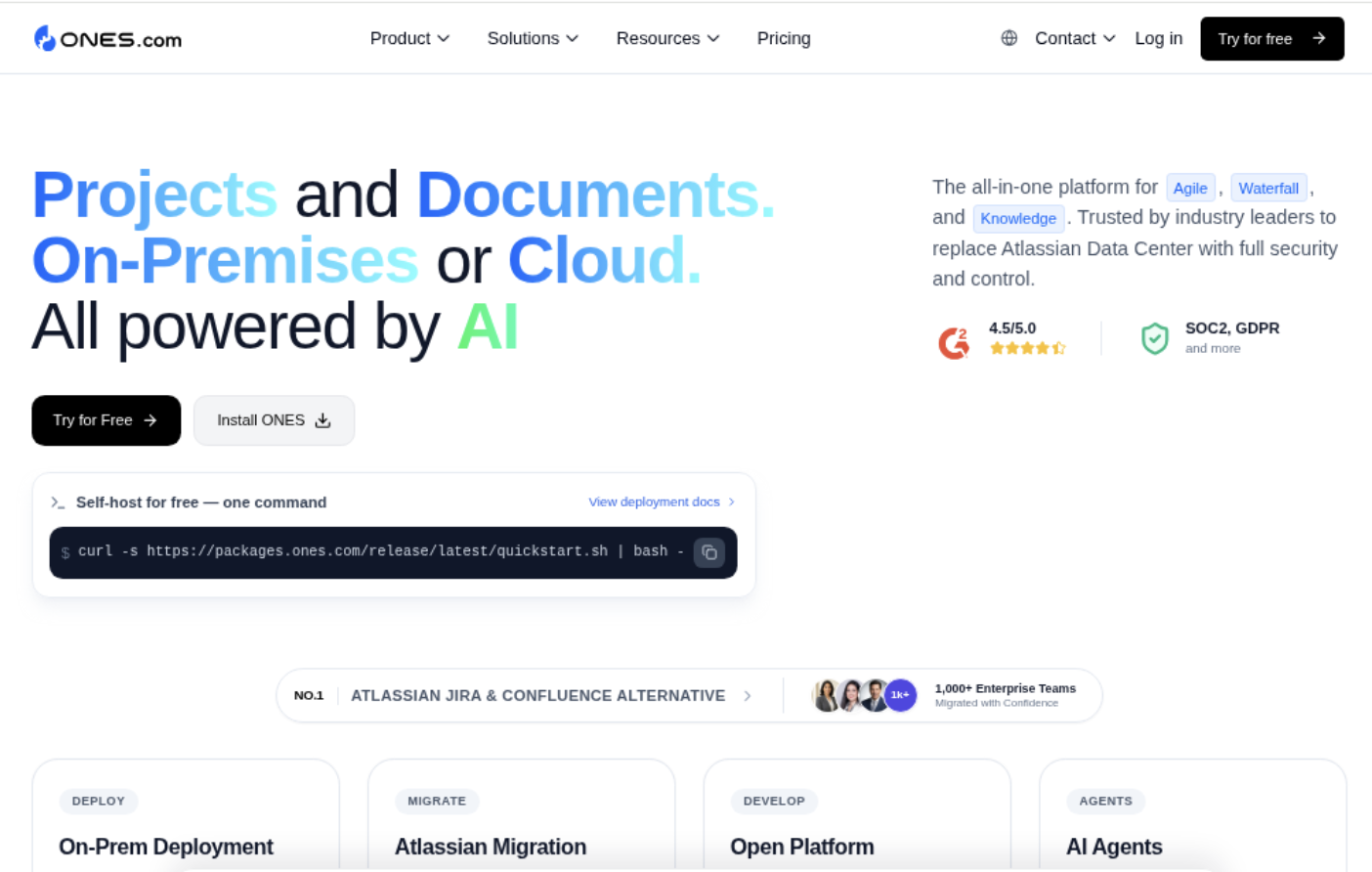
ONES.com combines project management and knowledge management in one platform powered by ONES Assistant. ONES Project provides project management as a Jira alternative, while ONES Wiki provides knowledge management as a Confluence alternative; they are sold separately.
For teams comparing long-term platform cost, ONES.com can reduce the number of plugins and separate systems required for planning, tracking, reporting, and team knowledge.
Core Capabilities
- Scattered project tracking: ONES Project centralizes planning, delivery, and status work, helping teams reduce context switching.
- Jira migration concerns: Jira-compatible workflows make it easier for teams familiar with issue-based delivery to adopt a comparable working model.
- Rigid processes: Custom workflows and custom fields let you align the platform with different departments and project types.
- Manual sprint planning: Sprint management supports structured iteration planning, task assignment, and progress review.
- Repetitive administration: Automation can handle recurring actions and reduce routine coordination work.
- Limited visibility: Built-in reporting gives teams a direct way to review progress, workload, and delivery status.
- Plugin dependence: Native capabilities can reduce the need for multiple extensions and the maintenance they create.
- Deployment restrictions: ONES.com supports Cloud, On-Premise, Private Cloud, and Air-gapped deployments.
- Uneven feature availability: The cloud and self-hosted versions provide full feature parity, allowing you to choose deployment based on operational needs.
Application Scenarios
A 25-person software team can use ONES Project for backlogs, sprints, workflows, custom fields, automation, and reporting. Its free plan supports up to 30 seats, giving a small team room to evaluate the core experience.
An organization with restricted network requirements can select an On-Premise, Private Cloud, or Air-gapped deployment. That option can support internal control requirements without giving up the same feature set available in the cloud version.
A company managing both delivery work and team knowledge can use ONES Project and ONES Wiki as separate products. Project teams can track execution while knowledge teams maintain an organized internal knowledge base.
Common Challenges and Practical Solutions
Challenge: Your headcount changes frequently
Solution: Forecast average and peak seat counts separately. Use monthly billing when staffing changes are temporary, then review whether annual billing fits once the team stabilizes.
Challenge: Several products appear on one invoice
Solution: Assign each subscription to a team and business purpose. Review product-level usage before renewing the full collection.
Challenge: The cheapest plan lacks a critical capability
Solution: Compare the cost of upgrading against the cost of an add-on, manual work, or a different platform. Include administration time in the comparison.
Challenge: You cannot measure real adoption
Solution: Review activity, completed work, reporting usage, and access patterns. Remove unnecessary seats and redesign workflows that teams avoid.
Challenge: Migration costs are unclear
Solution: Run a small pilot with one team. Measure setup time, training needs, workflow changes, and productivity impact before committing to a broader rollout.
FAQs About Jira User Pricing
Does Jira charge the same amount for every person?
Usually, the effective amount depends on the plan, seat tier, billing cycle, and product. Some plans use pricing bands, so the per-person rate can change as your team grows. Check the estimate for your actual seat count rather than multiplying a general promotional figure. Also review whether occasional collaborators need full access or can receive information through another approved method.
Is Jira Free enough for a small team?
Jira Free can suit a small team with basic project tracking needs and limited administration requirements. You should check the current seat limit, feature restrictions, storage terms, support options, and automation allowances before relying on it. If your team needs advanced governance, broader reporting, or more sophisticated controls, a paid tier may provide a better fit as adoption grows.
Should I choose monthly or annual billing?
Monthly billing offers flexibility when your headcount changes, projects are temporary, or you are still evaluating Jira. Annual billing may simplify budgeting when your team size and requirements remain stable. Compare the total commitment, expected hiring, cancellation terms, and likelihood of unused seats. A lower effective annual rate does not help if you pay for capacity your team does not need.
Do marketplace apps affect the Jira subscription price?
Marketplace apps generally create additional charges separate from the main Jira subscription. Common examples include time tracking, testing, reporting, portfolio planning, and specialized workflow tools. List every recurring app before finalizing your budget. Also include setup, support, renewal, and administration effort because the license charge is only one part of the extension cost.
How can I estimate Jira cost for a growing company?
Build three scenarios: current seats, expected seats in 12 months, and a high-growth case. For each scenario, select the required plan, add related products, estimate marketplace apps, and include administration effort. Then compare monthly and annual billing. Review the forecast quarterly because hiring, project scope, and feature requirements can change faster than your renewal cycle.
Conclusion
Jira user pricing becomes clearer when you calculate the whole operating picture. Start with active seats, identify the right Jira product, match capabilities to the plan, and separate recurring subscriptions from one-time implementation costs.
Remember the common pressure points: pricing tiers, annual commitments, add-ons, integrations, administration, and growth. A realistic forecast helps you avoid paying for unused access or selecting a plan that creates expensive workarounds.
But here's the solution: compare the cost of achieving your workflow, not just the number shown beside one seat. If Jira’s total setup becomes difficult to manage, evaluate an alternative such as ONES.com alongside your requirements, deployment needs, and expected team growth.