Jira Work Pricing Explained: A Clear Guide for Teams (2026)
Confused by jira work pricing? Compare plans, users, billing, and add-ons to budget smarter. Click to discover the right fit for your team.
Jira Work pricing can feel confusing when you compare plans, user counts, billing cycles, and add-ons at the same time. A team may see a low monthly figure, then discover that annual billing, guest access, automation needs, or advanced permissions change the final cost.
That uncertainty creates practical problems. You may underbudget a rollout, choose a plan that lacks essential controls, or pay for capacity your team never uses. Growing teams can also face unexpected increases when contractors, stakeholders, and occasional contributors need access.
But here's the truth: you can estimate Jira Work costs clearly by separating plan features, user pricing, billing terms, and additional expenses. This guide explains how the pricing model works, what each plan is designed for, and how to build a realistic 2026 budget.
Jira Work Pricing: The Short Answer
Jira Work pricing is generally determined by your selected plan, the number of users, your billing cycle, and any additional products or capacity your team needs. Jira Work Management has increasingly been presented as part of Jira, so current pricing pages may use the broader Jira name.
For most teams, the main choices are Free, Standard, Premium, and Enterprise. Free supports small teams with basic planning. Standard adds broader collaboration and administration. Premium introduces advanced scale, planning, and reliability features. Enterprise is designed for organizations managing several teams, sites, or complex governance requirements.
Exact prices can change by region, currency, promotion, product packaging, and billing method. Use the current pricing calculator before committing to a budget. The framework below helps you understand what to calculate and which questions to ask.
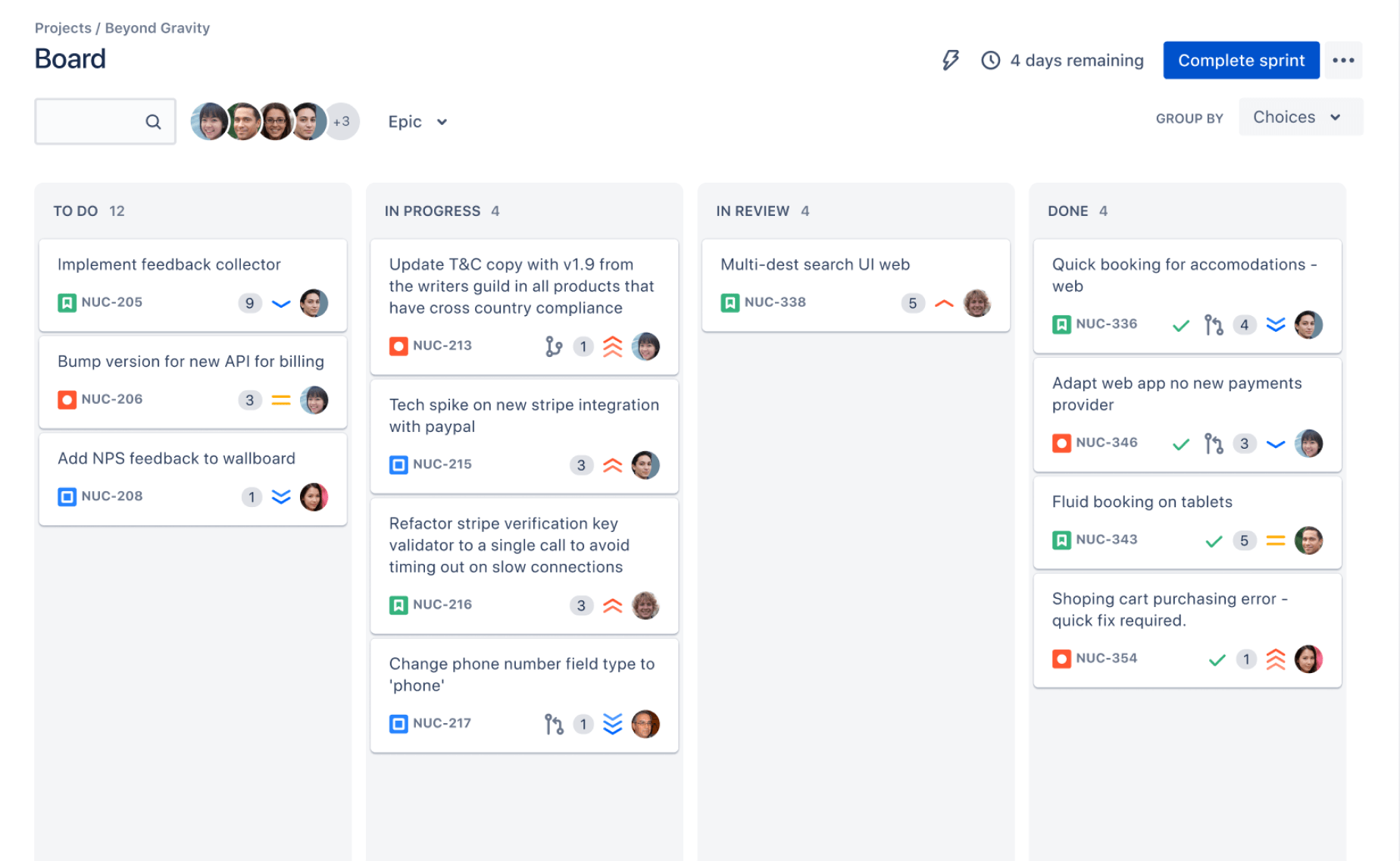
What determines the final bill?
- Plan level: Higher tiers provide more controls, capacity, administration, and operational features.
- User count: Costs usually rise as more people receive licensed access.
- Billing cycle: Monthly billing offers flexibility, while annual billing may use different commitment terms or discounts.
- Product scope: Jira may be combined with other Atlassian products, such as Confluence or service management tools.
- Usage requirements: Automation, storage, reporting, integrations, and advanced administration can affect your decision.
- Support and governance: Large organizations may need enterprise controls beyond the core project features.
Jira Plan Tiers Explained
Choosing the right tier begins with your operating model. A five-person marketing team has different needs from a 250-person software organization with several departments.
Free plan
The Free plan is intended for small teams testing Jira or managing straightforward work. It can cover simple task tracking, basic boards, project collaboration, and lightweight planning.
For example, a six-person product team could use the free tier to manage a launch checklist, assign owners, and track progress. The plan may become restrictive when the team needs more storage, advanced permissions, extensive automation, or larger-scale administration.
Free plans often include user or feature limits. Check the current allowance carefully because limits can apply to team size, storage, support, automation, or other capabilities.
Standard plan
Standard is usually the practical starting point for established teams. It provides more room for collaboration, administration, and daily project management.
A 25-person operations team might choose Standard when it needs multiple projects, broader access controls, more automation, and a more dependable administration experience.
Ask whether Standard covers your expected team size for the next 12 months. Moving up later is usually easier than redesigning a workflow after outgrowing a lower tier.
Premium plan
Premium is aimed at teams with more demanding planning, reliability, reporting, and operational requirements. It may suit organizations coordinating several projects or departments.
Imagine a product organization running quarterly planning, software delivery, compliance work, and customer launches. Premium can become attractive when cross-team visibility and advanced planning matter more than the lowest subscription price.
Premium pricing can be substantially higher than Standard. Compare the features your team will use every week, rather than selecting it because it offers the longest feature list.
Enterprise plan
Enterprise is generally intended for larger organizations with complex administration, governance, security, and purchasing requirements.
An enterprise buyer may care about centralized controls, multiple teams, legal terms, security reviews, advanced support, and predictable procurement. The price may depend on organizational scope and commercial terms rather than a simple public calculator.
If you are evaluating Enterprise, create a requirements brief first. Include user populations, access policies, compliance obligations, integrations, and expected growth.
How User Counts Affect the Cost
Jira pricing typically follows the number of licensed users rather than the number of active projects. That distinction matters because one person may participate in ten projects while another only views a single board.
Suppose a team has 18 employees, four contractors, and six executives who need regular access. Your planning number may be 28 users, even if only 18 people create tasks every day.
Count every access group
Start with a role-based count:
- Core team members who create and update work.
- Managers who review progress and assign priorities.
- Executives who need dashboards or portfolio visibility.
- Contractors who handle delivery tasks.
- Quality, security, or compliance specialists who approve work.
- Occasional collaborators who may need access during launches.
Then separate regular access from occasional access. Some people may only need reports, while others require full editing rights. Your final configuration should reflect the actual access model available in the current plan.
Include growth in your estimate
A budget that covers today’s headcount may become inaccurate within a few months. Add expected hires, seasonal contributors, and planned department expansion.
For example, a 40-person team expecting 25% growth should evaluate the cost around 50 users. This does not mean you must purchase every future seat immediately. It gives you a clearer view of the next pricing threshold.
Monthly Versus Annual Billing
Billing frequency affects cash flow, flexibility, and commitment. Monthly billing can suit teams with changing headcount. Annual billing may suit organizations with stable plans and a formal purchasing process.
Compare both options using the same user count and plan. A monthly quote can appear cheaper at first because it requires less commitment. An annual quote may produce a different effective monthly rate, depending on current commercial terms.
| Question |
Why it matters |
| How stable is your team size? |
Frequent hiring or seasonal work may favor flexible billing. |
| Can your team approve annual commitments? |
Procurement rules may determine which option is practical. |
| Will you add other Atlassian products? |
Bundled subscriptions can change the overall technology budget. |
| Could your plan change soon? |
A short-term commitment may help while requirements are still evolving. |
| How will renewals be managed? |
Assigning an owner prevents unexpected renewal issues. |
Here's why: the cheapest monthly figure is not always the lowest total cost. A slightly higher subscription can save administrative time if it reduces manual reporting, access work, or repeated configuration.
Features That Can Change Your Budget
Plan selection should follow operational requirements. Create a feature checklist before comparing prices, because a lower tier may become expensive when you add workarounds.
Automation
Automation can assign tasks, update fields, send notifications, and move work between statuses. Teams with high request volume may quickly depend on these rules.
A support operations group processing 300 internal requests each month may need more automation capacity than a small creative team. Estimate how many rules will run and how often they will trigger.
Storage and attachments
Teams often attach images, design materials, reports, and technical references to work items. Storage limits can affect how you organize project information.
Estimate your current attachment volume and expected growth. A video production team will have different storage needs from a ten-person consulting group handling short text-based tasks.
Permissions and administration
Basic collaboration may be enough for a small group. Larger organizations often need project roles, restricted work, approval controls, and centralized administration.
Consider whether sensitive initiatives should be visible to every member. A human resources project, acquisition plan, or security investigation may require tighter access controls.
Reports and planning
Reporting needs range from simple task lists to cross-project dashboards, workload views, release planning, and executive summaries.
If managers spend hours combining updates manually, an advanced plan may produce value beyond its subscription price. Measure the time spent preparing weekly status reports before making that decision.
A Practical Method for Estimating Your 2026 Budget
You can build a useful estimate in six steps. The goal is to calculate the total operating cost, then test it against realistic growth and usage.
- Define your active user groups. Count employees, contractors, managers, reviewers, and occasional collaborators.
- List required capabilities. Mark essential needs such as custom workflows, automation, reporting, permissions, and planning.
- Compare the plan tiers. Remove plans that lack a critical capability before comparing prices.
- Choose a billing assumption. Calculate monthly and annual scenarios using the same estimated user count.
- Add adjacent products and services. Include connected Atlassian products, integration services, migration work, training, and administration time.
- Run a growth scenario. Recalculate the budget with expected hires, additional teams, and higher activity.
For example, a 35-person software team may need Standard today and Premium after adding portfolio planning. The correct budget should show both the immediate subscription and the likely expansion path.
Use a simple cost formula
Your planning formula can be:
Total annual estimate = subscription cost + additional products + implementation effort + administration time + contingency.
The subscription is only one part of ownership. A team that needs extensive workflow design may spend more on setup than on the first month of licenses.
Common Pricing Mistakes Teams Make
Comparing headline prices only
A headline price may reflect a small user count or a specific billing assumption. Compare the same number of users across every tier.
Use a consistent scenario, such as 25 users, 50 users, and 100 users. This reveals where the cost curve changes.
Ignoring occasional collaborators
Contractors and reviewers can be easy to overlook. When they need regular access, they may affect your licensed user count.
Create a quarterly access review. Remove people who no longer need access and confirm that temporary contributors have clear end dates.
Choosing advanced features without a use case
A premium feature has value when it solves a measurable problem. It may add little value if your team only needs task lists and a weekly status view.
Write one example for every advanced capability you plan to use. If you cannot describe the workflow, postpone the upgrade.
Forgetting internal administration
Someone must manage permissions, workflows, naming conventions, onboarding, reporting, and renewal planning. That work has a labor cost even when the subscription looks affordable.
Assign ownership before rollout. A clear administrator can prevent inconsistent setups across projects.
Jira Work Pricing Alternatives: ONES.com
ONES.com is a unified platform for project management and knowledge management, powered by AI through ONES Assistant. ONES Project is the project management product and can serve as a Jira alternative, while ONES Wiki supports knowledge management as a Confluence alternative. The products can be sold separately.
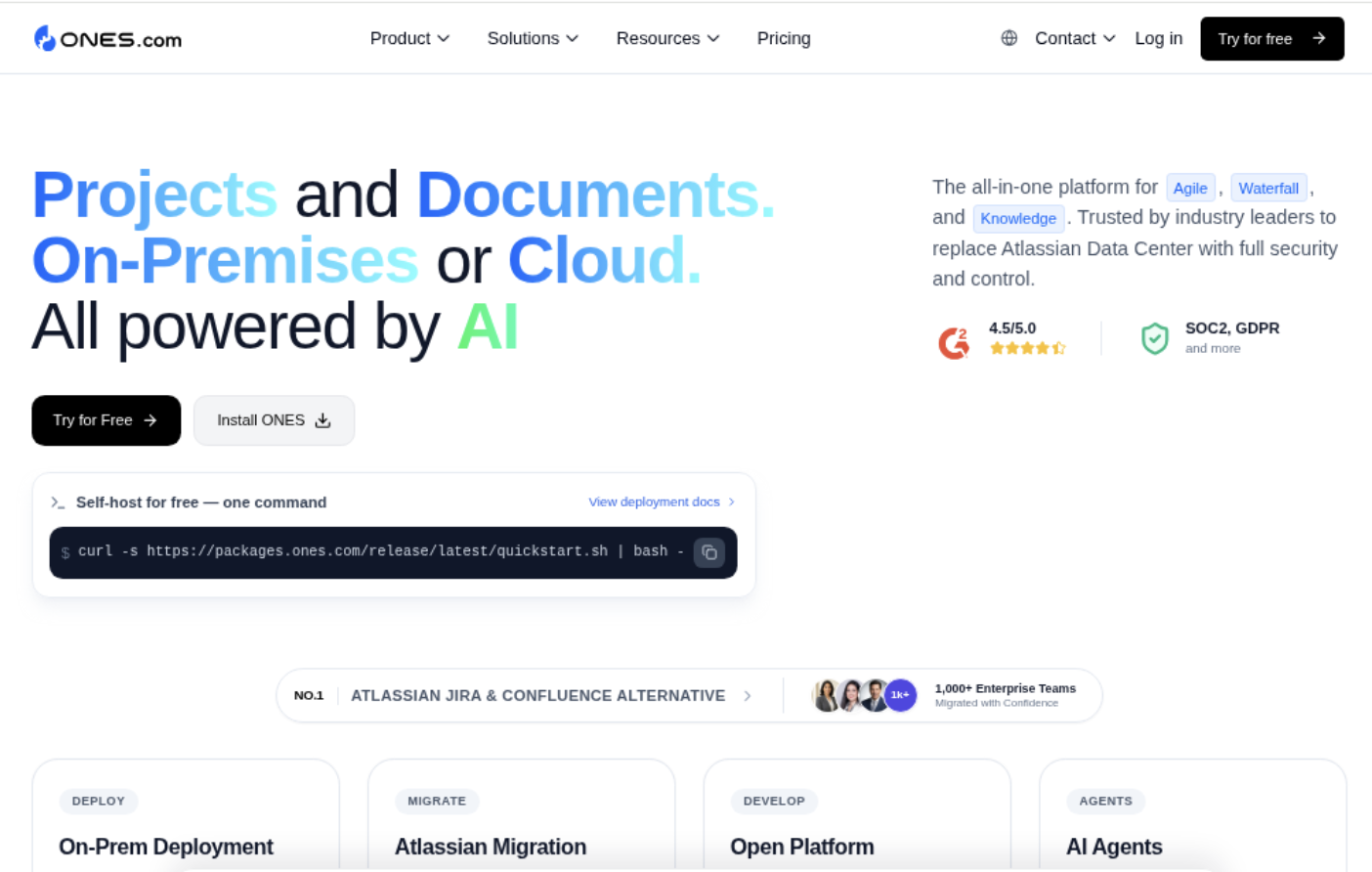
The platform offers a free plan for up to 30 seats and supports Cloud, On-Premise, Private Cloud, and Air-gapped deployments. Its self-hosted versions provide feature parity with the cloud version, which can matter when security or hosting requirements shape your total project management cost.
Value Proposition
For teams comparing subscription cost with deployment control, ONES.com provides a way to evaluate project management, knowledge management, and hosting requirements in one product family.
Its value depends on your workflow complexity, deployment preference, team size, and need to reduce reliance on multiple plugins.
Core Capabilities
- Plugin sprawl: Jira environments can require several add-ons for planning and reporting. ONES capability: ONES Project includes built-in reporting and native project management functions. Result: You can assess a simpler baseline before adding extensions.
- Complex delivery workflows: Teams may need more than standard task statuses. ONES capability: Custom workflows and custom fields support tailored processes. Result: Product, engineering, and operations teams can align the system with their approval paths.
- Sprint coordination: Agile teams need clear iteration planning and progress tracking. ONES capability: Sprint management supports recurring delivery cycles. Result: Teams can organize work around planned iterations.
- Manual repetitive updates: Reassigning work and changing statuses consumes administrative time. ONES capability: Automation handles repeatable workflow actions. Result: Project owners can spend more time on exceptions and decisions.
- Jira migration concerns: Teams may hesitate to change familiar delivery patterns. ONES capability: Jira-compatible workflows help map existing practices. Result: Transition planning can focus on configuration and adoption.
- Hosting restrictions: Some organizations cannot place project information in a public cloud. ONES capability: On-Premise, Private Cloud, and Air-gapped deployments are available. Result: You can match deployment with security and network requirements.
- Separate knowledge and project tools: Teams may lose context across disconnected products. ONES capability: ONES Project and ONES Wiki belong to the same unified platform. Result: You can evaluate project work and team knowledge together while purchasing products separately.
- Unclear growth costs: A low starting price may become harder to manage as adoption increases. ONES capability: A free allowance of up to 30 seats and multiple deployment models support different adoption stages. Result: You can test fit before planning a larger rollout.
Application Scenarios
Scenario one: a regulated engineering team. A team working in a restricted network may need project tracking without public-cloud deployment. An air-gapped ONES Project deployment can fit that environment while preserving the core feature set available in the cloud version.
Scenario two: a growing software organization. A 20-person team may begin with sprint management, custom workflows, and reporting. As other departments join, ONES Wiki can provide a connected knowledge management option without requiring the same product purchase for every team.
Scenario three: a plugin-heavy Jira environment. If a team relies on multiple extensions for custom fields, automation, and reporting, it can compare the native capabilities of ONES Project against the current subscription and administration burden.
Common Challenges When Planning the Subscription
Challenge: Your user count changes every month
Solution: Track permanent staff, contractors, and temporary collaborators separately. Review access monthly and estimate the highest realistic user count for major launches.
Challenge: Your team cannot tell which features are essential
Solution: Separate must-have capabilities from convenience features. Test each requirement with a real workflow, such as approving a release or producing a weekly delivery report.
Challenge: The quote does not match your internal budget
Solution: Compare plan tiers, billing cycles, and user groups before cutting features. A smaller licensed population with clear viewer policies may be more practical than choosing a weak plan for everyone.
Challenge: You underestimate migration and setup work
Solution: Budget for workflow design, permissions, naming standards, training, integration checks, and pilot testing. A careful rollout reduces rework after launch.
Challenge: Stakeholders want advanced planning immediately
Solution: Ask for a measurable outcome. If advanced planning should save five hours each week, track that result during a pilot before committing to a higher tier.
FAQs About Jira Work Costs
Is Jira Work Management still a separate product?
Jira Work Management has increasingly been incorporated into the broader Jira product experience. Naming and packaging can change, so check the current plan descriptions when you compare options. The important question is whether the selected Jira plan includes the business project features your team needs, such as task tracking, workflows, permissions, reporting, and automation.
Does Jira charge for every person who views a project?
Access rules depend on the plan and the type of activity a person performs. Someone who only needs occasional visibility may have different access requirements from a person who creates tasks, edits workflows, or manages projects. Review the current licensing rules for guests, collaborators, and viewers before finalizing your count.
Is annual billing always cheaper?
Annual billing can offer a different effective rate or commitment structure, but it is not automatically the best choice for every team. Monthly billing may be more suitable when headcount changes quickly or a pilot is still running. Compare the full annual commitment, expected user growth, and cancellation terms before choosing.
What should I include in a Jira budget besides licenses?
Include implementation, workflow configuration, training, administration, integrations, migration, reporting design, and renewal management. Add connected Atlassian products if your team needs them. You should also estimate the time managers spend maintaining workflows, permissions, dashboards, and team conventions.
When should a team consider Premium?
Consider Premium when your team has a clear need for advanced planning, broader cross-project visibility, higher operational scale, or stronger reliability requirements. Start with specific examples. If managers currently combine several project updates manually or teams cannot coordinate releases effectively, a higher tier may provide measurable value.
Can an alternative reduce total project management cost?
It can, depending on your plan, migration effort, deployment requirements, and reliance on add-ons. Compare the complete ownership picture rather than the subscription alone. A platform with native reporting, custom workflows, automation, and flexible hosting may reduce extension and administration work for some teams.
Conclusion
Jira Work pricing becomes easier to understand when you separate the plan, user count, billing cycle, product scope, and operating effort. Start with the capabilities your team requires, then compare realistic user scenarios across Free, Standard, Premium, and Enterprise.
But here's the truth: a low subscription figure can still produce a high total cost when you overlook contractors, integrations, administration, storage, or future growth. A clear budget includes those factors before procurement begins.
The solution is straightforward. Build a current estimate, test a growth scenario, measure the value of advanced features, and compare alternatives such as ONES.com when deployment control or native capabilities matter. That approach gives your team a pricing decision grounded in actual work rather than a headline number.