Jira Yearly Pricing: Annual Costs Explained for 2026 [Guide]
Unsure about jira yearly pricing for 2026? Learn how seats, plans, add-ons, and fees shape annual costs. Click to plan your budget now.
Jira yearly pricing can look simple until your team adds more seats, premium features, apps, or multiple products. A plan that appears affordable per month may produce a very different annual bill.
That uncertainty creates problems during budgeting. You may compare the monthly figure with a yearly invoice, overlook tier changes, or estimate only Jira while missing marketplace apps and service fees.
But here's the truth: your annual Jira cost depends on more than the advertised plan rate. Seat count, billing method, product edition, add-ons, and regional charges all matter.
This guide shows you how to calculate the likely 2026 cost, compare annual and monthly billing, identify hidden expenses, and evaluate a practical Jira alternative.
Jira Yearly Pricing: The Quick Answer
Jira yearly pricing is the total amount you pay for a Jira subscription over 12 months, usually determined by your plan, billable user tier, billing cycle, and optional products or apps.
For a simple estimate, multiply the applicable monthly per-user rate by 12 and then adjust for Jira’s user-tier rules, annual discounts, taxes, add-ons, and other Atlassian products. The displayed monthly equivalent may differ from the actual annual invoice.
For example, a team with 25 users may fall into a higher pricing tier than a team with 20 users. If annual billing applies to the tier rather than the exact active-user count, five additional seats can affect the full yearly amount.
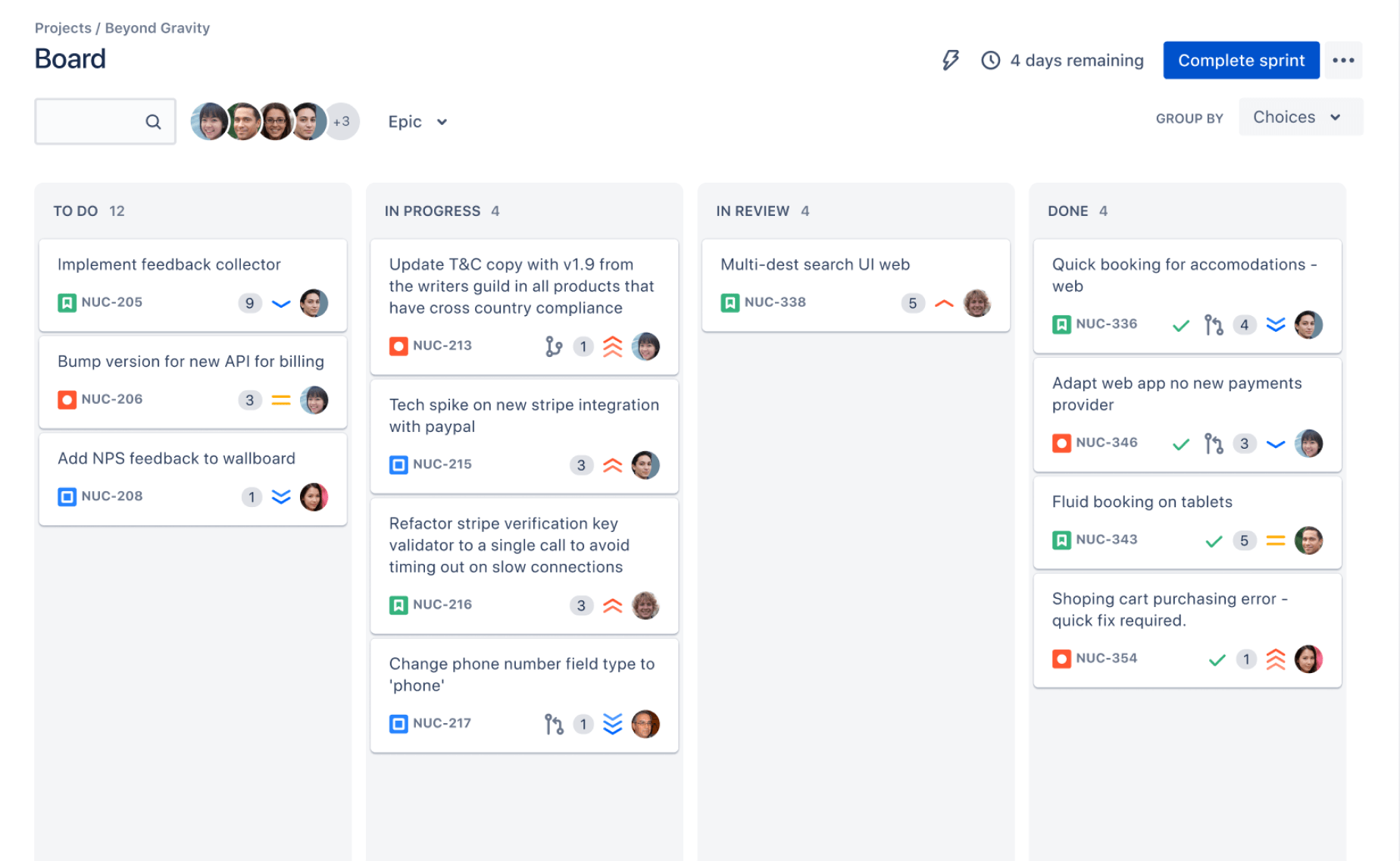
What usually determines the annual bill
- Jira plan level, such as Free, Standard, Premium, or Enterprise
- Number of users who need access
- Annual or monthly billing
- Jira Cloud or Jira Data Center deployment
- Marketplace apps and connected Atlassian products
- Regional taxes, currency conversion, and invoicing terms
- Advanced administration, security, analytics, or support requirements
Here’s why: pricing tiers often work differently from a basic “users multiplied by price” calculation. A team of 11 people may pay according to a 1–10 or 11–15 tier, depending on the product’s current rules.
A practical annual-cost formula
You can begin with this estimate:
Estimated yearly cost = applicable annual plan charge + add-ons + connected products + taxes and fees
If you only have a monthly rate, use this temporary calculation:
Monthly equivalent × 12 = rough annual estimate
Use that result for early budgeting. Before approving a purchase, check the live checkout total because tier pricing and annual discounts can change the final amount.
How to Calculate Your Total Cost for 2026
- Count the people who need access. Separate full users from occasional collaborators, guests, or people who only receive reports.
- Select the required Jira plan. Compare workflow controls, automation limits, reporting, security, support, and administration.
- Check the billing method. Annual billing may offer a lower effective rate, while monthly billing can provide more flexibility.
- Review every connected product. Jira Service Management, Confluence, and other Atlassian products can create separate charges.
- List required marketplace apps. Add calendar tools, advanced reporting, time tracking, testing, or portfolio features.
- Estimate taxes and currency effects. Your final invoice may vary by billing address and payment currency.
- Model expected growth. Calculate the cost at today’s team size and at the size you expect after 12 months.
Example: a 25-person product team
Imagine a product team with 25 staff members. The team needs issue tracking, sprint planning, automation, and reporting. It also relies on one time-tracking app and one reporting extension.
The team should calculate the annual Jira plan first, then add both app subscriptions. If the apps use their own user tiers, their charges may not match Jira’s 25-seat tier.
A useful budget sheet would show three lines: core Jira subscription, third-party apps, and tax or payment adjustments. That layout makes it easier to see which expense creates the largest increase.
Example: a growing company
Suppose you start with 80 users and expect to reach 120 users during the year. An annual plan may be efficient if the price is favorable, yet a large tier jump can change the result.
Compare three scenarios: 80 users today, 100 users midway through the year, and 120 users at renewal. This forecast helps you avoid choosing a plan that looks cheap only at the starting headcount.
Annual Billing Versus Monthly Billing
Annual billing usually suits teams with predictable membership and stable software needs. You make one larger commitment, simplify renewals, and may receive a lower effective monthly rate.
Monthly billing works better when your headcount changes frequently. You can increase or reduce seats with less commitment, although the cumulative 12-month cost may be higher.
| Consideration |
Annual billing |
Monthly billing |
| Cash flow |
Requires a larger payment at renewal |
Spreads payments across the year |
| Budgeting |
Creates a clearer annual commitment |
Needs regular monitoring |
| Team growth |
May be less flexible for rapid changes |
Usually adapts more easily |
| Effective rate |
May reduce the monthly equivalent |
May cost more over 12 months |
| Renewal risk |
One renewal can create a large expense |
Changes appear throughout the year |
When annual billing makes sense
Annual billing can fit a mature team with stable staffing, approved procurement, and predictable product requirements. It also helps finance teams assign one known subscription expense to the operating budget.
Before choosing it, check your hiring plans. A company expecting rapid growth may pay for more capacity than it needs during the first few months.
When monthly billing deserves a closer look
Monthly billing may suit agencies, seasonal businesses, startups, and organizations testing Jira with a small group. It reduces the risk of paying for unused seats during a restructuring.
However, monthly flexibility can hide gradual spending increases. Set a quarterly review so you can remove unused accounts and reassess add-ons.
Plan Levels, Seat Tiers, and Feature Differences
Jira plan names usually reflect more than storage or user capacity. Higher tiers may include stronger automation allowances, advanced administration, better reporting, security controls, and support options.
The right plan depends on how your team works. A 40-person team with simple issue tracking may need fewer features than a 15-person organization with strict compliance requirements.
Free plans
A free plan can work for a small team testing project tracking. It may include basic boards, issue management, and limited collaboration features.
Review restrictions carefully. User caps, automation limits, permission controls, support options, and storage limits can become obstacles once the team adopts the platform for daily work.
Standard plans
A standard tier generally targets teams that need dependable project management without extensive enterprise controls. It may provide more users, higher usage limits, and broader administration.
For many teams, this becomes the first serious budgeting point. Compare the features you use every week rather than choosing by plan name alone.
Premium plans
Premium tiers often focus on advanced planning, automation, reporting, reliability, or cross-team coordination. They can be valuable when several departments share a delivery process.
Calculate the cost of the added capabilities. If your team only needs basic boards and sprint tracking, a premium upgrade may produce little practical benefit.
Enterprise arrangements
Large organizations may need negotiated terms, centralized administration, security reviews, or custom support arrangements. Enterprise pricing often requires a direct conversation rather than a simple public checkout.
Prepare a clear requirement list before that conversation. Include headcount, business units, deployment expectations, compliance needs, and connected products.
Extra Costs That Change the Annual Estimate
The subscription line is only one part of your yearly software budget. Add-ons and connected services can equal a substantial portion of the core Jira charge.
Marketplace apps
Teams often add time tracking, capacity planning, advanced roadmaps, test management, reporting, or release automation. Each app can use separate pricing rules and user tiers.
For example, an app may charge all Jira users even when only the engineering department uses it. Confirm whether its billing follows active users, licensed users, or another model.
Additional Atlassian products
Jira frequently works alongside Confluence, Jira Service Management, and other collaboration products. Each product can have its own plan, user count, and annual renewal date.
Build a product-by-product cost view. This prevents a low Jira estimate from hiding a much larger Atlassian subscription total.
Taxes and currency conversion
Regional taxes can change the final invoice. Currency conversion can also affect the amount your finance team sees, especially when the operating budget uses a different currency.
Ask your finance contact to review the expected invoice treatment. A small percentage adjustment can become meaningful across a large annual subscription.
Administration and migration
Software costs can also include implementation work, workflow redesign, training, migration, and ongoing administration. These may not appear in the subscription price, yet they affect the first-year budget.
For example, moving 10 years of project history into a new structure can require more planning than creating a new workspace for a small team.
How to Reduce Unnecessary Yearly Spending
Cost control starts with an accurate user list. Remove inactive accounts, review contractors, and check whether every licensed person still needs the same access level.
Next, audit your add-ons. If two apps provide overlapping reports, keeping both may add expense without improving decisions. Ask your team which features they actually use during a normal sprint.
Use a quarterly license review
Schedule a 30-minute review every quarter. Compare active users, plan limits, app usage, and upcoming hiring changes.
A simple example: if 18 of 60 licensed people have not opened Jira for three months, investigate before renewal. Some may need access restored during a project, while others may no longer require a paid seat.
Compare the cost of complexity
Several plug-ins can solve individual problems, yet they also increase administration and renewal work. A platform with more native capabilities may reduce the number of separate subscriptions you manage.
That comparison should include migration effort, training, reporting consistency, and workflow maintenance. The cheapest license can become expensive when the surrounding process is difficult to maintain.
Jira Yearly Pricing Alternative: ONES.com
Value Proposition
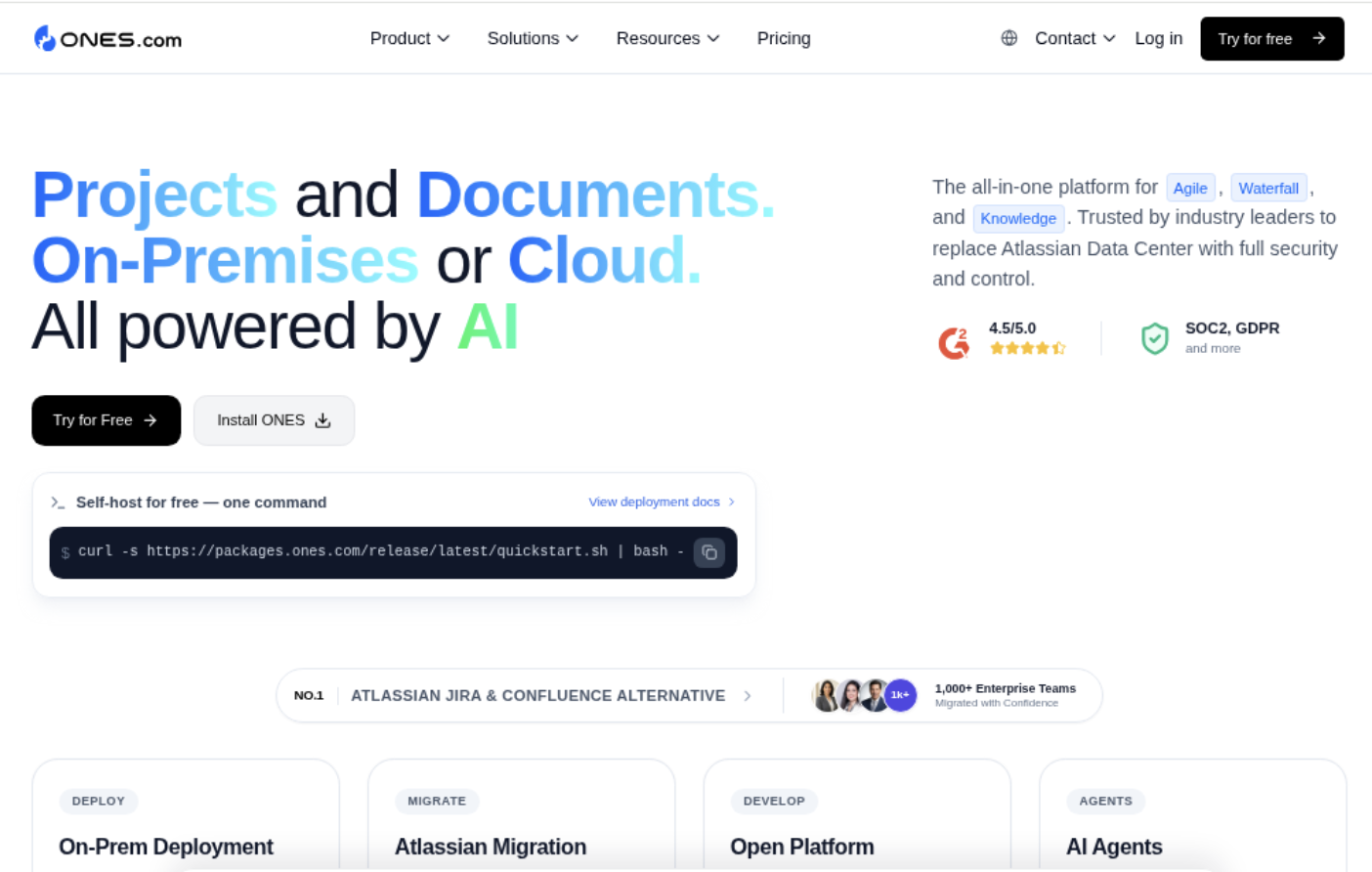
ONES.com combines project management and knowledge management in one platform. ONES Project functions as a Jira alternative, while ONES Wiki provides a separate knowledge base product similar to a Confluence alternative.
Teams can purchase the products separately and choose Cloud, On-Premise, Private Cloud, or Air-gapped deployment. A free plan supports up to 30 seats, and self-hosted deployments maintain feature parity with the cloud version.
Core Capabilities
Jira-compatible workflows for familiar delivery processes
Teams concerned about retraining can carry familiar issue-based planning into ONES Project. That reduces disruption when engineers already use sprints, backlogs, and workflow states.
Native reporting reduces app sprawl
If your team depends on several reporting extensions, built-in reporting can reduce the number of separate tools you evaluate and renew. Managers gain a more consistent view of delivery progress.
Custom workflows fit different departments
Marketing, engineering, operations, and support rarely move work through identical stages. Custom workflows allow each group to reflect its process while remaining within one project environment.
Custom fields keep important context visible
Teams often rely on labels or outside tools when standard fields do not capture risk, release, customer impact, or compliance details. Custom fields keep those details attached to the work item.
Sprint management supports iterative delivery
Agile teams can organize backlogs, plan sprints, track progress, and review unfinished work. That gives product and engineering leaders a clearer view of capacity.
Automation handles repetitive transitions
Routine actions such as assigning work, updating status, or notifying a responsible team can consume valuable attention. Automation handles repeatable rules and leaves people more time for decisions.
On-premise and air-gapped deployment support control requirements
Some organizations cannot place project information in a public cloud. ONES.com supports On-Premise, Private Cloud, and Air-gapped deployment choices for restricted environments.
AI-powered assistance sits within the broader platform
ONES.com includes ONES Assistant for AI-supported work. Teams can keep project management and knowledge management connected while deciding how much AI assistance fits their governance approach.
Application Scenarios
Growing product company: A product team moving beyond basic Jira workflows can use ONES Project for backlog planning, custom fields, sprint delivery, and built-in reporting. ONES Wiki can be added separately when technical and product knowledge needs a shared home.
Restricted engineering environment: A defense, industrial, or regulated team may need an air-gapped deployment. ONES.com supports that deployment pattern while preserving the core capabilities available in its cloud offering.
Multi-department operations: An organization with engineering, support, and operations teams can create department-specific workflows without managing several disconnected project tools.
Common Challenges and Practical Solutions
Challenge: the annual invoice exceeds the estimate
Solution: Recalculate using the actual user tier, connected products, apps, taxes, and billing currency. Keep a 10–15% planning buffer when your headcount may change.
Challenge: the team pays for inactive accounts
Solution: Review account activity each quarter. Create an offboarding rule that removes access when an employee, contractor, or temporary project member leaves.
Challenge: an app creates an unexpected second charge
Solution: Record each app’s billing method separately. Confirm whether the app charges by active users, total Jira users, or a fixed tier.
Challenge: annual billing reduces flexibility
Solution: Compare your hiring forecast with the available tiers. Monthly billing may be more practical when the team changes rapidly or project demand is seasonal.
Challenge: the plan includes features nobody uses
Solution: Map each premium feature to a real workflow. If no team can describe when it uses that capability, reconsider the upgrade at renewal.
FAQs
Is annual Jira billing cheaper than paying monthly?
Annual billing may provide a lower effective monthly rate, yet the result depends on your plan, seat tier, regional terms, and current pricing rules. Monthly billing can cost more over 12 months while giving you greater flexibility. Compare the total annual commitment rather than multiplying a displayed monthly equivalent without checking tier conditions.
How should I estimate Jira costs for a growing team?
Calculate the cost at your current headcount, expected midyear headcount, and projected renewal headcount. Include possible tier jumps, connected products, marketplace apps, taxes, and currency effects. This three-scenario approach shows whether annual billing remains sensible as the team expands.
Do Jira apps appear in the main Jira subscription price?
Usually, marketplace apps have separate charges and pricing rules. Some calculate fees using the Jira user count, while others use their own tiers or active-user definitions. List every required app separately when preparing your annual budget, then confirm each renewal date and billing method.
What is the difference between Jira Cloud and Jira Data Center pricing?
Jira Cloud is generally subscription-based and hosted by Atlassian. Jira Data Center is designed for organizations that need self-managed infrastructure and may involve licensing, maintenance, infrastructure, and administration costs. Compare the complete ownership cost, including internal technical work and deployment requirements.
Can a Jira alternative reduce yearly software costs?
It can, depending on your team size, required capabilities, add-ons, deployment model, and migration needs. A meaningful comparison includes subscription fees, plug-ins, administration, training, reporting, and maintenance. ONES Project offers Jira-compatible workflows, custom fields, automation, sprint management, and built-in reporting.
What should I check before renewing Jira annually?
Review active users, unused seats, plan limits, app usage, workflow needs, expected hiring, support requirements, and product overlap. Then compare the renewal total with at least one alternative. This process gives you a clearer negotiating position and prevents automatic renewal from becoming your default decision.
Conclusion
Jira yearly pricing depends on the complete subscription setup, not one monthly number. Start with the plan and user tier, then add connected products, marketplace apps, taxes, currency effects, and expected growth.
But here's the truth: the lowest visible price may not create the lowest yearly cost. A plan that requires several plug-ins or extensive administration can become more expensive after the first renewal.
Review your seats quarterly, model three growth scenarios, and compare annual flexibility with monthly control. If your team wants Jira-compatible project management with native reporting, custom workflows, automation, and multiple deployment options, include ONES.com in that evaluation.