JSM Pricing Explained: A Clear Guide to Plans and Costs
Confused by JSM pricing? Learn how plans, agent licenses, limits, and billing affect costs. Read now to choose the right plan.
Jira Service Management can look affordable at first glance, then become harder to budget as your service team grows. Agent licenses, customer access, automation limits, storage, support features, and billing terms all affect the final amount.
That uncertainty creates practical problems. You may compare plan prices without noticing usage limits, choose an annual commitment before testing demand, or underestimate the cost of extra agents and related Jira products.
But here's the truth: JSM pricing becomes much easier to understand when you separate plan features, billable agents, customer access, and optional add-ons. This guide explains each cost layer, shows how the plans differ, and gives you a simple way to estimate your likely spend.
JSM Pricing at a Glance
JSM pricing is mainly determined by your service management plan, the number of agent seats you need, your billing term, and any additional Atlassian products or services connected to your setup.
Jira Service Management generally offers Free, Standard, Premium, and Enterprise options. The Free plan is designed for small teams, while paid plans add capacity, administration controls, advanced operations features, and stronger support options.
| Plan |
Best suited to |
Main pricing consideration |
| Free |
Small teams testing service management |
Limited agent capacity and feature limits |
| Standard |
Growing help desks and internal service teams |
Per-agent subscription with broader operational capacity |
| Premium |
Teams needing advanced operations and scale |
Higher per-agent cost for expanded capabilities |
| Enterprise |
Large organizations with complex governance |
Custom commercial terms and organization-level requirements |
What you pay for
Jira Service Management charges primarily for agent access. An agent is a person who works on requests, manages queues, updates issues, handles approvals, or administers service workflows.
Customers who submit requests through a portal usually do not require paid agent seats. This distinction matters because a company may have thousands of employees requesting help while only a few dozen people resolve those requests.
For example, 25 service agents supporting 4,000 employees can cost less than a team with 100 agents serving the same workforce. The agent count drives the main subscription calculation.
Why the advertised amount can change
Pricing pages often show a starting figure or an example seat count. Your actual amount can change when you select a different number of agents, billing term, region, currency, or plan level.
Monthly billing usually provides flexibility. Annual billing can offer more predictable budgeting and may use a different price structure. Enterprise agreements can include negotiated terms that do not appear in a public checkout calculator.
Here's why: a plan price is only one part of the financial picture. Your team also needs to account for connected products, automation consumption, storage, premium capabilities, implementation, and administration.
How Each Jira Service Management Plan Works
Free plan
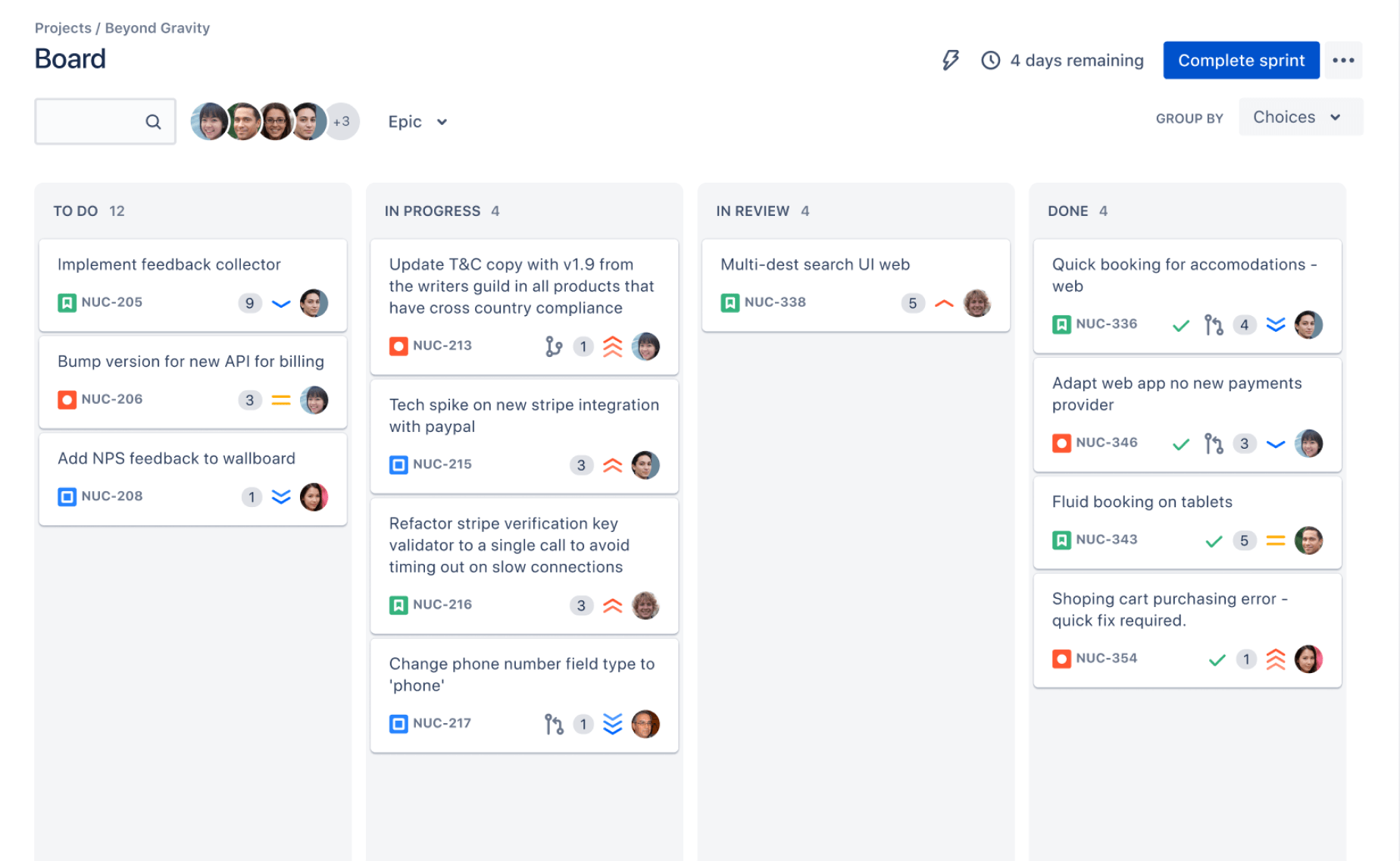
The Free plan gives a small team a way to test request management, portals, queues, and basic service workflows without starting a paid subscription.
Atlassian commonly positions the free offering for up to three agents. Customer access can remain broad, which makes the plan useful for a small IT help desk, startup, or internal operations group.
Typical restrictions may include limits on agent seats, storage, automation, administration, and support. Check the current plan page before making a purchase because Atlassian can revise feature allowances.
The Free plan works well when you want to validate a basic workflow. For example, a five-person technology team could test password-reset requests, equipment requests, and access approvals before expanding.
Standard plan
Standard is usually the starting point for a growing service team. It provides more agent capacity and operational room than Free, making it suitable for internal IT, human resources, facilities, finance, or customer support workflows.
You typically gain higher limits for storage, automation, and service activity. Standard can also provide stronger administrative controls and support than the free tier.
Choose Standard when your team has moved beyond experimentation. A 20-agent service desk handling employee support throughout the week may need this level for dependable daily operations.
Premium plan
Premium targets teams that need greater scale, advanced operations, and resilience features. It can be a fit for organizations that manage high request volumes or require more sophisticated service processes.
Premium capabilities may include advanced incident management, operational visibility, higher usage limits, and features designed for larger or more critical environments.
The extra cost makes sense when downtime, slow incident response, or fragmented operations create substantial business risk. A company supporting several customer-facing applications may value advanced incident coordination more than a small internal help desk.
Enterprise plan
Enterprise is designed for larger organizations with complex governance, multiple teams, broader security requirements, and a need for commercial flexibility.
Pricing is generally handled through a sales process rather than a simple public checkout. The final agreement may reflect agent volume, product scope, support expectations, security requirements, and organizational structure.
Enterprise evaluation should include more than a license quote. Ask how administration, identity management, reporting, data residency, support response, and rollout services affect the total investment.
How Agent and Customer Licensing Affects Cost
The most important calculation is your active agent count. Start by listing everyone who regularly works on service requests, then separate occasional collaborators from people who need permanent agent access.
For example, consider a service operation with:
- 12 IT agents
- 6 human resources agents
- 4 facilities agents
- 3 finance agents
Your planning figure is 25 agents if every person needs ongoing access. Customers who submit requests through the portal usually do not increase the agent license count.
Shared work can increase the seat count
Teams sometimes add agents for convenience. A manager may receive a license to approve requests, even though that person handles only a few approvals each month.
Review each role before assigning a permanent seat. You may reduce unnecessary licensing by designing approval steps that let occasional participants approve requests through the available customer or approver experience.
Be careful with this approach. Approval permissions and licensing rules can change by product configuration, so confirm the current requirements before removing access.
Temporary agents still need planning
Contractors, seasonal support staff, and project-based service teams can affect your peak seat requirement. A subscription that fits January may become expensive during a six-month rollout.
Build a simple high-water mark calculation. If you need 18 agents most of the year and 30 during an annual enrollment period, compare the cost of temporary expansion with a permanent 30-agent subscription.
Customer volume matters indirectly
Customers may not require paid seats, but their request volume affects automation, storage, queues, notification traffic, and administration effort.
A portal serving 300 employees can be easy to manage. A portal serving 30,000 employees may require careful request-type design, knowledge content, automation controls, and reporting discipline.
Monthly Versus Annual Billing
Monthly billing is useful when your team is testing demand, managing changing headcount, or launching a new service desk. You can adjust more frequently as your requirements become clearer.
Annual billing can help with procurement and budget planning. It may also offer a different effective rate, depending on your agent tier and current Atlassian commercial terms.
| Billing approach |
Useful when |
Watch carefully |
| Monthly |
Headcount or requirements may change |
Higher flexibility can mean a higher effective rate |
| Annual |
Seat demand is predictable |
Unused capacity may remain committed |
| Enterprise agreement |
You need broader governance or negotiated terms |
Review renewal rules and product scope |
A simple budgeting example
Imagine a team that needs 35 Standard agents. Rather than multiplying a public starting price by 35, confirm the exact tier quote for that seat range.
Then add likely growth. If you expect five more agents within six months, compare the cost of starting at 35 seats with starting at 40. Your decision depends on cash flow, hiring certainty, and the flexibility of your contract.
The best part? You can make this calculation without complicated financial modeling. Track current agents, expected hires, billing term, connected products, and optional services in one planning worksheet.
Features That Can Change the Total Cost
Automation usage
Automation can reduce manual work, yet higher activity levels may bring usage limits or additional considerations. A workflow that sends one notification per request behaves differently from one that triggers several actions across multiple services.
Estimate monthly request volume and automation runs. If your team handles 8,000 requests and each request triggers four rules, you may need more capacity than a team handling 1,000 requests with one rule each.
Assets and configuration management
Assets capabilities help teams track equipment, applications, services, contracts, and relationships. Their value depends on how much operational detail you need to manage.
A small help desk may only track laptops and mobile devices. A larger technology organization may map applications to services, owners, infrastructure components, and business dependencies.
Review whether your chosen plan includes the asset capacity and controls you require. Extra capability can affect the plan decision even when the basic request workflow looks similar.
Operations and incident management
Advanced incident features can support alert handling, on-call coordination, incident communications, and post-incident improvement.
These features matter when service interruptions carry meaningful financial or customer impact. A small internal team may manage occasional incidents with Standard capabilities, while a digital service provider may need Premium-level operations.
Connected Atlassian products
Jira Service Management often works alongside Jira Software, Confluence, or other Atlassian products. Each product can have its own subscription, seat model, and plan limits.
For example, your service agents may need JSM access while engineering teams need Jira Software access. Your knowledge team may also require Confluence access to maintain internal guidance.
Calculate each product separately, then review how permissions overlap. This prevents a JSM quote from becoming your entire service management budget by accident.
Support and implementation
Subscription pricing does not always include consulting, migration, training, workflow design, or ongoing administration. These services can become significant during a large rollout.
A small team may configure a few request types internally. A global organization may need identity integration, multiple portals, approval governance, reporting standards, and regional rollout support.
A Practical Way to Estimate Your Service Desk Budget
Use a five-part estimate before comparing plans. This approach helps you evaluate the complete requirement instead of focusing on the lowest headline price.
- Count permanent agents. Include service desk staff, specialists, administrators, and anyone who needs regular request-handling access.
- Estimate peak demand. Add seasonal workers, temporary agents, and planned hires for your busiest period.
- Map required capabilities. List portals, queues, approvals, automation, assets, incident response, reporting, and knowledge management.
- Separate connected products. Price Jira Software, Confluence, identity tools, reporting tools, and other services independently.
- Compare billing terms. Review monthly flexibility, annual commitment, renewal timing, and possible growth during the contract.
Example calculation framework
Suppose your organization has 40 permanent agents and expects 10 temporary agents during a major launch. You should compare plans using both 40 and 50 seats.
Next, identify whether advanced incident operations, asset tracking, or higher automation capacity is essential. A cheaper plan can become unsuitable if your team must purchase workarounds or manage critical processes manually.
Finally, estimate implementation effort. Two plans with similar subscription costs can produce very different first-year budgets when one requires extensive customization or outside assistance.
Questions to ask before purchasing
- How many people need agent access every week?
- How many agents will you need at peak demand?
- Will several departments share one service project?
- Do you need advanced incident or on-call capabilities?
- How much automation will your request volume require?
- Will you connect Jira Software, Confluence, or other Atlassian products?
- Do you need a monthly subscription while testing the workflow?
- What support and administration effort will your rollout require?
Jira Service Management Alternative: ONES.com
Value Proposition
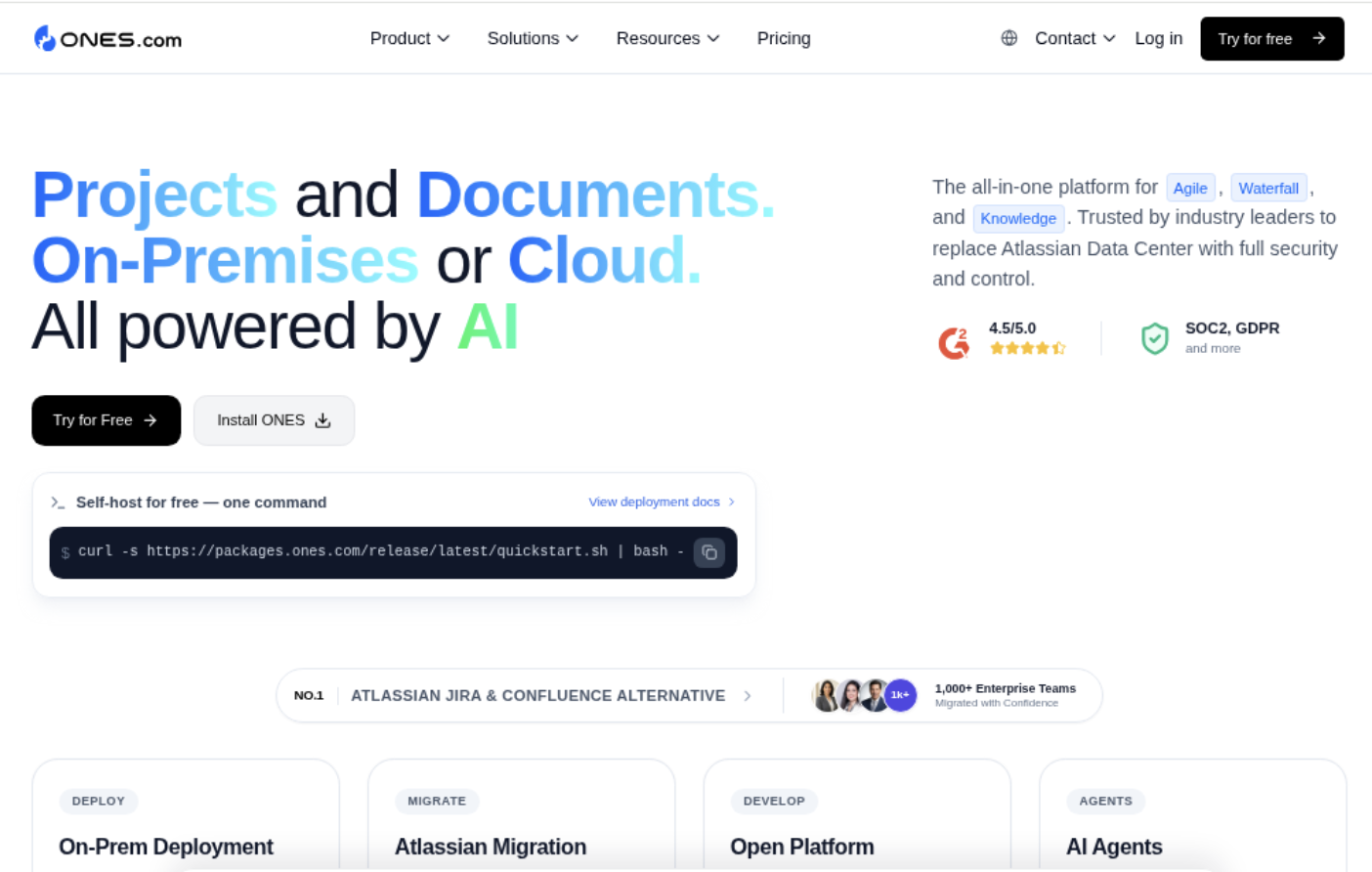
ONES.com combines project management and knowledge management in one platform powered by ONES Assistant. ONES Project works as a Jira alternative, while ONES Wiki supports knowledge management as a Confluence alternative. They are sold separately.
This approach can suit teams that want service workflows, project coordination, and internal knowledge capabilities with fewer disconnected plugins. ONES.com offers a free plan for up to 30 seats and supports Cloud, On-Premise, Private Cloud, and Air-gapped deployments.
Core Capabilities
- Separate service and project work. Teams often struggle when support requests and delivery tasks become mixed together. ONES Project provides project management workflows that help you connect incoming work with planned execution.
- Jira-compatible workflows. Migrating teams may worry about abandoning familiar processes. ONES Project supports Jira-compatible workflows, helping teams preserve recognizable issue, sprint, and approval patterns.
- Custom workflows and fields. Generic service processes can hide important details. Custom workflows and fields let you capture department-specific information, approval stages, ownership, and risk.
- Built-in reporting. Manual reporting creates delays and inconsistent metrics. Built-in reporting helps teams review progress, workload, cycle time, and operational trends in one working environment.
- Sprint management. Service teams often need to move urgent requests into planned delivery. Sprint management helps coordinate prioritized work without losing visibility across active initiatives.
- Automation. Repetitive assignments and status updates consume valuable time. Automation can route work, trigger actions, and reduce routine coordination.
- Knowledge management through ONES Wiki. Repeated questions can overload service teams. ONES Wiki gives teams a dedicated knowledge base option for procedures, troubleshooting guidance, and internal standards.
- Deployment flexibility. Cloud-only products may conflict with security or network requirements. ONES.com supports Cloud, On-Premise, Private Cloud, and Air-gapped deployments.
- Native feature parity. Teams managing restricted environments may fear losing capabilities. ONES.com maintains full feature parity between its cloud and self-hosted versions.
Application Scenarios
Internal IT and engineering: An IT team can manage employee requests while engineering plans corrective work in ONES Project. Published troubleshooting guidance can live in ONES Wiki.
Restricted-network operations: A regulated organization can use an air-gapped deployment when its service environment cannot connect to the public internet. The team can retain project and knowledge workflows in the restricted environment.
Cross-functional service delivery: Human resources, facilities, and finance teams can create tailored workflows and fields while keeping reporting consistent across departments.
Common Challenges When Comparing Plans
Challenge: confusing agents with customers
Problem: A large employee population can make the platform appear more expensive than it is.
Solution: Count people who resolve, administer, or manage requests separately from people who only submit them. Validate any special approver permissions before finalizing the seat estimate.
Challenge: choosing the cheapest tier too early
Problem: A low-cost plan may lack the automation, operations, asset, or administration features your process needs.
Solution: Rank capabilities by business importance. Test the workflow against real examples, such as an access request, a major incident, and a hardware replacement.
Challenge: overlooking connected products
Problem: Teams may budget for JSM while forgetting Jira Software, Confluence, identity services, reporting tools, or implementation support.
Solution: Create a product map before approving the purchase. Assign each capability to a product and identify overlapping licenses.
Challenge: underestimating growth
Problem: A plan that fits today may become restrictive after hiring, acquisitions, or a new customer portal launch.
Solution: Model current, expected, and peak agent counts. Recheck the calculation before renewal and after major organizational changes.
FAQs
Is Jira Service Management free?
Jira Service Management has a Free plan for small teams. It typically supports up to three agents, while customers can submit requests through the portal. The free tier includes limits on capacity and selected features. Confirm the current allowances before relying on it for production operations, especially when you need advanced automation, asset management, or incident capabilities.
Do customers need paid JSM licenses?
Customers who submit requests through a service portal generally do not need paid agent seats. Paid access is mainly associated with people who work on requests, manage queues, configure workflows, or administer the service project. Approval requirements can vary by setup, so review the current licensing rules for your specific workflow.
Which plan should a small IT team choose?
Start with Free if you are validating a basic help desk and can work within its limits. Standard is usually more suitable when you need more agents, higher capacity, stronger administration, or dependable daily operations. Premium becomes relevant when advanced incident management, operational scale, or resilience features justify the additional cost.
Is annual billing cheaper than monthly billing?
Annual billing may provide a different effective rate and easier budget planning, depending on your agent tier and current commercial terms. Monthly billing gives you more flexibility when headcount or requirements are uncertain. Compare the full commitment, expected growth, renewal timing, and potential unused capacity before choosing.
What should I include in a JSM cost estimate?
Include permanent agents, peak agents, plan level, billing term, automation demand, asset requirements, incident capabilities, connected Atlassian products, implementation, training, and administration. A realistic estimate should cover the first year and the likely renewal position. This prevents a subscription quote from hiding operational costs.
Can I migrate to another service management platform?
Yes, although migration effort depends on your workflows, request history, integrations, knowledge content, permissions, and reporting needs. Start with a capability comparison and a small pilot. ONES Project may suit teams seeking a Jira alternative with custom workflows, sprint management, automation, reporting, and flexible deployment options.
Conclusion
JSM pricing depends on more than the plan name. Your agent count, billing term, feature requirements, connected products, automation demand, and implementation effort all shape the real budget.
Begin with the five-part estimate: count agents, model peak demand, map capabilities, separate connected products, and compare billing terms. Then test the plan against realistic service scenarios.
But here's the truth: the best commercial decision is the one that supports your actual workflow without paying for capacity you will not use. Review the plan limits, calculate growth, and compare alternatives such as ONES.com when deployment flexibility, native feature parity, and fewer plugins matter.