Obsidian as Jira: A Practical Workflow Guide for Small Teams
Can you use Obsidian as Jira to tame team chaos? Learn a practical workflow for tasks, bugs, priorities, and status. Read now.
Small teams often reach for Obsidian because it is flexible, fast, and pleasant for thinking. Then project work grows messy. Tasks sit inside notes, priorities disappear among links, and nobody knows which work is blocked or ready.
That confusion becomes expensive when a three-person team manages product requests, bugs, deadlines, and decisions in separate places. You may understand your own system while teammates struggle to find the current status.
But here's the truth: Obsidian can support a lightweight Jira-style workflow when your team has modest coordination needs. You need consistent task fields, clear note templates, a reliable review rhythm, and rules for what belongs in Obsidian.
This guide shows you how to build that workflow, where it works well, where it breaks down, and when a dedicated project platform makes more sense.
How to Use Obsidian as a Jira-Style Workflow
Using Obsidian as Jira means turning linked Markdown notes, properties, tags, queries, and team routines into a lightweight system for tracking issues, projects, priorities, and progress. It can work for small teams when the work is relatively simple and everyone follows the same conventions.
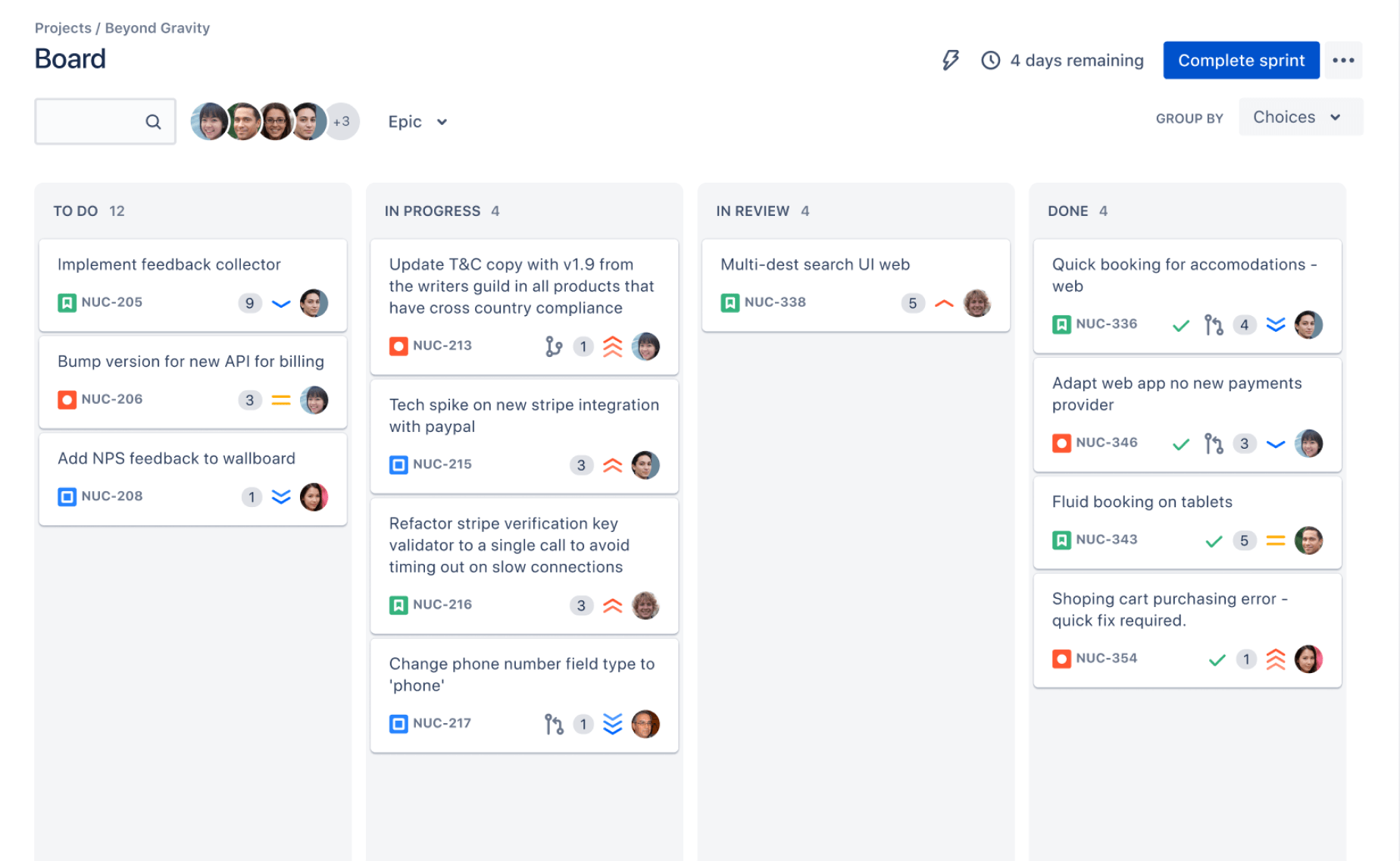
Obsidian is primarily a connected knowledge workspace. Jira is designed around structured issue tracking, workflow states, permissions, reports, and team coordination. You can imitate several Jira patterns in Obsidian, but you must create more of the operating system yourself.
Here's why: the quality of an Obsidian workflow depends less on clever plugins and more on shared habits. A simple system that everyone follows will outperform an advanced vault that only one person understands.
-
Define the work your team will track
Start by deciding what counts as a task, issue, project, decision, or reference note. If everything becomes a task, your workspace quickly turns into a noisy inbox.
For example, “Improve onboarding” is a project. “Interview five new customers” is a task. “Customer interview script” is a reference note. “Signup button fails on mobile” is an issue.
Write these distinctions in a short team guide. Keep the rules visible inside the shared workspace so new teammates can understand the system without a long training session.
-
Create one issue note template
Use a consistent template for work that needs tracking. You can add properties such as:
- Status: Backlog, Ready, In Progress, Blocked, Review, or Done
- Priority: Low, Medium, High, or Urgent
- Owner: The person responsible for the next meaningful action
- Type: Task, Bug, Improvement, Research, or Decision
- Target: The project, release, or outcome connected to the work
- Due: The date that matters, when one exists
A practical note might look like this:
---
status: In Progress
priority: High
owner: Maya
type: Bug
target: Mobile checkout
due: 2025-06-14
---

## Context

Customers cannot complete checkout on smaller screens.

## Definition of done

- Reproduce the issue on two devices
- Confirm the CSS fix
- Test payment completion
- Record the release note

## Updates

- 2025-06-10: Reproduced on iPhone SE
The exact property names matter less than consistency. Choose terms your team can remember and avoid creating five labels for the same concept.
-
Separate work notes from knowledge notes
Keep active work easy to identify. You might place issue notes under an Issues area, while meeting notes, research, and product knowledge live elsewhere.
Links can connect the areas. An issue can link to a technical explanation, a customer interview, or a decision note. The connection gives you context without forcing every detail into the task itself.
The best part? You preserve the strength of Obsidian while adding enough structure for day-to-day coordination.
-
Build views for common questions
Your team should be able to answer basic questions quickly:
- What needs attention today?
- Which work is blocked?
- What is assigned to me?
- What is ready for review?
- What changed during the current cycle?
You can use search, tags, properties, Dataview, or another compatible plugin to create these views. A blocked-work view, for example, should show every issue with status: Blocked and its owner.
If your team needs a plugin to answer every simple question, simplify the system before adding more automation.
-
Choose a workflow that matches your team
A small product team may use:
- Backlog
- Ready
- In Progress
- Review
- Done
A support team may need New, Investigating, Waiting, Resolved, and Closed. A creative team may prefer Ideas, Selected, Drafting, Review, Approved, and Published.
Use the fewest stages that explain where work stands. Too many states make updates slower and create arguments about labels instead of progress.
-
Run a regular review routine
Obsidian does not create accountability by itself. Set a short weekly review where you archive completed work, update owners, remove stale tasks, and confirm priorities.
During the review, ask three practical questions:
- What moved forward?
- What is stuck, and what decision would unblock it?
- What should be removed or postponed?
A ten-minute review can keep a lightweight system healthy. Without it, old tasks become invisible clutter.
-
Set a boundary for when Obsidian is no longer enough
Define the warning signs before they appear. You may need a dedicated project platform when the team requires complex permissions, formal approvals, cross-team dependencies, detailed reporting, or a large volume of simultaneous issues.
That boundary protects your team from endlessly customizing a personal knowledge workspace into a fragile project system.
What Obsidian Does Well for Small-Team Planning
Obsidian is strong when project work depends on context. A task can connect directly to meeting notes, product thinking, research, technical decisions, and release plans.
For example, a “Revise pricing page” issue can link to customer research, a decision note explaining the chosen positioning, and a launch checklist. A teammate can follow the reasoning instead of seeing only a short task title.
The local-first model also makes writing and organizing feel quick. You can create a note during a call, link it to a project, and refine it later without switching between many screens.
Obsidian suits teams that value flexible thinking and already have disciplined communication. It is especially useful for planning small initiatives with limited dependencies.
Where the Jira Comparison Starts to Break Down
Jira treats work items as structured records inside a project system. Obsidian treats notes as flexible building blocks. That difference matters when the team needs consistent reporting across hundreds or thousands of items.
Suppose six people each use a slightly different status: “In progress,” “Doing,” “Active,” and “Started.” A human can understand the difference, but a progress view cannot reliably group them without cleanup.
You might be wondering: can plugins close the gap? They can add queries, kanban boards, calendars, forms, and automation. They can improve the experience, though they also introduce maintenance, compatibility, and onboarding concerns.
Jira usually wins when your team needs issue history, structured transitions, permission controls, sprint reporting, or a shared operational view that requires little interpretation.
A Practical Obsidian Workflow Example
Imagine a four-person software team preparing a mobile checkout improvement. The team creates a project note with its goal, scope, target date, and links to related research.
Each piece of work receives its own issue note. One person owns the interface changes, another handles payment testing, and a third reviews the analytics event. Every issue links back to the project note.
During the weekly review, the team opens three views: active work, blocked work, and completed work. The project note also includes decisions, risks, and the next milestone.
Here is the important cause-and-effect chain: clear properties create consistent views, consistent views make reviews faster, and faster reviews make stale work easier to remove.
How to Keep the Workflow Maintainable
Keep templates short. A task note with twenty properties may look thorough, but teammates will skip fields they do not understand or need.
Use plain language for statuses. “Waiting for legal review” may be more useful than a generic “Blocked” when the next action is obvious.
Review your conventions after two or three weeks. Look for duplicate tags, empty fields, unclear ownership, and views nobody opens.
Let the workflow evolve carefully. Change one rule at a time, explain why it changed, and remove old conventions instead of allowing both systems to continue.
ONES.com combines project management and knowledge management in one platform, with ONES Project for structured project work and ONES Wiki for shared knowledge. You can use them separately, which helps a small team adopt the capabilities it needs first.
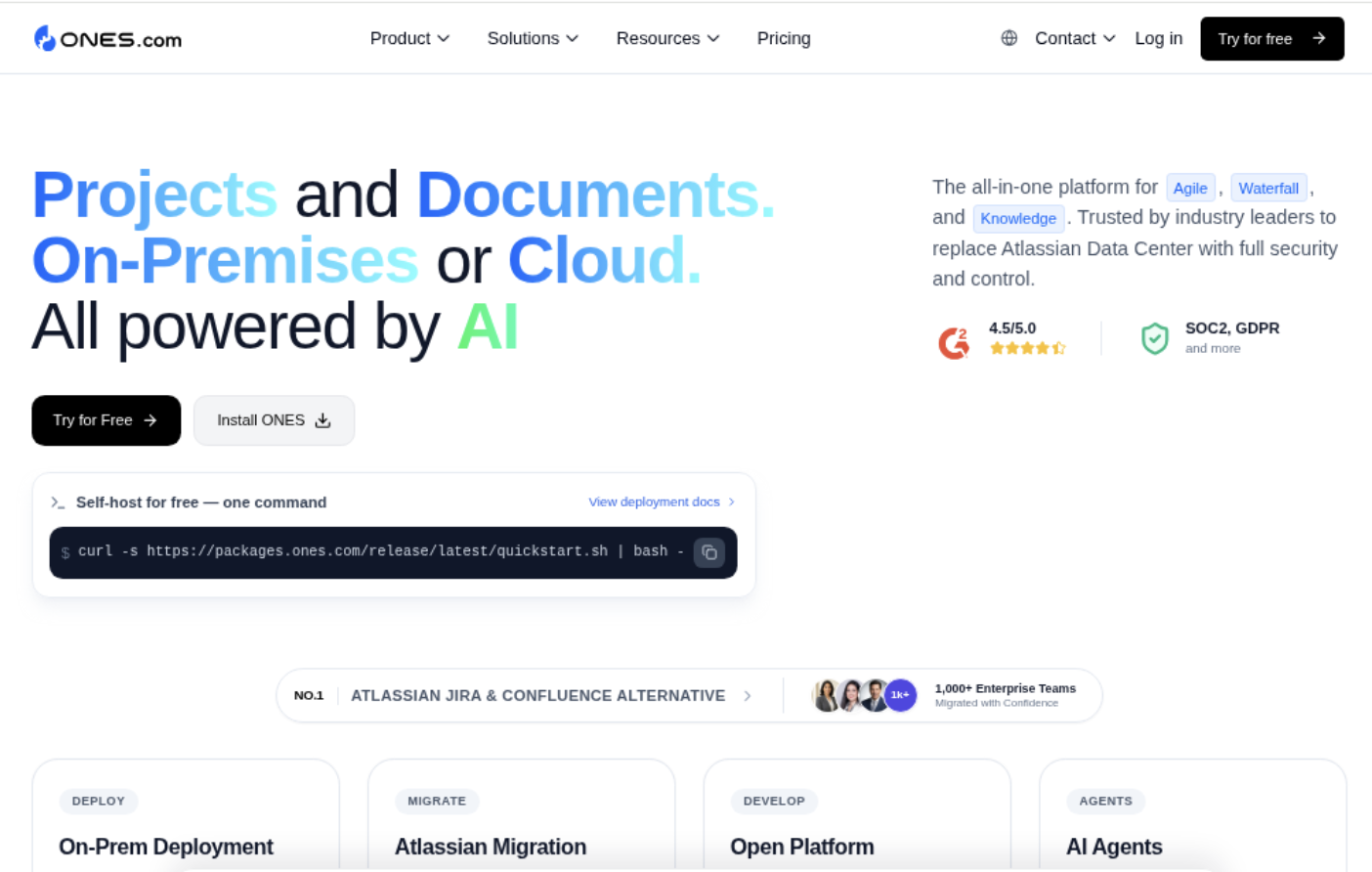
If your team has outgrown note-based coordination, ONES.com provides a more formal operating layer while keeping project context close to the work. It supports cloud, on-premise, private cloud, and air-gapped deployments, with feature parity between cloud and self-hosted versions.
Value Proposition
ONES.com helps you move from manually maintained task notes to shared project workflows with structured reporting, automation, and knowledge management. It is suitable when you need more coordination than a lightweight Obsidian setup can comfortably provide.
Core Capabilities
Unstructured task notes create inconsistent tracking — ONES Project provides Jira-compatible workflows — Your team gets clearer status transitions
When each person formats work differently, reporting becomes unreliable. ONES Project gives you configurable workflow stages and structured issue handling, helping teammates understand what happens next.
Plugin-heavy setups require ongoing maintenance — ONES Project includes native project features — Your team can reduce reliance on add-ons
Obsidian plugins can be useful, but a growing collection creates upgrade and training overhead. Native project capabilities give you a more consistent foundation for everyday work.
Manual priority reviews consume time — Custom fields and workflows capture important context — Managers can sort work with less cleanup
You can define fields for priority, ownership, risk, release, or business area. Those fields support more useful planning views than scattered tags.
Hidden dependencies delay delivery — Sprint management organizes planned work — Teams can see commitments within a defined cycle
Sprint planning helps you group work, review progress, and identify unfinished items before the next cycle begins.
Repeated handoffs create avoidable delays — Automation handles routine transitions — Teams spend more time on decisions
Automation can support actions such as assigning review work, updating statuses, or notifying the right teammate after a transition.
Knowledge gets separated from project activity — ONES Wiki provides a connected knowledge base — Decisions and guidance remain easier to find
Instead of keeping project reasoning in disconnected notes, your team can maintain shared knowledge alongside project activity.
Limited visibility makes planning difficult — Built-in reporting shows project progress — Leaders can spot trends and bottlenecks earlier
Reporting helps you review workload, completion, aging work, and progress without manually assembling updates.
Security requirements restrict cloud choices — On-premise, private cloud, and air-gapped deployment options support controlled environments — Teams can align deployment with operational needs
This matters for organizations that need tighter control over access, infrastructure, or network isolation.
Application Scenarios
A growing product team: Four people begin with Obsidian, then add more projects and stakeholders. ONES Project gives them shared workflows, sprint management, and reporting while ONES Wiki keeps product decisions accessible.
A regulated engineering team: The team needs project tracking inside a restricted environment. An air-gapped deployment supports that operational constraint while preserving the core project capabilities.
A distributed service team: The team manages requests, approvals, and recurring work across several groups. Custom workflows and automation make handoffs more visible than informal note conventions.
Common Challenges and Practical Solutions
Challenge: Teammates use different conventions
Solution: Publish one short template and a small glossary. Include examples for a task, issue, project, and decision. Review the system together after the first month.
Challenge: Work disappears inside long notes
Solution: Give every trackable item its own note or structured entry. Keep context linked rather than burying every task inside a meeting page.
Challenge: Priorities change faster than the workspace
Solution: Add a regular prioritization review. Keep a short list of current commitments and move uncertain ideas into a separate backlog area.
Challenge: Plugin changes interrupt the workflow
Solution: Limit your setup to essential plugins. Record what each plugin does and define a manual fallback for critical views.
Challenge: The team needs formal reporting
Solution: Decide whether reporting is occasional or operationally essential. If leaders depend on reliable metrics every week, consider a dedicated project platform such as ONES Project.
FAQs
Can Obsidian replace Jira for a small team?
Yes, when the team has a modest workload, limited permissions needs, and strong agreement on conventions. Obsidian can handle lightweight issue tracking through properties, templates, links, queries, and review routines. It becomes less suitable when you need complex workflows, formal sprint reporting, detailed permissions, or reliable coordination across many teams.
How should I organize tasks in Obsidian?
Give trackable work a consistent template with status, priority, owner, type, target, and due date. Keep active issues separate from general knowledge notes, then connect them with links. Create views for active, blocked, review, and completed work. A short weekly review keeps those views accurate.
Which plugins help create a Jira-style setup?
Dataview can help you query properties, while kanban, calendar, templating, and task-management plugins can support specialized views. Choose plugins for clear needs rather than collecting features. Test each addition with the whole team, because a plugin that makes one person faster may make onboarding harder for everyone else.
Is Obsidian good for sprint planning?
Obsidian can support simple sprint planning with a sprint note, linked issue notes, status properties, and a review view. It works best when the sprint contains a manageable number of tasks. If you need capacity planning, burndown reporting, dependency tracking, or automatic carryover, a dedicated project management platform will usually require less manual effort.
When should a team move beyond Obsidian?
Consider moving when work volume grows, status reporting becomes manual, permissions become important, or teammates cannot confidently find current priorities. Another signal is repeated disagreement about whether a task is active, blocked, or complete. At that point, formal workflows may save more time than further customization.
Conclusion
Obsidian can act as a lightweight Jira-style system when your small team needs flexible planning, connected context, and simple task visibility. Start with clear work types, one template, a small workflow, focused views, and a weekly review.
But here's the truth: the system will only remain useful while the team can maintain shared conventions without excessive effort. Once reporting, permissions, dependencies, and automation become central, structured project management becomes the safer choice.
The practical path is simple. Use Obsidian when context and flexibility matter most. Evaluate ONES.com when your team needs native project workflows, reporting, automation, knowledge management, or controlled deployment options.