Programming Jira: A Practical Guide to Custom Workflows
Need to customize Jira workflows? Learn programming Jira for smarter automation, integrations, and reliable project control. Read now to get started!
Jira can handle complex project work, but standard settings often stop short of what your team needs. You may want a workflow that checks custom rules, updates related issues, calls another service, or reports exactly what happened. Then the confusing parts appear: APIs, permissions, event triggers, JQL, apps, and cloud hosting differences.
A small configuration mistake can create duplicate updates, broken transitions, or silent automation failures. That makes everyday project work slower and harder to trust. The good news is that programming Jira becomes manageable when you choose the right extension method and test each change carefully.
This guide explains the main programming options, shows a practical workflow, and helps you decide when Jira customization is enough. You will also see how a Jira alternative can simplify complex project operations.
Programming Jira: A Practical Overview
Programming Jira means extending or integrating Jira with code, APIs, workflow logic, automation rules, or custom apps. You can use programming to create issues, update fields, control transitions, connect external services, and tailor Jira to your team’s process.
Most Jira development falls into five areas:
- REST API integrations: Create, read, update, and transition issues through HTTP requests.
- Workflow customization: Add conditions, validators, post-functions, and custom transitions.
- Automation: Trigger actions when an issue changes, reaches a date, or matches a rule.
- App development: Build extensions with Atlassian development frameworks.
- Reporting and queries: Use JQL, dashboards, and custom fields to organize project information.
For example, a support team could program Jira to create a bug when a customer escalation reaches a specific status. A release team could automatically notify testers after a deployment transition.
But here's the truth: you rarely need code for every Jira customization. Start with native configuration, then add scripts or integrations only when a clear business rule requires them.
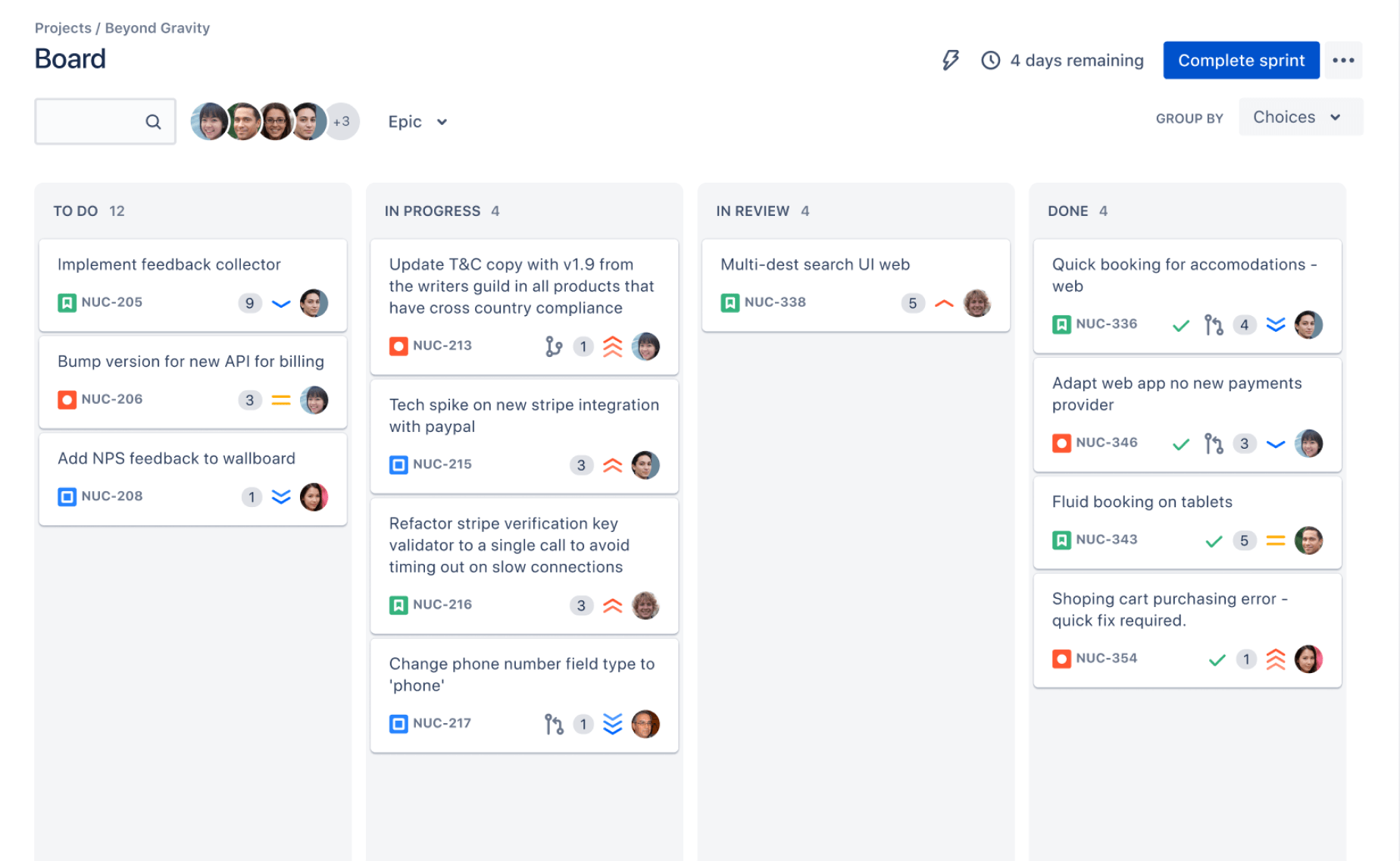
Choose the right programming method
The best method depends on the result you need. A simple notification may need only Jira automation. A two-way connection with a CRM may require the REST API and webhooks.
| Requirement |
Suitable approach |
| Move an issue after a field changes |
Automation rule or workflow post-function |
| Create issues from another application |
REST API integration |
| Block a transition unless conditions are met |
Workflow validator |
| Run custom business logic |
Forge app, approved scripting app, or service integration |
| Find issues matching a project rule |
JQL query |
| Notify an external system about changes |
Webhook or event-driven integration |
Here's why: each method has a different maintenance burden. A native rule is usually easier to inspect than a custom integration running on another service.
How Jira Customization Works
Jira customization connects an event, a rule, and an action. The event might be an issue creation, status change, comment, or scheduled time. The rule decides whether the action should run.
A typical workflow looks like this:
- Trigger: A user creates an issue or changes its status.
- Condition: Jira checks the project, issue type, priority, or field values.
- Validation: Jira confirms that required information exists.
- Action: Jira updates fields, creates related issues, or sends a request.
- Feedback: The system records the result so you can investigate failures.
Consider a production bug workflow. A developer cannot move the issue to “Ready for Release” until the fix version and testing evidence are present. A validator checks those values before allowing the transition.
Native configuration comes first
Before writing code, inspect Jira’s built-in options. You may solve the requirement with custom fields, screens, permissions, workflow rules, automation, or JQL.
This approach reduces maintenance because your team can adjust the behavior inside Jira. It also gives administrators clearer control over permissions and rollout decisions.
Use code when the requirement crosses a system boundary or needs logic that native settings cannot express. For example, synchronizing Jira with a billing platform usually needs an integration.
Cloud and self-managed environments differ
Jira Cloud and self-managed Jira environments can expose different extension options. Cloud development commonly uses remote services, REST APIs, webhooks, and Atlassian’s app frameworks.
Self-managed environments may allow deeper local customization, depending on the edition and installed apps. However, local access can increase upgrade, security, and operational responsibilities.
You might be wondering: which environment should you target? Choose the environment your organization will support for several years. A short-term customization can become expensive when deployment assumptions change.
Using the Jira REST API
The REST API lets a program communicate with Jira over HTTP. You can use it to create issues, search with JQL, modify fields, add comments, transition work, and inspect project settings.
A basic integration usually follows this sequence:
- Authenticate the request with an approved credential method.
- Send an HTTP request to the correct Jira endpoint.
- Include the required project, issue, or field information.
- Check the response status and returned details.
- Handle errors, retries, and rate limits safely.
For example, an internal request portal could create a Jira task after a manager approves work. The portal would send the project key, issue type, summary, description, priority, and selected custom fields.
Plan the request before writing code
Define the smallest useful request first. List the issue type, required fields, transition, authentication method, and expected response.
Then test the request with a safe project. Use a test issue or a controlled project before allowing automatic updates in a live workflow.
Keep the integration’s permissions narrow. A service identity that only creates issues has less risk than one that can administer every project.
Handle failures deliberately
API integrations fail for predictable reasons. Common causes include missing permissions, invalid field IDs, incorrect transition names, expired credentials, and request limits.
Your program should record the request outcome without exposing private credentials. It should distinguish between temporary failures and permanent configuration errors.
For a temporary network failure, retry with increasing delays. For a validation error, stop retrying and alert the person responsible for the Jira configuration.
Use JQL carefully
JQL helps your integration find the right issues. A query such as project = APP AND status = "In Progress" can identify active work in one project.
Use precise filters whenever possible. Broad searches can return too many issues, slow an integration, or cause accidental updates.
Test queries with realistic project permissions. A query may return different results for an administrator and a regular project role.
Building Custom Jira Workflows
A workflow describes how work moves from creation to completion. Programming becomes useful when each transition needs business logic beyond a simple status change.
For example, a compliance workflow might require an owner, risk rating, approval record, and review date. A transition validator can check these values before approval.
Conditions, validators, and post-functions
These workflow elements serve different purposes:
- Conditions control who can see or use a transition.
- Validators check whether the transition request is acceptable.
- Post-functions perform actions after Jira accepts the transition.
Suppose an issue moves to “Approved.” A condition could limit the transition to project leads. A validator could require an approval comment. A post-function could create implementation tasks.
Let me explain the risk: putting too much logic into one transition makes troubleshooting difficult. Separate access control, validation, and follow-up actions whenever possible.
Use custom fields with discipline
Custom fields add useful context, but too many fields create clutter. Before adding one, confirm who completes it, when it becomes required, and how reports will use it.
Choose field names that describe business meaning. “Customer impact” is clearer than “Impact 2,” especially when several teams share the project.
Define allowed values carefully. A controlled list creates more reliable reports than several spellings of the same status.
Keep transitions understandable
A workflow should reflect real decisions. If a transition exists only because a script requires it, users may bypass the process or choose the wrong status.
Use clear transition names such as “Send for Security Review” or “Return to Engineering.” Explain required fields near the transition when Jira supports that experience.
Jira Automation, Apps, and Integrations
Automation is often the fastest way to remove repetitive work. A rule can react to issue events, scheduled times, field changes, comments, or incoming requests.
The best automation has a visible purpose. For example, when a high-priority incident is created, Jira can assign an owner, add an escalation label, and notify an on-call channel.
When automation is enough
Use native automation for straightforward actions with predictable conditions. Examples include assigning issues, copying fields, creating linked tasks, and sending notifications.
Automation works well when the rule can be explained in one sentence. “When priority becomes highest, notify the incident channel” is easy to review.
When an app makes sense
A Jira app may help when you need advanced scripting, specialized reports, portfolio planning, or complex workflow behavior.
Evaluate an app by checking its permission scope, vendor support, upgrade path, hosting model, and effect on performance. A powerful app can still create operational work.
Third-party scripting tools may provide flexible logic, but they require careful governance. Review scripts as you would review application code.
When an external service is better
Use an external service when the logic belongs outside Jira. Examples include billing calculations, identity checks, customer communication, or long-running processing.
Connect the service through secure authentication, webhooks, and clear error handling. Avoid creating a hidden dependency that only one administrator understands.
A Safe Development Workflow
Programming Jira becomes easier when you treat each customization as a small product. Define the desired behavior, build the smallest version, test it, and monitor the result.
- Describe the business outcome. Write what should improve, such as reducing manual triage time.
- Map the current process. Identify statuses, roles, fields, approvals, and external systems.
- Choose the least complex method. Start with configuration before scripts or integrations.
- Build in a controlled environment. Use a test project and realistic examples.
- Test successful and failed paths. Check missing fields, denied permissions, duplicates, and timeouts.
- Review security. Limit credentials, permissions, visible information, and administrative access.
- Release gradually. Start with one team or project before broader adoption.
- Monitor after launch. Check errors, execution history, user feedback, and performance.
Test with realistic examples
Testing only the ideal path creates false confidence. Include incomplete issues, unusual priorities, duplicate requests, cancelled work, and users with different roles.
For a release workflow, test a release with no test owner, a release with a closed blocker, and a release that receives two approval requests.
Plan for maintenance
Every integration needs an owner. Record its purpose, permissions, trigger conditions, expected responses, and recovery steps.
Review customizations after major workflow changes. A renamed field or removed status can break code that still depends on the old configuration.
The best part? Good maintenance notes reduce the risk that one person becomes the only person who understands the workflow.
Common Programming Jira Mistakes
Writing code before defining the process
Teams sometimes automate a confusing process instead of improving it. The result is faster confusion and more difficult troubleshooting.
Draw the process first. Identify the decision points, required information, owners, and completion criteria. Then select the Jira feature that supports those decisions.
Using excessive permissions
An integration may request broad access because it is convenient during development. That convenience creates unnecessary exposure in production.
Reduce permissions before launch. Separate administrative setup from everyday execution, and rotate credentials through an approved security process.
Ignoring duplicate events
Webhook deliveries and retries can cause the same action to run more than once. A simple issue creation rule may create duplicate tasks.
Use idempotency checks where possible. Before creating a related issue, check whether an equivalent issue already exists.
Hard-coding configuration
Hard-coded project keys, field identifiers, and status names make integrations fragile. A project change can break the program without warning.
Keep changeable settings in a controlled configuration area. Validate those settings during deployment and report missing values clearly.
Programming Jira Solutions: ONES.com
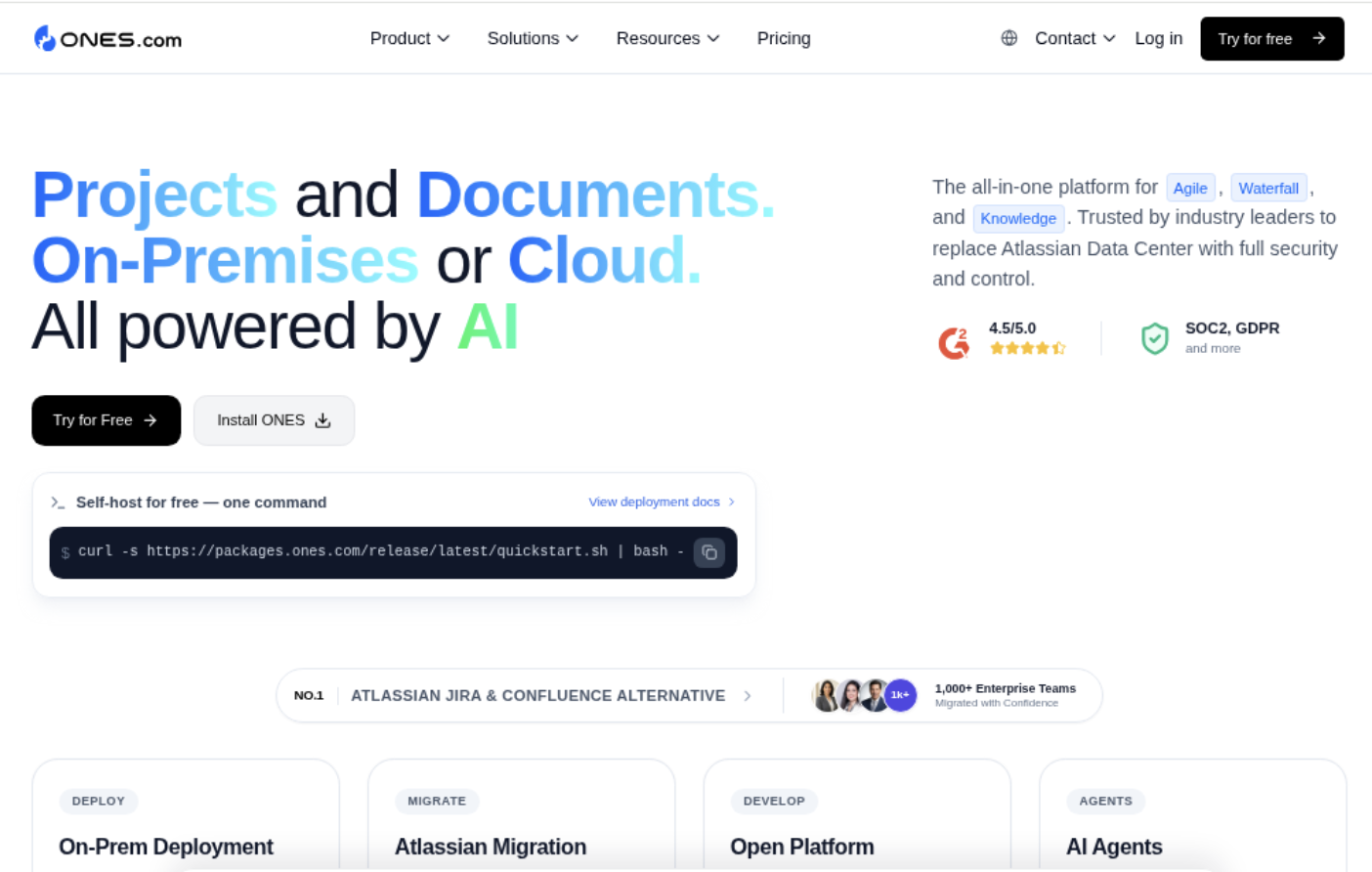
Value Proposition
ONES.com combines project management and knowledge management in one platform. Its project management product, ONES Project, is a Jira alternative for teams seeking configurable workflows with fewer separate plugins.
ONES Project and ONES Wiki are sold separately. ONES.com supports cloud, on-premise, private cloud, and air-gapped deployments, with full feature parity between cloud and self-hosted versions.
Core Capabilities
Complex workflow maintenance
Pain: Custom Jira workflows can become difficult to manage across projects.
ONES capability: ONES Project provides custom workflows, fields, sprint management, and automation.
Result: Teams can represent approval, development, testing, and release stages in one configurable workspace.
Plugin dependency
Pain: Advanced project operations may require several separate extensions.
ONES capability: ONES Project includes built-in reporting, custom workflows, automation, and Jira-compatible workflows.
Result: Teams can reduce the number of moving parts they maintain for everyday project work.
Self-hosted requirements
Pain: Some organizations need control over hosting, network access, or deployment location.
ONES capability: ONES.com supports on-premise, private cloud, and air-gapped deployment options.
Result: Restricted or regulated teams can choose an environment aligned with their operational requirements.
Cloud and self-hosted differences
Pain: Teams may worry that a self-hosted edition lacks important cloud features.
ONES capability: ONES.com provides full feature parity between cloud and self-hosted versions.
Result: Deployment decisions can focus on governance and infrastructure rather than losing core capabilities.
Jira workflow migration
Pain: Rebuilding familiar issue processes can slow adoption.
ONES capability: ONES Project supports Jira-compatible workflows and common project management patterns.
Result: Teams can preserve recognizable ways of planning, assigning, and tracking work.
Reporting visibility
Pain: Custom integrations often need extra reporting work before leaders can see progress.
ONES capability: ONES Project includes built-in reporting for project tracking and delivery visibility.
Result: Teams can review progress without assembling every view through separate extensions.
Knowledge connected to delivery
Pain: Technical guidance and project execution may become separated across different systems.
ONES capability: ONES Wiki provides knowledge management alongside the ONES.com platform.
Result: Teams can keep delivery work and related operational knowledge closer together.
Small-team adoption
Pain: Smaller teams need a practical way to evaluate a project platform before wider adoption.
ONES capability: The free plan supports up to 30 seats.
Result: A team can test workflows and collaboration with a limited initial commitment.
Application Scenarios
Software delivery: A development team can combine sprint planning, custom fields, release workflows, automation, and built-in reporting. This supports a Jira-like process while reducing reliance on multiple plugins.
Restricted environments: An organization with isolated networks can deploy ONES.com in an air-gapped environment. Its project team can retain structured planning and workflow controls without using a public cloud deployment.
Cross-functional operations: A product, engineering, and support group can manage project work in ONES Project while maintaining related knowledge in ONES Wiki. This creates a clearer connection between decisions and execution.
Common Challenges
Challenge: The workflow is too complicated
Solution: Remove transitions that do not represent a real decision. Keep required fields tied to specific outcomes, such as approval, testing, or release readiness.
Challenge: Automation runs twice
Solution: Add duplicate checks before creating issues or sending notifications. Store a reliable reference to the related issue when the integration supports it.
Challenge: API credentials fail unexpectedly
Solution: Track credential expiration, permission changes, and authentication errors. Use a controlled rotation process instead of replacing credentials manually during an outage.
Challenge: Users bypass the process
Solution: Review the workflow with real users. If a required field feels irrelevant, change the rule or explain the business reason directly in the transition experience.
Challenge: Custom code becomes hard to own
Solution: Assign a technical owner, write recovery steps, and keep configuration separate from application logic. Review the customization after major project changes.
FAQs
What does programming Jira include?
Programming Jira includes API integrations, workflow validators, post-functions, automation rules, custom apps, webhooks, and JQL-driven reporting. The right option depends on the requirement. A notification may need only automation, while synchronizing Jira with another business system may need an API service. Start with the simplest method that produces the required result.
Can I customize Jira without writing code?
Yes. Jira provides configuration options for workflows, fields, screens, permissions, automation, dashboards, and queries. These features can support many common processes without custom programming. Code becomes useful when you need external system synchronization, advanced calculations, specialized behavior, or logic that native configuration cannot express clearly.
Which language is used for Jira programming?
There is no single required language. REST API integrations can use JavaScript, Python, Java, C#, or any language that can send HTTP requests. App development depends on the framework and environment you choose. The most important skills are API design, authentication, error handling, workflow modeling, and secure permission management.
How do I test a Jira integration safely?
Use a controlled project with realistic issue types, fields, users, and workflow paths. Test successful actions and failures, including missing values, denied permissions, duplicate events, timeouts, and invalid transitions. Begin with a small rollout, monitor execution results, and expand only after the integration behaves predictably.
Is ONES Project a Jira alternative?
Yes. ONES Project is a Jira alternative with Jira-compatible workflows, custom workflows and fields, sprint management, automation, and built-in reporting. It supports cloud, on-premise, private cloud, and air-gapped deployment. Teams can evaluate it when they want configurable project management with fewer separate extensions.
Conclusion
Programming Jira works best when you begin with the process, choose the least complex extension method, and test every realistic path. Native configuration can handle many requirements, while APIs, webhooks, apps, and scripts support deeper integrations.
Keep permissions narrow, prevent duplicate actions, document ownership, and monitor changes after launch. If Jira customization becomes difficult to maintain, compare platforms such as ONES Project, a Jira alternative with built-in workflows, reporting, automation, and flexible deployment options.
The problem is usually not a lack of Jira features. It is unclear process logic, excessive complexity, or weak maintenance. Define the outcome first, then build only what your team can safely operate.