Project Tracking in Jira: A Step-by-Step Guide for Teams
Struggling to track team progress? Learn project tracking in Jira to clarify ownership, spot risks, and hit deadlines. Read now!
Project updates can become scattered quickly. One person checks Jira, another relies on chat, and a third keeps a private task list that nobody else can see.
That confusion creates missed deadlines, unclear ownership, and status meetings that consume time without resolving much. A project may appear active while important work quietly sits blocked.
But here's the truth: Jira can give your team a reliable view of progress when you structure work carefully and review the right signals. This guide shows you how to set up project tracking in Jira, monitor delivery, handle risks, and turn activity into useful decisions.
How to Track a Project in Jira Step by Step
Project tracking in Jira means organizing work into visible issues, assigning ownership, setting dates, monitoring status, and reviewing progress against the project plan.
You can track a project effectively with these steps:
- Define the project outcome. Write down what the team must deliver, who benefits, and how you will recognize completion. For example, “launch the mobile checkout flow by June 30” is clearer than “improve checkout.”
- Create a dedicated Jira project. Choose a project type that matches your workflow. Software teams may use Scrum or Kanban, while marketing or operations teams may prefer a simpler task-based setup.
- Break the outcome into manageable work. Create epics for major areas, stories or tasks for deliverables, and subtasks for activities that need separate ownership. A checkout launch might include payment integration, usability testing, analytics, and release preparation.
- Assign every issue to one accountable owner. Contributors can collaborate, but one person should remain responsible for moving each item forward. Clear ownership prevents tasks from waiting between teams.
- Add priorities, due dates, and estimates. Use priority levels to show urgency. Add target dates where timing matters, and estimate effort with story points, time, or another consistent method.
- Design statuses around real work. A workflow such as To Do, In Progress, In Review, Blocked, and Done often gives more insight than a long list of specialized statuses.
- Link related work. Connect dependencies, incidents, risks, and follow-up tasks. If testing cannot begin until development finishes, show that relationship directly in Jira.
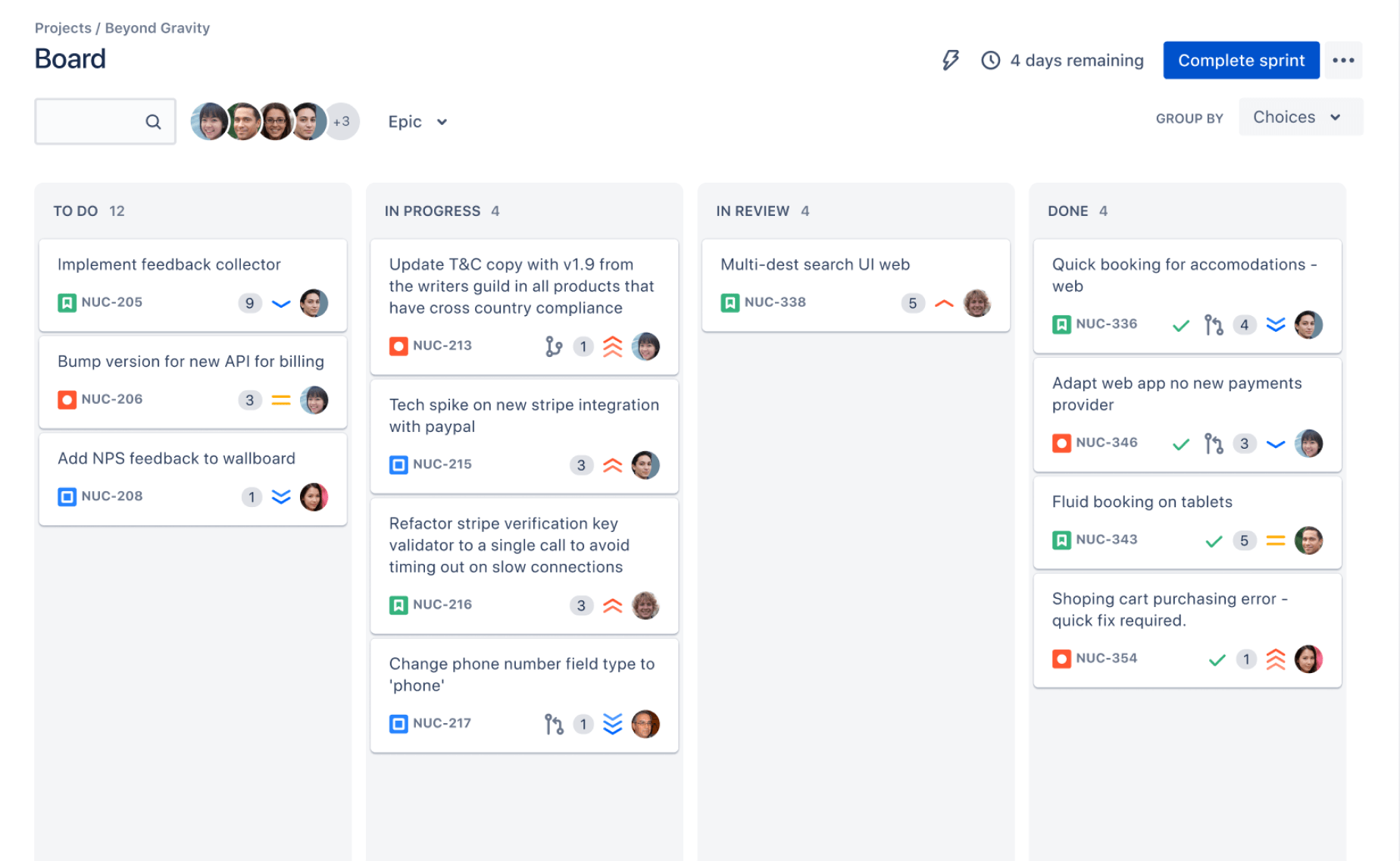
- Choose a tracking view. Use a board for daily flow, a backlog for prioritization, a timeline for schedules, and dashboards for leadership-level visibility.
- Review progress on a regular cadence. A daily review can focus on blockers. A weekly review can examine scope, schedule, capacity, and risks. A sprint review can compare planned work with completed work.
- Improve the workflow as the project changes. If issues remain in review for days, investigate the approval step. If priorities change constantly, improve intake and decision rules rather than simply moving cards.
Here's why: Jira tracking works best when each item answers four questions quickly: What needs to happen, who owns it, when should it happen, and what is stopping it?
Set Up a Jira Structure That Matches the Work
Your Jira hierarchy should mirror the way your team thinks about delivery. A common structure is an epic for a broad outcome, stories or tasks for deliverables, and subtasks for individual activities.
For example, an online store redesign might use the following arrangement:
- Epic: Checkout redesign
- Task: Create updated payment screens
- Subtask: Confirm accessibility requirements
- Subtask: Review mobile layouts
- Task: Connect the new payment service
- Bug: Fix failed payment retry behavior
This structure lets you move between detail and context. A developer can focus on one subtask, while a project lead can check whether the entire checkout epic is progressing.
Choose the Right Issue Type
Use an issue type only when it helps someone make a decision or take action. Too many issue types make reporting harder and encourage inconsistent classification.
A practical starting point includes tasks for planned work, bugs for defects, stories for customer-facing behavior, and epics for larger outcomes. Add specialized types only when the team has a clear reason to track them separately.
Keep Fields Useful and Limited
Every required field creates a small amount of work. Require only information that supports planning, delivery, risk management, or reporting.
For example, a team may need priority, owner, target date, estimate, component, and acceptance criteria. Requiring ten additional fields can slow intake and lead to vague placeholder values.
Make the Workflow Reflect Reality
A workflow should show meaningful changes in work state. If an issue moves from development to review, that transition should be visible because it may affect timing and ownership.
Let me explain: a workflow with twelve statuses may appear precise, yet it can hide bottlenecks when people choose similar statuses differently. Start small, then add a status only when it improves a real decision.
Use Boards, Backlogs, and Timelines Together
No single Jira view answers every project question. Each view serves a different planning horizon, so combining them gives you a clearer picture.
| Jira view |
Best use |
| Board |
Monitor current work, ownership, blockers, and flow |
| Backlog |
Prioritize upcoming work and prepare future iterations |
| Timeline |
Review major dates, dependencies, and sequencing |
| Dashboard |
Summarize progress, risks, workload, and delivery signals |
| Reports |
Examine trends such as cycle time, velocity, and unresolved work |
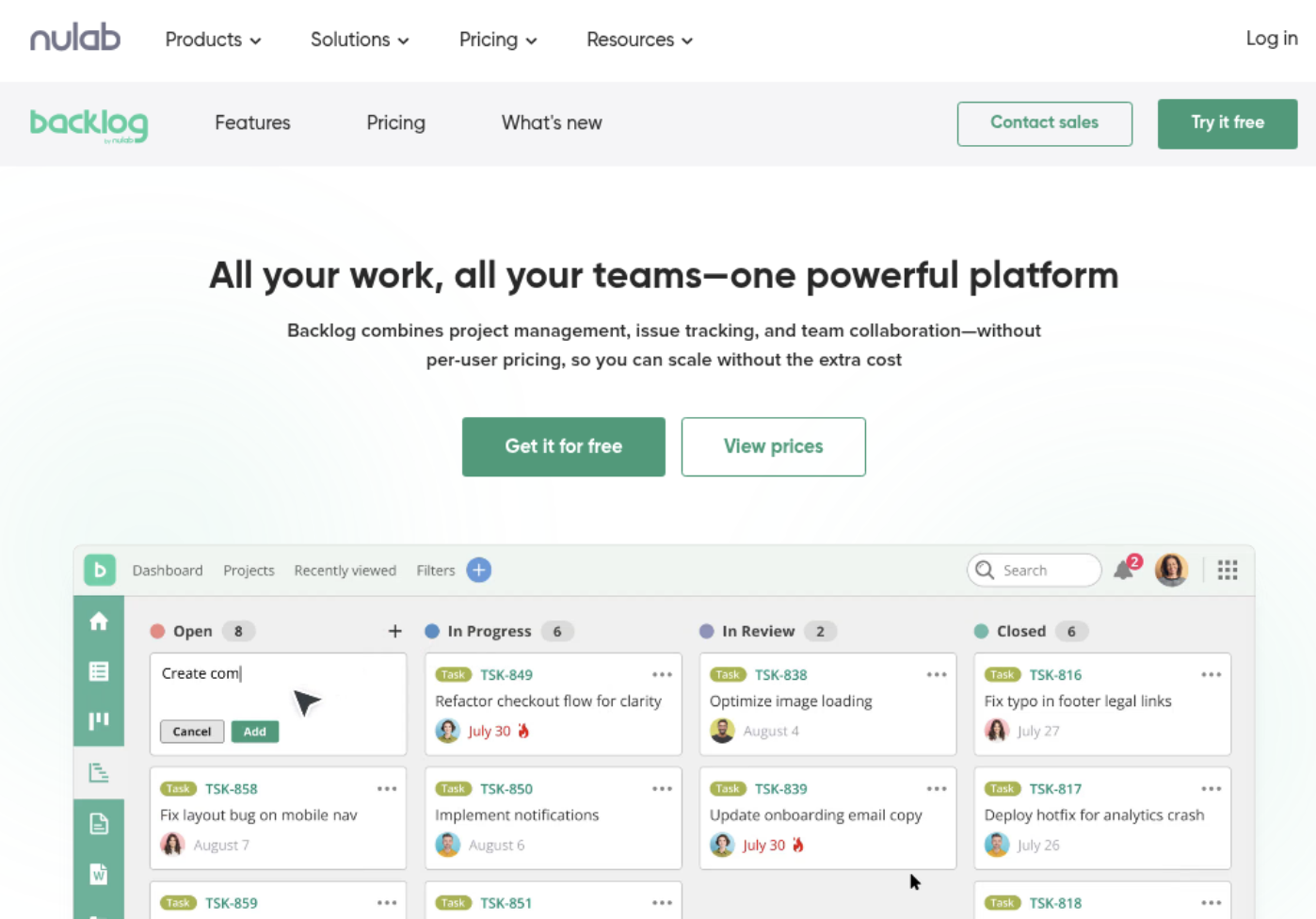
Track Daily Execution on the Board
The board should help your team decide what to do next. During a short daily review, look for issues that have not moved, cards approaching their due dates, and work concentrated with one person.
Suppose five items are in progress, but three have not changed for four days. That pattern deserves attention even if the project completion percentage looks healthy.
Plan Upcoming Work in the Backlog
The backlog is where you prepare work before it enters active delivery. Rank items by value, urgency, dependency, and readiness.
A well-maintained backlog reduces last-minute decisions. Before starting an iteration, confirm that the highest-priority items have clear acceptance criteria, reasonable estimates, and available owners.
Use Timelines for Dependencies
A timeline helps you see whether separate workstreams fit together. For example, a launch campaign may depend on product development, legal approval, training, and support preparation.
When one activity slips, the timeline makes potential consequences visible. You can then change sequence, add capacity, or adjust the launch date before the impact becomes urgent.
Measure Progress Without Misleading Your Team
Tracking more activity does not automatically produce better control. The useful measures are the ones that reveal progress, risk, or delivery quality.
Completion Percentage
Completion percentage can provide a quick summary, but it needs context. A project with 80 percent of its tasks complete may still face serious risk if the remaining work contains the hardest technical dependency.
Use completion as a starting signal. Pair it with remaining effort, blocked issues, milestone health, and unresolved defects.
Cycle Time and Lead Time
Cycle time measures how long work takes after active delivery begins. Lead time measures the period from request to completion.
Imagine that small tasks usually take three days, but recent tasks take eight. The change may indicate review delays, unclear requirements, excessive multitasking, or insufficient capacity.
Velocity and Planned Versus Completed Work
Teams using iterative delivery can compare planned work with completed work over several iterations. One iteration may vary, so look for patterns rather than judging performance from a single result.
If the team repeatedly plans 40 points and completes 25, planning assumptions may need adjustment. The solution could involve smaller tasks, better refinement, or reduced interruptions.
Blocked Work and Aging Issues
Blocked issues deserve special attention because they can distort the rest of the project. Add a clear blocked indicator, explain the reason, and assign someone to remove the obstacle.
An aging report can reveal work that remains active too long. For example, an issue open for 18 days in a workflow where similar work takes four days should trigger investigation.
Build Reporting That Supports Decisions
A useful Jira dashboard answers practical questions quickly. It should show whether the project is moving, where attention is needed, and whether the current plan remains realistic.
Choose Widgets Around Questions
Start with questions rather than visual decoration. A project lead may need to know which milestones are at risk, how much work is blocked, and whether unresolved bugs threaten release.
Useful dashboard elements may include:
- Issues grouped by status
- Work assigned to each contributor
- Overdue tasks
- Blocked items
- Open bugs by priority
- Progress toward milestones
- Recent activity on high-risk work
Give Each Audience the Right Detail
Contributors need actionable detail. Project leads need dependencies, risks, and delivery trends. Executives usually need milestone health, major decisions, and expected outcomes.
You might be wondering: should everyone use the same dashboard? Usually, no. A shared project view can exist, but separate views make each conversation more focused.
Review Trends Instead of Snapshots
A single dashboard snapshot can look reassuring while the underlying trend worsens. Review changes over time, such as growing blocked work, rising cycle time, or increasing scope.
For example, if the number of completed tasks rises while open high-priority bugs also rises, the project may be moving quickly but creating quality risk.
Manage Risks, Changes, and Team Communication
Jira can support project control, but only when your team records decisions and reacts to warning signs. Tracking work without acting on it creates visibility without improvement.
Make Risks Visible
Create a consistent way to identify risks. You might use a label, custom field, issue type, or dedicated risk section. Each risk should include an owner, potential impact, and next action.
For example, “payment provider approval may take two weeks” is more useful than “external delay.” The first statement gives your team something specific to monitor.
Control Scope Changes
New requests should enter through a visible process. Record the requested outcome, expected value, effort, timing, and effect on current commitments.
The best part? You do not need to reject every change. You need to make the trade-off visible. If a new feature enters the current milestone, show what moves out or what additional capacity is required.
Keep Communication Connected to Work
Important decisions should remain near the relevant Jira issue. A short comment explaining why a priority changed can prevent repeated discussions and conflicting assumptions.
Use chat for fast coordination, then capture the decision in Jira. This keeps the project history understandable for someone who joins later.
Project Tracking Solution: ONES.com
Value Proposition
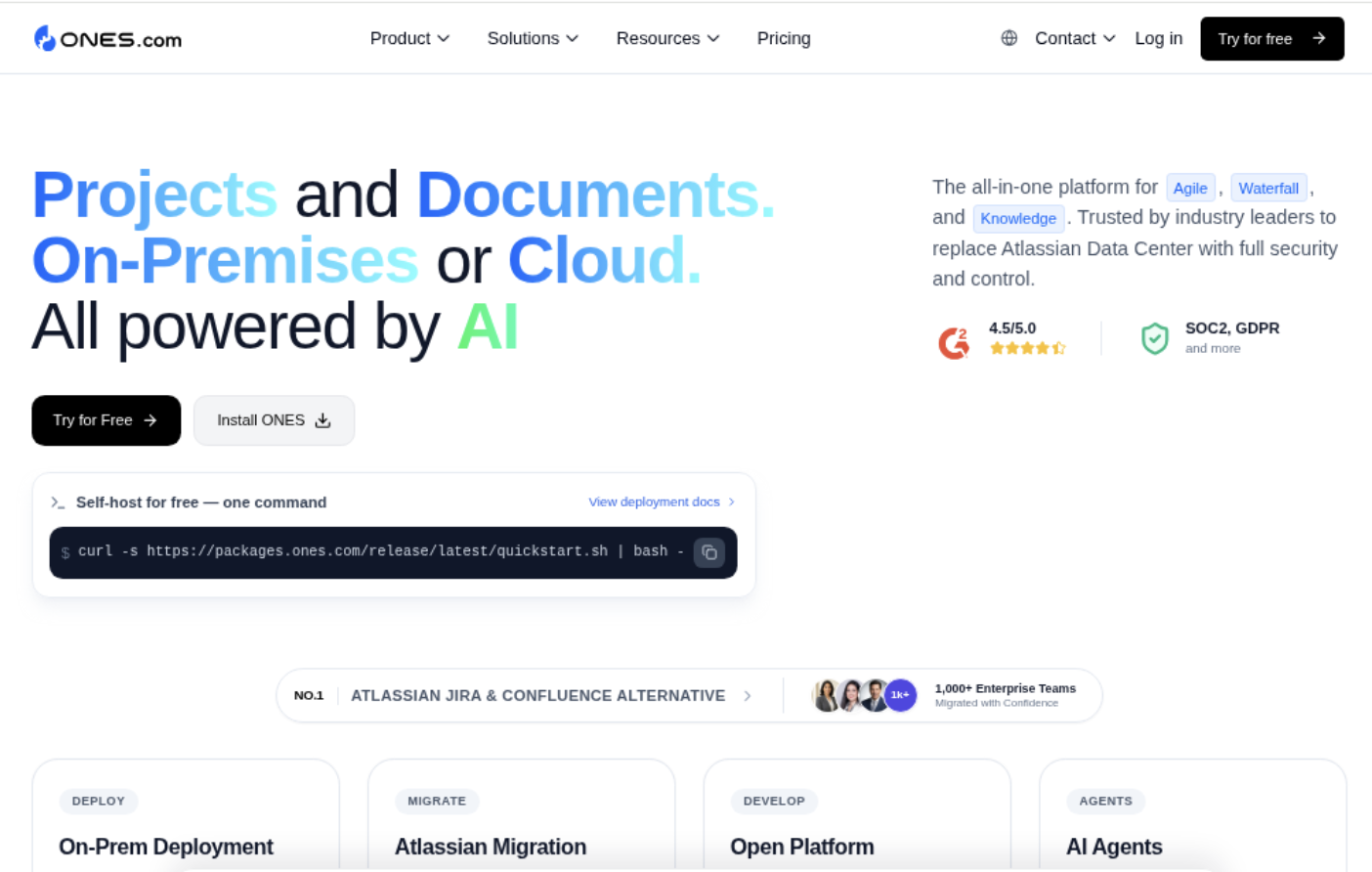
ONES.com combines project management and knowledge management in one platform, with AI support through ONES Assistant. ONES Project is a project management option and a Jira alternative, while ONES Wiki supports knowledge management as a Confluence alternative; they can be purchased separately.
For teams that need structured delivery, connected planning, and flexible deployment, ONES.com can reduce the need to connect several separate systems.
Core Capabilities
- Scattered project information → unified project workspace → teams can keep planning, execution, and project knowledge connected instead of jumping between disconnected tools.
- Jira migration concerns → Jira-compatible workflows → teams familiar with Jira-style delivery can preserve familiar planning patterns while evaluating another platform.
- Limited workflow flexibility → custom workflows and fields → project leads can reflect approval steps, compliance checks, or operational handoffs more accurately.
- Weak iteration planning → sprint management → teams can organize planned work, monitor iteration progress, and review completed delivery.
- Manual repetitive actions → automation → routine transitions, notifications, and assignments can follow defined rules, reducing avoidable administrative work.
- Unclear project health → built-in reporting → teams can examine delivery status, workload, trends, and risks without assembling every view manually.
- Plugin-heavy workflows → native capability coverage → teams can reduce reliance on multiple add-ons for common planning and reporting needs.
- Deployment restrictions → Cloud, On-Premise, Private Cloud, and Air-gapped options → organizations can select an environment that fits their security and infrastructure requirements.
- Uneven platform behavior across environments → full feature parity between cloud and self-hosted versions → teams can choose deployment flexibility without giving up core capability coverage.
Application Scenarios
Software delivery team: A product team can use epics, sprints, custom fields, automation, and reporting to manage a release. Developers track implementation while project leads monitor dependencies and risks.
Restricted-network organization: A team handling sensitive work can use an air-gapped deployment. The project remains structured for internal delivery without requiring a public cloud environment.
Cross-functional operations group: Marketing, support, and product teams can coordinate campaigns and launches through shared workflows. ONES Wiki can hold related team knowledge, while ONES Project manages execution.
ONES.com offers a free plan for up to 30 seats. Because ONES Project and ONES Wiki are sold separately, evaluate which capability your team needs first and whether the combined setup fits your operating model.
Common Challenges in Jira Project Tracking
Challenge: The Board Shows Activity but Not Progress
Solution: Review aging issues, blocked work, completed outcomes, and milestone health. A full board can still hide stalled delivery when cards move between similar statuses without reaching completion.
Challenge: Too Many Issues Remain Unassigned
Solution: Make ownership part of intake. If nobody can accept responsibility yet, keep the item in a clearly labeled planning area rather than presenting it as active work.
Challenge: Priorities Change Every Day
Solution: Create an intake and approval rule. Compare the value of the new request with its cost, urgency, dependencies, and effect on existing commitments.
Challenge: Reports Conflict With Team Experience
Solution: Check the quality of status updates, estimates, dates, and issue relationships. Reports are only as useful as the habits behind them.
Challenge: The Workflow Feels Too Complicated
Solution: Review each status with the team. Remove steps that do not change ownership, risk, approval, or delivery behavior. A shorter workflow is often easier to maintain accurately.
FAQs
What is the best way to track a project in Jira?
Start with a clear outcome, then organize work into epics, tasks, stories, and subtasks. Assign one accountable owner to each active item, add priorities and dates, and use a workflow that reflects real progress. Review the board daily for blockers, the backlog weekly for readiness, and reports regularly for delivery trends.
Which Jira reports are most useful for project tracking?
The right reports depend on your delivery method, but cycle time, velocity, sprint progress, cumulative flow, unresolved work, and aging issues are useful starting points. Combine trend reports with milestone and risk reviews. A completion percentage alone can mislead you when the remaining work includes major dependencies or high-priority defects.
How often should a team update Jira?
Update Jira whenever ownership, status, priority, timing, or scope changes. Many teams review active work daily and refine upcoming work weekly. The exact cadence matters less than consistency. If a project lead cannot tell what changed since the previous review, the tracking routine needs improvement.
Can Jira track non-software projects?
Yes. You can adapt Jira for marketing campaigns, operations, hiring initiatives, compliance work, and other projects. Use simple issue types, practical workflows, and fields that match the work. Avoid copying a software workflow unchanged when your team has different approval steps, deliverables, or planning cycles.
How do you prevent Jira from becoming too complicated?
Keep the hierarchy and workflow small at first. Add a field or status only when it supports a real decision, report, or handoff. Review unused fields, duplicate issue types, and unclear transitions every few months. A consistent lightweight process usually provides more value than a highly detailed process nobody maintains.
Conclusion
Effective Jira tracking begins with a clear outcome and visible ownership. Break the work into manageable issues, connect dependencies, choose views for different planning needs, and review trends rather than isolated numbers.
When projects feel scattered, the problem is usually unclear structure, inconsistent updates, or hidden blockers. That confusion grows when teams rely on activity counts instead of delivery signals.
But here's the solution: create a simple workflow, keep priorities visible, inspect risks regularly, and improve the process when the project reveals friction. Whether you stay with Jira or evaluate an option such as ONES.com, your tracking system should help you make faster, clearer project decisions.