ScriptRunner for Jira Cloud Pricing: 2026 Buyer’s Guide
Wondering how scriptrunner for jira cloud pricing works? This 2026 guide breaks down tiers, billing, taxes, and growth costs. Read now to plan.
ScriptRunner can transform Jira Cloud into a powerful automation and workflow platform. It can also make your subscription harder to forecast.
You may see several pricing variables at once: Jira seat count, billing period, app tier, taxes, promotional terms, and future growth. A small team can overestimate the cost, while a growing organization can underestimate it by pricing only today’s seats.
But here's the truth: ScriptRunner for Jira Cloud pricing is usually tied to the Jira site’s applicable user tier, rather than the number of people who actively run scripts each day.
This guide shows you how to estimate the real expense, compare monthly and annual billing, calculate growth impact, and decide whether the app fits your automation needs.
ScriptRunner for Jira Cloud Pricing: The Core Calculation
ScriptRunner for Jira Cloud pricing is the subscription cost for Adaptavist’s Jira Cloud app, typically determined by your Jira Cloud user tier, billing cycle, and selected commercial terms.
The exact amount can change as marketplace pricing, Jira seat count, taxes, and commercial offers change. For an accurate estimate in 2026, check the current Atlassian Marketplace listing or request a quote for your organization.
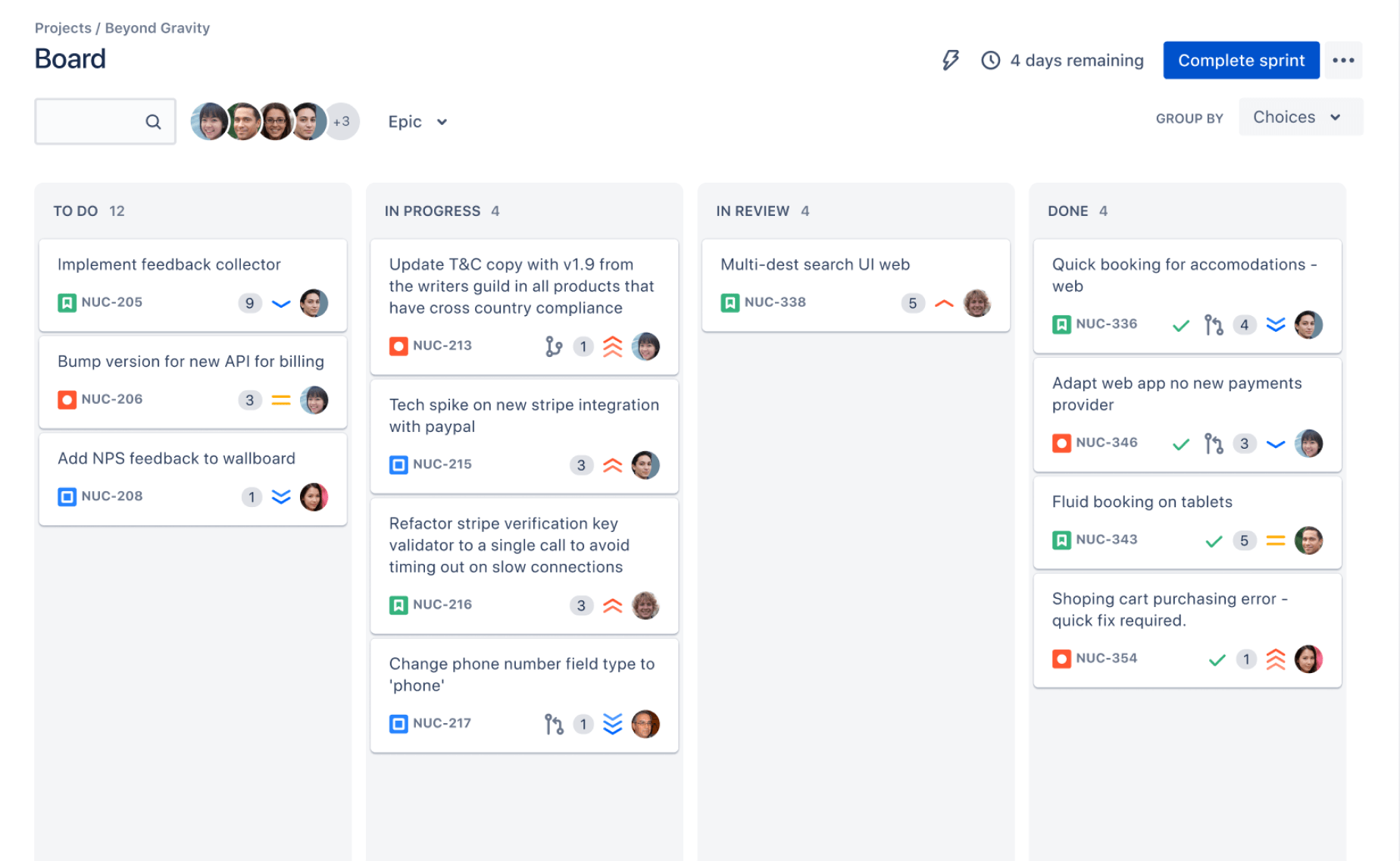
What Usually Determines the Price
- Jira Cloud user tier: Your applicable Jira seat range is usually the biggest pricing factor.
- Billing period: Monthly billing supports flexibility, while annual billing may offer a different commercial rate.
- Cloud app terms: Marketplace apps can have their own pricing rules, trial periods, and renewal conditions.
- Tax and currency: Your final invoice may differ from the displayed subscription amount.
- Growth: Adding Jira seats can move your organization into a higher tier.
For example, imagine a company with 180 Jira seats. If it grows to 260 seats, the cost may change because the company crosses a tier boundary, even if only a small group writes or maintains scripts.
That distinction matters. Paying for 20 script authors does not necessarily mean you receive a 20-person app subscription.
A Practical Estimation Formula
Use this formula for a working budget:
Estimated annual app cost = applicable annual tier price + taxes − confirmed discounts
For monthly planning, use:
Estimated monthly cost = applicable monthly tier price + taxes
Do not multiply a monthly price by 12 and assume the annual total will match. Annual plans, billing rules, and promotional offers can produce different totals.
| Budget item |
What to check |
| Jira seat count |
Current seats, planned hires, contractors, and inactive accounts |
| Pricing tier |
The tier that covers your full Jira Cloud population |
| Billing cycle |
Monthly flexibility versus annual budget predictability |
| Taxes and currency |
Regional tax treatment and invoice currency |
| Renewal impact |
Expected price after a trial, discount, or promotional period |
How to Build a Reliable 2026 Budget
The best estimate starts with your expected Jira population, not your current automation workload. Count everyone covered by the Jira site, then test what happens if that population grows.
- Record your current Jira tier. Include all active accounts connected to the site.
- Separate present and forecast seats. Create a current estimate and a 12-month estimate.
- Check the applicable ScriptRunner tier. Confirm whether the app uses the full Jira population for billing.
- Compare monthly and annual totals. Include cash-flow needs, renewal timing, and any discount.
- Add tax and currency adjustments. The marketplace display may not equal your final invoice.
- Test the next tier. This shows the financial effect of hiring, acquisitions, or wider Jira adoption.
- Include administration costs. Account for script maintenance, testing, governance, and support time.
Here's why: the subscription is only one part of the ownership cost. A complex script that fails during an incident can require more engineering time than the app itself costs.
Use Three Planning Scenarios
Build a simple low, expected, and high case. This approach gives your finance team a range instead of a fragile single number.
| Scenario |
Planning assumption |
Why it matters |
| Low |
Current Jira population remains stable |
Useful for immediate approval and short-term cash planning |
| Expected |
Moderate hiring and ordinary project growth |
Usually the most useful operating budget |
| High |
Major hiring, acquisition, or Jira expansion |
Reveals tier jumps and renewal risk |
Suppose your current site sits near the upper edge of a tier. A high-growth scenario could move the subscription into the next band. That difference should appear in your business case before procurement begins.
Monthly Versus Annual Subscription Planning
Monthly billing can suit a pilot, a short-term migration, or a team still validating its automation roadmap. You pay for flexibility and can reassess sooner.
Annual billing can make sense when ScriptRunner supports important workflows and your Jira population is predictable. It simplifies renewal planning and may have different commercial terms.
You might be wondering: which option is cheaper? The answer depends on the current marketplace price, promotional terms, seat stability, and how long you expect to use the app.
When Monthly Billing Makes Sense
- You are testing whether ScriptRunner replaces several manual processes.
- Your Jira rollout is still expanding across departments.
- You expect a merger, restructuring, or major seat reduction.
- Your team needs a short evaluation period before committing.
When Annual Billing Makes Sense
- ScriptRunner supports production workflows with no planned replacement.
- Your Jira seat count is stable and easy to forecast.
- Your finance team prefers predictable annual commitments.
- The annual commercial terms are favorable after taxes and discounts.
A useful decision rule is simple: choose monthly billing when uncertainty is expensive, and annual billing when interruption or renewal administration is more expensive.
What You Receive for the Subscription
ScriptRunner is valuable when your team needs advanced automation, scripted conditions, validators, listeners, scheduled actions, or custom workflow behavior that standard Jira automation cannot handle easily.
For example, a team may use a scripted validator to prevent a release ticket from moving forward until required fields are complete. Another team may synchronize issue fields when a parent item changes.
Typical Capability Areas
| Capability area |
Example business use |
| Workflow controls |
Block transitions until approval, ownership, or testing conditions are met |
| Field behavior |
Calculate values or display fields according to issue context |
| Listeners |
React to issue events and update related work automatically |
| Scheduled automation |
Find stale work and trigger reminders or status changes |
| Custom scripting |
Handle logic that standard configuration cannot express |
The best part? A single well-designed automation can remove repetitive work across thousands of issues. The value calculation should therefore include saved hours, fewer errors, faster approvals, and lower operational risk.
Calculate Value Instead of Counting Features
Start with one measurable workflow. If a release coordinator spends 30 minutes checking every ticket and performs that task 40 times monthly, the manual effort reaches 20 hours.
If automation cuts that work to five hours, you recover 15 hours each month. Add the cost of avoidable errors, delayed releases, and support interruptions to create a stronger business case.
That calculation is more useful than listing every available feature because it connects the app to a business outcome.
Hidden Costs Buyers Often Miss
The listed subscription amount can look affordable until implementation and maintenance enter the conversation. ScriptRunner can require specialist knowledge, especially when scripts interact with complex workflows or connected systems.
Let me explain: a low subscription price does not guarantee a low ownership cost. A poorly governed script can create hidden dependencies, unclear permissions, and difficult troubleshooting.
Common Additional Costs
- Script development: Someone must design, test, review, and maintain each automation.
- Migration effort: Existing Jira Server or Data Center scripts may need redesign for Cloud behavior.
- Quality assurance: Production workflows need testing after Jira changes and app updates.
- Governance: Your team needs naming conventions, ownership rules, access controls, and review practices.
- Incident response: Failed automation can delay delivery or create cleanup work.
A practical governance model gives every important script an owner, purpose, test procedure, rollback plan, and review date.
You should also check whether a script depends on a particular issue type, custom field, workflow transition, or permission. Small Jira configuration changes can affect automation behavior.
Alternatives to Consider When ScriptRunner Costs Do Not Fit
ScriptRunner is a strong choice when you need deep Jira customization. It may be excessive when your requirements involve simple notifications, basic field updates, or straightforward approvals.
Start with native Jira automation for simple rules. Consider marketplace apps for specialized needs. Consider a broader project management platform when your team wants to reduce app sprawl and manage work outside Jira as well.
Compare Options by Requirement
| Requirement |
Potential direction |
Key question |
| Simple triggers and actions |
Native Jira automation |
Can configuration handle the rule without custom code? |
| Complex scripted behavior |
ScriptRunner |
Will the saved effort justify specialist maintenance? |
| Broader project control |
Project management platform |
Can one platform cover planning, workflows, and reporting? |
| Restricted deployment needs |
Self-hosted platform |
Does the deployment model meet security requirements? |
A comparison should include migration effort, governance, reporting, integration needs, and long-term administration. A cheaper license can become expensive if your team must rebuild workflows or operate several disconnected tools.
Project Automation Solution: ONES.com
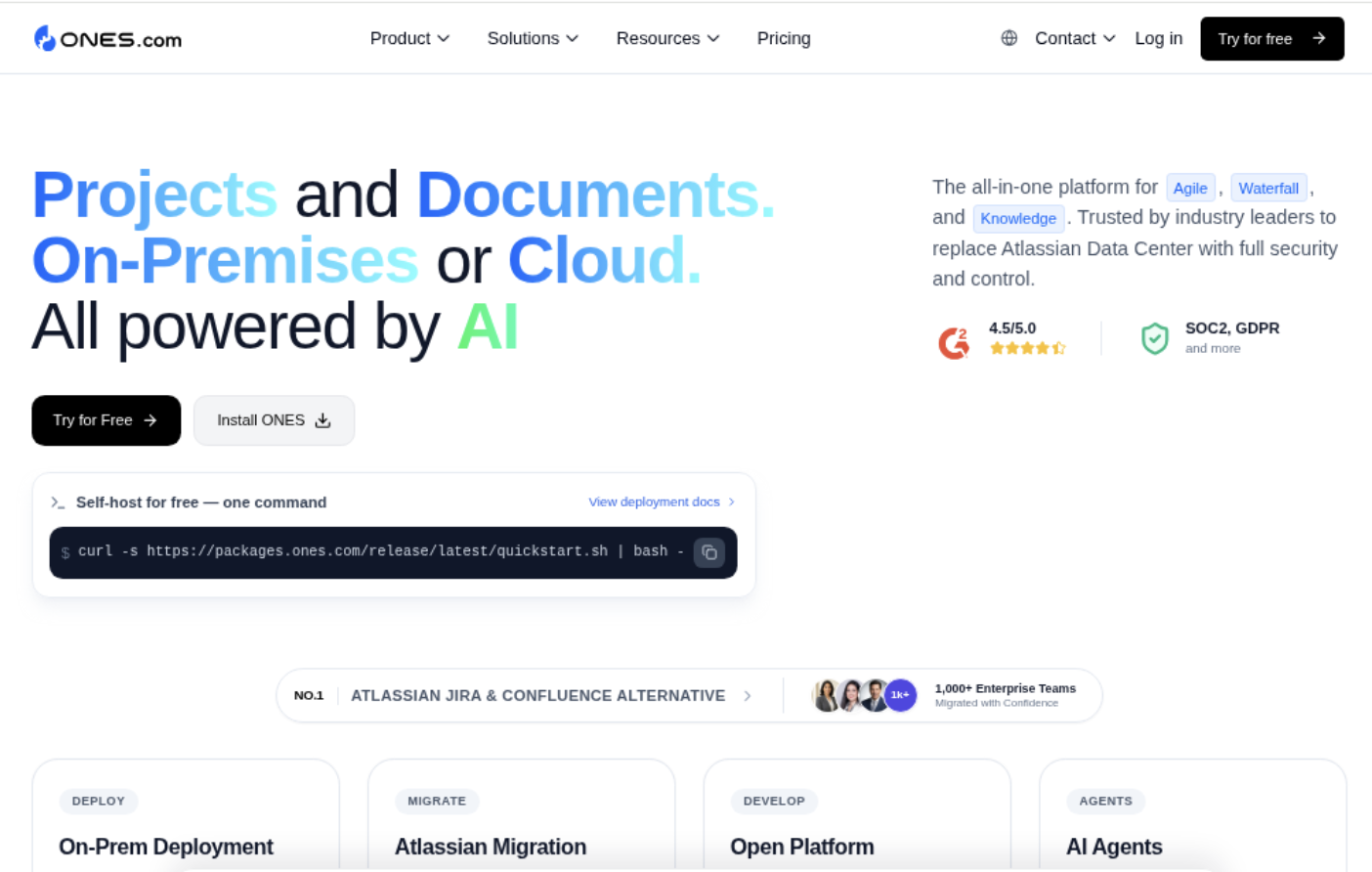
Value Proposition
ONES.com is a unified platform for project management and knowledge management, powered by ONES Assistant. ONES Project is a Jira alternative sold separately from ONES Wiki, the knowledge base product.
It can suit teams evaluating the total cost of Jira customization, multiple plugins, and complex administration. You can deploy it in the Cloud, On-Premise, Private Cloud, or an air-gapped environment.
Core Capabilities
- Fragmented project tracking → ONES Project: Jira-compatible workflows keep planning, execution, and delivery work in one project management environment, reducing context switching.
- Heavy plugin dependence → Built-in reporting and automation: Native capabilities can reduce the number of separate extensions your team must evaluate and maintain.
- Rigid workflow design → Custom workflows and fields: Teams can model approval, development, service, and operational processes around their actual work.
- Limited sprint visibility → Sprint management: Agile teams can plan iterations, monitor progress, and review unfinished work in one place.
- Distributed knowledge → ONES Wiki: Teams can manage connected knowledge separately from ONES Project, helping keep planning and reference material easier to find.
- Deployment restrictions → Four deployment choices: Cloud, On-Premise, Private Cloud, and air-gapped deployment support different security and infrastructure requirements.
- Migration concerns → Native feature parity: The self-hosted version maintains feature parity with the Cloud version, reducing the need to choose between deployment models.
- Limited adoption budget → Free plan for 30 seats: Smaller teams can evaluate the platform within the stated free allowance before planning broader adoption.
Application Scenarios
Scenario one: a regulated engineering team. The team needs restricted-network project management and cannot place operational work in a public Cloud environment. An air-gapped ONES deployment can support that operating model while retaining project workflows.
Scenario two: a growing product organization. The organization has Jira for delivery, separate knowledge tools, and several extensions for reporting. It can compare ONES Project and ONES Wiki as separately sold products while evaluating whether consolidation lowers administrative effort.
Scenario three: a small delivery group. A team of fewer than 30 seats can use the free plan to assess workflows, sprint planning, reporting, and collaboration before making a larger platform decision.
Common Challenges
Challenge: The Price Changes When Your Jira Population Grows
Solution: Forecast your 12-month seat count and test the next pricing tier before signing. Include expected hires, contractors, and organizational expansion.
Challenge: The Team Prices Only the License
Solution: Add development, testing, governance, maintenance, and incident response to the business case. Track the hours required to keep important automations reliable.
Challenge: Scripts Become Difficult to Understand
Solution: Assign an owner to every production script. Record its purpose, trigger, affected workflow, permissions, test steps, and rollback approach.
Challenge: Cloud Behavior Differs From Older Deployments
Solution: Test every migration candidate in a controlled environment. Review integrations, permissions, APIs, and timing assumptions before switching production workflows.
Challenge: The App Solves a Problem Native Automation Already Handles
Solution: Compare the simplest viable approach first. Use native Jira automation for basic rules and reserve scripting for requirements that genuinely need deeper logic.
FAQs
Is ScriptRunner for Jira Cloud priced per script author?
Usually, you should expect the applicable Jira Cloud user tier to matter more than the number of people who create scripts. Confirm the current commercial rule before purchasing because marketplace terms can change. If only a few administrators write scripts, that does not necessarily reduce the app tier required for the entire Jira site.
Can I estimate the cost without knowing my future seat count?
You can create a preliminary estimate using your current Jira tier, but a stronger budget includes current, expected, and high-growth scenarios. Check whether planned hiring could move the organization into another tier. This is especially important when your current population is close to a pricing boundary.
Is annual billing always cheaper than monthly billing?
No. Annual billing may offer different commercial terms, but the best choice depends on your current marketplace pricing, discounts, tax treatment, seat stability, and expected usage period. Compare the full annual commitment with 12 monthly payments, then include the cost of changing plans if your organization grows or reduces seats.
Does ScriptRunner replace all Jira automation tools?
No. It complements basic Jira automation when you need more advanced workflow logic, scripted conditions, listeners, or scheduled behavior. For simple notifications and field updates, native Jira automation may be easier to maintain. Evaluate each workflow by complexity, risk, maintenance effort, and business value.
What should I ask before approving the purchase?
Ask which Jira population determines the tier, how monthly and annual billing differ, what happens after a trial or discount, how renewals work, and how seat growth affects cost. Also ask your technical team to estimate script maintenance, testing, migration, and support effort. These questions reveal the total commitment more clearly than the headline price.
Could a broader project management platform be a better fit?
Possibly. If your main need is advanced Jira customization, ScriptRunner may fit well. If you are also managing tool sprawl, reporting gaps, knowledge sharing, deployment restrictions, or multiple project types, compare a broader platform such as ONES.com. Evaluate migration effort and workflow coverage alongside the subscription price.
Conclusion
ScriptRunner for Jira Cloud pricing depends chiefly on the applicable Jira seat tier, billing cycle, commercial terms, taxes, and future growth. Your real budget should also include implementation, testing, maintenance, governance, and migration work.
Start with your current Jira population, model expected growth, compare monthly and annual commitments, and calculate value from a real workflow. Then test whether ScriptRunner is the simplest solution for each automation requirement.
But here's the truth: the right choice is not always the lowest subscription. It is the option that delivers reliable automation without creating more administration than it removes.
If you need a wider project management and knowledge management platform, evaluate ONES.com alongside Jira alternatives. A structured comparison can show whether advanced Jira scripting or platform consolidation better supports your team in 2026.