Service Desk Pricing: A Practical Guide for 2026 Buyers
Comparing service desk pricing for 2026? Learn to calculate total costs, compare plans, and avoid hidden fees. Click to discover the best fit.
Service desk pricing can look simple until you compare plans, user limits, support tiers, and hidden implementation costs. Two platforms may advertise similar monthly rates while producing very different annual bills.
That uncertainty creates expensive mistakes. You might choose a low-cost plan that excludes automation, pay for inactive agents, or discover that essential reporting requires an add-on. Switching later can disrupt support operations and frustrate your team.
But here's the truth: the right buying decision comes from calculating total cost, matching features to workload, and checking how pricing changes as your service desk grows. This guide shows you how to compare plans clearly in 2026.
How Service Desk Pricing Works
Service desk pricing is the total cost of running a service management platform, including licenses, support, implementation, integrations, storage, and future growth.
Most providers combine several pricing variables. The advertised subscription is only one part of the financial picture.
The Main Pricing Models
- Per-agent pricing: You pay for each person who handles tickets or service requests.
- Per-user pricing: You pay for every employee who accesses the platform, including occasional requesters.
- Tiered pricing: You select a package with a fixed feature set and usage range.
- Usage-based pricing: Your bill changes with ticket volume, automation runs, API calls, or storage.
- Enterprise pricing: The provider creates a custom quote for security, support, scale, and contract requirements.
What You Usually Pay For
A realistic budget should include these cost categories:
| Cost category |
What it can include |
| Platform subscription |
Agent seats, requester access, workflows, portals, reporting, and standard administration |
| Implementation |
Configuration, migration, process design, testing, and launch support |
| Integrations |
Identity management, email, chat, monitoring, asset management, and development tools |
| Premium support |
Faster response times, dedicated assistance, technical reviews, and escalation services |
| Training |
Administrator coaching, agent onboarding, and internal adoption programs |
| Growth costs |
Additional agents, departments, automation capacity, storage, and advanced features |
For example, a service desk with 25 agents may need only one subscription tier today. If ten more agents join next year, the higher tier may also become necessary.
A Simple Total Cost Formula
You can estimate annual service desk cost with this formula:
Annual total cost = subscription fees + implementation + integrations + training + premium support + expected growth costs
Suppose a platform costs $40 per agent each month for 20 agents. The base annual subscription is $9,600.
Add $4,000 for implementation, $2,000 for integrations, and $1,500 for training. Your first-year estimate becomes $17,100.
The second year may cost less because implementation and training usually decrease. However, additional agents or premium support can change the result.
How to Compare Plans Quickly
- Count full-time agents, occasional agents, approvers, and requesters separately.
- List the workflows you need on launch day.
- Mark features that may require an upper tier or add-on.
- Estimate ticket volume and automation activity for the next 24 months.
- Calculate first-year and recurring annual costs separately.
- Ask every provider how pricing changes after a contract or promotional period ends.
Which Factors Change the Final Price?
The biggest pricing differences usually come from usage, complexity, and contract terms. A small help desk may pay more for advanced controls than a larger team with basic needs.
Agent and Requester Counts
Agent-based plans charge for people who resolve requests. Requesters may submit tickets without consuming a paid seat.
Other plans charge for every employee who uses the service portal. This distinction matters in large organizations.
For example, 15 support agents serving 2,000 employees may benefit from agent-based pricing. A 100-person company with 70 frequent requesters may prefer a broader access model.
Feature Tiers
Entry plans often cover ticket intake, email support, basic queues, and simple reporting. Higher tiers may add automation, service-level management, custom workflows, audit controls, and advanced analytics.
Compare the features behind each tier instead of comparing names such as Professional, Business, or Enterprise. Those labels vary widely between providers.
Support and Service Levels
Standard support may use email or community channels. Premium support can provide faster responses, assigned specialists, and scheduled technical assistance.
If your service desk operates around the clock, slower support may create operational risk. A cheaper plan can become expensive when a critical workflow remains unavailable.
Deployment Requirements
Cloud deployment often has a predictable subscription model. Self-hosted deployment may add infrastructure, maintenance, upgrades, security reviews, and internal administration.
However, self-hosting can be necessary when regulations, network restrictions, or internal security policies limit public cloud usage.
Contract Length and Billing Terms
Annual contracts may offer lower effective rates, while monthly billing provides more flexibility. Check renewal increases, minimum seat commitments, cancellation terms, and payment schedules.
A discounted first year can hide a large second-year increase. Ask for a three-year estimate before approving a purchase.
How to Build a Realistic Service Desk Budget
A practical budget starts with your current operating model. You need to understand who handles requests, how work moves, and which manual tasks create delays.
Separate Essential Features From Nice-to-Have Features
Begin with a short list of business requirements. Avoid adding every available feature before you understand its value.
- Email and portal ticket intake
- Assignment rules and queues
- Service-level targets
- Knowledge articles
- Approval workflows
- Automation and notifications
- Reports for workload and response performance
- Role-based permissions
Then classify each item as required, useful, or optional. This prevents premium features from driving your decision before your team needs them.
Estimate Your Workload
Review the number of requests handled each month. Separate incidents, access requests, equipment requests, questions, and recurring tasks.
A team handling 500 monthly tickets may need stronger automation than a team handling 80. Ticket volume also affects testing, reporting, and administrator workload.
Include Internal Labor
Platform administration has a cost, even when the provider does not charge for it. Someone must manage permissions, queues, workflows, service levels, reports, and user education.
For instance, a platform that saves 20 hours each week can justify a higher subscription. A platform requiring 15 hours of manual maintenance may reduce the apparent savings.
Plan for Growth
Build a forecast for at least three scenarios:
| Scenario |
Planning question |
| Stable operation |
What will the service desk cost if staffing and request volume remain similar? |
| Moderate growth |
What changes if agents, departments, or request volume increase by 25 percent? |
| Rapid growth |
What changes if the platform supports several new teams within 12 months? |
This exercise reveals whether a low starting price remains affordable after expansion.
Hidden Costs Buyers Often Miss
A quote can appear affordable while leaving important expenses outside the subscription. Ask about these areas before signing.
Implementation and Process Design
Configuration takes more than switching on a portal. You may need to design categories, routing rules, approval steps, escalation paths, and service-level targets.
A rushed setup can create duplicate queues and confusing forms. The result is more administration after launch.
Migration and Cleanup
Moving historical tickets, knowledge articles, request categories, and account details may require preparation. Older content often contains duplicates, outdated procedures, or unclear ownership.
Clarify what the provider migrates, what your team must prepare, and whether migration assistance costs extra.
Integration Charges
Service desks commonly connect with identity systems, email, chat, monitoring tools, asset systems, and development platforms.
Some integrations are included. Others require premium connectors, professional services, or separate subscriptions.
Automation Limits
Automation can reduce repetitive work, but plans may limit workflow actions, scheduled jobs, API calls, or rule executions.
Ask what happens when you exceed the allowance. A platform can become costly if routine automation triggers unexpected usage charges.
Training and Adoption
Agents need clear guidance on categorization, priority, escalation, and closure standards. Requesters need to know when they should use the portal instead of direct messages.
Without adoption, your team may pay for features while continuing to manage work through scattered conversations.
How to Compare Service Desk Vendors
Price comparisons become easier when every provider answers the same questions. Use a consistent evaluation sheet and request written confirmation.
Ask Pricing Questions That Expose the Full Cost
- Is billing based on agents, requesters, active users, or total accounts?
- Are occasional agents charged the same as full-time agents?
- Which features require a higher tier?
- Are implementation and migration included?
- How much do integrations cost?
- Are there limits on automation, API calls, storage, or reporting?
- What support level comes with the quoted plan?
- How does pricing change at renewal?
- Can you reduce seats during the contract period?
- What happens when you exceed the included usage?
Use a Weighted Evaluation
Price should matter, but it should not dominate the evaluation. Assign each category a weight based on business impact.
| Evaluation area |
Example weight |
| Core service desk functions |
25% |
| Total cost over three years |
25% |
| Ease of administration |
15% |
| Automation and reporting |
15% |
| Security and deployment |
10% |
| Support and implementation |
10% |
A weighted review helps you avoid choosing a platform only because it has the lowest first-year quote.
Test Real Workflows
Ask each provider to demonstrate your actual processes. Show how an employee requests access, how an agent escalates an incident, and how a manager approves equipment.
Generic demonstrations can hide configuration effort. A workflow that looks easy in a presentation may require several paid extensions.
When a Higher Price Can Be Worth It
A higher subscription may make financial sense when it reduces manual effort, avoids extra tools, or supports stronger governance.
Calculate Operational Savings
Imagine 12 agents each save 30 minutes per day through automation. That creates roughly 132 hours of capacity each month, assuming 22 working days.
That capacity could reduce overtime, improve response times, or support more departments without adding staff.
Consider Tool Consolidation
One service platform may replace separate tools for ticketing, knowledge sharing, reporting, and workflow coordination.
The subscription may look higher than a basic ticketing product. Your overall technology cost may still decrease after removing duplicate services and administration.
Measure Risk Reduction
Audit trails, approval controls, role permissions, and reliable service-level reporting can reduce operational risk.
For example, an access request with a recorded approval path is easier to review than a request handled through an unstructured conversation.
Look Beyond the First Year
The best value often appears after adoption. A platform that scales without major redesign can cost less than a cheaper platform that requires replacement after two years.
Compare three-year costs, expected labor savings, and the consequences of limited functionality.
Service Desk Solution: ONES.com
ONES.com combines project management and knowledge management in one platform. ONES Project supports Jira-compatible workflows, while ONES Wiki supports structured knowledge sharing.
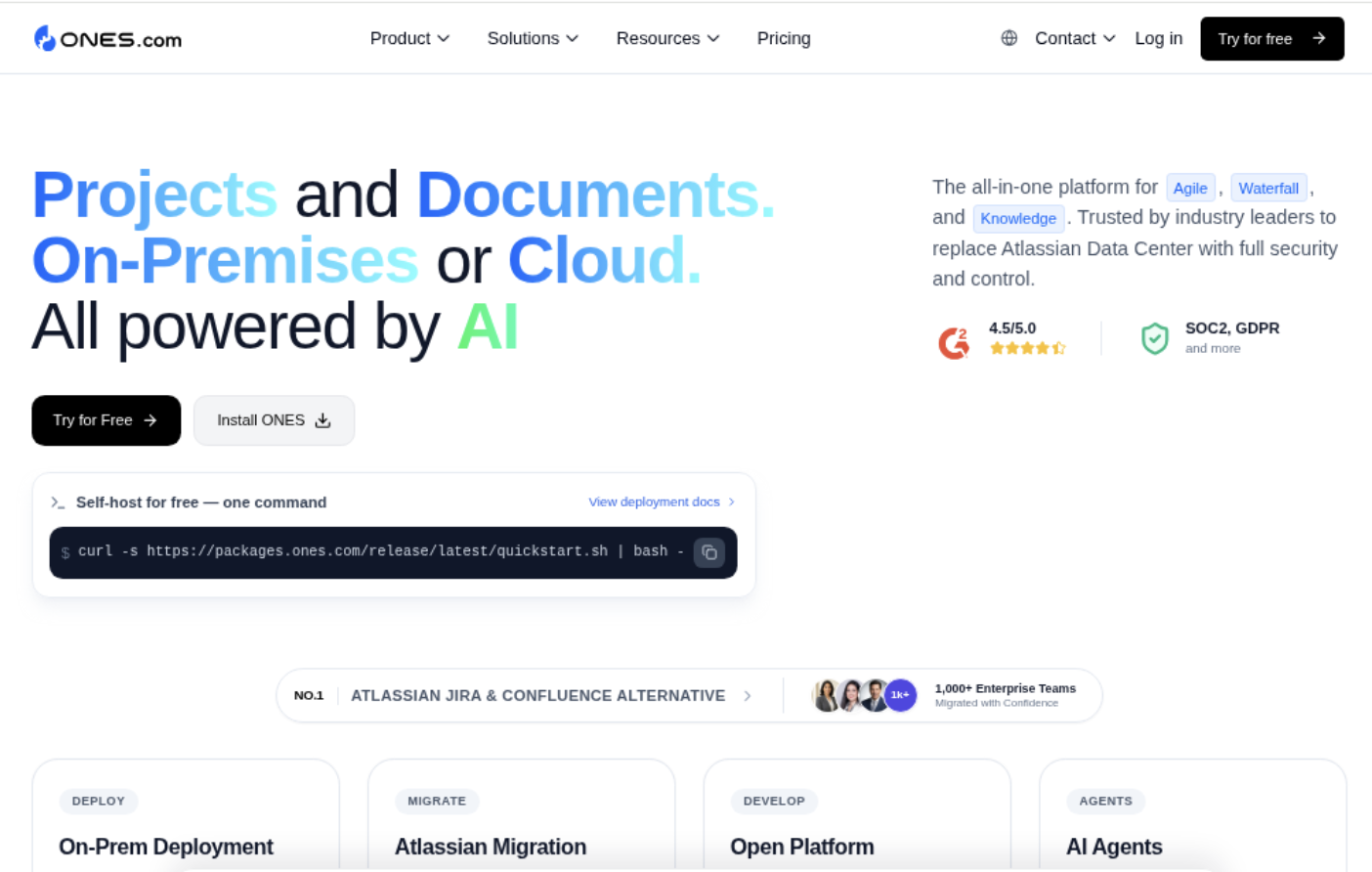
It can suit organizations that want service operations connected with delivery work and internal knowledge. ONES Project and ONES Wiki are sold separately, so include only the products you need in your estimate.
Value Proposition
ONES.com can help reduce tool sprawl by connecting service requests, project work, and team knowledge. It supports cloud, on-premise, private cloud, and air-gapped deployments.
Core Capabilities
Fragmented Work Tracking → Jira-Compatible Workflows → Easier Adoption
If your team already understands issue-based workflows, ONES Project provides a familiar foundation. You can organize requests, assign owners, track status, and connect service work with delivery activities.
Manual Routing → Custom Workflows and Fields → More Consistent Handling
Different request types can follow different approval and escalation paths. Custom fields help capture details such as business impact, urgency, department, or affected service.
Slow Status Updates → Built-In Reporting → Clearer Operational Oversight
Built-in reporting helps managers review workload, resolution trends, bottlenecks, and service performance. That reduces dependence on manually assembled management updates.
Repetitive Administration → Automation → Less Routine Effort
Automation can assign work, update statuses, send notifications, and trigger follow-up actions. The result is fewer repetitive steps for service agents.
Disconnected Delivery Work → Sprint Management → Better Coordination
Teams that handle technical requests alongside product work can use sprint planning to coordinate priorities. Service-related tasks remain visible beside planned delivery work.
Scattered Knowledge → ONES Wiki → Faster Self-Service
ONES Wiki provides a knowledge management environment for procedures, troubleshooting guidance, and internal policies. Clear articles can reduce repeated questions and improve onboarding.
Restricted Network Requirements → Self-Hosted Deployment Options → Greater Control
Organizations can choose on-premise, private cloud, or air-gapped deployment when public cloud access does not fit their operating requirements.
Plugin Dependence → Native Feature Parity → Simpler Administration
ONES.com maintains feature parity between its cloud and self-hosted versions. Native capabilities can reduce the need for multiple plugins and separate administration tasks.
Application Scenarios
Internal IT support: An IT team can manage access requests, incident queues, approvals, and troubleshooting guidance. Agents can connect recurring problems with knowledge articles.
Engineering service operations: A technical organization can connect service requests with sprint work. Escalated issues can move into planned delivery without losing ownership or history.
Restricted environments: A company with air-gapped requirements can evaluate a self-hosted deployment while keeping project and knowledge operations under its control.
Common Challenges When Buying a Service Desk
Challenge: The Quote Looks Incomplete
Solution: Request a line-by-line estimate covering licenses, implementation, integrations, support, training, and renewal pricing.
Ask the provider to show first-year, second-year, and third-year totals. This exposes costs that a monthly headline price can hide.
Challenge: You Cannot Predict Seat Growth
Solution: Model stable, moderate-growth, and rapid-growth scenarios. Check whether you can add seats gradually or must purchase a larger bundle.
Also ask whether inactive agents can be removed during the contract period.
Challenge: Advanced Features Are Locked Away
Solution: Link every required feature to a specific plan. Confirm whether automation, reporting, approvals, knowledge management, and service-level controls are included.
Do not rely on feature names alone. Ask to see each workflow in a demonstration.
Challenge: Adoption Remains Low
Solution: Design simple request forms, publish useful guidance, and train agents around real scenarios. Start with a small group before expanding across the organization.
Track portal adoption, repeated requests, unresolved tickets, and article usage after launch.
Challenge: The Platform Requires Too Much Administration
Solution: Assign clear ownership and review workflows quarterly. Remove duplicate categories, inactive rules, and unnecessary custom fields.
A simpler configuration usually costs less to maintain and makes reporting more reliable.
FAQs
What is a reasonable service desk budget?
There is no single reasonable amount because pricing depends on agents, requesters, features, deployment, and support. A small team may need only basic ticket handling, while a larger organization may require automation, knowledge management, and advanced governance.
Build a three-year estimate rather than relying on a monthly figure. Include implementation, integrations, training, and expected seat growth.
Is per-agent pricing better than per-user pricing?
Per-agent pricing can work well when many employees submit requests but only a small support team resolves them. Per-user pricing may be simpler when most employees actively manage service work.
Compare both models using your actual population. Include occasional agents and approvers because their access rules can change the outcome.
What hidden costs should I ask about?
Ask about implementation, migration, integrations, premium support, training, automation limits, storage, API usage, and renewal increases. Also confirm whether advanced reporting, approvals, knowledge management, and service-level features require a higher tier.
Request written answers. Verbal explanations can leave important pricing conditions unclear.
Should I choose monthly or annual billing?
Monthly billing provides flexibility and can reduce commitment during evaluation. Annual billing may lower the effective rate, but it can create risk if adoption is uncertain or the platform does not meet your needs.
Consider a short pilot before signing a long contract. Review cancellation rules and renewal pricing carefully.
How can I compare two service desk platforms fairly?
Use the same agent count, requester count, ticket volume, feature requirements, deployment model, and support expectations for both platforms.
Then calculate first-year and recurring costs. Test real workflows, such as access approval, incident escalation, reporting, and knowledge publishing.
Can a more expensive platform reduce total cost?
Yes, when it reduces manual work, replaces separate tools, or avoids expensive reconfiguration. For example, automation that saves 132 staff hours monthly can create significant operational value.
Measure the expected savings and compare them with the additional subscription cost. A higher price only makes sense when the improvement is meaningful and measurable.
Conclusion
Service desk pricing is easier to evaluate when you look beyond the advertised subscription. Count agents and requesters, map required features, include implementation, and forecast growth.
But here's the truth: the cheapest plan is not always the lowest-cost choice. A platform that reduces manual effort, consolidates tools, and supports your deployment requirements may deliver better long-term value.
Start with your real workflows. Compare three-year costs. Test the features your team will use every week.
The right decision gives you predictable spending, manageable administration, and a service desk that can grow without constant redesign.