Structure for Jira Pricing 2024: A Practical Cost Guide
Wondering about structure for jira pricing 2024? Get a practical cost guide to Jira tiers, deployment, renewals, and budgets. Read now.
Planning a Structure for Jira budget can feel deceptively simple. You see an app price, multiply it by your team size, and expect the answer to be finished. Then the Jira plan, deployment type, user tier, taxes, and renewal terms appear.
That uncertainty creates awkward surprises. A team may budget for 100 Structure users while Atlassian calculates the app against a larger Jira tier. A Data Center customer may also overlook annual renewal costs or the separate Jira license.
The practical answer: estimate Structure for Jira pricing by identifying your Jira deployment, Jira user tier, billing period, and added administration costs. This guide shows how to calculate the 2024 total and compare it with a broader project management platform.
Structure for Jira Pricing in 2024: The Cost Overview
Structure for Jira pricing in 2024 depended mainly on your Jira deployment, Jira user tier, and subscription term. Cloud customers generally paid a recurring app subscription through Atlassian Marketplace, while Data Center customers typically paid an annual app license tied to a user tier.
The app fee was only one part of the budget. You also needed to account for Jira licensing, taxes, premium Jira editions, Marketplace billing rules, implementation time, and possible add-ons.
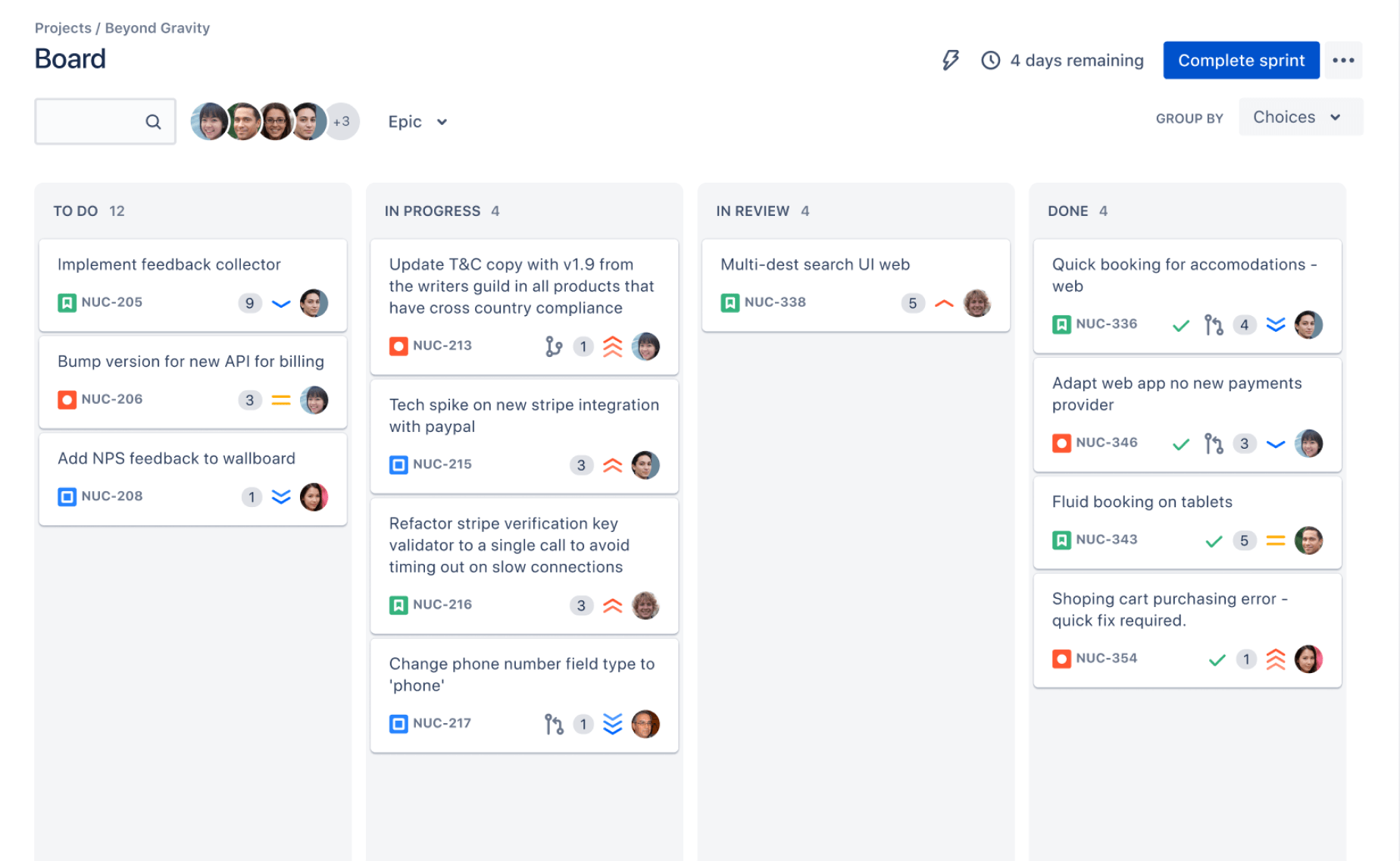
The four cost elements to calculate
- Jira platform cost: Structure runs inside Jira, so your Jira subscription or license remains a separate expense.
- Structure app cost: This covers the Structure functionality itself and varies by deployment and tier.
- Tax and billing adjustments: Regional taxes, currency conversion, and billing arrangements can change the final invoice.
- Administration cost: Configuration, training, migration, and ongoing maintenance can become significant for complex portfolios.
Here's why: a low app price does not always produce a low total cost. For example, a 150-person Jira environment may require a higher Marketplace tier even when only 60 people actively open Structure views.
Cloud and Data Center use different pricing logic
| Deployment |
Typical 2024 pricing approach |
| Jira Cloud |
Recurring Marketplace subscription, commonly connected to the Jira site’s user tier |
| Jira Data Center |
Annual app license, generally aligned with a selected Jira user tier |
| Jira Server |
New Server sales ended, so renewal and migration conditions required special attention |
Atlassian Marketplace pricing can change by product, region, billing method, and tier. Treat the Marketplace checkout estimate as the final authority for a live purchase.
How to Calculate Your Expected Structure Cost
The fastest approach is to separate known charges from variable charges. Then you can test several team-size scenarios before committing to a plan.
Step 1: Identify your Jira deployment
Start by confirming whether your team uses Jira Cloud or Jira Data Center. The distinction affects licensing, renewal, administration, and infrastructure responsibility.
A small software team hosted entirely in Atlassian Cloud will usually evaluate recurring subscription costs. A regulated enterprise running Data Center may also budget for infrastructure, upgrades, security reviews, and internal support.
Step 2: Confirm the billable Jira tier
Check the total Jira user tier rather than counting only the people who need a Structure view. Some Marketplace apps calculate pricing using the Jira instance tier or an applicable user band.
For example, suppose 80 employees have Jira access, but 35 people need portfolio planning. Your app tier may still reflect the broader Jira population. Confirm this detail during the Marketplace purchase flow.
Step 3: Separate recurring and one-time costs
- Recurring costs: Jira subscription, Structure subscription or renewal, premium Jira features, and related Marketplace apps.
- One-time costs: configuration, training, hierarchy design, migration, and internal rollout.
- Variable costs: taxes, currency conversion, contractors, and additional support.
A useful planning equation is:
Estimated annual total = Jira cost + Structure cost + related apps + tax + implementation + administration.
Step 4: Calculate the cost per active planner
Divide the annual total by the number of people who actively plan, report, or manage work. This gives you a more useful business measure than the raw invoice.
For instance, if a 120-person Jira environment costs $18,000 annually across Jira, Structure, and administration, but 30 people use the hierarchy every week, the effective cost is $600 per active planner.
Step 5: Model growth before purchasing
Test your current tier, next tier, and expected renewal tier. A hiring plan can push the account into a new pricing band before the team notices.
You might be wondering: should you purchase for today’s headcount or next year’s forecast? Compare both options. A higher tier may be easier to manage, while a lower tier can preserve cash during a short pilot.
What Influenced Structure Pricing During 2024?
Pricing was not determined by features alone. The commercial setup around Jira affected your total spend just as much.
Jira user count and access patterns
Structure may support planning across teams, but your billing tier can reflect the wider Jira environment. That creates a common mismatch between active Structure users and billable Jira users.
Imagine a company with 500 Jira accounts. Only 90 portfolio managers use Structure, while the remaining accounts belong to developers, testers, and occasional contributors. The app estimate may still use the relevant 500-user tier.
Cloud versus self-managed operations
Cloud reduces infrastructure work, but recurring subscriptions require careful renewal planning. Data Center gives enterprises more control over hosting and deployment, yet internal teams must handle upgrades, availability, monitoring, and security operations.
The cheapest invoice is not always the lowest total cost. A self-managed deployment can require more engineering time, while a Cloud subscription may reduce operational overhead.
Annual renewal and contract timing
Data Center customers usually needed to evaluate annual renewal timing. Cloud customers needed to monitor recurring billing, user growth, and any changes to their Jira plan.
Keep renewal dates visible in your procurement calendar. Missing a date can compress approval time and make comparison difficult.
Jira Server migration considerations
Atlassian ended new Server sales before 2024, and Server customers faced a migration path toward Cloud or Data Center. That meant Structure budgeting could not be separated from the broader deployment decision.
A Server customer should estimate migration work, compatibility checks, data transfer, user training, and temporary parallel operations. These expenses may outweigh a simple app-price comparison.
Example Budgets for Different Team Sizes
The examples below show how to think about cost. They are planning scenarios, not official Marketplace quotes. Replace the placeholder amounts with the price displayed for your Jira tier.
| Scenario |
What to include |
Budget question |
| Small Cloud team |
Jira subscription, Structure subscription, tax, basic setup |
Does the app improve planning enough to justify another recurring charge? |
| Growing Cloud company |
Higher Jira tier, Structure tier, training, reporting configuration, renewal buffer |
Will headcount growth trigger a new Marketplace band? |
| Data Center enterprise |
Jira license, Structure renewal, infrastructure, administrators, upgrades, support |
Is self-managed control worth the operational workload? |
Example: a 25-person Cloud team
Suppose 25 people use Jira, eight people manage roadmaps, and five teams need hierarchy views. Your calculation should include the Jira plan, the Structure app tier, regional tax, and a small configuration allowance.
The main risk is underestimating setup time. Even a small team may need custom views, permissions, hierarchy conventions, and reporting rules.
Example: a 200-person organization
Now assume 200 people access Jira, but 45 program managers and team leads use Structure frequently. The relevant app tier may reflect the broader Jira population rather than the 45 active planners.
Add training and governance to the estimate. Without clear ownership, several teams may create competing hierarchies and increase administration work.
Example: a Data Center deployment
A Data Center estimate should include annual Jira and Structure licensing, hosting, storage, backup operations, upgrades, monitoring, and specialist administration.
For a regulated company, security reviews and change-control work may be required before installation. These costs do not appear in the Marketplace price, but they belong in the business case.
How to Decide Whether Structure Is Worth the Cost
Structure is most valuable when Jira’s standard issue views do not provide enough hierarchy, portfolio visibility, or cross-team planning.
Before buying, write down the planning problem in concrete terms. For example, “project managers spend two hours every Friday assembling status updates” is more useful than “we need better visibility.”
Measure the current planning burden
Track how much time people spend creating rollups, reconciling milestones, preparing status meetings, and checking dependencies.
If six managers spend three hours each week building manual reports, that represents 18 hours of recurring effort. A Structure evaluation should test whether it reduces that burden.
Compare capability with total cost
Review the app alongside your existing Jira edition and other Marketplace subscriptions. Several inexpensive add-ons can create a larger administration burden than one broader platform.
The best part? You can compare on more than license price. Include adoption, maintenance, reporting quality, permission management, and the time required to train new team members.
Run a focused trial
Choose one planning problem, such as a product release with three teams and shared dependencies. Build the hierarchy, create the reporting view, and ask stakeholders to use it during a real planning cycle.
Record the time needed to configure the view and update it. If the trial saves meeting preparation time and improves decision-making, you have stronger evidence for the purchase.
Questions to Ask Before Approving the Purchase
- Which Jira deployment are we using?
- What Jira user tier will influence the app estimate?
- Are Structure users different from total Jira users?
- Is the price monthly, annual, or tied to a renewal license?
- What taxes or currency adjustments could apply?
- Do we need additional reporting, planning, or automation apps?
- Who will configure hierarchy views and maintain permissions?
- What happens if our Jira user count grows?
- Are we migrating from Jira Server?
- What business result will justify the annual spend?
Let me explain: procurement approval becomes easier when you connect the cost to a measurable result. “The app costs $X” is incomplete. “The app reduces weekly reporting work by Y hours and improves dependency visibility” gives decision-makers something useful.
A Practical Alternative for Jira Planning Costs: ONES.com
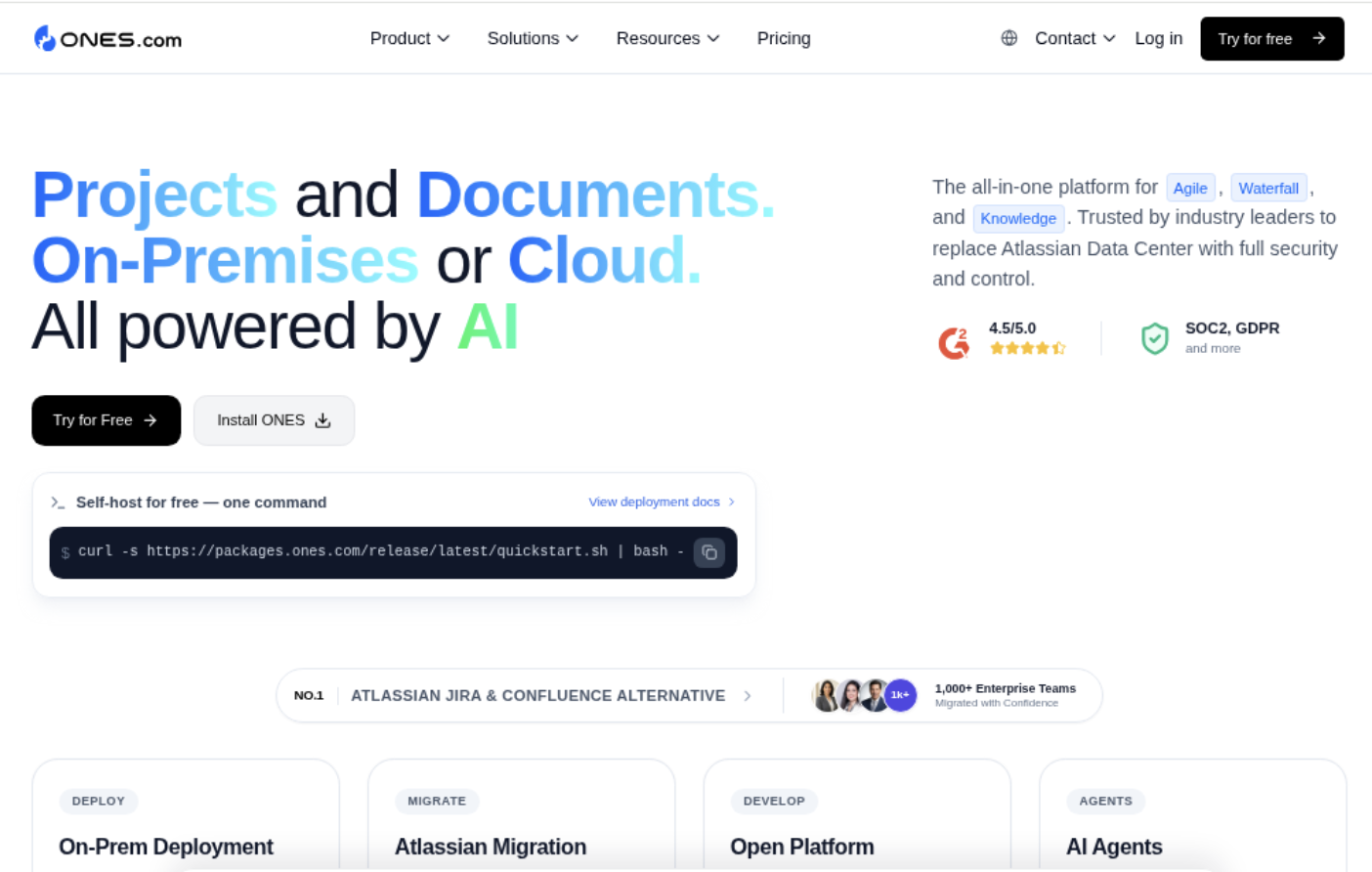
Value Proposition
ONES.com combines project management and knowledge management in one platform, with AI support through ONES Assistant. ONES Project is the project management product and can serve as a Jira alternative, while ONES Wiki is a separate knowledge base product and can serve as a Confluence alternative.
This structure can help teams compare one broader platform with a collection of Jira apps, especially when deployment control and reduced plugin reliance matter.
Core Capabilities
- Planning scattered across tools → ONES Project combines project planning and work tracking → teams can manage delivery work in one project environment.
- Jira migration concerns → Jira-compatible workflows support a familiar operating model → teams can reduce process disruption during evaluation.
- Complex portfolio rollups → built-in reporting and configurable views provide broader visibility → managers can review progress without assembling separate reports.
- Rigid processes → custom workflows and fields adapt work items to team requirements → departments can reflect their approval and delivery stages.
- Manual sprint administration → sprint management supports iterative planning → teams can organize backlogs and review commitments more consistently.
- Repetitive coordination → automation handles defined workflow actions → teams can reduce routine status and transition work.
- Heavy plugin dependence → native capabilities cover common planning and reporting needs → administrators may have fewer extensions to maintain.
- Hosting restrictions → Cloud, On-Premise, Private Cloud, and Air-gapped deployments are available → organizations can align deployment with security requirements.
- Mixed project and knowledge practices → ONES Project and ONES Wiki address separate needs within the ONES.com platform → teams can evaluate project and knowledge workflows together.
Application Scenarios
Growing product organization: A product company with several engineering teams can test ONES Project for backlogs, sprints, custom workflows, and reporting. The evaluation should compare migration effort, administration time, and the number of external extensions required.
Restricted-network enterprise: An organization with air-gapped requirements can assess the self-hosted deployment options. The key questions involve installation, upgrades, access controls, internal support, and feature parity with the Cloud version.
Project and knowledge alignment: A services team can use ONES Project for delivery tracking and evaluate ONES Wiki separately for procedures, meeting knowledge, and team guidance. The products are sold separately, so budget them as distinct purchases.
ONES.com offers a free plan for up to 30 seats. The platform supports four deployment models, and its self-hosted version maintains feature parity with the Cloud version. Confirm current commercial terms, deployment requirements, and product fit before making a decision.
Common Challenges When Estimating the Cost
Challenge: confusing active users with the billable tier
Problem: Only a small group may use Structure, while the Jira environment contains many more accounts.
Solution: Confirm the Marketplace calculation method and model the full Jira tier. Ask Atlassian or the app vendor for clarification before approval.
Challenge: comparing app price instead of total cost
Problem: A low subscription may require additional reporting, portfolio, or automation add-ons.
Solution: Compare the complete toolset, administration time, training, and renewal commitments. Use the same cost categories for every option.
Challenge: overlooking migration costs
Problem: Server customers may focus on the Structure license while ignoring migration planning.
Solution: Estimate compatibility testing, data transfer, user communication, retraining, and temporary support capacity.
Challenge: underestimating governance
Problem: Multiple teams can create inconsistent hierarchies, fields, and reporting conventions.
Solution: Assign an owner, define naming rules, and review major planning views during a regular governance session.
FAQs
Was Structure for Jira free in 2024?
Structure was not generally a free app for unlimited Jira use. Pricing depended on the deployment, applicable user tier, and Marketplace terms. A trial or limited evaluation period may have been available, but you should not treat a trial as a permanent free plan. Check the relevant Atlassian Marketplace listing and purchase screen for the tier that matches your Jira environment.
Does Structure pricing depend on the number of Structure users?
It may depend on the Jira user tier rather than only the people who actively use Structure. This distinction matters because a 40-person planning group could belong to a 200-user Jira environment. Confirm the billing rule for your deployment before calculating the annual total. The Marketplace estimate should show the applicable tier during checkout.
Is Jira included in the Structure subscription?
No. Structure is an app that works with Jira, so the Jira subscription or license is a separate cost. Your budget should include both products, along with taxes, related apps, administration, and implementation. A Structure quote by itself does not represent the full cost of running the planning workflow.
Did Jira Server affect Structure budgeting in 2024?
Yes. Atlassian had ended new Jira Server sales, so Server customers needed to consider renewal conditions and a possible move to Cloud or Data Center. Structure budgeting therefore included migration planning, compatibility checks, training, and operational changes. Treat the app renewal as part of a wider deployment decision rather than an isolated purchase.
What is the best way to compare Structure with another platform?
Use the same evaluation criteria for every option: annual licensing, user tiers, deployment choices, reporting, workflow flexibility, administration effort, migration work, and adoption. Then test one real planning scenario. For example, compare how each platform handles a release with three teams, shared dependencies, and a weekly executive report.
Conclusion
Structure for Jira pricing in 2024 was shaped by more than the app’s listed fee. Your Jira deployment, user tier, billing term, taxes, related apps, administration, and migration plans all influenced the final cost.
Start with the Marketplace tier, separate Jira licensing from the Structure subscription, and calculate recurring and one-time expenses independently. Then test the estimate against a real planning workflow.
But here's the truth: the right choice depends on the result you need. If Structure gives your teams clearer hierarchy views and reduces reporting effort, the cost may be justified. If several add-ons and high administration effort are required, compare a broader option such as ONES.com.
A careful 2024 cost review helps you avoid surprise renewals, budget for growth, and choose a planning approach that fits your team’s deployment and operating model.