Tempo Timesheets Jira Pricing: A Clear Cost Guide for 2026
Confused by tempo timesheets jira pricing? Learn how Jira and Tempo costs combine in 2026 with a clear budget model. Click to discover!
Tempo Timesheets Jira pricing can feel confusing because two separate costs often appear together: your Jira subscription and the Tempo app charge. If you budget only for the time-tracking app, your final bill may come as an unpleasant surprise.
The confusion grows when your team changes seat counts, chooses monthly billing, adds premium Jira features, or compares Cloud with self-managed deployment. A small pricing difference per user can become significant across a large team.
But here's the truth: you can estimate the total cost with a simple model. Add Jira licensing, Tempo Timesheets licensing, optional add-ons, taxes, and any deployment-related expenses.
This guide explains the pricing structure, shows practical calculations, highlights common traps, and compares a Jira alternative for teams that want project management and time tracking in a broader platform.
How Tempo Timesheets Jira Pricing Works
Tempo Timesheets Jira pricing is the combined cost of a Jira subscription and the Tempo Timesheets app, adjusted for users, billing frequency, deployment type, and optional features.
Tempo Timesheets usually works as an app within the Atlassian ecosystem. That means you should treat the Jira plan and the time-tracking app as separate line items when planning your budget.
- Identify your Jira plan. Your Jira edition determines the base project-management cost and may affect available administration, security, and reporting features.
- Count billable users. The relevant seat count may include people who log time, approve worklogs, manage projects, or need reporting access.
- Choose the Tempo deployment model. Cloud and self-managed environments can have different pricing structures, terms, and administrative requirements.
- Check the Tempo tier. Features, limits, and support options may vary by plan or subscription level.
- Add optional products. Planning, budgeting, portfolio, resource management, or other Tempo products can increase the total.
- Apply billing terms and taxes. Monthly billing, annual billing, currency conversion, regional taxes, and renewal terms can change the amount you pay.
For a quick estimate, use this formula:
Total annual cost = annual Jira cost + annual Tempo Timesheets cost + optional app costs + taxes and adjustments.
Here's why: a team can have a low Tempo app charge while still paying considerably more for Jira, or the reverse. Looking at one line alone gives you an incomplete budget.
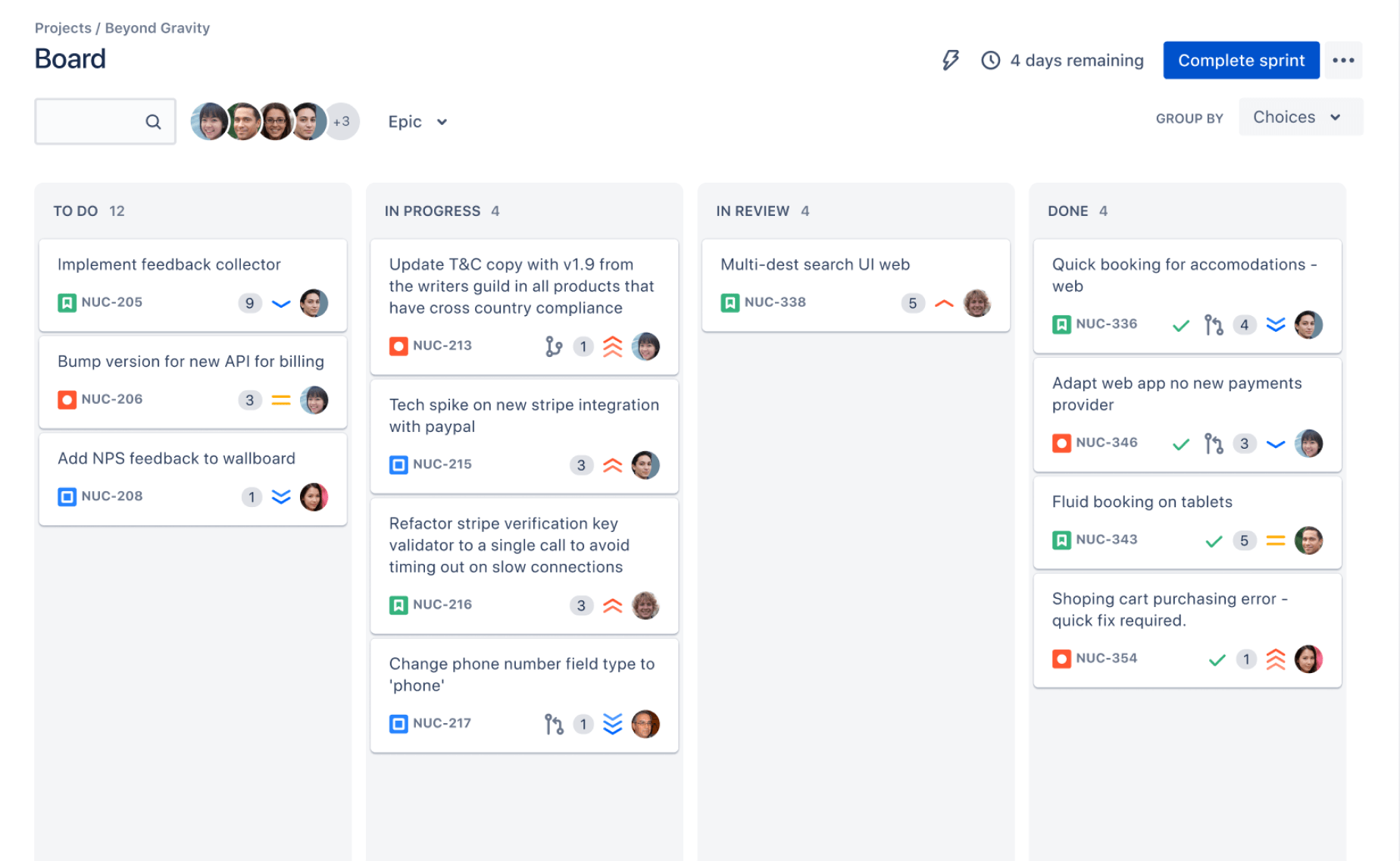
The two main subscription components
Jira provides the project and issue-management environment. Tempo Timesheets adds time tracking, worklog management, approvals, reporting, and related controls.
For example, imagine a 25-person product team. If all 25 people require Jira access and only 18 need to record time, you still need to check how both vendors calculate eligible seats. The number of active time-trackers may differ from the number of Jira users.
Some teams also give managers access to reports without requiring them to log hours. That arrangement can affect the practical seat count and should be confirmed before purchase.
Cloud pricing versus self-managed pricing
Cloud subscriptions usually follow recurring per-user billing. The vendor manages hosting, updates, backups, and much of the infrastructure.
Self-managed deployments can involve a different commercial model. You may need to consider hosting, maintenance, upgrades, system administration, security reviews, and support arrangements alongside the app license.
The cheapest license is not always the cheapest operating model. A self-managed installation may suit strict infrastructure requirements, while Cloud may reduce internal administration.
Monthly and annual billing
Monthly billing gives you flexibility when your team size or product plans change. Annual billing can improve budget predictability and may offer different commercial terms.
Compare both options using the same user count. A fair comparison includes the full year rather than multiplying one month without checking seat changes, promotional terms, or renewal conditions.
What You Should Check Before Calculating the Cost
Pricing estimates become reliable when your assumptions are clear. Write down who needs access, which environment you prefer, and which capabilities matter to your team.
Jira user count
Start with the total number of people who need Jira access. Include engineers, product managers, designers, testers, delivery leads, contractors, and administrators where applicable.
A 40-person company may have 28 regular Jira users, 7 occasional contributors, and 5 managers. Your estimate should explain whether all 40 people need accounts.
Tempo user count
Next, identify who will use time-tracking features. People may need access for different reasons:
- Recording time against work items
- Submitting weekly worklogs
- Approving team timesheets
- Reviewing project reports
- Managing billing or utilization data
- Configuring time-tracking policies
Do not assume that only people entering hours matter. Approval and reporting roles can influence the actual subscription requirement.
Required features
List the functions you genuinely need before comparing plans. A professional services firm may require billable-hour reporting and approval workflows. An internal engineering team may need simple worklogs and sprint reporting.
Buying a higher tier for one rarely used capability can raise the cost across every eligible user. Conversely, selecting a lower tier without a required control can create manual work later.
Deployment and compliance needs
Ask whether your organization needs Atlassian Cloud, a self-managed environment, or a restricted network arrangement. Security, residency, internal governance, and integration requirements can determine the right deployment.
For example, a regulated organization may accept a higher operating cost to retain tighter infrastructure control. A small startup may prioritize fast setup and minimal administration.
A Practical 2026 Cost Estimation Method
You do not need a complicated financial model. A clear three-scenario estimate usually gives you enough information for planning.
Build a low, expected, and high scenario
Create three user-count assumptions:
- Low scenario: Only current active users receive access.
- Expected scenario: Current users plus planned hires and occasional contributors.
- High scenario: Every likely project participant receives access.
Then apply the current Jira and Tempo prices to each scenario. Keep the numbers separate so you can see which product drives the change.
| Cost item |
Low scenario |
Expected scenario |
High scenario |
| Jira subscription |
Current active users |
Active users plus planned hires |
All likely participants |
| Tempo Timesheets |
Core time-tracking team |
Core team plus managers |
All people requiring reports or approvals |
| Optional products |
None or essential only |
Planned additions |
Full potential package |
| Tax and currency adjustment |
Estimated percentage |
Estimated percentage |
Estimated percentage |
The table does not need exact figures at the beginning. Its purpose is to expose assumptions before you commit to a subscription.
Use a simple hypothetical example
Suppose 30 people need Jira, while 22 people record time and 4 managers approve worklogs. You might begin with 30 Jira seats and then verify whether Tempo counts 22, 26, or another eligible total.
Now add five planned hires and one optional reporting product. Your expected annual budget should reflect the additional seats and product charge, even if those costs begin later in the year.
Let me explain: the correct figure is not a universal number. It depends on current vendor pricing, your plan selection, and how your organization uses the tools.
Check the live commercial terms
Pricing pages and marketplace listings can change. Before approving a purchase, confirm the current amount, billing interval, eligible user definition, tax treatment, renewal terms, and cancellation rules.
For a large deployment, request a formal quote and ask whether volume pricing, annual terms, or account-specific conditions apply. Keep the quote date beside your internal estimate because prices can change before renewal.
What Can Increase Your Total Bill?
The app subscription is only one part of the financial picture. Several practical factors can raise your final cost.
Growing user counts
Seat growth is the most obvious driver. A team that expands from 50 to 80 people may experience a larger increase than expected if new departments also need time reporting.
Review headcount quarterly. Remove inactive access where appropriate, but do not remove accounts needed for historical reporting, approvals, or audit requirements without checking the consequences.
Additional Tempo products
Tempo offers more than time tracking. Depending on your needs, planning, budgeting, resource management, or portfolio capabilities may add separate charges.
A consultancy might begin with Timesheets and later add capacity planning. That addition can improve forecasting, yet it changes the annual software budget.
Jira plan upgrades
Some organizations upgrade Jira because they need stronger administration, governance, support, or security controls. The upgrade affects the Jira portion of the bill even when Tempo usage remains unchanged.
Compare the total bundle after every Jira change. An upgrade that looks affordable in isolation may have a larger effect when paired with several connected apps.
Implementation and administration
Subscription pricing rarely captures configuration time. You may need to define worklog rules, map projects, train staff, build reports, and establish approval responsibilities.
For example, a 100-person firm may spend several weeks standardizing activity categories and approval calendars. That internal effort has a real cost, even when no extra license is required.
Integrations and reporting work
Custom integrations can create expenses through consulting, middleware, development, or maintenance. Reporting requirements may also require additional configuration and testing.
Ask whether your existing workflow can support the reports you need. A tool can be affordable at purchase and expensive to adapt if your reporting model is highly specialized.
How to Compare Alternatives Without Losing Important Features
A price comparison should measure the workflow you need, not just the advertised subscription amount.
Compare the full operating model
Place Jira, Tempo, administration, training, integrations, and reporting work in one comparison. Then assess how many separate systems your team must maintain.
A lower app price may require more manual reconciliation. A broader platform may cost more per seat while reducing the number of plugins and handoffs.
Use a capability checklist
Compare each option against practical requirements:
- Time entry and worklog editing
- Approval workflows
- Billable and non-billable categorization
- Sprint and project reporting
- Custom fields and workflows
- Automation
- Access controls
- Cloud or self-managed deployment
- Export and reporting flexibility
- Support for growing teams
You might be wondering: should price come first? Start with the minimum capability set, then compare cost. Otherwise, you risk choosing a cheap option that cannot support your operating process.
Calculate the cost per active project
Another useful measure is cost per active project or cost per delivery team. A platform serving 10 projects with one reporting model may be more efficient than several separate tools serving the same work.
For example, if three departments maintain different tracking systems, calculate the labor spent consolidating weekly reports. That effort may outweigh a modest difference in subscription cost.
Tempo Timesheets Alternative: ONES.com
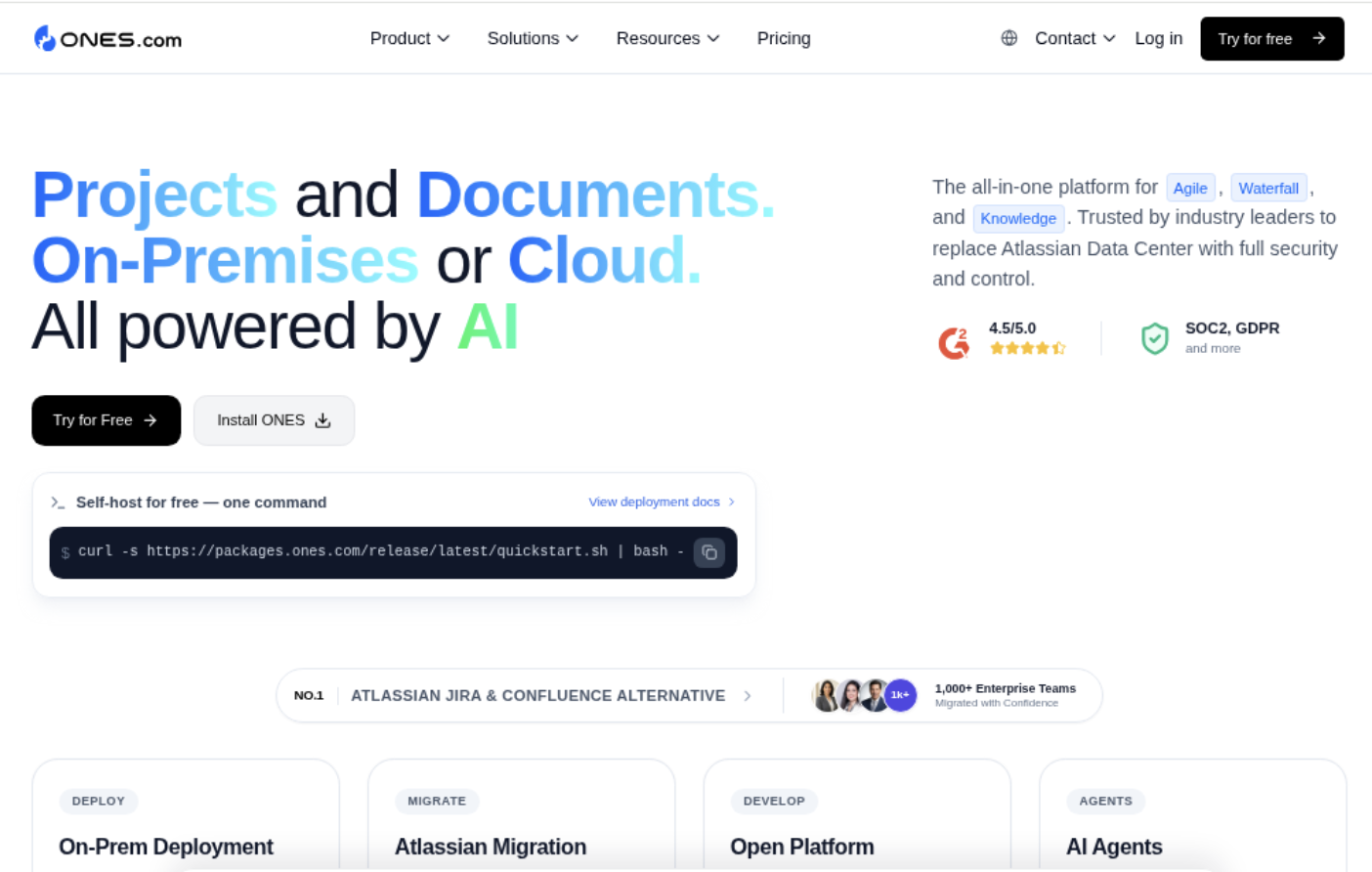
Value Proposition
ONES.com is a unified platform for project management and knowledge management, powered by ONES Assistant. ONES Project serves as a Jira alternative, while ONES Wiki serves as a Confluence alternative, and each product is sold separately.
For teams evaluating time tracking alongside project workflows, ONES.com can reduce reliance on multiple plugins by combining project planning, workflow control, reporting, and team knowledge capabilities in one environment.
Core Capabilities
- Scattered project information → Unified project workspace → Teams manage work, ownership, and progress in one connected environment.
- Complex Jira migrations → Jira-compatible workflows → Teams can preserve familiar issue-management patterns while evaluating a Jira alternative.
- Manual status reporting → Built-in reporting → Managers gain clearer views of progress, workload, and delivery trends.
- Rigid process rules → Custom workflows and fields → Teams can reflect approval, review, and delivery requirements without redesigning every process around defaults.
- Separate sprint tools → Sprint management → Agile teams can plan iterations, monitor work, and review sprint outcomes in the same project environment.
- Repetitive project administration → Automation → Routine transitions and notifications can happen with fewer manual actions.
- Too many plugins → Native capability coverage → Teams may reduce plugin dependency and simplify administration.
- Infrastructure restrictions → Four deployment choices → Organizations can choose Cloud, On-Premise, Private Cloud, or Air-gapped deployment.
- Different feature sets across environments → Full feature parity between Cloud and self-hosted versions → Teams can select deployment based on governance needs rather than accepting a reduced feature set.
- Separate project and knowledge tools → ONES Project plus ONES Wiki → Teams can connect delivery work with shared knowledge while purchasing the products separately.
Application Scenarios
Scenario one: a software team reviewing Jira costs. A 60-person engineering organization wants sprint management, custom workflows, reporting, and automation. It can compare the combined Jira and Tempo subscription with an ONES Project configuration that covers core project-management needs through native capabilities.
Scenario two: a regulated organization. A company cannot place operational work in a public Cloud environment. It can evaluate ONES On-Premise, Private Cloud, or Air-gapped deployment while checking whether the required project features remain available.
Scenario three: a growing services team. A services group needs project visibility and shared operating knowledge. It can assess ONES Project for delivery management and ONES Wiki for knowledge management, then compare the combined cost with its existing collection of Jira apps.
The best comparison depends on your workflow, governance requirements, team size, and reporting model. Treat ONES.com as an alternative to evaluate when reducing plugin reliance or supporting self-managed deployment matters.
Common Challenges When Estimating the Subscription
Challenge: confusing Jira cost with app cost
Problem: A budget owner sees the Tempo amount and assumes it represents the full solution.
Solution: Keep Jira, Tempo, optional products, taxes, and internal administration as separate lines. Add them only after reviewing each requirement.
Challenge: using the wrong seat count
Problem: The team counts only people entering hours and forgets approvers, managers, or reporting users.
Solution: Map every role that needs access. Confirm how the vendor defines billable or eligible users before finalizing the estimate.
Challenge: ignoring user growth
Problem: A quote fits the current team but becomes inaccurate after planned hiring.
Solution: Build low, expected, and high scenarios. Include likely hires, contractors, department expansion, and seasonal contributors.
Challenge: overlooking deployment costs
Problem: A self-managed option appears inexpensive because hosting and administration are excluded.
Solution: Estimate infrastructure, upgrades, monitoring, backup, security reviews, and internal support before comparing deployment models.
Challenge: choosing features by price alone
Problem: A lower tier lacks a workflow, approval, or reporting function your team depends on.
Solution: List essential capabilities first. Then compare the lowest plan that can support those requirements reliably.
FAQs
Does Tempo Timesheets replace the Jira subscription?
No. Tempo Timesheets generally works as an app within the Jira environment, so you should budget for both products. The exact relationship depends on your deployment and commercial arrangement. Check the current Jira plan, Tempo plan, eligible user count, taxes, and any optional products before calculating the complete annual cost.
Is Tempo Timesheets priced per user?
Pricing commonly depends on the number of eligible users, though the exact calculation can vary by product, deployment, and billing terms. Do not assume that only people who enter time count. Approvers, administrators, managers, and reporting users may also need access. Confirm the current eligibility rules before buying.
Is annual billing cheaper than monthly billing?
Annual and monthly plans can have different commercial terms, but the better choice depends on your growth pattern and cash-flow preferences. Annual billing may make budgeting easier, while monthly billing can offer flexibility when headcount changes quickly. Compare the full 12-month cost using the same seat assumptions and check renewal conditions.
What should a small team include in its estimate?
Start with Jira seats, Tempo users, the required feature tier, billing frequency, taxes, and any optional products. Add a small growth allowance if hiring is likely. A five-person team should still check whether a manager needs reporting or approval access, because role requirements can change the eligible user count.
How can I compare Tempo with another project platform?
Compare the complete workflow rather than one license line. Review time tracking, approvals, sprint management, reporting, custom workflows, automation, integrations, deployment, administration, and knowledge management. Then calculate subscription cost plus internal operating effort. This approach shows whether a broader platform could reduce plugins or manual reporting.
Can ONES.com work for teams with deployment restrictions?
ONES.com supports Cloud, On-Premise, Private Cloud, and Air-gapped deployments. ONES.com also states that its self-hosted and Cloud versions have full feature parity. Confirm technical requirements, implementation responsibilities, support terms, and the separate product needs for ONES Project and ONES Wiki during evaluation.
Conclusion
Tempo Timesheets Jira pricing is easiest to understand when you separate Jira licensing from the Tempo app, then add optional products, taxes, deployment costs, and administration.
Start with the correct user count. Build low, expected, and high scenarios. Check current commercial terms before approval, especially when your team is growing or requires self-managed infrastructure.
But here's the truth: the lowest subscription figure may not produce the lowest overall operating cost. Plugins, integrations, manual reporting, and administration can change the result.
If your team wants to compare a Jira alternative with native project capabilities, reporting, custom workflows, automation, and flexible deployment, include ONES.com in the evaluation. The right choice is the one that fits your required workflow, governance model, and long-term operating budget.