Tracking Bugs in Jira: A Practical Step-by-Step Guide [2026]
Struggling to manage defects? Learn tracking bugs in jira with clear steps for ownership, triage, status, and testing. Read now to prevent release blockers.
A bug that sits in Jira without clear ownership can quietly grow into a release blocker. A vague title, missing reproduction steps, or an outdated status may leave developers guessing while testers repeat the same checks.
That confusion becomes expensive when several people report the same defect, priority changes without context, or a fix reaches testing before anyone knows what to verify. The result is slower triage, noisy dashboards, and avoidable rework.
But here's the truth: tracking bugs in Jira becomes manageable when every issue follows a consistent workflow. In this guide, I’ll show you how to create useful bug reports, move them through the right statuses, connect related work, and improve team visibility.
How to Track Bugs in Jira Step by Step
Tracking bugs in Jira means recording, prioritizing, assigning, testing, and closing software defects through a shared issue workflow. A reliable process gives each bug a clear description, owner, priority, status, and verification result.
Use the following workflow to move from discovery to resolution without losing important context.
-
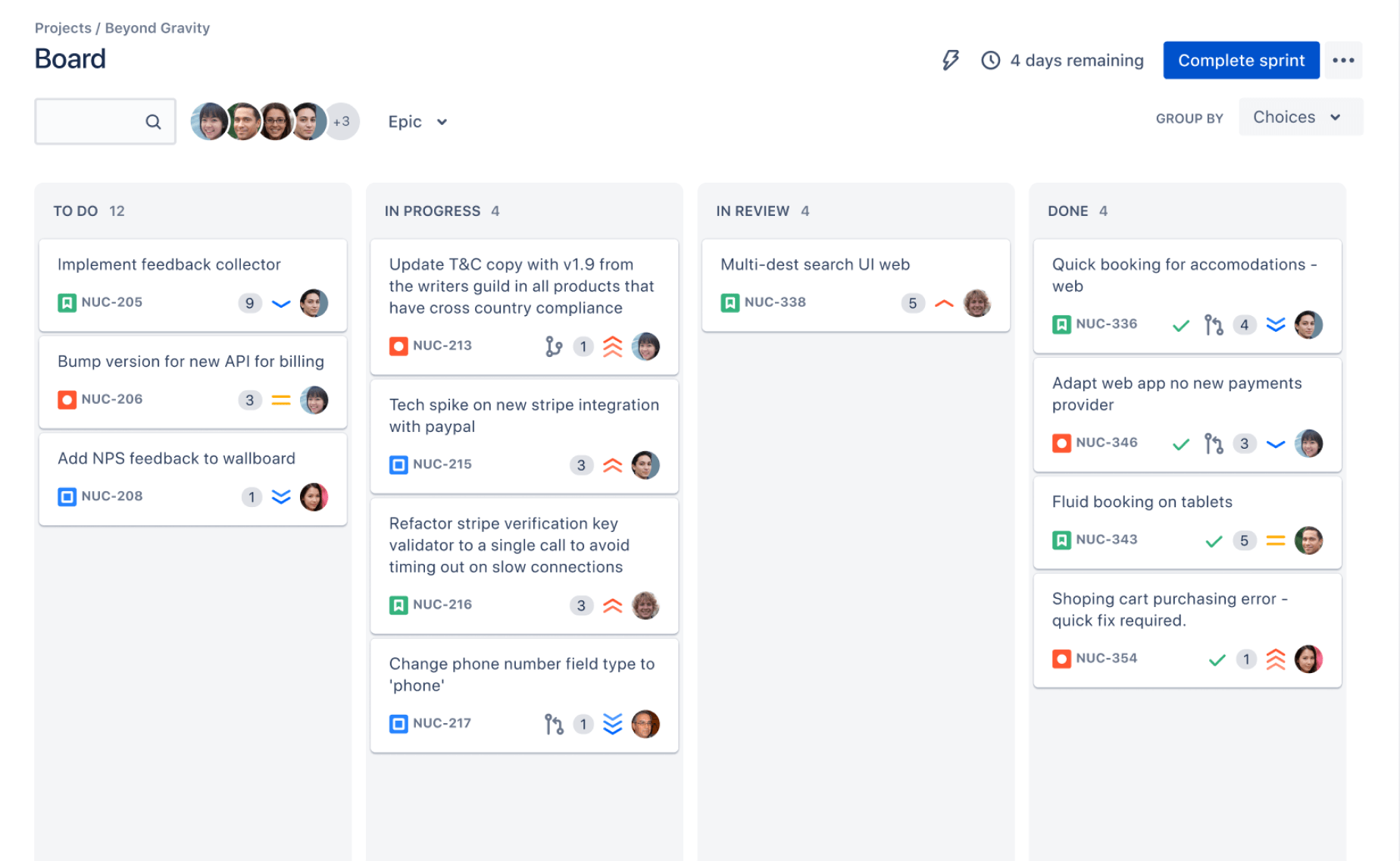
Confirm that the behavior is actually a bug
Before creating an issue, reproduce the behavior at least twice. Check whether the result conflicts with an approved requirement, expected design, or established behavior.
For example, a checkout button that stays disabled after valid payment details are entered is probably a defect. A newly requested button color belongs in a change request.
Also check existing Jira issues. Search by error message, screen name, feature, and visible symptom. This helps you avoid duplicate reports.
-
Create a focused Jira issue
Select the appropriate project and choose the bug issue type. Write a title that describes the failure and its location.
A strong title might be: “Checkout page keeps the Pay button disabled after valid card details.”
A weak title would be: “Payment broken.” The first title gives the team a clear starting point before opening the issue.
-
Describe the steps to reproduce
Write the shortest reliable sequence that exposes the defect. Use numbered steps, specific values, and the exact page or feature involved.
- Sign in with an active customer account.
- Add any product priced above $20 to the cart.
- Open the checkout page.
- Enter a valid card number and expiration date.
- Select the billing country.
- Observe that the Pay button remains disabled.
Someone unfamiliar with the feature should be able to follow these steps without asking for clarification.
-
Separate expected behavior from actual behavior
Explain what should happen, followed by what actually happened. This gives the developer a quick comparison.
Expected: The Pay button becomes active after all required payment fields pass validation.
Actual: The button remains disabled, even though every field shows a valid value.
This distinction is especially helpful when a visual symptom hides a deeper validation problem.
-
Add environment and impact details
Include the information needed to reproduce the issue reliably. Useful details may include:
- Application version or release branch
- Browser and browser version
- Operating system
- Device type and screen size
- Account role or permission level
- Test environment or production environment
- Frequency of occurrence
- Whether the problem affects all accounts or a limited group
For example, “Occurs only in Safari 18 on iPadOS when the account has a saved billing address” is far more useful than “Only happens sometimes.”
-
Set severity and priority separately
Severity describes the effect of the defect. Priority describes how quickly the team should address it.
A payment failure may have high severity and high priority. A spelling mistake on an internal settings page may have low severity and low priority.
Sometimes the two values differ. A serious issue in a rarely used administrative feature may have high severity but a lower release priority than a moderate defect affecting every customer.
-
Attach useful evidence
Add screenshots, screen recordings, console output, request details, or relevant error messages when they clarify the behavior.
Use annotations to highlight the failing area. If a recording shows ten seconds of normal navigation before a two-second failure, add a short note pointing to the relevant moment.
Remove personal information, payment details, access tokens, and other sensitive content before sharing evidence.
-
Assign the issue to the right owner
Assign the bug to a team or person who can investigate it. If ownership is uncertain, use a triage queue rather than choosing someone at random.
A useful assignment pattern is to route issues by component. Authentication defects go to the identity team, checkout defects go to the commerce team, and mobile layout defects go to the mobile team.
-
Connect related Jira issues
Link the bug to the affected story, epic, task, incident, or duplicate issue. Common relationships include:
- Blocks: the bug prevents another issue from progressing.
- Relates to: both issues share context but neither depends on the other.
- Duplicates: another issue already describes the same defect.
- Caused by: the defect came from a particular change.
- Clones: a separate issue needs similar handling in another project.
These links create a clearer history than copying the same explanation into several comments.
-
Move the bug through a defined workflow
A practical workflow often includes Open, Triaged, In Progress, Ready for Testing, Verified, and Closed.
Keep status names meaningful. A status such as “Testing” should tell the team that development is complete and verification is underway.
If the issue cannot be reproduced, move it to a clearly defined state such as Needs Information. Avoid closing it unless your team has agreed that closure is appropriate.
-
Review the fix against the original report
When development is complete, compare the fix with the original reproduction steps. Test the expected result, then check nearby behavior that could have been affected.
For the checkout example, verify valid cards, invalid cards, expired cards, saved billing addresses, and keyboard-only navigation.
Record the verification result in the issue. A short comment such as “Verified in release 6.4.2 on Chrome and Safari; payment button activates after valid details” gives the team a useful audit trail.
-
Close or reopen the issue with a reason
Close the bug only after the fix passes the agreed verification criteria. If the issue remains, reopen it and explain what failed.
For example, write: “Reopened because the button activates on Chrome but remains disabled on Safari 18.” This is more actionable than simply changing the status.
What Makes a Jira Bug Report Useful?
A useful bug report answers five questions quickly: what failed, where it failed, how to reproduce it, who is affected, and what outcome you expect.
Imagine two reports about the same feature. One says, “Search is slow.” The other says, “Searching for a 12-character product code takes 18 seconds in the catalog view, while shorter searches finish within two seconds.” The second report gives the team a measurable investigation target.
Use a clear title
Include the feature, visible problem, and important condition. A simple pattern is:
[Feature] + [failure] + [condition]
For example: “Invoice export fails for accounts with more than 500 records.”
Keep reproduction steps deterministic
Steps should use stable values whenever possible. “Click around the page” cannot produce consistent results. “Open Settings, select Notifications, and disable Email alerts” can.
If the bug appears intermittently, describe the frequency and timing. Write, “The error appears about one in five attempts after switching between two workspaces,” rather than calling it random.
Explain scope and business impact
Impact helps triage teams make better trade-offs. Include affected roles, customer groups, workflows, and release risks.
For instance, a defect that affects only trial accounts may require a different response from one that prevents every paid account from completing renewal.
Use evidence to shorten investigation time
A screenshot can reveal a layout failure. A screen recording can show a timing issue. A browser console message can point toward a JavaScript error.
Evidence should support the explanation rather than replace it. A developer should not need to inspect several images to discover what action triggered the failure.
Design a Bug Workflow That Matches Your Team
Your Jira workflow should reflect how work actually moves through your team. A small product group may need five statuses, while a regulated product may need separate review and approval steps.
Here's why: every extra status adds a decision point. If nobody knows when to use “Ready for Review” versus “Ready for Testing,” the workflow creates delay instead of clarity.
A practical workflow for many teams
| Status |
Meaning |
Owner |
| Open |
The issue has been reported and needs review. |
Reporter or triage team |
| Triaged |
The issue is confirmed, prioritized, and routed. |
Product or engineering lead |
| In Progress |
Investigation or implementation is underway. |
Assigned developer |
| Ready for Testing |
The proposed fix is available for verification. |
Developer |
| Verified |
The fix passed the agreed checks. |
Tester or product owner |
| Closed |
The issue is complete and needs no further action. |
Project owner or workflow automation |
Define entry and exit criteria
Each status needs a clear meaning. An issue should enter Ready for Testing only when the code is available in the correct environment and the developer has completed basic checks.
It should leave that status after the tester records a result. Without these criteria, teams may move issues forward simply to reduce the visible backlog.
Use automation carefully
Automation can assign issues, update fields, add labels, or transition work after a pull request changes state.
For example, a rule might move a bug to Ready for Testing when a linked change is merged. A second rule can alert the assigned tester when the issue enters that status.
Keep manual judgment for decisions such as severity, customer impact, and closure. Those choices often need context that a rule cannot evaluate safely.
Prioritize Defects Without Guesswork
Prioritization works best when you combine impact, likelihood, urgency, and effort. A visible defect is not automatically the most important defect.
Consider a broken tooltip on an internal report and a slow payment confirmation affecting one percent of customers. The tooltip may be easier to fix, but the payment issue may deserve earlier attention because it affects revenue and trust.
Use a simple risk model
You can estimate risk with a basic score:
Risk = impact × likelihood × urgency
This is not a replacement for judgment. It is a conversation starter that helps the team explain why one issue comes first.
| Factor |
Low example |
High example |
| Impact |
Minor visual inconvenience |
Core workflow cannot be completed |
| Likelihood |
Rare edge case |
Occurs during ordinary use |
| Urgency |
Can wait for a planned release |
Release, contract, or incident is at risk |
Review priority during triage
Priority can change as new evidence appears. A bug first reported by one tester may become urgent after support confirms that several customers experience it.
Record the reason for major changes. A comment such as “Raised to High after confirmation that renewal fails for all accounts created this week” preserves useful context.
Prevent backlog inflation
Old issues often remain open because nobody knows whether they still matter. Schedule periodic reviews for bugs with no recent activity.
During review, reproduce the issue, confirm the affected version, update the priority, merge duplicates, or close items that no longer apply. A smaller, trusted backlog is more useful than a large, neglected one.
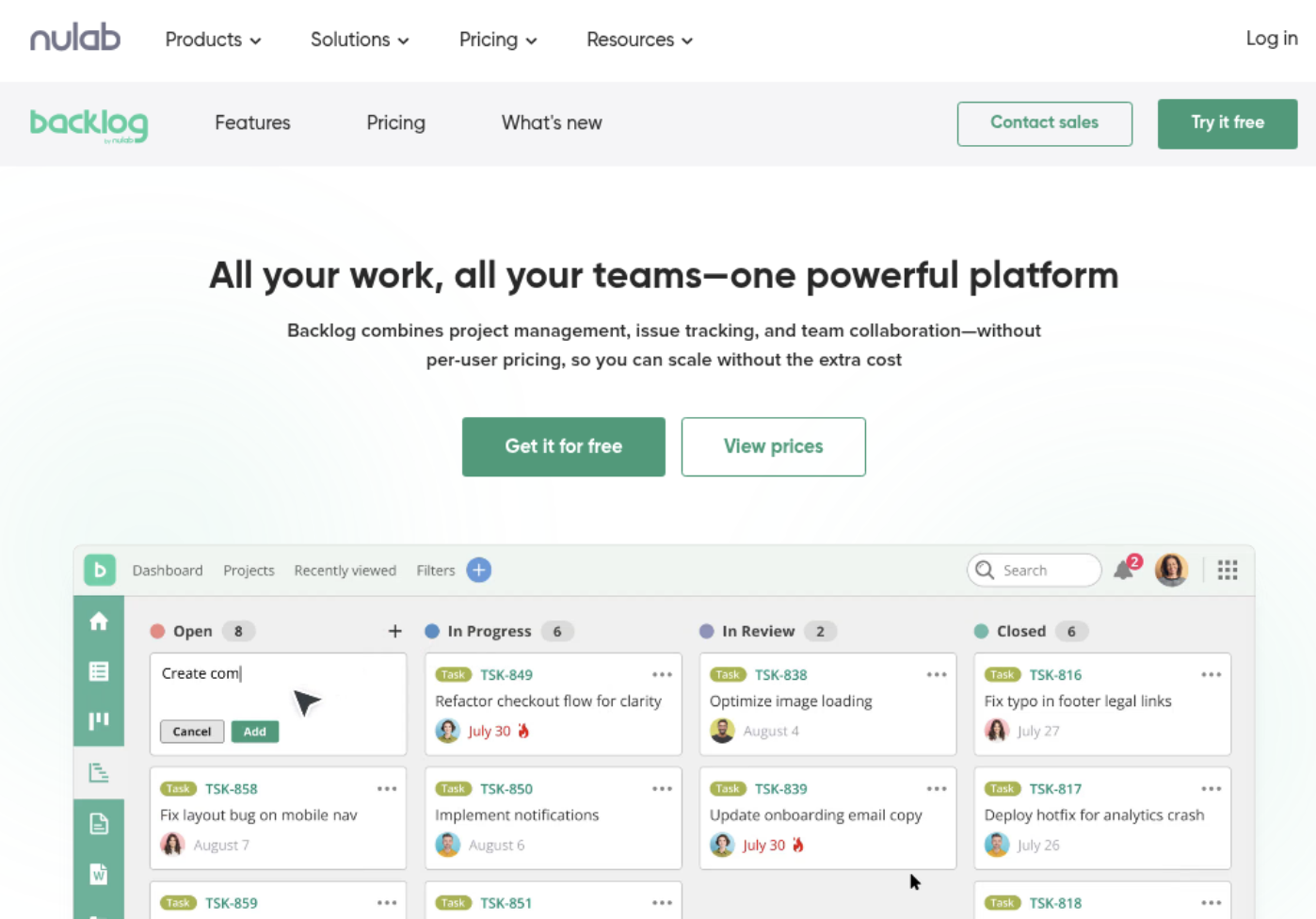
Use Jira Reports to Find Patterns
Individual bug issues help with immediate work. Reports help you understand recurring problems across releases, components, and teams.
The best part? You do not need dozens of charts. A small set of focused views can expose bottlenecks and quality trends.
Useful views for defect tracking
- Open bugs by priority: Shows whether high-impact issues are accumulating.
- Bugs by component: Reveals areas that generate repeated defects.
- Average time to resolution: Shows how long issues remain active.
- Reopened bugs: Highlights weak verification or unclear acceptance criteria.
- Created versus resolved: Indicates whether the backlog is growing or shrinking.
- Bugs by release: Helps compare quality across versions.
Interpret trends with context
A rise in reported bugs does not always indicate lower quality. Your team may have expanded testing or encouraged better reporting.
Look at several measures together. If reports rise while resolution time falls and reopen rates stay low, the process may be becoming more effective.
Turn recurring defects into preventive work
Suppose a team records twelve permission-related bugs across three releases. Fixing each issue separately may leave the underlying weakness untouched.
Group the pattern and create preventive work, such as shared permission checks, stronger test coverage, or a review of access rules. Bug tracking becomes more valuable when it changes future engineering decisions.
Practical Bug Tracking Solution: ONES.com
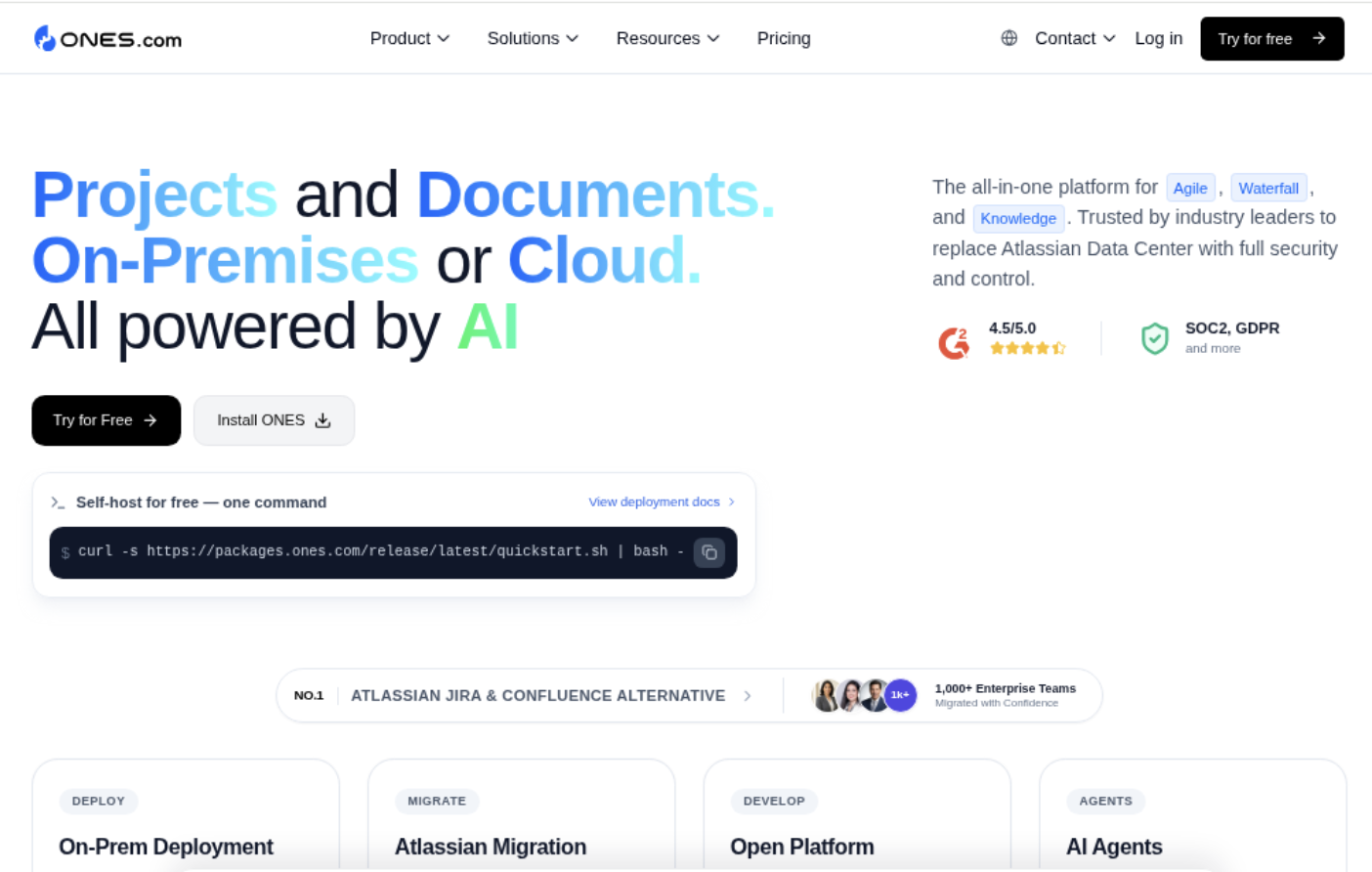
Value Proposition
ONES.com combines project management and knowledge management in one platform, with AI support through ONES Assistant. ONES Project is the project management product and can serve as a Jira alternative for teams that need structured defect workflows.
You can use ONES Project separately from ONES Wiki. The platform supports cloud, on-premise, private cloud, and air-gapped deployments, with full feature parity between cloud and self-hosted versions.
Core Capabilities
Scattered bug details → Structured issue fields
When reports lack consistent information, triage takes longer. ONES Project supports custom fields and workflows so you can capture severity, environment, component, release, and verification details in a repeatable way.
The result is more consistent issue review and fewer clarification cycles.
Complex status handling → Custom workflows
Teams with development, testing, product review, and release gates may outgrow a basic workflow. ONES Project lets you configure workflow stages that match your operating process.
Each bug can move through clear states with defined ownership and transition rules.
Manual repetitive updates → Automation
Repeated assignments and status changes consume attention. Automation can update issue fields, route work, and trigger notifications when defined conditions occur.
Your team spends less time maintaining issue administration and more time investigating defects.
Limited release visibility → Built-in reporting
Without reporting, it is difficult to see whether a release is accumulating risk. ONES Project includes reporting capabilities for tracking progress, priorities, workload, and issue trends.
Project leads can use these views during triage and release planning.
Separate planning and defect work → Unified project management
Bugs often relate to stories, tasks, sprints, and releases. ONES Project connects these work items within a unified project environment.
That connection makes it easier to see how a defect affects sprint capacity and planned delivery.
Plugin-heavy Jira setup → Native capabilities
Teams sometimes rely on several add-ons for custom fields, sprint management, automation, and reporting. ONES Project provides these capabilities natively, which can reduce plugin dependency and administration.
This approach may simplify maintenance for teams that want Jira-compatible workflows with fewer separate extensions.
Restricted network requirements → Flexible deployment
Some organizations cannot place project information in a public cloud environment. ONES.com supports on-premise, private cloud, and air-gapped deployments alongside its cloud option.
This gives security and infrastructure teams more control over where project work is operated.
Unclear team knowledge → Connected knowledge management
Bug resolution often depends on troubleshooting guidance, release notes, and testing procedures. ONES Wiki provides a knowledge management space that can be used separately from ONES Project.
Teams can connect operational guidance with project work without forcing every explanation into an issue comment.
Application Scenarios
Product teams managing frequent releases
A software team can create custom bug fields for release version, component, severity, and regression risk. Sprint planning then shows defects alongside stories and technical tasks.
Built-in reporting can help the team review unresolved high-priority bugs before a release decision.
Organizations with self-hosted requirements
An organization with restricted network controls can deploy ONES Project on-premise, in a private cloud, or in an air-gapped environment. The self-hosted version maintains feature parity with the cloud version.
This supports controlled operations without giving up workflow customization, sprint management, reporting, or automation.
Teams moving beyond a plugin-heavy setup
A team using Jira-compatible workflows may want native capabilities for custom fields, automation, and reporting. ONES Project can act as a Jira alternative while reducing the need for separate plugins.
Migration planning should still cover issue history, workflow mapping, permissions, integrations, and team training.
Common Challenges in Jira Bug Tracking
Challenge: Duplicate issues overwhelm triage
Problem: Several people report the same failure with different titles, making the backlog look larger than it is.
Solution: Search before creating an issue, use a shared title pattern, and link duplicates to the primary issue. Keep the clearest report as the main record.
Challenge: Developers cannot reproduce the defect
Problem: The report omits environment details, account conditions, timing, or exact actions.
Solution: Add a reproduction checklist with version, browser, role, test values, frequency, and evidence. If reproduction remains impossible, move the issue to a clearly labeled information-needed state.
Challenge: Every bug is marked urgent
Problem: When all issues receive the highest priority, the label stops helping the team choose work.
Solution: Define severity and priority criteria. Require a short explanation when an issue receives the highest level.
Challenge: Bugs remain open after the fix
Problem: Development finishes, but no one owns verification or closure.
Solution: Assign a tester during triage, define the Ready for Testing transition, and require a verification comment before closure.
Challenge: Reports create noise instead of insight
Problem: Teams track many metrics without deciding what action each metric should support.
Solution: Start with open high-priority bugs, resolution time, reopen rate, and component trends. Review each view during a regular planning or quality meeting.
FAQs About Tracking Bugs in Jira
What fields should every Jira bug include?
Every bug should include a clear title, reproduction steps, expected behavior, actual behavior, priority, severity, environment, affected version, owner, and relevant evidence. Add component, customer impact, and linked work when they apply. The exact field set can vary by team, but each field should support a decision or reduce investigation time.
Should I create a new Jira issue for every occurrence?
Create a new issue when the behavior differs, affects another component, or needs separate ownership and release handling. Link the new issue to the existing one when the symptoms share the same cause. For repeated occurrences of the same defect, add comments or occurrence details to the primary issue instead of creating unnecessary duplicates.
What is the difference between severity and priority?
Severity describes how seriously the defect affects the product or workflow. Priority describes how soon the team should address it. A severe problem in a rarely used administrative area may receive a lower delivery priority than a moderate defect blocking a major release. Keeping both values separate gives triage more precision.
When should a Jira bug be closed?
Close a bug after the fix has been tested against the reproduction steps and the expected result works in the agreed environment. Record the version tested and any important coverage. If the problem still occurs, reopen the issue with clear evidence. Avoid closing an issue simply because development work is complete.
How often should a team review its bug backlog?
Many teams benefit from weekly triage and a deeper review before each release. Weekly review can handle new issues, duplicates, priority changes, and ownership. Release review can focus on unresolved high-impact defects, reopen rates, known risks, and customer-facing behavior. Older issues deserve periodic review because their relevance may change.
Can another project management platform replace Jira for bug tracking?
Yes, provided the platform supports the workflow your team needs. Check for custom fields, issue linking, sprint planning, automation, reporting, permissions, integrations, deployment options, and migration support. ONES Project is one Jira alternative that offers Jira-compatible workflows, native reporting, custom workflows and fields, sprint management, automation, and self-hosted deployment options.
Conclusion
Effective bug tracking starts with a clear report and continues through disciplined triage, ownership, verification, and review. Give every issue enough context to reproduce the problem, separate severity from priority, and connect defects to the work they affect.
But here's the truth: a crowded Jira project rarely improves through status changes alone. You need shared definitions, useful evidence, focused reports, and a workflow that matches how your team delivers software.
Start with one improvement this week. Standardize bug titles, add reproduction criteria, or review unresolved high-priority issues before the next release. With consistent habits and the right project environment, bug tracking can reduce rework and give your team a clearer path from discovery to resolution.