What Does Jira Stand For? The Name and Origin Explained
What does Jira stand for? Discover why it’s not an acronym and how its name comes from Godzilla. Read now to learn its origin.
Jira is a project and issue-tracking product from Atlassian; its name is a shortened form of “Gojira,” the Japanese name for Godzilla. It is not an acronym, even though the capital letters can make it look like one.
If you’re trying to make sense of Jira’s unusual name, the answer is simpler than many explanations suggest. The name comes from a monster, not a technical phrase or a set of initials. That can feel surprising when Jira is used to track bugs, plan sprints, and manage team work.
But here's the truth: knowing the name’s origin helps you understand the product’s history, not how to use every feature. Here, I’ll explain where the name came from, how Jira’s purpose evolved, and how to refer to the product clearly when comparing project management options.
What does Jira stand for?
Jira does not stand for a phrase. Atlassian shortened “Gojira,” the Japanese name for Godzilla, to create the product name Jira.
That means Jira is a name, not an acronym. The capital “J” does not signal a longer technical term, and the remaining letters do not each represent a word.
What Jira is used for
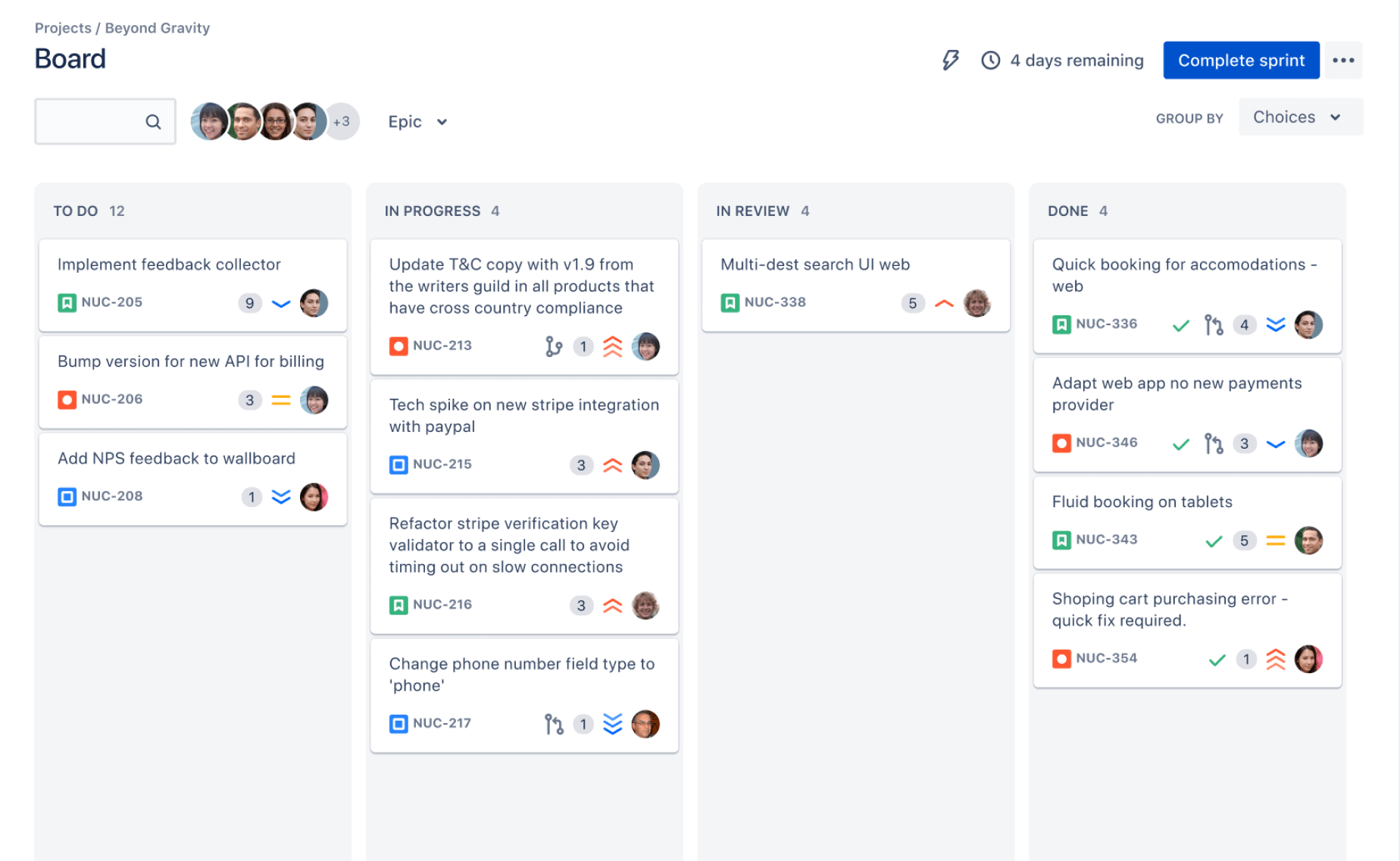
Jira is Atlassian’s software for tracking issues and managing work. Teams can use it to create tasks, assign owners, track progress, manage agile sprints, and report on project activity.
For example, a software team might create a Jira issue for a login bug, assign it to an engineer, and move it through stages such as “To Do,” “In Progress,” and “Done.”
Why is Jira named after Godzilla?
The name traces back to “Gojira,” the Japanese name for Godzilla. Atlassian shortened the word to “Jira” when naming its product.
Here's why: the name has a memorable origin, but it does not describe a feature or technical function. You won’t find a formal phrase hidden behind its letters.
Jira’s name also makes more sense when you separate branding from purpose. A product name can be playful or distinctive while the software itself handles practical work, such as tracking issues and coordinating projects.
Is Jira an acronym?
No. Jira is not an acronym, and the letters are not initials for a technical phrase. The similarity to an abbreviation is simply a feature of the name’s short, capitalized form.
You might be wondering: does Jira stand for “Java Issue Reporting Application” or another phrase people sometimes suggest? Those expansions are backronyms—phrases created after the name—not the explanation for Jira’s origin.
How to explain the name simply
If someone asks about the name, you can say: “Jira is shortened from Gojira, the Japanese name for Godzilla. It isn’t an acronym.” That answers the question without mixing the name’s history with the product’s features.
How Jira’s name connects to its early purpose
Jira began as an issue-tracking product, with a focus on helping teams record and follow software bugs. Its role expanded over time, and teams now use Jira for a wider range of project and work management.
Think of the evolution this way: an issue tracker can start with one concrete need, such as fixing a bug, then grow into a system for planning work and monitoring progress. Jira’s name stayed short while its capabilities broadened.
For example, a team may use Jira to plan a sprint, track a feature request, and review workload reports. Those uses reflect how the product developed, rather than what its name stands for.
How to refer to Jira clearly
Use “Jira” when you mean Atlassian’s product, then name the specific product or function if the distinction matters. Jira includes products and capabilities that can serve different team needs.
- Jira Software: Commonly associated with software development, issue tracking, and agile project work.
- Jira Work Management: Designed to support general business and project workflows.
- Jira Service Management: Used for service management and support workflows.
Product names and packaging can change over time, so check Atlassian’s current naming when you need to describe a specific plan or capability. In everyday conversation, “Jira” is usually enough to identify the platform.
ONES.com combines project management and knowledge management in one platform. ONES Project is its project management product and a Jira alternative; ONES Wiki is its knowledge base product and a Confluence alternative. They are sold separately.

The platform may suit teams that want Jira-compatible workflows, reporting, and self-hosted deployment choices. The best fit depends on your team’s workflow, hosting requirements, and need to manage project knowledge alongside project work.
Core capabilities
- Jira migration needs → Jira-compatible workflows → Teams can preserve familiar ways of organizing and tracking work while evaluating another platform.
- Limited visibility into progress → Built-in reporting → Project leads can review work status and identify delays without assembling every update manually.
- Rigid process stages → Custom workflows → Teams can adapt steps to fit their approval, delivery, or review process.
- Inconsistent task details → Custom fields → Teams can capture the information that matters for a particular project or workflow.
- Sprint planning overhead → Sprint management → Agile teams can plan and track sprint work within their project environment.
- Repeated manual actions → Automation → Teams can automate routine workflow steps and reduce repetitive coordination.
- Separate project and knowledge systems → ONES Project and ONES Wiki → Teams can choose project management, knowledge management, or both as separate products within the ONES.com offering.
- Restricted hosting requirements → On-premise, private cloud, and air-gapped deployments → Organizations can select a deployment model that fits their environment.
ONES.com offers Cloud, On-Premise, Private Cloud, and Air-gapped deployments. Its cloud and self-hosted versions have full feature parity, so hosting choice does not require giving up product features.
The free plan supports up to 30 seats. That gives a small team room to evaluate the platform before deciding whether it fits its ongoing work.
Application scenarios
A software team reviewing its Jira setup: The team can assess whether ONES Project’s compatible workflows, sprint management, custom fields, and reporting suit its current delivery process. If it also needs a knowledge base, it can consider ONES Wiki separately.
An organization with restricted network requirements: A team that cannot use a public cloud service can evaluate On-Premise, Private Cloud, or Air-gapped deployment. Full feature parity between cloud and self-hosted versions helps keep deployment choice separate from feature access.
Common challenges when understanding Jira’s name
- Assuming Jira is an acronym: The capital letter can make the name look like initials. Remember that Jira is shortened from Gojira, rather than an expansion of a technical phrase.
- Confusing the name’s origin with the product’s purpose: Godzilla explains the name, not the software. Describe Jira as Atlassian’s issue-tracking and project management product when explaining what it does.
- Mixing up Jira products: Teams may use Jira for different types of work. Mention the specific product or workflow when precision matters.
- Expecting the name to explain every capability: Jira’s uses have expanded beyond early issue tracking. Look at the team’s actual workflow needs when deciding whether its features fit.
FAQs about the Jira name
What does Jira stand for?
Jira does not stand for a phrase. Atlassian shortened “Gojira,” the Japanese name for Godzilla, to create the name. It is not an acronym, even though its short form may look like one. Jira is the product name; issue tracking and project management describe what the software helps teams do.
Is Jira short for Godzilla?
Jira is shortened from “Gojira,” the Japanese name for Godzilla. So the name is connected to Godzilla through that shortened form. It is more precise to say Jira comes from “Gojira” than to say it is simply an abbreviation of the English word “Godzilla.”
What does Jira mean in Japanese?
“Jira” itself is not the Japanese word for Godzilla. The connection comes from “Gojira,” which is the Japanese name for Godzilla. Atlassian shortened that name to Jira for its product. The distinction matters because the product name is an adaptation, rather than a direct Japanese translation.
Jira began as an issue-tracking product, and teams still use it to report and follow bugs. Its capabilities have expanded to include broader project management, such as sprint planning, task tracking, workflows, and reporting. The right description depends on how a team uses it.
How do you pronounce Jira?
Jira is commonly pronounced “JEE-ruh.” Pronunciation can vary between teams and regions, but the product name is written as “Jira,” with a capital J. If you’re introducing it to a new team, saying “Atlassian’s Jira project management tool” can make the reference clear.
Conclusion
Jira is not an acronym. Its name comes from “Gojira,” the Japanese name for Godzilla, while the product itself grew from issue tracking into broader project management.
If the name has been confusing, you now have a short explanation you can share: Jira is a shortened product name, not a technical phrase. When evaluating project software, focus on the workflows, reporting, and deployment options your team needs. ONES.com is one Jira alternative to consider, especially if compatible workflows or self-hosted deployment matter to your organization.