What Is Jira? A Clear Guide to Its Features and Uses Today
What is the Jira, and how can it simplify teamwork? Learn its features, uses, and workflows in this clear guide. Read now to get started.
Jira can feel confusing when you first encounter it. You may see issue types, boards, sprints, workflows, backlogs, and reports before you understand what the platform actually does.
That confusion creates a practical problem. You might create the wrong project, choose an unsuitable workflow, or spend more time managing Jira than managing the work itself.
Here’s the good news: Jira is easier to understand when you view it as a system for planning, tracking, and improving team work. This guide explains what Jira is, how its main features fit together, and where it works best today.
What Is Jira?
Jira is project management software for planning, tracking, and delivering work, especially in software development and Agile teams. It helps you turn work into trackable issues, organize those issues on boards, assign responsibility, monitor progress, and review performance.
At its core, Jira gives your team a shared workspace for moving work from an idea to completion. A software team might use it to track a bug, plan a sprint, manage a product requirement, or coordinate a release.
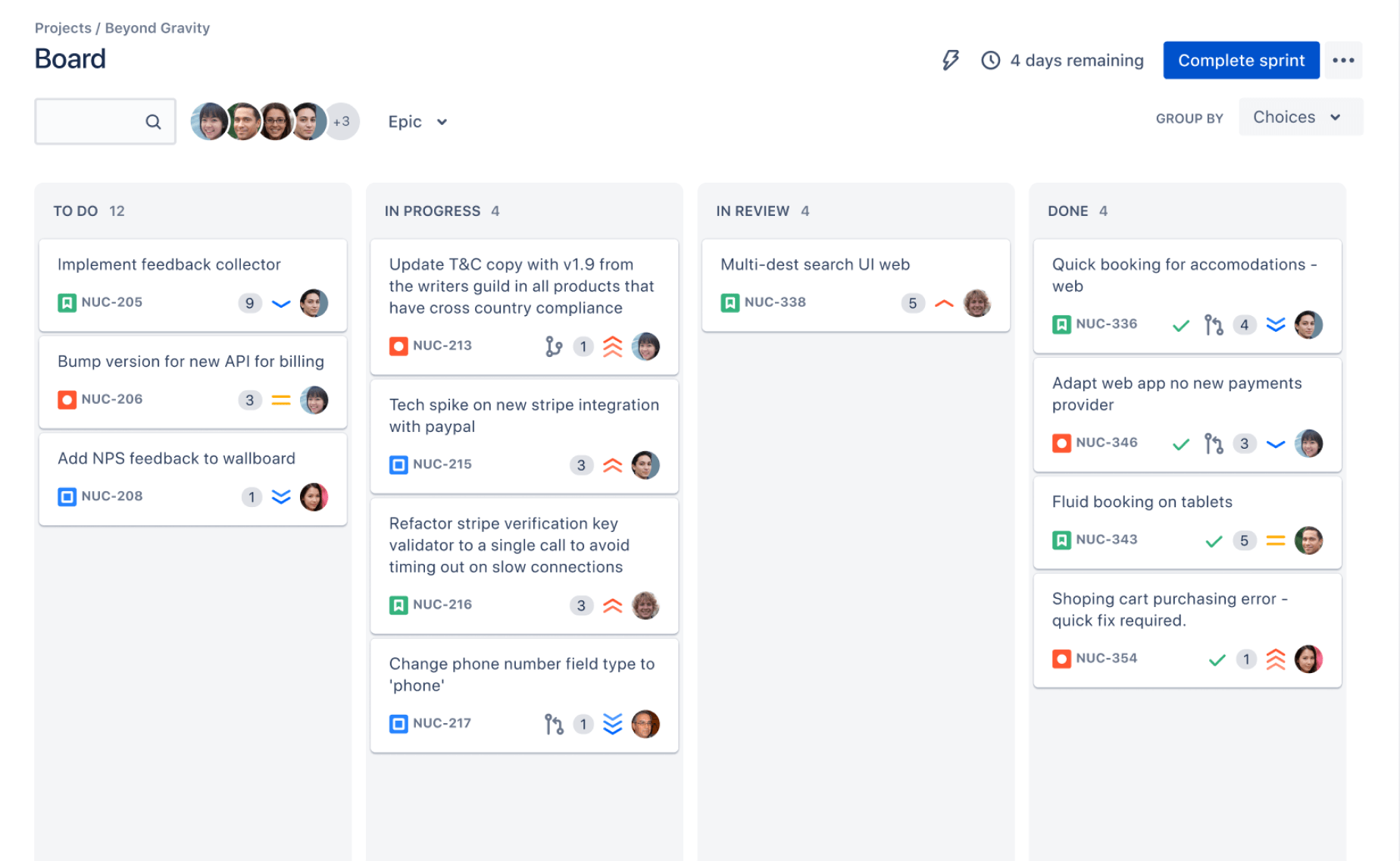
What Jira Helps You Manage
Jira can support many kinds of work, although it is especially associated with software teams. You can use it to manage:
- Software bugs and technical defects
- Product requirements and feature requests
- Tasks and subtasks
- Support or service requests
- Release planning
- Agile sprints and backlogs
- Approval steps and operational work
- Cross-team project dependencies
For example, a product manager can create a feature issue, a designer can attach design details, a developer can update its status, and a tester can record the result. Everyone sees the same progress.
How Jira Organizes Work
Jira typically organizes work through a hierarchy. The exact setup can vary, but the structure often looks like this:
| Level |
Purpose |
| Project |
Groups related work for a team, product, service, or department. |
| Issue |
Represents one piece of work, such as a bug, task, or story. |
| Subtask |
Breaks a larger issue into smaller actions. |
| Epic |
Groups related work toward a larger product or business outcome. |
| Sprint |
Defines a short work period for completing selected items. |
This structure lets you move from a broad goal to a specific action. For instance, a mobile checkout epic could contain stories for payment methods, address validation, and order confirmation.
How Jira Works in Practice
Jira follows a repeatable workflow. Your team creates work, prioritizes it, assigns responsibility, changes its status, and reviews the result.
- Create a project: Choose a project type that matches your work, such as software development, business projects, or service management.
- Define issue types: Decide whether the team will track bugs, tasks, stories, epics, requests, or custom work items.
- Create and describe issues: Add a clear title, context, acceptance criteria, priority, owner, and relevant attachments or links.
- Prioritize the backlog: Arrange work according to customer impact, risk, urgency, dependencies, or business value.
- Plan work: Select issues for a sprint, assign them to a release, or place them into a scheduled workflow.
- Move issues through statuses: A typical path might include To do, In progress, In review, Testing, and Done.
- Monitor progress: Use boards, dashboards, reports, and filters to see what is moving and what is blocked.
- Review and improve: Examine completed work, discuss delays, and adjust the workflow for the next cycle.
Here’s why this matters: Jira makes invisible work visible. If five tasks are waiting for review, your team can see the bottleneck instead of guessing where time is going.
A Simple Jira Example
Imagine a team improving an online checkout process. The product manager creates an epic called “Simplify checkout.” It contains several stories:
- Allow guest checkout
- Add digital wallet payments
- Improve address validation
- Show clearer payment errors
The team places the stories in its backlog, estimates effort, and selects several for the next sprint. Each story moves across the board as the team completes design, development, review, and testing.
At the end of the sprint, the team can see which stories were completed, which remained unfinished, and why certain issues took longer than expected.
Jira’s Main Features
Issues and Custom Fields
An issue is Jira’s basic unit of work. It can represent almost anything your team needs to track.
Each issue can include a summary, description, priority, status, assignee, labels, due date, comments, links, and custom fields. A development team might add environment details, affected versions, severity, and reproduction steps to a bug.
Custom fields are useful when a standard setup does not capture enough detail. However, adding too many fields can make issues difficult to complete. A short bug report with five useful fields is often better than one with twenty confusing fields.
Boards and Backlogs
A board gives you a visual view of work. In a Kanban layout, cards move continuously across columns such as To do, In progress, and Done.
A Scrum board usually supports sprint planning. Your team selects work from the backlog, commits to a short cycle, and tracks progress until the sprint ends.
The backlog holds upcoming work. It allows you to capture ideas without forcing the team to start everything immediately.
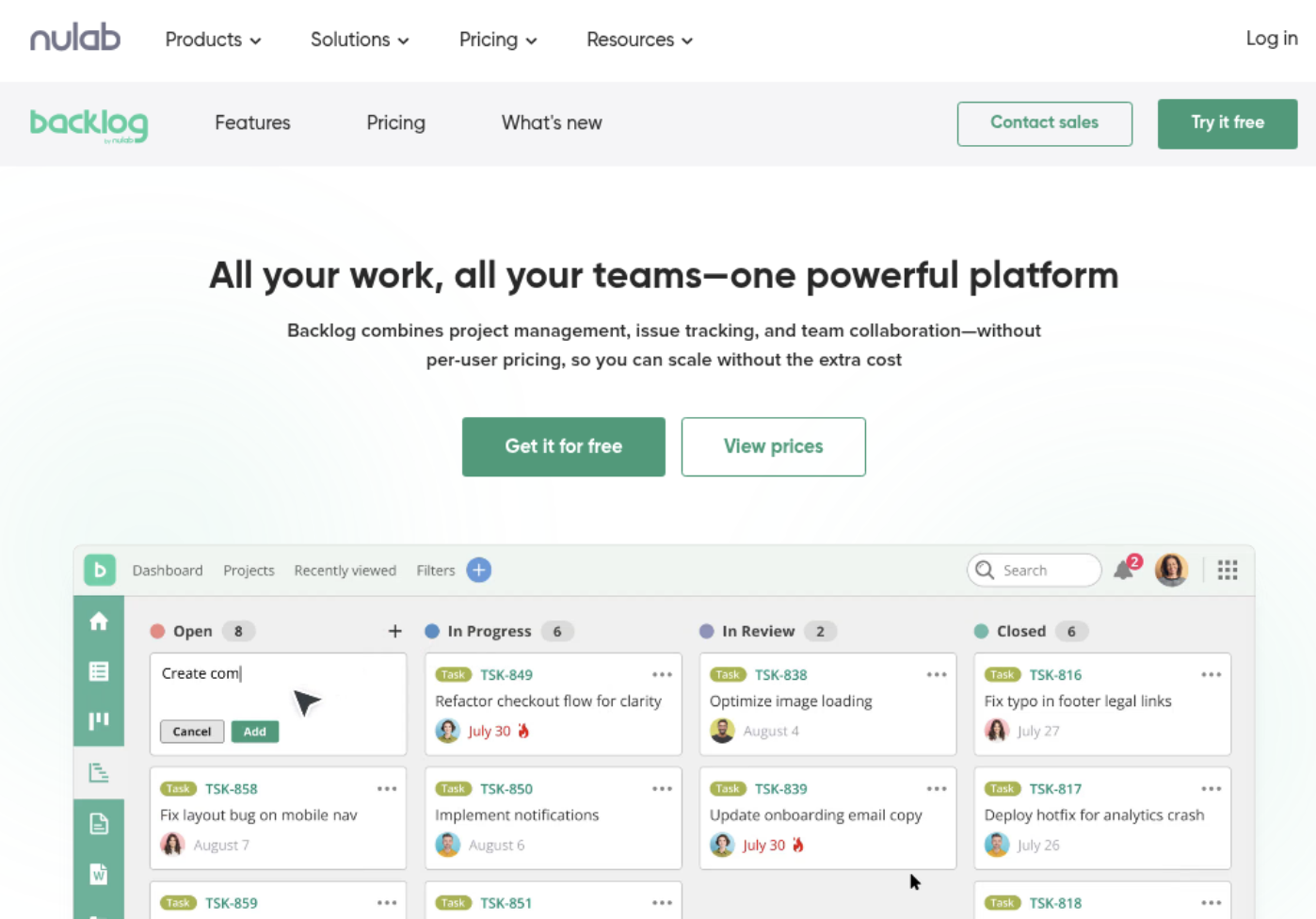
Workflows
A workflow defines how an issue moves from creation to completion. Simple teams may need only three statuses. More regulated teams may require design approval, security review, testing, and release approval.
For example, a content request could follow this path:
- Request submitted
- Scope confirmed
- Drafting
- Review
- Revision required
- Approved
- Published
Workflows help clarify responsibility. They also reveal where work pauses most often.
Reports and Dashboards
Jira includes reports that help you review progress, workload, sprint performance, cycle time, and issues by category.
A dashboard can combine several views. A team lead might display unresolved critical bugs, sprint progress, recently completed work, and issues waiting for review.
The best dashboard answers a real question. If nobody needs a chart, removing it can make the workspace easier to understand.
Automation and Integrations
Automation lets Jira perform routine actions. A rule might assign an issue when its status changes, notify a reviewer when work reaches a certain stage, or close an inactive request after approval.
Jira can also connect with development, communication, planning, and reporting tools. These connections can reduce repeated updates, although every integration adds another point to maintain.
Who Uses Jira?
Software development teams are Jira’s most familiar audience. Developers, testers, product managers, designers, and technical leads can coordinate work in one place.
Jira also appears in marketing, operations, finance, human resources, and internal service teams. For example, a marketing group could track campaign requests, review stages, launch tasks, and post-campaign improvements.
Here’s a practical comparison:
| Team type |
Possible Jira use |
| Software development |
Features, bugs, technical debt, releases, and sprints. |
| Product management |
Roadmaps, customer requests, priorities, and product outcomes. |
| Marketing |
Campaign planning, content approvals, and launch coordination. |
| Operations |
Recurring work, process requests, and cross-team handoffs. |
| Service teams |
Incidents, requests, approvals, and response targets. |
The platform usually works best when a team agrees on clear definitions. “Done” should mean something specific, and every status should represent a meaningful change in progress.
Jira for Agile and Scrum Teams
Jira is closely connected with Agile methods because it supports short planning cycles, prioritized backlogs, visible work, and regular reviews.
In Scrum, a product owner prioritizes the backlog. The team selects work for a sprint, completes it, and discusses results during a review and retrospective.
In Kanban, work flows continuously. The team limits how many items can be active at one time, which helps prevent a crowded middle stage.
Scrum Example
A two-week Scrum sprint might include ten issues. Three developers, one tester, and one product manager review the sprint goal before work begins.
During the sprint, the board shows several issues in progress and two waiting for testing. That visual signal encourages the team to finish existing work before starting more items.
At the retrospective, the team notices that testing begins too late. For the next sprint, it agrees to involve the tester during refinement and reduce the number of simultaneous development tasks.
Kanban Example
A service team may receive requests continuously rather than in sprints. It can use columns for New, Investigating, Waiting for requester, In progress, and Resolved.
A limit of three items in progress discourages the team from accepting a fourth request before completing one of the current items. That small rule can reduce unfinished work and improve response time.
Jira Strengths and Limitations
Jira’s strength is flexibility. You can adapt issue types, fields, permissions, workflows, screens, and reports to match complex processes.
That flexibility can also create difficulty. A team may add unnecessary statuses, duplicate fields, or complicated approval paths. New members then need more time to understand where work belongs.
| Strength |
Potential limitation |
| Detailed work tracking |
Small tasks can feel overly formal. |
| Custom workflows |
Too many steps can slow progress. |
| Agile planning support |
Poor backlog maintenance creates confusion. |
| Reports and dashboards |
Too many views can hide the important signal. |
| Wide integration options |
Connected tools require ongoing administration. |
The best setup is rarely the most complex one. Start with the smallest workflow that reflects how your team actually works, then improve it after observing real problems.
Value Proposition
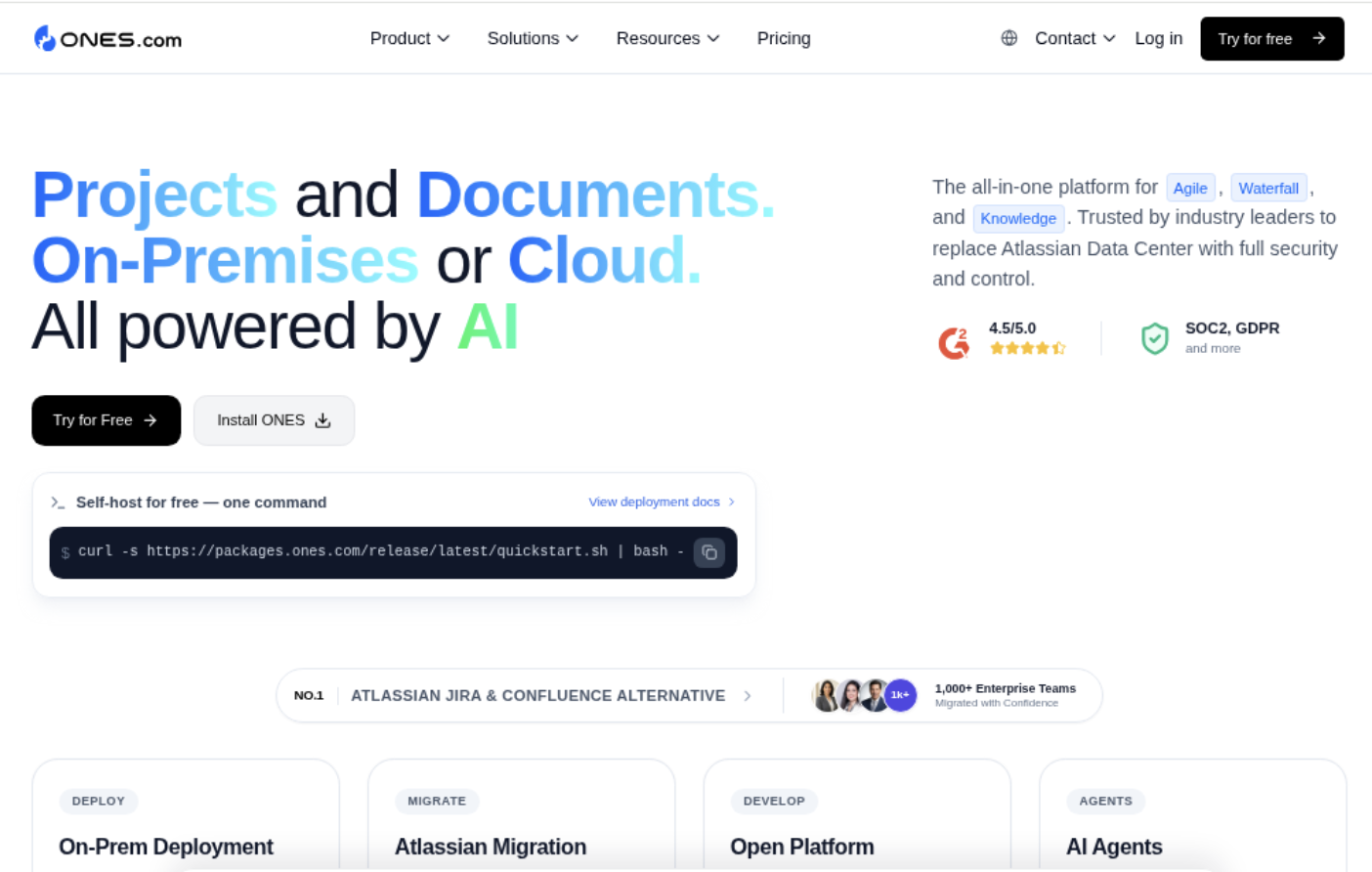
ONES.com is a unified platform for project management and knowledge management, powered by ONES Assistant. It can suit teams seeking a Jira alternative with project tracking, knowledge management, and deployment flexibility.
ONES Project and ONES Wiki are sold separately. ONES Project focuses on project management, while ONES Wiki supports knowledge management as a Confluence alternative.
Core Capabilities
- Scattered project work → ONES Project: Organize tasks, issues, and priorities in one project workspace, helping teams maintain a clearer delivery view.
- Complex Agile planning → Sprint management: Plan sprints, manage backlogs, and track progress through workflows that support familiar Agile practices.
- Rigid processes → Custom workflows and fields: Adapt issue stages and work details to match the team’s actual process rather than forcing every team into one template.
- Limited progress visibility → Built-in reporting: Review delivery progress, workload, and workflow activity without relying entirely on separate reporting tools.
- Repetitive administration → Automation: Automate routine actions such as assignments, notifications, and status changes to reduce manual coordination.
- Jira migration concerns → Jira-compatible workflows: Teams familiar with Jira-style planning can retain recognizable working patterns while evaluating another platform.
- Plugin dependence → Native capabilities: Core project functions are available within the platform, which can reduce the need to assemble many extensions.
- Deployment restrictions → Four deployment options: Choose Cloud, On-Premise, Private Cloud, or Air-gapped deployment according to security and infrastructure requirements.
- Uneven deployment experiences → Feature parity: The cloud and self-hosted versions provide full feature parity, helping distributed teams maintain consistent capabilities.
- Small-team budget pressure → Free plan: Teams can start with up to 30 seats before deciding whether a larger arrangement is necessary.
Application Scenarios
Software delivery: A development team can use ONES Project for backlog planning, issue tracking, sprint execution, custom workflows, and reporting. A self-hosted deployment may suit an organization with strict infrastructure requirements.
Restricted environments: A team operating in an air-gapped environment can use the air-gapped deployment option while maintaining project tracking capabilities suited to its network conditions.
Project and knowledge coordination: A product organization can use ONES Project for delivery work and ONES Wiki for team knowledge. Keeping the two purposes distinct can make both workspaces easier to manage.
Common Challenges When Using Jira
Challenge: The Workflow Has Too Many Statuses
Problem: Work moves through many stages that do not represent meaningful decisions. Team members stop trusting the board.
Solution: Review each status and ask what action or ownership change it represents. Remove stages that only describe minor activity.
Challenge: The Backlog Becomes a Storage Area
Problem: Old ideas, duplicate requests, and vague tasks remain indefinitely.
Solution: Schedule backlog reviews. Clarify useful items, merge duplicates, and archive work that no longer supports a current goal.
Challenge: Reports Encourage the Wrong Behavior
Problem: A team focuses on closing many small issues rather than delivering meaningful outcomes.
Solution: Pair activity measures with quality and outcome measures. Review escaped bugs, cycle time, blocked work, and customer impact alongside issue counts.
Challenge: People Update Jira Inconsistently
Problem: The board becomes inaccurate because team members use different rules for statuses, priorities, and ownership.
Solution: Create short working agreements. Explain when an issue changes status, who owns the next action, and what completion requires.
FAQs About Jira
Is Jira only for software development?
No. Jira is strongly associated with software teams, but you can adapt it for marketing, operations, service work, product planning, and internal requests. A team might track campaign approvals, hiring tasks, or recurring operational improvements. The main requirement is that the work benefits from clear ownership, visible progress, and defined stages.
What is the difference between Jira and a simple task list?
A simple task list usually records what needs to happen. Jira can also show priority, ownership, dependencies, workflow stages, sprint commitments, history, and reporting. For a personal errand list, Jira may be unnecessary. For a team coordinating releases or approvals, those additional controls can be valuable.
What are Jira issues?
Jira issues are trackable work items. An issue can be a bug, task, story, epic, service request, or another custom item. It normally includes a title, description, status, assignee, priority, and activity history. You can connect issues to related work, add comments, and move them through a defined workflow.
What is a Jira sprint?
A Jira sprint is a fixed work period during which a team aims to complete selected issues. Scrum teams often use one- to four-week sprints. Before the sprint begins, the team chooses work from the backlog. During the sprint, it monitors progress and protects the sprint goal from unnecessary changes.
Can small teams use Jira?
Yes, small teams can use Jira, especially when they need structured planning or issue tracking. The setup should remain simple. A small team may need only a few issue types, a short workflow, one board, and a focused dashboard. Complexity should grow only when the team encounters a real coordination problem.
Conclusion
Jira is project management software that helps you organize work as issues, move that work through workflows, and review progress through boards and reports.
Its strongest use cases involve collaborative work with clear ownership, changing priorities, dependencies, or repeated delivery cycles. Agile and Scrum teams often benefit from its backlog, sprint, and reporting features.
But here’s the truth: Jira works best when the process stays understandable. Keep workflows purposeful, maintain the backlog, define “done,” and measure outcomes rather than activity alone.
If Jira’s flexibility feels heavier than your team needs, a Jira alternative such as ONES Project may be worth evaluating. The right platform is the one that makes work clearer without turning coordination into extra work.