What Is Jira by Atlassian? A Clear Guide for All Beginners
Wondering what is Jira Atlassian? Learn how beginners can plan, track, and deliver work with confidence. Click to discover Jira basics now.
Jira can feel confusing when you first encounter it. You may hear about issues, epics, sprints, workflows, boards, and projects before anyone explains how they fit together.
That confusion creates real problems. A beginner might mistake an issue for a bug, use a board without understanding its purpose, or change a workflow that controls important team steps.
But here's the truth: Jira is easier to understand when you see it as a system for planning, tracking, and delivering work. Atlassian built it for teams that need visibility into tasks, bugs, requests, and larger project goals.
This guide explains what Jira is, how its main parts connect, where it works well, and when another platform may suit your team better.
What Is Jira by Atlassian?
Jira by Atlassian is a project management and issue-tracking platform that helps teams plan work, assign tasks, manage workflows, and monitor progress. Teams use it to coordinate software development, service requests, business projects, and operational work.
Jira organizes work into projects and issues. A project provides the shared workspace, while an issue represents a specific piece of work, such as a bug, task, story, or request.
How Jira Works at a Glance
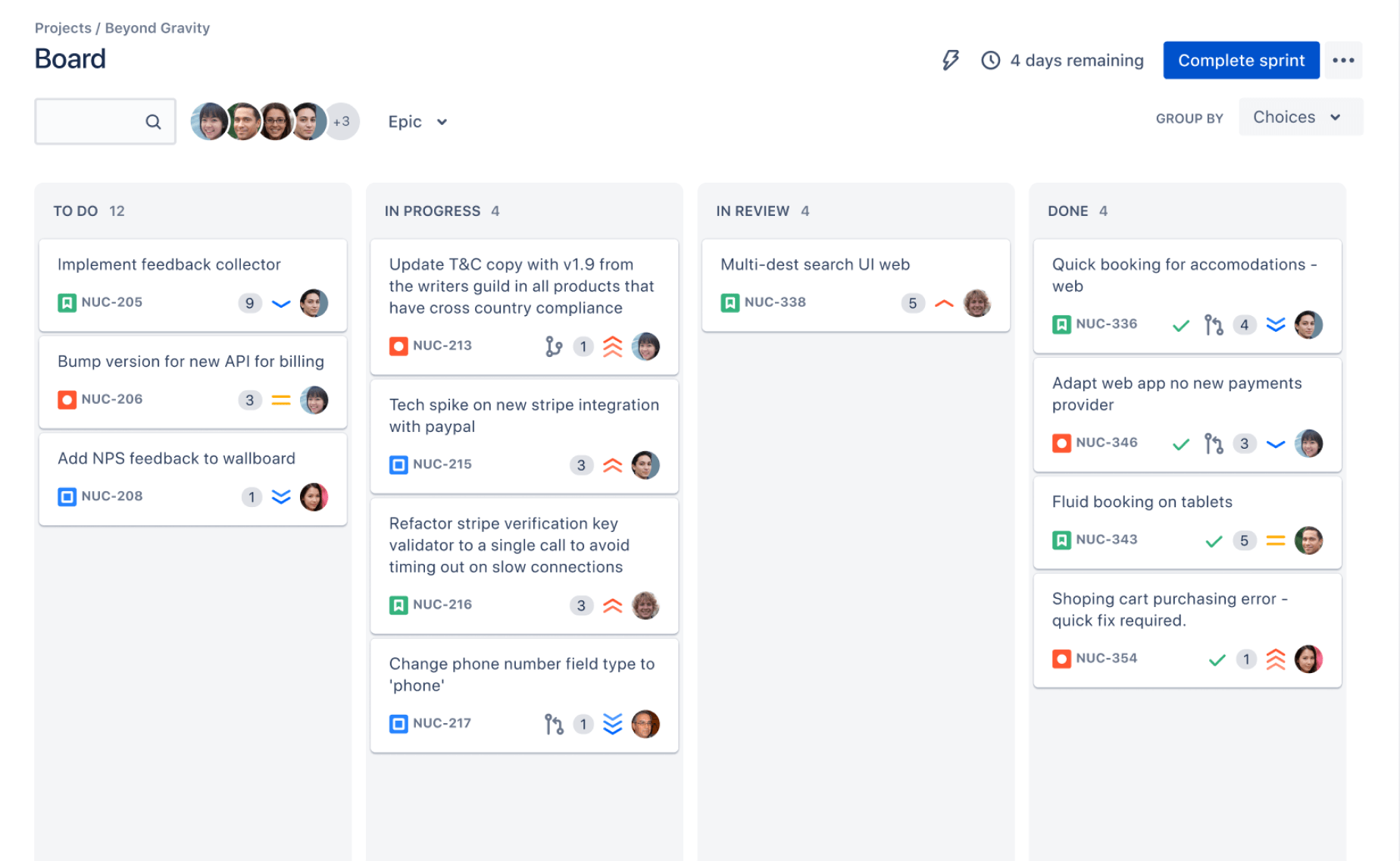
You can think of Jira as a work-control center. A team creates work items, gives them owners, moves them through stages, and reviews progress through boards and reports.
For example, a product team might create a story called “Add passwordless login.” That story can include acceptance criteria, an assignee, a priority, a deadline, and links to related work.
When development begins, the issue moves from “To Do” to “In Progress.” After testing, it may move to “Done.” Jira records each transition and keeps the surrounding context connected.
What Is an Issue?
An issue is Jira’s basic unit of work. The word sounds technical, yet it does not only mean a problem.
Depending on the project, an issue may represent a software bug, a product story, a research task, a customer request, or a general assignment.
Each issue can include fields such as:
- Summary and detailed description
- Issue type
- Assignee and reporter
- Priority and status
- Labels and components
- Due date and time estimates
- Comments and activity history
- Links to related issues
What Is a Jira Project?
A Jira project groups related work under shared settings. It can represent a product, department, service team, internal initiative, or business process.
A software team may have one project for a mobile application. A support department may create another project for incoming service requests.
Projects typically control permissions, issue types, workflows, screens, notifications, and reporting options. Administrators can tailor these settings to match the team’s operating model.
What Are Jira Boards?
A board gives you a visual view of work. It displays issues as cards arranged across columns that represent workflow stages.
A Kanban board may use columns such as “Backlog,” “Ready,” “In Progress,” “Review,” and “Done.” A Scrum board usually supports sprint planning and sprint execution.
Boards help you answer practical questions quickly:
- What work has not started?
- Who owns each active item?
- Which tasks are waiting for review?
- Where is work accumulating?
- What was completed during the sprint?
What Are Jira Workflows?
A workflow describes how an issue moves from creation to completion. It combines statuses, transitions, rules, and sometimes approvals.
For example, a bug workflow might move through “Open,” “Triaged,” “In Development,” “Ready for Testing,” “Verified,” and “Closed.” A transition can require a field update or restrict who may perform it.
Here's why workflows matter: they turn an informal process into a visible operating path. That consistency helps teams reduce missed handoffs and unclear ownership.
What Are Epics, Stories, and Tasks?
Jira often uses a hierarchy to connect large goals with smaller pieces of work.
- Epic: A broad initiative that may take several weeks or months.
- Story: A user-focused requirement or capability.
- Task: A specific piece of work that supports a goal.
- Subtask: A smaller step within an issue.
- Bug: A defect or unexpected behavior that needs attention.
Imagine an epic called “Improve checkout.” It could contain stories for guest checkout, saved payment methods, and order confirmation. Each story could include tasks for design, development, testing, and release preparation.
How Jira Fits Into Team Work
Jira usually supports a cycle that begins with planning and ends with review. The exact process depends on the team, yet the basic flow remains easy to recognize.
- Plan the work: Add goals, requirements, bugs, and requests to a backlog.
- Prioritize items: Rank issues by value, urgency, effort, or risk.
- Choose a delivery method: Use Scrum, Kanban, or a customized workflow.
- Assign ownership: Give each issue a responsible person or team.
- Track progress: Move issues through statuses and monitor blockers.
- Review outcomes: Use reports and team discussions to assess progress.
- Improve the process: Adjust priorities, workflow rules, and working agreements.
Jira for Scrum Teams
Scrum teams use Jira to manage product backlogs, plan sprints, and review completed work. A sprint is a fixed period in which the team aims to finish a selected group of issues.
During sprint planning, the team chooses backlog items and estimates the work. During the sprint, members update issue statuses and flag blockers.
At the end, reports such as sprint reports and velocity charts can help the team discuss delivery patterns. These reports support conversation; they do not replace judgment.
Jira for Kanban Teams
Kanban teams focus on continuous delivery rather than fixed sprint cycles. Jira helps them visualize work and limit the number of active items.
Suppose a team allows only three tasks in testing at one time. That limit encourages the team to resolve testing work before starting more development work.
The result can be a smoother flow and fewer partially completed tasks. Teams can also monitor cycle time, throughput, and blocked work.
Jira for Teams Outside Software Development
Jira is strongly associated with software development, yet other teams can adapt it for structured work.
A marketing team might track campaign requests. An operations team could manage process improvements. A human resources team may coordinate onboarding activities.
The fit depends on the level of workflow detail you need. Jira is often most useful when work involves multiple owners, clear stages, dependencies, or recurring review points.
Key Jira Features Beginners Should Know
Jira offers many settings, so beginners should focus on the features that shape daily work. Start with the work item, board, workflow, backlog, and report.
Backlogs
A backlog is a prioritized queue of planned work. It gives the team a place to capture future tasks without placing every item on the active board.
For example, a product manager might keep 40 ideas in the backlog while selecting 8 items for the next sprint. This separation keeps current work easier to read.
Custom Fields
Custom fields let teams record details that standard fields do not cover. Examples include customer segment, risk level, release target, environment, or approval status.
Custom fields are useful when they answer a recurring question. Too many fields can slow issue creation and make screens difficult to understand.
Automation
Jira automation can perform routine actions when specific events occur. A rule might assign an issue when it enters a status, notify a reviewer, or add a label after a condition is met.
Let me explain: automation works best when the underlying workflow is already clear. Automating a confusing process usually makes confusion move faster.
Reports and Dashboards
Reports help teams inspect progress, workload, cycle time, sprint results, and unresolved issues. Dashboards bring selected charts and issue views into one place.
A project lead might use a dashboard to monitor overdue work, blocked items, and progress toward a release. A team member may prefer a personal view showing assigned issues.
Permissions and Roles
Jira includes controls for deciding who can view, create, edit, transition, or administer work. Roles can differ between projects.
This matters when a project includes contractors, customers, executives, or multiple departments. Clear permission design reduces accidental changes and protects sensitive details.
Integrations and the Atlassian Marketplace
Jira can connect with communication, development, testing, reporting, and collaboration services. Atlassian also provides a Marketplace where teams can find additional apps.
Integrations can save time, although every added connection creates maintenance work. Review ownership, access requirements, and long-term value before adding an app.
Jira Cloud, Data Center, and Product Editions
You might be wondering: which Jira offering should a beginner understand? The answer depends on hosting, team needs, and the Atlassian products involved.
Jira Cloud
Jira Cloud is hosted by Atlassian. Your team accesses it through a web browser, while Atlassian manages much of the infrastructure, maintenance, and platform updates.
Cloud can suit teams that want faster setup and less infrastructure responsibility. Administrators still manage projects, access, workflows, and integrations.
Jira Data Center
Jira Data Center is designed for organizations that need self-managed deployment, additional control, or high-scale administration.
It can suit enterprises with strict infrastructure requirements. The organization takes on more responsibility for operations, upgrades, availability, and security planning.
Jira Software and Other Atlassian Products
Jira Software focuses on software development and agile planning. Jira Service Management supports service requests, incident handling, and support operations.
Atlassian also offers products such as Confluence for team knowledge and Trello for visual task management. Teams often connect products when different groups need different work experiences.
| Product or offering |
Typical purpose |
| Jira Software |
Software planning, issue tracking, agile delivery, and release work |
| Jira Service Management |
Service requests, incidents, changes, and support operations |
| Jira Cloud |
Atlassian-hosted access with reduced infrastructure management |
| Jira Data Center |
Self-managed deployment for organizations needing additional control |
Strengths and Limitations of Jira
Jira can provide strong visibility when a team has complicated work. It becomes more valuable when tasks involve dependencies, approvals, testing, releases, or several teams.
Where Jira Works Well
- Tracking bugs and product requirements in one workspace
- Supporting Scrum, Kanban, and customized workflows
- Connecting high-level goals with smaller delivery tasks
- Showing ownership, status, priority, and blockers
- Creating reports for planning and process review
- Automating repetitive updates and notifications
- Supporting access controls for larger organizations
Where Jira May Feel Difficult
Jira can feel heavy when a small team needs only a simple checklist. New users may also struggle when an administrator creates too many issue types, statuses, fields, or screens.
Configuration can solve many problems, yet configuration itself requires time and judgment. A team that changes settings without a clear reason may create inconsistent habits.
The best starting point is a small workflow with clear definitions. Add complexity after the team can explain why each step exists.
A Simple Example
Imagine a five-person team building an online booking feature. The product owner creates an epic and adds stories for search, availability, payment, and confirmation.
The team prioritizes those stories, creates subtasks, and places selected work into a sprint. Developers update statuses, testers record defects, and the product owner reviews completed items.
At the end of the sprint, the team can see what shipped, what remained open, and where work slowed down. That visibility supports a more useful planning discussion.
ONES.com is a unified platform for project management and knowledge management. Its separate products, ONES Project and ONES Wiki, can support teams that want connected planning and team knowledge.
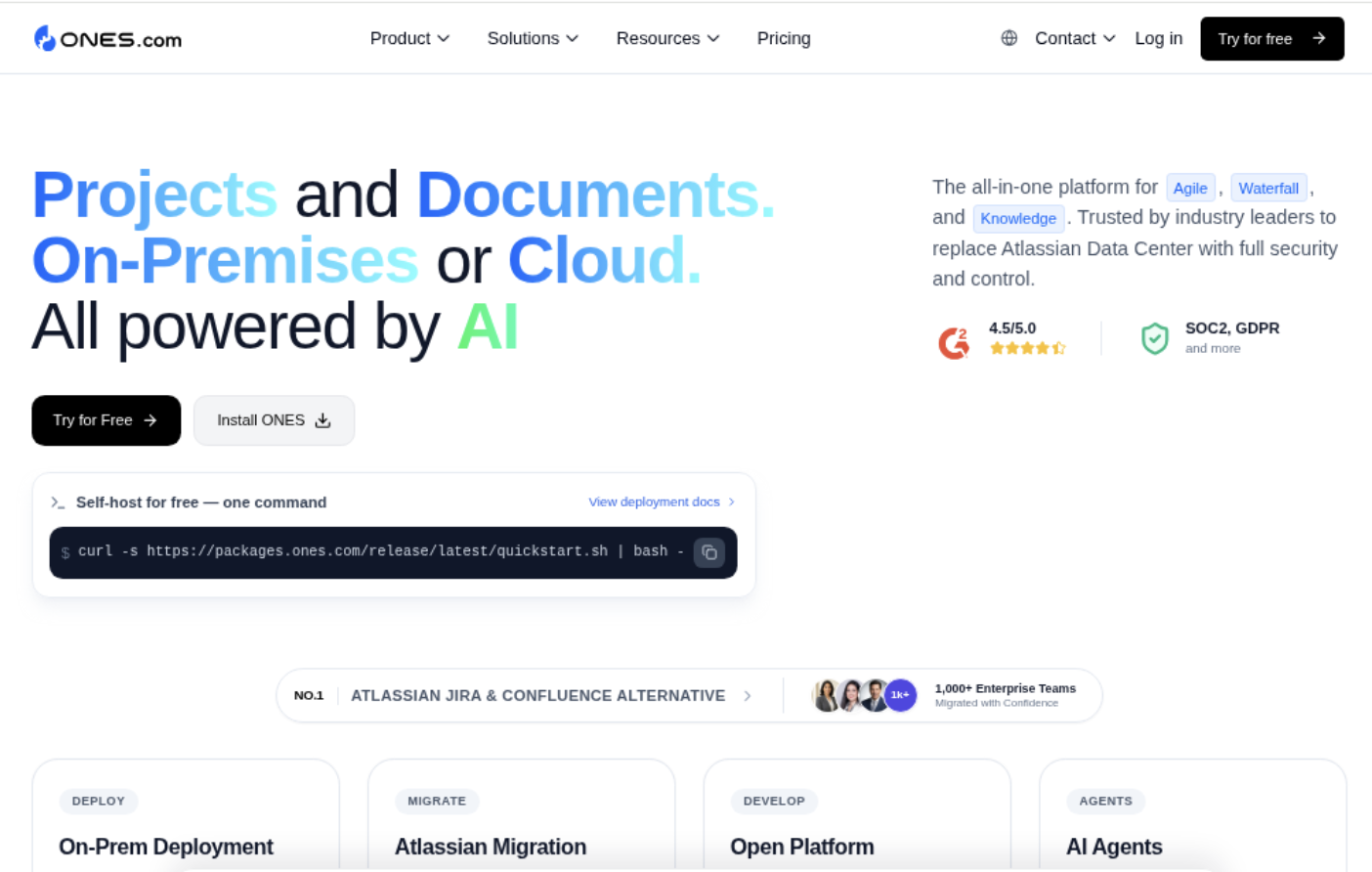
ONES Project serves as a Jira alternative for project and issue management. It offers cloud and self-hosted deployment options, including on-premise, private cloud, and air-gapped environments.
Core Capabilities
1. Issue Tracking for Scattered Work
Pain: Tasks, defects, and requests can become difficult to follow when each team tracks work differently.
ONES capability: ONES Project provides structured issues, ownership, priorities, statuses, and related work.
Result: Teams can see responsibility and progress in a consistent workspace.
2. Jira-Compatible Workflows for Familiar Processes
Pain: A team may hesitate to change platforms because its existing delivery process is already established.
ONES capability: ONES Project supports Jira-compatible workflows and offers custom workflows and fields.
Result: Teams can preserve familiar process logic while adapting settings to their own needs.
3. Sprint Management for Agile Planning
Pain: Sprint planning becomes harder when the backlog, active work, and completed items lack a shared view.
ONES capability: Sprint management features help teams organize planned work, monitor active delivery, and review outcomes.
Result: Scrum teams gain a clearer connection between sprint goals and daily execution.
4. Built-In Reporting for Limited Visibility
Pain: Teams may depend on separate reporting tools to understand workload, progress, or delivery patterns.
ONES capability: ONES Project includes built-in reporting for common project management needs.
Result: Managers and teams can inspect progress without assembling every view manually.
5. Automation for Repetitive Administration
Pain: Reassigning work, updating fields, and sending routine notices can consume valuable team time.
ONES capability: Automation features can handle recurring actions within defined project rules.
Result: The team spends less effort on repetitive administration and more time on delivery.
6. Custom Fields for Specialized Processes
Pain: Standard fields may not capture details such as risk, release stage, customer group, or compliance status.
ONES capability: Custom fields let teams adapt issue tracking to their operating requirements.
Result: Important context stays connected to the work item rather than scattered across separate systems.
7. Self-Hosted Deployment for Control Requirements
Pain: Some organizations cannot place project information in a shared public cloud environment.
ONES capability: ONES.com supports cloud, on-premise, private cloud, and air-gapped deployments.
Result: Organizations can select a hosting model that matches their security and infrastructure requirements.
8. Feature Parity Across Deployment Options
Pain: Self-hosted teams may lose important capabilities compared with cloud teams.
ONES capability: ONES.com provides full feature parity between its cloud and self-hosted versions.
Result: Deployment decisions can focus on operational requirements rather than sacrificing core functionality.
9. Separate Project and Knowledge Management Products
Pain: Project decisions and team knowledge often become disconnected from active work.
ONES capability: ONES Project handles project management, while ONES Wiki supports knowledge management. They are sold separately.
Result: Teams can choose the product they need and connect project activity with team knowledge when appropriate.
Application Scenarios
Software development team: A development group can manage epics, stories, bugs, sprints, custom workflows, and release reporting in ONES Project. Jira-compatible workflows can reduce the adjustment period for experienced Jira teams.
Restricted-network organization: A defense, manufacturing, or regulated team may need an air-gapped deployment. ONES.com supports that environment while retaining feature parity with its cloud offering.
Growing project office: A project office can standardize work tracking across departments, then use ONES Wiki separately for procedures, decisions, and internal knowledge.
Common Challenges When Starting With Jira
Challenge 1: Too Many Statuses
Problem: A workflow with twelve statuses can make a simple task difficult to interpret.
Solution: Begin with a few meaningful stages. Add a status only when it represents a real decision, handoff, or control point.
Challenge 2: Poor Issue Descriptions
Problem: An issue titled “Fix checkout” gives the assignee little direction.
Solution: Include the expected outcome, relevant conditions, acceptance criteria, and any known limitation. A clear issue reduces follow-up questions.
Challenge 3: An Unmanaged Backlog
Problem: An old backlog can contain duplicate ideas, abandoned requests, and items with no clear value.
Solution: Review the backlog regularly. Close stale items, combine duplicates, and rank the remaining work using shared criteria.
Challenge 4: Reports Without Decisions
Problem: A dashboard may display many charts without helping the team decide what to do next.
Solution: Connect every report to a question. For example, use a blocked-work view to decide whether the team needs an escalation.
Challenge 5: Confusing Ownership
Problem: Several people may comment on an issue while nobody owns the next action.
Solution: Assign one accountable person and use watchers, collaborators, or team roles for supporting participation.
FAQs About Jira by Atlassian
Is Jira only for software developers?
No. Jira is widely used by software teams, yet its workflows can support marketing requests, operations work, business projects, and service processes. It is most suitable when work has several stages, owners, dependencies, or review points. A small team with simple personal tasks may find a lighter task list easier to maintain.
What is the difference between Jira and Jira Software?
Jira is the broader Atlassian work-management product family, while Jira Software focuses on software development and agile delivery. Jira Software includes capabilities commonly associated with backlogs, Scrum boards, Kanban boards, issue tracking, and release planning. Atlassian also offers Jira Service Management for service and support workflows.
Yes. Jira supports project management through task tracking, planning, ownership, workflows, dependencies, reporting, and automation. Its strongest fit is usually complex or collaborative work. Teams can use it for sprint planning, Kanban delivery, product releases, bug management, and cross-functional initiatives.
What is a Jira issue?
A Jira issue is a tracked unit of work. It may be a bug, task, story, request, or subtask, depending on the project configuration. An issue can include a description, owner, priority, status, comments, deadlines, links, and custom fields. The issue moves through a workflow as the team completes its work.
Can Jira be used for Kanban?
Yes. Jira supports Kanban boards that visualize continuous work across workflow stages. Teams can establish work-in-progress limits, monitor blocked items, and review delivery patterns such as cycle time. Kanban teams do not need to use fixed sprints, although Jira can support both Kanban and Scrum approaches.
What should a beginner learn first?
Start with five ideas: projects, issues, boards, workflows, and backlogs. Then learn how your team assigns ownership, defines completion, handles blockers, and reviews progress. You do not need to understand every administrative setting immediately. A small practical project usually teaches Jira faster than exploring every menu.
Conclusion
Jira by Atlassian is a project management and issue-tracking platform for organizing work, controlling workflows, and improving visibility.
The essential model is simple: projects hold related work, issues represent individual items, boards show progress, workflows define movement, and reports help teams review results.
But here's the truth: Jira delivers the most value when the team agrees on clear issue definitions, practical statuses, ownership rules, and review habits.
If Jira feels too complex, simplify the workflow before adding more settings. If your organization needs Jira-compatible work management with cloud, on-premise, private cloud, or air-gapped deployment options, ONES.com may be worth evaluating.