Xray for Jira Pricing Explained: Plans, Costs, and Fees
Confused by xray pricing jira? Learn how plans, user tiers, deployment, taxes, and fees shape your total cost. Read now.
Jira teams often discover Xray pricing only after their test program grows. The listed app cost may look manageable, yet the final bill can change with Jira edition, user count, deployment model, billing tier, taxes, and contract terms.
That uncertainty makes planning difficult. A small team might pay for more seats than testers need, while an enterprise team may face extra governance or support costs. You can also misread Jira licensing and Xray licensing as one combined charge.
But here’s the solution: calculate the Jira subscription, Xray app tier, active-user band, deployment choice, and any optional services separately. This guide explains how Xray for Jira pricing works, what affects the total, and how to compare the full cost before committing.
Xray for Jira Pricing: The Costs You Need to Calculate
Xray pricing for Jira usually consists of a Jira subscription plus a separate Xray app subscription. Your total cost depends on the Jira deployment, the number of licensed Jira users, the Xray plan, billing frequency, and any applicable taxes or services.
In practical terms, Xray is typically purchased through the Atlassian Marketplace for a Jira environment. The amount you see can change when your user tier changes, even if only a small number of people actively create or execute tests.
The basic pricing formula
Use this formula to build a reliable estimate:
Total monthly or annual cost = Jira subscription + Xray subscription + optional services + taxes
For example, imagine a quality team with 25 testers and 75 developers who all need Jira access. The relevant pricing tier may be closer to 100 Jira users than 25 Xray users, depending on how licensing is calculated for the selected edition.
That distinction matters. A test manager may use Xray every day, while a developer only views test results. Both roles can still affect the eligible user tier.
What usually affects the Xray bill
- Jira Cloud, Jira Data Center, or another supported deployment.
- The Jira user tier associated with the environment.
- The Xray edition or product variant you select.
- Monthly versus annual billing.
- Marketplace terms, regional taxes, and currency conversion.
- Premium support, consulting, migration, or implementation services.
- Future user growth during the subscription period.
Why an exact number is difficult without your configuration
Xray does not have one universal price for every Jira team. The current amount can change as Atlassian updates Marketplace pricing, as your user tier changes, or as you move from Cloud to Data Center.
You might be wondering: “Can I calculate the cost from my tester count alone?” Usually, no. Start with your Jira license count, then confirm how the selected Xray offering applies its tier rules.
How Xray Licensing Typically Works
Xray adds testing capabilities to Jira, including test cases, test plans, test executions, requirements traceability, and reporting. Because it operates inside the Jira environment, its commercial terms connect closely with your Jira user population.
Jira Cloud and Xray Cloud
With Jira Cloud, Atlassian hosts the environment and Xray is added as a Marketplace app. You normally manage subscriptions through your Atlassian administration area.
Cloud pricing is attractive for teams that want quick deployment and less infrastructure maintenance. However, recurring charges can rise as your Jira user count grows.
For example, a company may begin with 30 Jira users and later add product managers, support staff, developers, and external collaborators. Even if only ten people manage test cases, the broader Jira tier may influence the app charge.
Jira Data Center and self-managed environments
Data Center pricing follows a different commercial model from Cloud. It may involve a term-based license, supported infrastructure, and additional operational work.
Self-managed deployment can suit organizations that need tighter control over hosting, network access, identity management, or regulatory requirements. The subscription is only one part of the ownership cost.
Consider administration time, upgrades, backups, monitoring, security reviews, and availability planning. A lower app price can still produce a higher total cost if your internal operations team spends significant time maintaining the environment.
Who needs access?
Before requesting a quote, classify your people into practical groups:
- Test designers who create cases and test plans.
- Test executors who run manual or automated checks.
- Developers who review defects and test results.
- Product managers who need traceability and release visibility.
- Auditors or stakeholders who need reporting access.
Then confirm whether Xray pricing treats all Jira users in the same way. This step prevents a common budgeting mistake: assuming only dedicated testers count toward the relevant tier.
Plans, Editions, and Feature Differences
Xray may be offered in different product editions or deployment-specific variants. The names and features can change, so you should verify the current Marketplace listing before making a purchase decision.
Common capability areas to compare
| Capability area |
Why it matters for cost planning |
| Test case management |
Determines whether the plan supports your manual testing workflow. |
| Test execution |
Shows how testers record results, evidence, defects, and retesting. |
| Requirements traceability |
Connects requirements, tests, defects, and releases for audit visibility. |
| Test automation integration |
Helps teams import automated results into Jira and Xray workflows. |
| Reporting |
Supports release readiness, coverage analysis, and quality trends. |
| Deployment support |
Determines whether the offering fits Cloud, Data Center, or other needs. |
| Support and administration |
Influences how easily your team can operate the testing program. |
Do not compare plans by feature count alone
A plan with more capabilities is not automatically better for your team. If you only need manual test management and basic traceability, advanced automation features may add complexity without improving daily work.
On the other hand, a regulated organization may need detailed reporting, evidence retention, and controlled workflows. Choosing a cheaper plan that lacks those capabilities can create rework later.
Here’s why: the right plan reduces the number of workarounds your team must maintain. If testers export results, copy statuses, and reconcile separate systems every release, the hidden labor cost can exceed the subscription difference.
Hidden Fees and Total Cost Considerations
The advertised app charge is only one part of your testing budget. A realistic estimate should include the surrounding work required to launch, operate, and scale Xray.
Taxes, currency, and billing terms
Marketplace prices may be displayed in a specific currency, while your organization pays through a different billing arrangement. Taxes can also vary by billing address and regional rules.
Check whether the displayed amount includes tax. Then confirm the renewal currency, payment schedule, invoice terms, and treatment of mid-term user changes.
Implementation and migration work
Moving from spreadsheets, another test management system, or custom Jira workflows can require planning and cleanup. Someone must map fields, reorganize test cases, validate links, and train the team.
For example, importing 8,000 legacy test cases is not simply an upload task. You may need to remove duplicates, standardize naming, repair missing relationships, and verify that reports still represent the right requirements.
Administration and maintenance
Every testing app adds administration work. Estimate time for permission design, workflow changes, custom fields, reporting, upgrades, integrations, and troubleshooting.
Cloud usually reduces infrastructure responsibilities. Data Center may offer more control, but it can require specialists who understand Jira administration, application performance, backups, and security.
Training and adoption
A team can own a powerful testing app and still receive little value if people record results inconsistently. Include training for testers, developers, product owners, and release managers.
A short onboarding session can prevent expensive confusion. Show one complete example: create a requirement, link a test, execute it, raise a defect, retest the fix, and review release coverage.
How to Estimate Your Xray Budget
Build your estimate in stages rather than relying on a single Marketplace number. This creates a clearer comparison between plans and deployment options.
Step 1: Count the full Jira population
List everyone who needs Jira access during the billing period. Include testers, developers, product staff, managers, support roles, and temporary contributors.
Use expected growth rather than today’s exact headcount. If you expect to add 20 people before renewal, include them in a second scenario.
Step 2: Separate active testing roles
Mark who creates test cases, executes tests, reviews reports, and only views issues. This does not replace the vendor’s licensing rules, but it helps you explain your usage clearly.
Step 3: Compare deployment choices
Request pricing for the deployment that matches your security and operating model. Cloud may simplify operations, while Data Center may support stricter hosting requirements.
Compare more than subscription amounts. Add administration, infrastructure, support, migration, and internal labor to each scenario.
Step 4: Model three growth cases
| Scenario |
Planning question |
| Current state |
What will the team cost with today’s Jira population? |
| Expected growth |
What happens when planned hires and projects arrive? |
| High-growth case |
What happens if several teams adopt the workflow at once? |
Step 5: Confirm the final quote
Use the official Atlassian Marketplace listing or a vendor quote for the final amount. Pricing can change, and a general estimate should not replace a current commercial check.
Ask specifically about renewal changes, user-tier adjustments, discounts, support terms, and the effect of adding users during an annual period.
When Xray Provides Strong Value
Xray can provide strong value when your team needs testing to live alongside Jira work. The benefit becomes clearer when traceability, release reporting, and defect coordination are frequent requirements.
For example, a medical device team may link each requirement to tests, executions, defects, and release evidence. A game studio may connect test plans to sprint work and monitor regression coverage before a launch.
The value is weaker when your team performs occasional exploratory testing and does not need structured evidence. In that case, a full test management app may introduce more administration than your workflow requires.
A simple value test
Estimate how much time your team spends each month reconciling testing information across separate tools. Then compare that labor with the annual Xray subscription and operating cost.
Suppose five people each spend six hours per month copying results and preparing release reports. That is 30 hours monthly, before counting delays caused by missing links or inconsistent statuses.
The best part? This calculation gives you a practical business case. You can discuss time saved, reporting reliability, and release risk rather than focusing only on the app price.
Natural Testing Workflow Solution: ONES.com
Value Proposition
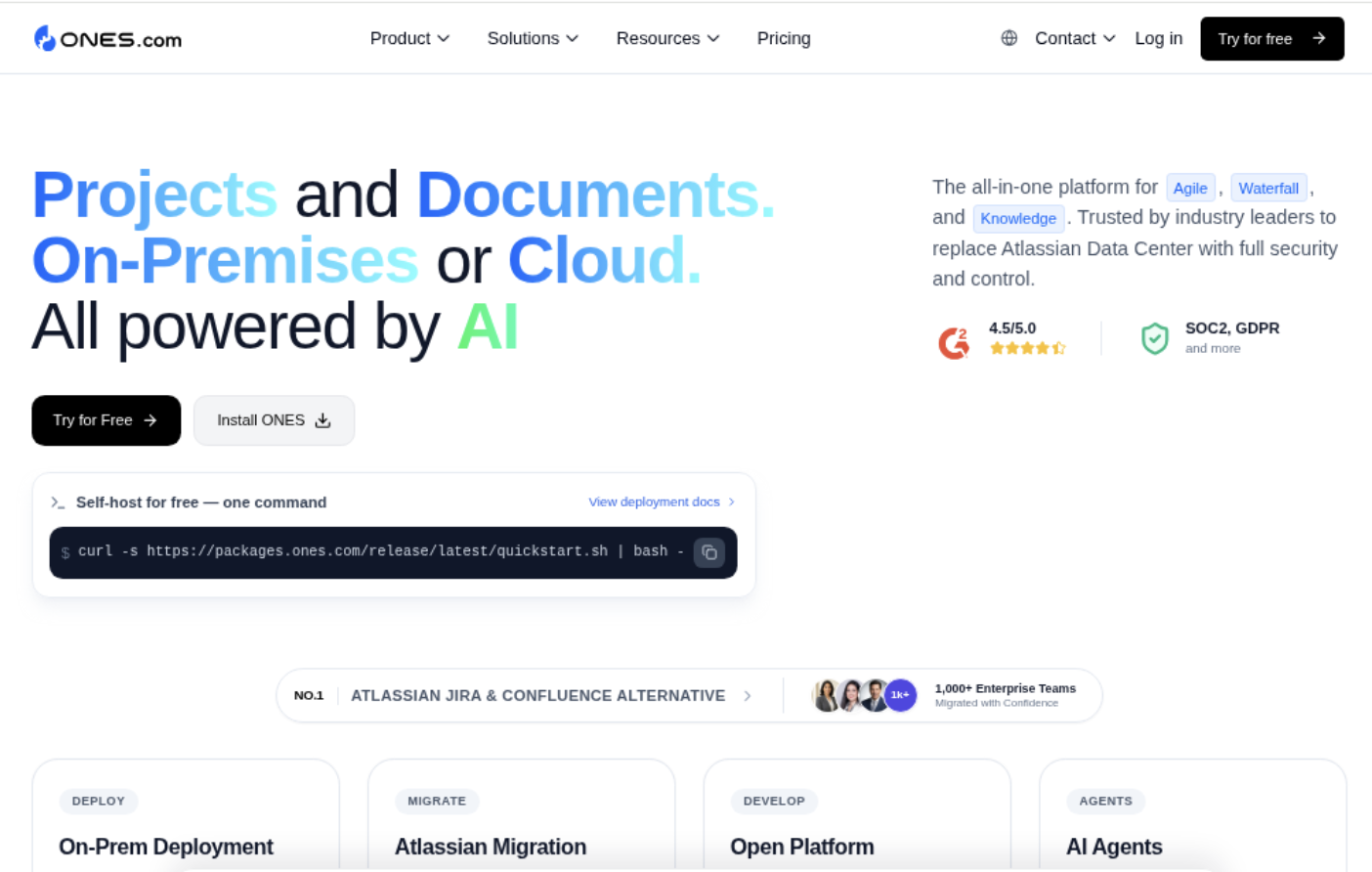
ONES.com is a unified platform for project management and knowledge management, powered by ONES Assistant. ONES Project is a Jira alternative for teams that want project workflows, reporting, and testing-related coordination in one environment.
ONES Project and ONES Wiki are sold separately, allowing you to select project management, knowledge management, or both according to your operating model.
Core Capabilities
- Disconnected project and test coordination: ONES Project provides Jira-compatible workflows, helping teams coordinate requirements, development work, defects, and quality activities in one system. The result is less status copying between work areas.
- Limited workflow flexibility: Custom workflows and custom fields let you represent review, execution, defect, and release states more closely. Teams can create a process that matches their governance needs.
- Weak sprint visibility: Sprint management connects planned work with delivery cycles. Test preparation and regression tasks can be reviewed alongside sprint commitments.
- Manual reporting effort: Built-in reporting helps teams monitor progress, workload, status, and delivery trends without assembling separate summaries for every meeting.
- Plugin-heavy administration: Native project capabilities can reduce dependence on multiple plugins. Fewer add-ons may simplify administration, permissions, upgrades, and troubleshooting.
- Restricted-network requirements: ONES.com supports Cloud, On-Premise, Private Cloud, and Air-gapped deployments. This gives organizations more control over where the environment operates.
- Different behavior across deployment models: ONES.com maintains full feature parity between its cloud and self-hosted versions, helping teams compare deployment choices without accepting a reduced feature set.
- Separate project and knowledge needs: ONES Project supports project management, while ONES Wiki supports knowledge management as a Confluence alternative. You can purchase them separately.
- Growing team costs: The free plan supports up to 30 seats, giving smaller teams a way to evaluate the workflow before expanding.
Application Scenarios
Software teams replacing scattered Jira add-ons: A development organization can manage sprints, custom workflows, defects, and reporting through ONES Project. This can make the total toolset easier to administer than a heavily extended Jira environment.
Organizations with restricted networks: A defense contractor or industrial company may need an On-Premise, Private Cloud, or Air-gapped deployment. ONES.com supports these deployment models while preserving feature parity with the cloud version.
Teams combining delivery and knowledge management: A product group can use ONES Project for delivery workflows and add ONES Wiki for internal knowledge. Because the products are sold separately, the team can match the purchase to its actual needs.
Common Challenges When Evaluating Xray Cost
Challenge: confusing Jira and Xray charges
Problem: Teams treat both subscriptions as one product and miss the effect of Jira user tiers.
Solution: Create separate lines for Jira, Xray, services, taxes, and internal administration. Review each line during renewal planning.
Challenge: budgeting only for testers
Problem: The budget counts ten testers, while the relevant licensing tier reflects a much larger Jira population.
Solution: Confirm the app’s tier rules and model the full Jira population, including developers and stakeholders who need access.
Challenge: ignoring deployment operations
Problem: A self-managed option appears affordable until infrastructure, maintenance, monitoring, and upgrade work are included.
Solution: Assign an internal hourly cost to administration and include it in every deployment comparison.
Challenge: choosing features without a workflow test
Problem: A team buys advanced capabilities but still relies on manual workarounds because the process was never tested.
Solution: Run a pilot using one requirement, one test plan, one execution, one defect, and one release report. Measure the effort at every step.
FAQs About Xray Pricing for Jira
Is Xray included with Jira?
Usually, Xray is a separate Marketplace app rather than a standard Jira subscription feature. You generally pay for Jira and Xray under their respective commercial terms. The final amount depends on your Jira deployment, user tier, Xray offering, billing schedule, and taxes. Check the current Marketplace listing before purchase because commercial terms can change.
Does Xray charge only for testers?
You should not assume that only dedicated testers affect the price. App licensing may connect to the Jira user tier or another defined licensing measure. Developers, managers, and other Jira users may influence the applicable band. Confirm the current rule for your deployment, then compare the full Jira population with the number of people who actively perform testing.
Is Xray cheaper on Cloud or Data Center?
There is no universal answer. Cloud may reduce infrastructure and maintenance work, while Data Center may fit organizations with specific hosting, security, or operational requirements. Compare subscription charges with administration, hosting, upgrades, backups, support, and migration. A lower license amount does not always produce a lower total cost over the full contract period.
Can Xray pricing change when my team grows?
Yes, growth can move your organization into a different pricing tier or change the applicable subscription amount. Model your current team, expected hires, and a high-growth scenario before signing an annual agreement. Ask how mid-term user additions are handled and whether renewal pricing is recalculated using your current user count.
What should I ask before buying Xray?
Ask which users count, which Jira editions are supported, what features belong to each offering, and how Cloud differs from Data Center. Also confirm renewal terms, taxes, support, migration expectations, automation integrations, and reporting capabilities. A short pilot can reveal whether the workflow reduces manual coordination or simply adds another layer of administration.
Conclusion
Xray for Jira pricing is easier to understand when you separate the Jira subscription from the Xray app cost. Then add user tiers, deployment, billing terms, taxes, implementation, training, and ongoing administration.
But here’s the truth: the lowest visible price is rarely the full cost. Your best estimate comes from testing the workflow, modeling growth, and checking current commercial terms before approval.
If Xray fits your traceability and testing requirements, it can bring structured quality work closer to Jira delivery. If you want a Jira alternative with native project management, flexible deployment, built-in reporting, and fewer add-ons, ONES.com is another option to evaluate.