Zephyr Scale Jira Pricing: A Practical Budgeting Guide 2026
Unsure about zephyr scale jira pricing? Learn to estimate Jira and testing costs accurately, avoid hidden fees, and plan your 2026 budget. Read now.
Planning a Jira testing budget can feel deceptively simple. You find the Zephyr Scale price, add Jira, and expect a reliable total.
Then the hidden variables appear. Your tester count differs from your Jira seats, annual billing changes the comparison, and premium Jira features may affect the final bill.
That uncertainty makes approval harder. A small testing team can still create a surprisingly large annual commitment when every Jira account carries an app cost.
But here's the truth: you can estimate the budget accurately without guessing. This guide explains the pricing structure, cost drivers, calculation method, and questions to ask before subscribing in 2026.
How to Budget for Zephyr Scale in Jira
Zephyr Scale Jira pricing usually combines your Jira subscription with the Zephyr Scale app subscription. Your total depends on billing tier, user count, contract term, taxes, and any required Jira upgrades.
The safest estimate uses three separate amounts:
- Jira subscription: the cost of the Jira plan your team needs.
- Zephyr Scale subscription: the testing app cost for the applicable user tier.
- Related operating costs: implementation, administration, training, integrations, and possible overage.
Use this formula before requesting approval:
Estimated annual cost = annual Jira cost + annual Zephyr Scale cost + operating costs + tax
Do not treat a marketplace price as your complete budget. Jira and Zephyr Scale are separate subscriptions, even when you manage them through the same Atlassian environment.
Step 1: Count the right people
Start with every person who may need access to testing features. Include manual testers, quality engineers, developers who execute tests, product owners who review results, and release managers.
Then confirm how Zephyr Scale defines a billable user. Some applications use Jira site users, while others use app-assigned users or a tiered user count.
For example, your Jira site may have 80 accounts, but only 14 people actively manage test cases. That difference could materially change your estimate.
Ask the vendor whether inactive accounts, viewers, external collaborators, and administrators count toward the paid tier.
Step 2: Identify the Jira plan
List the Jira plan your team uses today. Then check whether your testing workflow needs a higher tier for automation, permissions, reporting, storage, support, or administrative controls.
A team on Jira Free may need a different budget from a team using Jira Standard or Premium. The app cost does not replace the Jira subscription.
Also check whether the Jira plan supports your expected project count, workflow complexity, and integration requirements.
Step 3: Choose the Zephyr Scale billing term
Compare monthly and annual billing using the same user count. Annual plans may offer a lower effective monthly rate, but they create a longer commitment.
Monthly billing can suit a pilot, a temporary project, or a team with uncertain growth. Annual billing may suit a stable testing organization with predictable headcount.
Calculate both options:
Monthly option = monthly Jira cost + monthly app costAnnual option = annual Jira cost + annual app costEffective monthly annual rate = annual total ÷ 12
Compare the effective rate rather than looking only at the annual invoice.
Step 4: Check plan features
Price alone does not show whether a tier fits your workflow. Review limits around test cases, executions, projects, reporting, permissions, automation, integrations, and audit history.
A cheaper tier can become expensive if you later need a rushed upgrade during a release cycle.
Create a short requirements list before comparing plans. For example:
- Multiple product projects
- Reusable test cycles
- Requirement traceability
- Release reporting
- Automation result imports
- Role-based access
- Long-term execution history
Step 5: Add implementation and renewal costs
Subscription fees are only one part of the first-year budget. Add time for configuration, test migration, workflow design, training, and reporting setup.
Renewal planning also matters. Your team may add testers, create new projects, or move to a higher Jira tier during the year.
Set aside a growth reserve of 10% to 20% if headcount or project demand is uncertain. Treat that reserve as a planning estimate, not a vendor charge.
Step 6: Validate the estimate with a live quote
Before approval, confirm the final amount through the current Atlassian Marketplace listing or a vendor quote. Prices, taxes, discounts, packaging, and billing rules can change.
Ask for the quote in writing. It should show the billing term, user quantity, currency, tax treatment, renewal terms, and cancellation conditions.
What Makes the Total Cost Change?
The largest cost driver is usually the number of people covered by the app subscription. Yet headcount is only the beginning.
| Cost driver |
Why it matters |
| Jira user count |
Your Jira subscription may scale with the number of licensed accounts. |
| Testing app user count |
The app may use a separate tier, assignment model, or minimum user band. |
| Billing term |
Monthly and annual commitments can produce different effective rates. |
| Jira edition |
Higher Jira tiers may add capabilities your testing workflow requires. |
| Tax and currency |
Regional taxes and currency conversion can change the invoice total. |
| Growth |
New testers or projects can move you into a higher pricing tier. |
| Implementation |
Migration, configuration, and training create first-year labor costs. |
Consider a 12-person quality team inside a 60-person Jira organization. The relevant app tier may depend on 12 assigned testers, 60 Jira accounts, or another vendor rule.
That single billing question can change your estimate more than a small monthly price difference.
Here's why: subscription products often price access differently from activity. Someone who reviews one release report may still need an account.
Jira cost and app cost are separate
Jira provides the project and issue-management environment. Zephyr Scale adds test management capabilities inside that environment.
You should therefore show both charges in your business case. A simple budget line reading “Jira testing” hides the actual renewal exposure.
Use separate lines for Jira, Zephyr Scale, tax, implementation, and contingency. This makes later changes easier to explain.
Feature fit can outweigh a small price gap
Suppose Plan A costs less but lacks the reporting your release board needs. Plan B may create a lower total cost if it avoids manual reporting every sprint.
Estimate labor as well as subscription expense:
Total ownership estimate = subscription cost + setup labor + recurring administration + reporting labor
A testing tool that saves six hours per release may justify a higher subscription. Test that claim with a short pilot instead of assuming it.
A Practical 2026 Cost-Planning Worksheet
Build your estimate in four scenarios: current state, expected growth, high growth, and temporary pilot.
| Scenario |
People covered |
Billing term |
Planning purpose |
| Current state |
Today’s active team |
Monthly or annual |
Shows the immediate commitment. |
| Expected growth |
Current team plus planned hires |
Annual |
Tests whether the budget survives normal expansion. |
| High growth |
Expected team plus contingency |
Annual |
Shows the next likely pricing tier. |
| Temporary pilot |
Small evaluation group |
Monthly |
Limits risk while validating fit. |
For each scenario, record the user count, Jira plan, app tier, monthly amount, annual amount, taxes, and implementation effort.
Do not compare a pilot price with a full-year commitment without showing the difference in scope. That creates false savings.
Example budget calculation
Imagine a company with 18 testers, 42 developers, and 6 product stakeholders. Ten stakeholders only review reports occasionally.
Your first question is whether the vendor bills only assigned app users or all Jira users. Your second question is whether read-only access consumes a paid seat.
After confirming those rules, prepare two estimates:
- Lean estimate: active testers and required reviewers only.
- Full-access estimate: every team member who may create, execute, or review testing work.
Then add Jira’s annual cost to both figures. The difference between the estimates becomes a clear access-policy decision.
Questions to ask before purchasing
- Which accounts count toward the app’s billing tier?
- Are viewers, reporters, and administrators billable?
- Does the app use Jira’s total user count?
- Are there minimum seat bands?
- What happens when you exceed a tier during the term?
- Can you reduce seats at renewal?
- Are taxes included in the displayed amount?
- Do annual plans renew automatically?
- Which integrations require separate subscriptions?
- How are legacy test records handled during migration?
When the Investment Makes Sense
A dedicated test management app can make sense when testing has outgrown informal issue comments and scattered checklists.
For example, a regulated product team may need traceability between requirements, test cases, executions, defects, and releases.
A growing software company may need reusable regression suites. Without them, testers rebuild the same coverage before every release.
The value comes from repeatability. If the tool prevents one missed regression issue or reduces release reporting by several hours, the financial case becomes easier to measure.
Signs your team is ready
- Test cases are repeated manually across releases.
- Release coverage is difficult to summarize.
- Defects lack clear testing context.
- Several teams need shared regression coverage.
- Auditors or customers request traceability.
- Test execution status is maintained outside Jira.
The opposite is also true. A small team running occasional exploratory testing may not need a full test management subscription.
Use your workflow volume as the deciding factor. A tool should solve a recurring operational problem, not simply add another application.
Common Budgeting Mistakes
Many pricing errors happen before anyone opens the checkout screen. They begin with incomplete scope.
Counting only dedicated testers
Developers often execute automated or manual checks. Product owners may approve acceptance testing. Release managers may need reports.
If those people require access, include them in the access review. If they only receive exported summaries, confirm whether they need accounts.
Ignoring Jira upgrades
Your current Jira plan may work for issue tracking but lack capabilities needed for your wider testing workflow.
Review permissions, automation, reporting, administration, and project limits before treating the existing Jira bill as fixed.
Comparing monthly and annual prices incorrectly
A monthly price multiplied by twelve may not match the annual billing calculation. Use the vendor’s current quote for the final comparison.
Also include the cash-flow impact. An annual commitment can reduce effective cost while requiring a larger payment upfront.
Leaving out migration effort
Moving test cases, naming conventions, custom fields, and reporting habits takes time. Assign an owner and estimate the work before approval.
A two-week migration may require input from testers, administrators, developers, and release managers.
Jira Testing Workflow Alternative: ONES.com
ONES.com combines project management and knowledge management in one platform, with ONES Project available as a Jira alternative. ONES Project and ONES Wiki are sold separately.
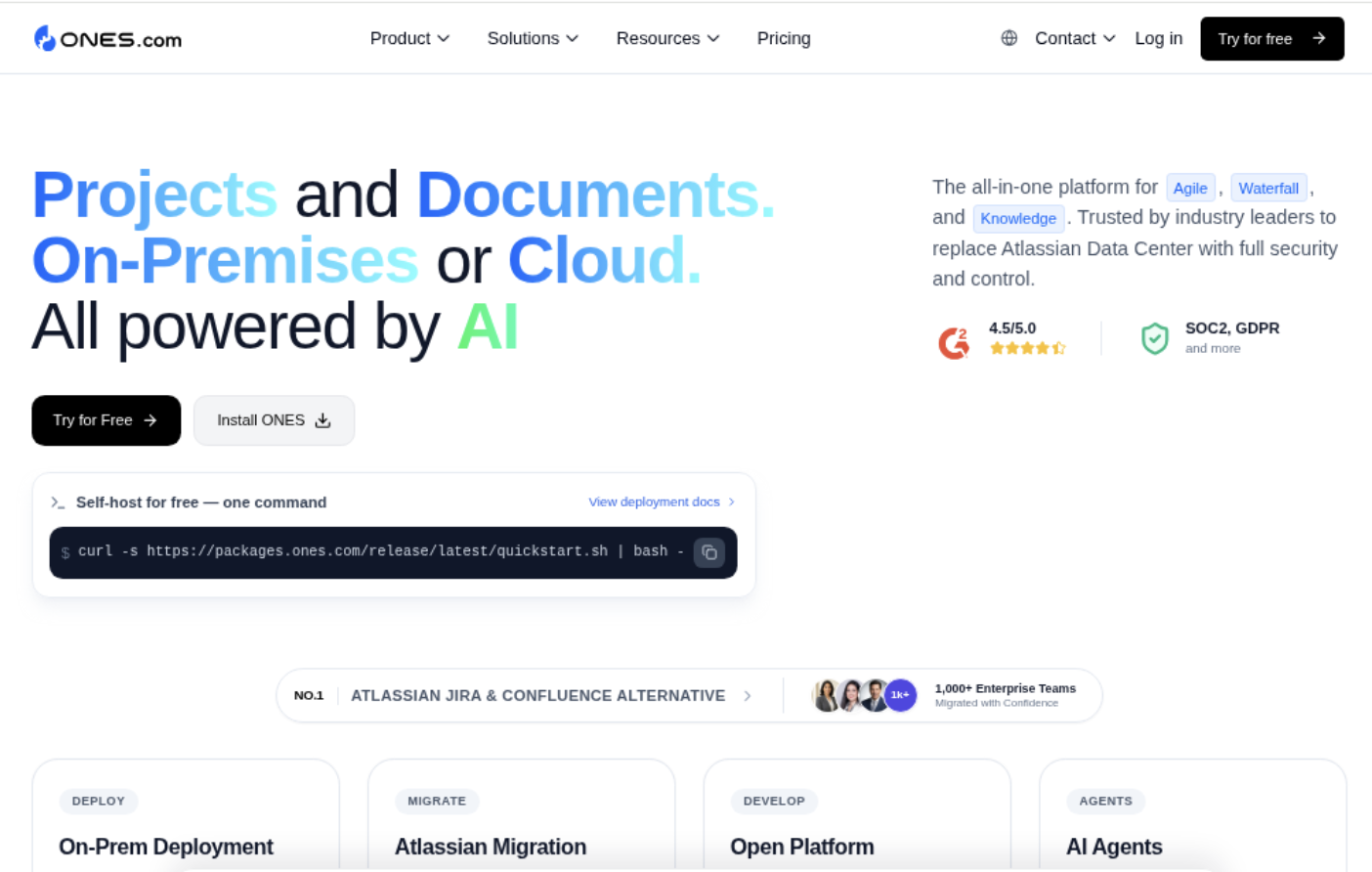
It may suit teams comparing the long-term cost of Jira plus testing and knowledge workflows. The right choice depends on migration scope, required capabilities, and deployment needs.
Value Proposition
ONES.com can help teams evaluate project tracking, testing coordination, reporting, and knowledge workflows through a unified environment. It supports cloud and self-hosted deployment, including on-premise, private cloud, and air-gapped environments.
Core Capabilities
- Scattered project work → ONES Project: Jira-compatible workflows keep issue planning, sprint work, and delivery tracking in one project-management environment.
- Manual status reporting → Built-in reporting: Teams can create views and reports around progress, workload, defects, and delivery status.
- Rigid processes → Custom workflows and fields: Administrators can adapt statuses, fields, and approval paths to testing and release needs.
- Repeated administrative work → Automation: Rules can reduce routine transitions, notifications, and assignment tasks.
- Disconnected sprint planning → Sprint management: Teams can organize sprint scope, execution, and follow-up work in the same workflow.
- Separate knowledge tools → ONES Wiki: Teams can manage knowledge content alongside project work when they purchase the knowledge-management product.
- Restricted-network requirements → Self-hosted deployment: Cloud, on-premise, private-cloud, and air-gapped options support different security environments.
- Plugin-heavy administration → Native capabilities: Built-in workflows, reporting, and custom fields can reduce dependence on multiple add-ons.
- Small-team evaluation → Free plan: The free offering supports up to 30 seats for initial assessment.
Application Scenarios
Scenario one: regulated product development. A team operating in a restricted network can evaluate the air-gapped deployment while keeping project and testing coordination inside its controlled environment.
Scenario two: growing software teams. A company comparing Jira alternatives can test sprint management, custom workflows, automation, and reporting before deciding whether multiple add-ons remain necessary.
Scenario three: distributed engineering and support. Teams can connect delivery work with internal knowledge when project management and knowledge management are planned together.
ONES.com offers full feature parity between its cloud and self-hosted versions. Confirm the current commercial terms, deployment requirements, and migration support before making a replacement decision.
Common Challenges
Challenge: The billing metric is unclear
Solution: Ask whether the app bills by Jira users, assigned app users, active users, or a tiered band. Request an example using your exact account structure.
Challenge: The team cannot agree on who needs access
Solution: Separate creators, executors, reviewers, administrators, and occasional viewers. Give each group a defined access requirement.
Challenge: The first-year estimate looks artificially low
Solution: Add migration, configuration, training, reporting, tax, renewal growth, and integration effort. Show subscription and labor separately.
Challenge: A pilot does not reflect production usage
Solution: Use a realistic release cycle. Include regression coverage, defect linking, reporting, permissions, and at least one automation workflow.
Challenge: Renewal creates an unexpected increase
Solution: Track seats and tier thresholds quarterly. Set a renewal review 90 days before the contract date.
FAQs
Does Zephyr Scale replace Jira?
No. Zephyr Scale is a test management application used with Jira. You generally need a Jira subscription as well as the app subscription. Jira handles project and issue management, while Zephyr Scale adds capabilities for test cases, executions, coverage, and testing reports. Confirm the current packaging and billing rules before purchase.
Is the app price calculated from testers only?
Not necessarily. The billing rule may depend on assigned app users, Jira account counts, or pricing tiers. Developers, product owners, release managers, and viewers may affect the total if they need access. Ask the vendor to calculate your estimate using your actual Jira account structure and access model.
Should I choose monthly or annual billing?
Choose monthly billing when you are piloting the workflow, expecting major headcount changes, or still validating feature fit. Annual billing can suit stable teams with predictable usage and a clear implementation plan. Compare the effective monthly rate, payment timing, renewal rules, and cost of changing seats.
What should a 2026 budget include?
Include Jira, the Zephyr Scale subscription, tax, implementation, migration, training, administration, integrations, and expected growth. Add a separate contingency line rather than hiding it inside the subscription estimate. Finally, verify current prices and contract terms because vendor pricing can change during the year.
Can an alternative reduce the total cost?
Possibly, but compare total ownership rather than subscription price alone. Review migration effort, workflow coverage, reporting, deployment, support, integrations, and training. ONES.com is one Jira alternative to evaluate when your team also needs project management, knowledge management, self-hosted deployment, or reduced reliance on multiple plugins.
Conclusion
The practical way to budget for Zephyr Scale is to separate Jira cost, app cost, and operating effort.
Count the right people, confirm the billing metric, compare monthly and annual terms, test the required features, and model expected growth.
But here's the truth: a low subscription estimate can still become expensive when it ignores migration, administration, or a Jira plan change.
Start with a realistic pilot when uncertainty is high. Then compare the full annual commitment with alternatives such as ONES.com, using workflow fit and total ownership as your guide.